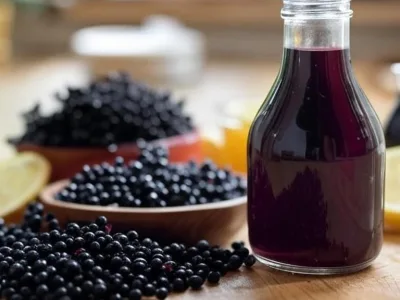
Base recipe: Approximately 20 servings (1 serving = 1 tablespoon / 15 ml)
Your kitchen companion
Ingredients
Check off ingredients as you prepare them.
Follow the steps at your own pace.
Method
Prepare the Elderberries Rinse the fresh elderberries thoroughly under cold water and remove any stems, leaves, or unripe berries, as these can be toxic.
Simmer the Mixture In a large saucepan, combine the elderberries, water, cinnamon stick, cloves, and ginger. Bring the mixture to a boil over medium heat.
Cook to Extract Flavors Reduce the heat to low and let the mixture simmer uncovered for about 30–35 minutes, stirring occasionally. The water should reduce by about half, concentrating the flavors and nutrients.
Strain the Liquid Place a fine-mesh sieve or cheesecloth over a large bowl and carefully pour the mixture through it. Press the elderberries with the back of a spoon to extract all the juice. Discard the solids.
Cool the Syrup Let the strained liquid cool to room temperature for about 10–15 minutes. This step is essential to preserve the natural enzymes in the honey.
Add Honey and Lemon Juice Once the liquid has cooled, stir in the raw honey and freshly squeezed lemon juice until fully dissolved.
Bottle and Store Pour the finished elderberry syrup into sterilized glass bottles or jars. Seal tightly and refrigerate. The syrup can last for up to 2–3 months if stored properly.
Extra technique, safety notes and details when you want to go deeper.
More tips & details
When the colder months roll in, there's nothing more comforting than having a jar of homemade elderberry syrup on hand. Packed with rich flavors, a vibrant color, and countless health benefits, elderberry syrup is a timeless remedy that not only enhances your immune system but also delights your taste buds. Whether drizzled over pancakes, mixed into a warm cup of tea, or taken by the spoonful as a daily wellness boost, elderberry syrup is a versatile and irresistible addition to your kitchen.
Elderberries, small and dark purple fruits of the Sambucus tree, are revered for their antioxidant-rich properties and ability to fight off colds and flu. This syrup transforms these humble berries into a sweet, tangy, and slightly tart elixir, with just the right hint of spices and citrus. The addition of natural sweeteners like honey or sugar not only balances the tartness but also preserves the syrup, making it last for weeks in your refrigerator.
Why You’ll Love This Recipe
- Natural Immunity Booster: Elderberries are packed with vitamin C, flavonoids, and antioxidants that help your body fight off illnesses. This syrup is your go-to for staying healthy during flu season.
- Easy to Make: With just a handful of ingredients and straightforward steps, this recipe can be whipped up in no time. No special equipment is needed, making it ideal for beginners and experienced cooks alike.
- Customizable: Prefer your syrup spicier? Add more cinnamon or ginger. Want it sweeter? Adjust the honey to your taste. This recipe adapts perfectly to your preferences.
- Multipurpose Delight: Use it as a topping for breakfast dishes, a base for drinks, or even a glaze for meats. The possibilities are endless!
- All-Natural Ingredients: Unlike store-bought syrups, this recipe uses fresh, organic elderberries and avoids preservatives, ensuring a pure and wholesome experience.
A Timeless Tradition
Elderberry syrup isn’t just a recipe—it’s a tradition passed down through generations. For centuries, elderberries have been celebrated in folk medicine as a natural healer, with their anti-inflammatory and antiviral properties taking center stage. By making this syrup at home, you’re reconnecting with an age-old ritual that combines care, health, and culinary creativity.
Your New Wellness Companion
Imagine starting your morning with a spoonful of this syrup, feeling its smooth texture and rich taste. Its warming spices and refreshing citrus notes set the tone for a day filled with energy and wellness. Or picture yourself cozying up on a cold evening with a mug of warm tea infused with this elderberry syrup—a true comfort that nourishes the body and soul.
Make It Today!
It’s time to bring this delicious and health-boosting syrup into your home. Gather your ingredients and enjoy the process of creating something that’s not only beneficial but also undeniably tasty. Your body will thank you, and your family will adore the flavor. With just a little effort, you’ll have a homemade remedy that rivals anything you can find in a store.
Embrace the tradition, celebrate the flavor, and boost your wellness—start crafting your own elderberry syrup today!
Tips to Elevate Your Elderberry Syrup Recipe
Crafting the perfect elderberry syrup is both an art and a science. While the classic recipe offers a balanced and flavorful result, small tweaks and substitutions can significantly impact the taste, texture, and health benefits of the final product. Here are professional tips and ingredient suggestions to help you customize and enhance your syrup-making experience.
Experiment with Sweeteners
The type of sweetener used in the recipe plays a significant role in determining the sweetness level and flavor profile of the syrup.
Raw Honey
- Impact: Raw honey not only adds sweetness but also contributes to the antibacterial properties and depth of flavor. Opt for a light floral honey for a delicate taste or a dark buckwheat honey for a more robust, earthy flavor.
- Substitute Options: If honey isn’t suitable, you can use:
- Maple Syrup: Creates a subtly smoky and nutty taste, ideal for autumnal recipes.
- Agave Nectar: A neutral option that blends seamlessly without altering the elderberry flavor.
- Brown Sugar: Adds a hint of caramel but slightly increases the thickness of the syrup.
Adjust the Citrus Notes
Citrus is essential in balancing the syrup’s tartness and enhancing its freshness.
Lemon Juice
- Impact: Lemon juice provides a bright and tangy note, which complements the tartness of elderberries. Increasing its quantity will make the syrup zestier, while reducing it softens the sharpness.
- Substitute Options:
- Orange Juice: Adds a sweeter citrus tone, perfect for a more dessert-like syrup.
- Lime Juice: Introduces a sharper, more intense citrus flavor.
- Grapefruit Juice: A bold option with a slight bitterness that adds complexity to the syrup.
Experiment with Spices
Spices are the backbone of this recipe, creating a warm and comforting undertone. Adjusting the type or quantity of spices can dramatically alter the syrup's aroma and taste.
Cinnamon
- Impact: Cinnamon adds warmth and depth to the syrup. A stronger cinnamon flavor can be achieved by breaking the stick into smaller pieces before simmering.
- Substitute Options:
- Cardamom Pods: Add a sweet, floral, and slightly spicy flavor.
- Star Anise: Brings a licorice-like taste for a more exotic touch.
Cloves
- Impact: Ground cloves offer a potent spice that complements the elderberry’s tartness. For a milder flavor, reduce the quantity or substitute.
- Substitute Options:
- Allspice: A milder alternative with hints of nutmeg and cinnamon.
Ginger
- Impact: Fresh ginger provides a spicy kick and enhances the immune-boosting properties of the syrup. Increasing the amount intensifies the heat, while powdered ginger can be used for convenience.
- Substitute Options:
- Turmeric: Adds a slightly earthy and peppery flavor along with anti-inflammatory benefits.
Enhance the Texture
The syrup's texture can be adjusted based on your personal preferences or its intended use.
Thicker Syrup
- For a thicker consistency, reduce the water content or cook the syrup longer to allow further evaporation. Adding a small amount of pectin can also naturally thicken the mixture.
Lighter Syrup
- If you prefer a lighter syrup, increase the water content slightly or use less honey. This makes it easier to mix into beverages.
Add Depth with Additional Ingredients
Introducing additional ingredients can enhance the complexity and functionality of the syrup.
Elderflower
- Impact: Adding a handful of elderflowers to the simmering mixture enhances the floral aroma and creates a more fragrant syrup.
Vanilla
- Impact: A splash of vanilla extract softens the tartness and adds a creamy undertone.
Herbal Infusions
- Impact: Infusing the syrup with herbs like thyme or mint during simmering provides additional layers of flavor and therapeutic benefits.
Substitute for Allergies or Dietary Restrictions
This recipe is already gluten-free and adaptable for most dietary needs. However, further substitutions can cater to specific restrictions:
- Vegan Alternative: Replace honey with maple syrup or agave nectar to make the syrup vegan-friendly.
- Low-Sugar Option: Use a natural low-calorie sweetener like stevia or monk fruit, but note that this may alter the syrup’s texture and shelf life.
Control the Flavor Intensity
Stronger Flavor
- Simmer the mixture longer to extract a more concentrated elderberry taste. Using dried elderberries instead of fresh ones can also create a richer flavor.
Milder Flavor
- Add more water or reduce the quantity of spices to achieve a lighter, more delicate syrup.
Pairing Suggestions
While elderberry syrup is often enjoyed alone or in beverages, its versatility allows it to shine in a variety of dishes.
- Over Pancakes or Waffles: Use a thicker version of the syrup for a fruity breakfast topping.
- In Cocktails: Mix the syrup with sparkling water or gin for a refreshing elderberry-infused drink.
- As a Glaze: Combine the syrup with balsamic vinegar to create a glaze for roasted vegetables or meats.
By experimenting with these suggestions, you can create a syrup that suits your taste preferences and dietary needs while still maintaining the health benefits of elderberries. Whether you prefer it tangy, sweet, spicy, or mild, the possibilities are endless, allowing you to craft a one-of-a-kind elderberry syrup that’s perfect for any occasion.
Recivelle · /recipe/elderberry-syrup-recipe