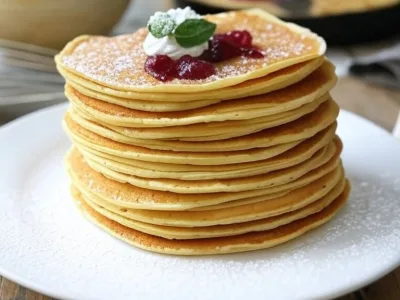
Base recipe: This recipe makes 8 Swedish pancakes, serving 4 people (2 pancakes per serving).
Your kitchen companion
Ingredients
Check off ingredients as you prepare them.
Follow the steps at your own pace.
Method
Prepare the Batter: In a large mixing bowl, whisk together the eggs, sugar, and salt until smooth. Gradually add the flour, whisking continuously to avoid lumps. Slowly pour in the milk, mixing until the batter is thin and smooth. Stir in the melted butter and vanilla extract (if using). Let the batter rest for 15–20 minutes for the best consistency.
Heat the Pan: Place a non-stick pan or crepe pan over medium heat. Add a small amount of butter, swirling it around to coat the surface.
Cook the Pancakes: Pour about 60 ml (¼ cup) of batter into the pan, immediately tilting and swirling to spread it thinly. Cook for about 60–90 seconds, or until the edges begin to turn golden.
Flip with Care: Use a thin spatula to carefully flip the pancake. Cook the other side for 30–45 seconds until lightly golden. Transfer to a plate and cover with a clean kitchen towel to keep warm.
Repeat: Continue cooking the remaining batter, adding a small amount of butter to the pan as needed. Stack the pancakes as they are cooked.
Serve and Enjoy: Serve warm with lingonberry jam and whipped cream, or dust with powdered sugar for an authentic Swedish experience.
Extra technique, safety notes and details when you want to go deeper.
More tips & details
Irresistibly Light and Fluffy Swedish Pancakes (Pannkakor)
Swedish pancakes, known as Pannkakor, are an absolute delight—thin, buttery, and beautifully golden with a delicate crisp on the edges and a soft, melt-in-your-mouth texture. Unlike American pancakes, which are thick and fluffy, Swedish pancakes are closer to French crêpes, but with a richer, slightly sweeter taste. Their ultra-light consistency makes them perfect for rolling, folding, or stacking with your favorite toppings.
Made with simple ingredients like eggs, milk, flour, sugar, and butter, this classic Swedish recipe is both easy to prepare and impossible to resist. Whether you're looking for a quick weekday breakfast, a cozy weekend brunch, or a special dessert, these pancakes will always deliver. Serve them traditionally with lingonberry jam and whipped cream, or get creative with honey, Nutella, or fresh berries for a truly indulgent experience.
Why You’ll Love This Recipe
- Authentic Swedish Flavor – This recipe stays true to Swedish tradition, offering the perfect balance of lightness and richness.
- Quick and Easy to Make – Just mix, cook, and enjoy—no complicated techniques required!
- Versatile and Customizable – Enjoy them with sweet or savory toppings, making them suitable for breakfast, brunch, or even dessert.
- Thin, Soft, and Buttery – Their delicate texture makes them a true treat, perfect for rolling or layering.
- Family-Friendly and Loved by All – Kids and adults alike will adore these golden beauties, making them a staple in your kitchen.
The Secret to Perfect Swedish Pancakes
The key to achieving the perfectly thin and lacy texture lies in the batter consistency and cooking technique. Unlike American pancake batter, Swedish pancake batter is thinner and smoother, allowing it to spread effortlessly in the pan. Using a well-buttered non-stick pan or a seasoned cast-iron skillet ensures a light, golden-brown finish without sticking.
Cooking these pancakes over medium heat prevents them from burning while giving them that signature crisp edge. A quick flip (just once!) ensures an even cook, preserving the delicate, tender texture inside.
The Best Toppings and Serving Ideas
Swedish pancakes shine with a variety of toppings, but the most classic and beloved choice is lingonberry jam with a dollop of freshly whipped cream. The tartness of the lingonberries perfectly balances the buttery sweetness of the pancakes, creating an authentic Scandinavian experience.
If you want to switch things up, try these delicious variations:
- Fresh berries and maple syrup for a refreshing and naturally sweet option.
- Nutella and sliced bananas for a decadent, chocolatey twist.
- Lemon zest and powdered sugar for a bright, citrusy touch.
- Savory toppings like smoked salmon and cream cheese for an unexpected yet delightful contrast.
How to Make Swedish Pancakes Like a Pro
To achieve the best results, let the batter rest for at least 15–20 minutes before cooking. This allows the flour to fully absorb the liquid, resulting in a smoother, more cohesive texture.
When pouring the batter into the pan, tilt and swirl the pan quickly to create an even, thin layer. Cooking each pancake for about a minute per side ensures the perfect golden hue without overcooking.
A Breakfast Favorite That Feels Like a Treat
There’s something truly special about homemade Swedish pancakes—the way they fill your kitchen with the warm aroma of butter and sugar, the way they effortlessly fold around your favorite fillings, and the way they bring joy to every bite. Whether you're enjoying them as a comforting weekend breakfast or a delightful dessert, they’re guaranteed to make any meal feel a little more special.
So grab your favorite skillet, whip up a batch, and enjoy the irresistible taste of Sweden in your own home!
Mastering the Art of Swedish Pancakes (Pannkakor)
Swedish pancakes, or pannkakor, are thin, delicate, and buttery pancakes that are a staple in Scandinavian cuisine. Unlike their American counterparts, which are thick and fluffy, these pancakes are much lighter, making them perfect for rolling, folding, or stacking with a variety of toppings. The slightly sweet, rich batter gives them a distinctive taste, and when paired with lingonberry jam and whipped cream, they become an indulgent treat that is hard to resist.
However, what makes this recipe even more exciting is its versatility. By making small adjustments, you can modify the texture, flavor, and even nutritional value of these pancakes. Whether you prefer a fluffier texture, a more intense sweetness, or a healthier variation, tweaking the ingredients can transform the end result.
How Ingredient Adjustments Affect Texture and Flavor
Each ingredient in Swedish pancakes plays a crucial role in achieving the perfect balance of lightness and richness. Adjusting these components slightly can lead to a completely different experience, whether you're aiming for crispier edges, a more tender bite, or a richer taste.
Flour: The Foundation of the Pancake
The type and amount of flour used directly influence the pancake’s texture.
- All-Purpose Flour – The standard choice, giving pancakes a balanced texture that is both tender and slightly chewy.
- Cake Flour – Creates a lighter, more delicate pancake due to its lower protein content.
- Whole Wheat Flour – Adds a nutty flavor and denser texture, making the pancakes more filling and fiber-rich.
- Gluten-Free Flour Blend – Ensures a similar texture to traditional Swedish pancakes, though some blends might require a bit more liquid for the right consistency.
How to Adjust for a Fluffier or Crispier Pancake
- For a fluffier pancake: Add an extra egg to introduce more structure and a slight rise.
- For a crispier edge: Increase the butter in the batter and cook over medium-high heat, ensuring a delicate crunch.
The Role of Eggs in Structure and Flavor
Eggs provide structure, richness, and moisture. Since Swedish pancakes contain more eggs than traditional American pancakes, they remain soft and flexible rather than thick and fluffy.
How Different Egg Quantities Impact the Recipe
- Adding more eggs (4 instead of 3): Enhances the richness and elasticity, making the pancakes easier to roll.
- Reducing the eggs (2 instead of 3): Results in a thinner, more delicate pancake but slightly reduces its structure.
- Using egg substitutes: Flax eggs (1 tbsp ground flaxseed + 3 tbsp water per egg) can be used for an egg-free version, though the pancakes will be less elastic and slightly grainy.
How Milk and Liquid Ratios Affect the Batter
The liquid content determines the batter’s consistency, which in turn affects how the pancakes spread and cook.
Milk Variations and Their Effects
- Whole Milk – Provides the richest flavor and ideal texture.
- Low-Fat Milk – Results in a slightly less creamy pancake but still works well.
- Plant-Based Milks – Almond, oat, or soy milk can be used, but oat milk provides the most neutral and creamy consistency.
How to Adjust the Liquid for Different Results
- More liquid (350 ml instead of 300 ml): Makes the pancakes thinner and more delicate.
- Less liquid (250 ml instead of 300 ml): Creates a slightly thicker batter, producing a more substantial texture.
The Sweetness Factor: Adjusting Sugar for Balance
Swedish pancakes are naturally slightly sweet, but adjusting sugar levels can create different flavor experiences.
- Standard sugar amount (30 g / 2 tbsp) – Maintains a mild sweetness, perfect for pairing with jams.
- Reducing sugar (15 g / 1 tbsp) – Results in a more neutral flavor, allowing for savory applications.
- Increasing sugar (45 g / 3 tbsp) – Creates a richer, dessert-like experience.
Alternatives for Healthier Sweetening
- Honey or maple syrup – Provide natural sweetness and a deeper caramel-like flavor.
- Stevia or erythritol – Low-calorie options that keep the pancakes light without altering the texture.
The Secret Ingredient: Butter’s Influence on Texture
Butter not only adds flavor but also contributes to the softness and crispness of the pancakes.
- More butter (40 g instead of 30 g) – Enhances the golden, crispy edges while making the batter richer.
- Less butter (20 g instead of 30 g) – Reduces the fat content, making the pancakes slightly chewier.
Dairy-Free Alternatives
- Coconut oil – Adds a slight coconut aroma while keeping the pancakes rich.
- Vegan butter – Works well for a dairy-free alternative without changing the texture.
Serving Customizations: From Sweet to Savory
Swedish pancakes are traditionally served with lingonberry jam and whipped cream, but exploring different toppings allows for endless variations.
Sweet Topping Ideas
- Fresh berries and powdered sugar – A classic and refreshing option.
- Nutella and sliced bananas – Adds a creamy, indulgent twist.
- Lemon zest and honey – Provides a zesty contrast to the buttery pancakes.
Savory Topping Ideas
- Smoked salmon with cream cheese – A Scandinavian classic that combines saltiness and creaminess.
- Sautéed mushrooms and herbs – Perfect for a more robust, earthy flavor.
- Feta cheese and olives – Brings a Mediterranean twist with a tangy and salty balance.
Cooking Techniques for the Perfect Texture
Even with the best ingredients, technique plays a crucial role in achieving perfect Swedish pancakes.
How to Ensure Even Cooking
- Preheat the pan – A properly heated pan ensures an even golden-brown color.
- Tilt and swirl the pan – Helps spread the batter thinly and evenly.
- Use a non-stick or well-seasoned cast-iron pan – Prevents sticking and allows for easy flipping.
Flipping Techniques for Beginners
- Use a thin spatula – This helps gently lift the edges before flipping.
- Cook on medium heat – Prevents burning while allowing the batter to set properly.
Elevating Swedish Pancakes to Perfection
Swedish pancakes are an incredibly versatile dish that can be customized to suit any preference. By making small adjustments to the flour, eggs, milk, sugar, and butter, you can control the texture, sweetness, and crispness of the pancakes. Whether you enjoy them as a light breakfast, an elegant brunch, or a comforting dessert, they always deliver a taste of Sweden in every bite.
Experimenting with different ingredients, cooking techniques, and serving styles allows you to create your own perfect version of these delicious pancakes. So grab your whisk, heat up your pan, and enjoy the magic of homemade Swedish pancakes!
Recivelle · /recipe/easy-swedish-pancakes-pannkakor-recipe