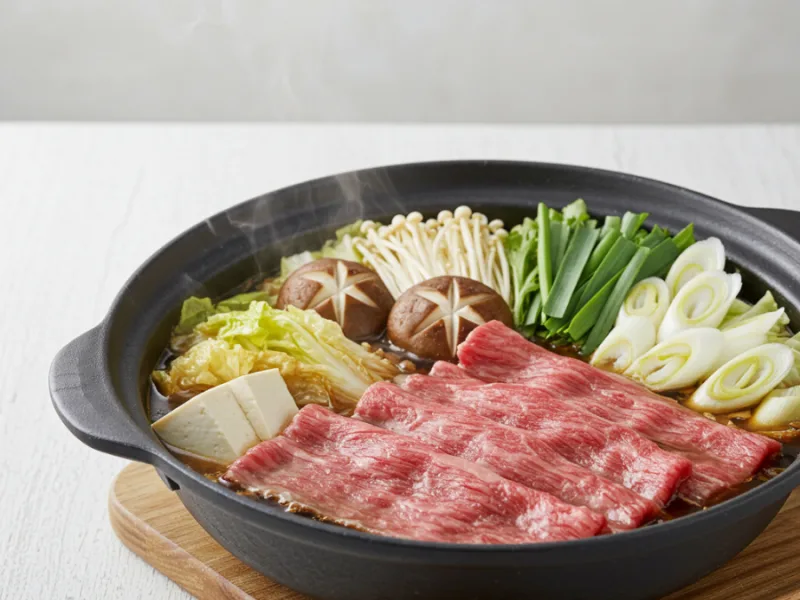
Base recipe: This recipe serves 4 people.
Your kitchen companion
Ingredients
Check off ingredients as you prepare them.
Follow the steps at your own pace.
Method
Prepare the ingredients Thinly slice the beef if not pre-sliced. Cut the tofu into cubes and clean the mushrooms. Chop the napa cabbage and slice the carrot into thin rounds. Trim the enoki mushrooms and cut the spring onions diagonally. Drain and rinse the shirataki noodles.
Make the sukiyaki broth In a small saucepan, combine the dashi stock, soy sauce, mirin, and sugar. Heat over medium heat until the sugar dissolves, then set aside.
Heat the pot Place a large, shallow pan or Japanese sukiyaki pan over medium heat. Lightly grease the bottom with a bit of beef fat or neutral oil.
Sear the beef Add a few slices of thinly sliced beef to the pan and sear for about 30 seconds per side. Pour a small amount of the sukiyaki broth over the beef and let it absorb the flavor. Once cooked, move the beef to one side of the pan.
Add the vegetables and tofu Arrange napa cabbage, shiitake mushrooms, enoki mushrooms, tofu, carrot, spring onions, and shirataki noodles in the pan. Pour the remaining sukiyaki broth over the ingredients.
Simmer the ingredients Reduce the heat to low and let the ingredients simmer for 10-15 minutes, allowing the flavors to blend.
Add the greens Add the shungiku (or spinach) in the last few minutes of cooking, as they wilt quickly.
Serve hot Traditionally, sukiyaki is served directly from the pan. Each person can take ingredients from the pot and dip them into a beaten raw egg before eating. Serve with steamed white rice on the side.
Extra technique, safety notes and details when you want to go deeper.
More tips & details
A Taste of Japan: Easy Sukiyaki Recipe – Japanese Beef Hot Pot
There’s something truly magical about Sukiyaki, a dish that brings warmth, comfort, and an explosion of umami flavors in every bite. This Japanese hot pot is more than just a meal—it’s an experience, a communal gathering where thinly sliced beef, fresh vegetables, tofu, and noodles come together in a rich, slightly sweet soy-based broth. Every ingredient absorbs the deep flavors of the simmering sauce, creating a dish that’s both simple and indulgent.
Whether you’re a fan of Japanese cuisine or just looking for a hearty, flavorful dinner, this sukiyaki recipe is perfect for any occasion. It’s easy to prepare, requires minimal effort, and delivers restaurant-quality results right in your kitchen. Plus, it’s customizable—you can adjust the ingredients based on your preferences, making it a versatile dish that suits everyone at the table.
Why You’ll Love This Easy Sukiyaki Recipe
Authentic Japanese Flavor Without the Hassle
Sukiyaki is traditionally cooked at the table in a shallow iron pot, but with this recipe, you can easily recreate the experience at home without needing special equipment. The secret lies in the perfect balance of soy sauce, mirin, sugar, and dashi, which form the rich, savory-sweet broth that coats every ingredient.
A One-Pot Wonder
If you love meals that are both easy to make and easy to clean up, this sukiyaki recipe is for you. Everything is cooked in a single pot, meaning less time spent washing dishes and more time enjoying the meal with your loved ones.
Perfect for Sharing
Japanese cuisine is known for bringing people together, and sukiyaki is the ultimate social meal. Traditionally enjoyed in a group setting, this dish is meant to be cooked and eaten at the table, allowing everyone to take part in the process. It’s a fantastic way to turn dinner into an engaging and interactive experience.
Healthy and Nutritious
This dish isn’t just delicious—it’s also packed with nutrients. Lean beef provides a great source of protein, while shiitake mushrooms, napa cabbage, and tofu add fiber, vitamins, and minerals. Plus, the light yet flavorful broth enhances all the natural goodness of the ingredients without overpowering them.
What Makes This Sukiyaki Stand Out?
Unlike other hot pot dishes, sukiyaki is cooked in a special sauce rather than plain broth, giving it a unique depth of flavor. The combination of sweet and savory notes makes every bite irresistible, and when paired with freshly cooked rice or dipped into a raw egg (as traditionally served in Japan), it becomes even more indulgent.
The secret to achieving the best sukiyaki lies in the quality of the beef. Thinly sliced, well-marbled beef such as ribeye or sirloin works best, as it absorbs the flavors beautifully while remaining tender and juicy.
For an authentic experience, you can also serve sukiyaki with a side of steamed white rice, which balances out the richness of the dish and complements the umami-packed broth.
Ready to Try This Delicious Japanese Hot Pot?
If you’re craving a warm, comforting, and flavorful meal, this easy sukiyaki recipe is exactly what you need. Whether it’s a cozy weeknight dinner, a special gathering, or simply a way to explore new flavors, this dish is guaranteed to impress.
Gather your ingredients, heat up your pot, and get ready to experience the deliciousness of homemade sukiyaki—a dish that’s as enjoyable to make as it is to eat!
How to Customize and Perfect Your Easy Sukiyaki Recipe
Sukiyaki is a versatile and flavorful Japanese hot pot that can be adapted to suit different tastes, dietary needs, and ingredient availability. While the traditional recipe brings a harmonious balance of sweet and savory flavors, making small adjustments can create unique variations. Whether you're looking to enhance the umami, adjust the sweetness, or make the dish healthier, there are multiple ways to customize sukiyaki to your preference.
Choosing the Best Beef for Sukiyaki
The quality of beef plays a significant role in the texture and richness of sukiyaki.
Best cuts for tender and flavorful sukiyaki
- Ribeye or sirloin – These cuts have the perfect balance of fat and lean meat, creating a rich, buttery texture when cooked in the sukiyaki broth.
- Chuck or brisket – A more affordable option that still delivers great flavor. These cuts have slightly more chew but absorb the broth well.
- Wagyu beef – If you want the ultimate indulgence, wagyu beef adds unmatched tenderness and marbling, making the dish exceptionally flavorful.
Adjusting the fat content in beef
If you prefer a leaner version, opt for top round or flank steak, which have less marbling but still provide a great bite when thinly sliced. Cooking lean beef at a lower temperature for a shorter time helps prevent toughness.
Alternative Proteins for a Unique Twist
While beef is traditional, you can experiment with different proteins to create new and exciting flavors.
Chicken sukiyaki
- Replacing beef with boneless chicken thighs creates a slightly lighter dish with a richer umami depth from the dark meat.
- If using chicken breast, marinate in soy sauce and mirin for at least 30 minutes to enhance moisture and tenderness.
Seafood sukiyaki
- Shrimp, scallops, or white fish fillets add a delicate sweetness to the broth.
- Seafood cooks much faster than beef, so add it towards the end to prevent overcooking.
Plant-based sukiyaki
- Firm tofu is already part of the traditional recipe, but you can also add tempeh or seitan for a heartier, protein-rich alternative.
- Using mushrooms like shiitake, king oyster, and enoki can mimic the meaty texture and provide a deep umami flavor.
Adjusting the Sweetness and Salinity of the Broth
The balance between sweetness, saltiness, and umami is key to a perfect sukiyaki. You can modify the broth based on your preferences.
Making the broth sweeter
- Increase the amount of mirin and sugar for a richer, caramelized depth.
- Using honey or maple syrup instead of sugar can add a more complex sweetness.
Reducing saltiness
- Replace some of the soy sauce with low-sodium soy sauce to control the salt content.
- Adding more dashi stock helps maintain the umami flavor while diluting the saltiness.
Enhancing umami without increasing sodium
- A small amount of miso paste can deepen the flavor without making the broth overly salty.
- Adding dried shiitake mushrooms while simmering the broth provides natural umami.
Customizing the Vegetables for Different Textures and Flavors
The vegetables in sukiyaki contribute to the dish’s texture, sweetness, and earthiness. Swapping vegetables or adding new ones can create different layers of taste and crunch.
Vegetables that enhance umami
- Shiitake mushrooms – Deep, earthy umami flavor that intensifies the broth.
- King oyster mushrooms – Firm and meaty, great for a plant-based alternative to beef.
- Leeks or shallots – Milder than onions but still add a sweet depth to the dish.
Vegetables for extra sweetness
- Carrots – Naturally sweet and add a subtle crunch.
- Daikon radish – Absorbs the broth’s flavors and provides a slightly sweet, mild taste.
- Bell peppers – A non-traditional option that enhances sweetness and freshness.
Vegetables for more crunch
- Lotus root – Adds a crisp texture while soaking up the broth.
- Bean sprouts – Give a fresh and light contrast to the rich flavors.
Experimenting with Different Types of Noodles
Noodles are an essential part of sukiyaki, adding a satisfying texture to the dish. Depending on your preference, you can swap out the traditional shirataki noodles for other options.
Shirataki noodles – the classic choice
- Low in calories and carbs, making them a great option for a lighter meal.
- Have a slightly chewy texture and soak up the broth’s flavors well.
Udon noodles – for a heartier meal
- Thick, chewy noodles that absorb the broth beautifully and make the dish more filling.
- Great for those who want a more substantial bite.
Glass noodles – for a delicate texture
- Made from mung beans, they turn soft and slightly translucent when cooked.
- Lighter than udon but retain a good chewiness.
How Cooking Methods Affect Sukiyaki
Sukiyaki is traditionally cooked tableside in a shallow iron pot, but the method can be adjusted based on your setup and preference.
Cooking on the stovetop
- If you don’t have a traditional sukiyaki pan, a large skillet or Dutch oven works well.
- Cooking at medium heat prevents overcooking the beef while allowing vegetables to soften.
Using a hot pot setup
- If hosting a gathering, an electric hot pot allows diners to cook ingredients together at the table.
- This method makes the meal more interactive and allows each person to customize their bowl.
Slow cooker sukiyaki
- Using a slow cooker results in tender beef and deeply infused flavors.
- Add the beef towards the end of the cooking time to prevent it from becoming too soft.
Creating a Lighter or Healthier Version
Sukiyaki is already a nutrient-rich meal, but small adjustments can make it even healthier without losing its authentic taste.
Lowering calories and fat
- Use lean beef cuts like top round instead of fatty cuts like ribeye.
- Increase the amount of vegetables while slightly reducing the beef portion.
Reducing sugar and sodium
- Use a sugar substitute like stevia or monk fruit for a lower-calorie broth.
- Opt for low-sodium soy sauce to maintain flavor without excess salt.
Increasing fiber and nutrients
- Adding extra mushrooms and greens boosts fiber and micronutrients.
- Swapping shirataki noodles for whole-grain udon increases the fiber content.
Final Thoughts on Customizing Sukiyaki
Sukiyaki is an incredibly adaptable dish, making it easy to personalize while still preserving its delicious, comforting essence. Whether you want a richer, more indulgent version, a lighter and healthier adaptation, or an alternative protein-based hot pot, small modifications can completely transform the experience.
Experiment with different ingredients and cooking styles to find your perfect sukiyaki recipe, and enjoy a meal that’s both deeply satisfying and uniquely tailored to your taste!
Recivelle · /recipe/easy-sukiyaki-recipe-japanese-beef-hot-pot