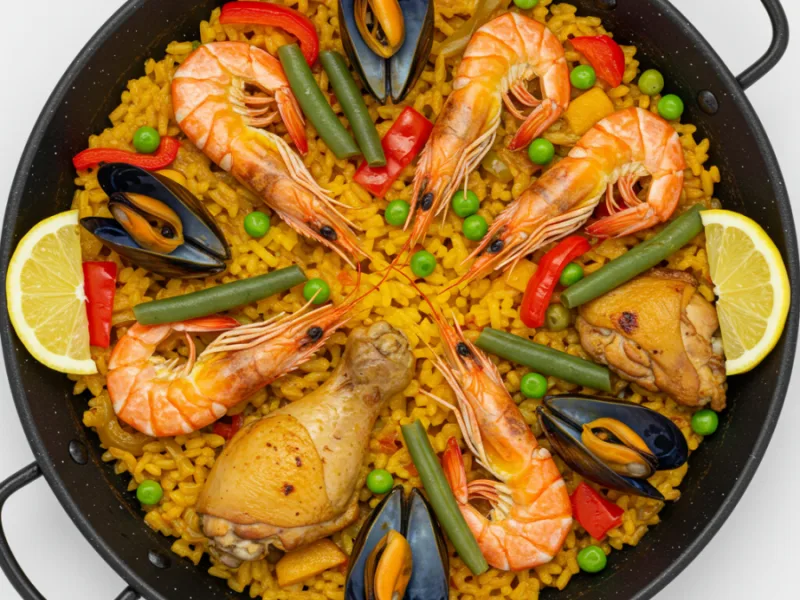
Base recipe: 4
Your kitchen companion
Ingredients
Check off ingredients as you prepare them.
Follow the steps at your own pace.
Method
Prepare the base. Heat olive oil in a large paella pan over medium heat. Add the chopped onion and sauté for 2 minutes until translucent. Stir in the garlic and red bell pepper, cooking for another 2 minutes.
Develop the flavors. Add the grated tomatoes and cook until the mixture thickens, about 5 minutes. Stir in smoked paprika and saffron, ensuring the flavors meld.
Sear the chicken. Add the chicken thighs, season with salt and pepper, and brown on both sides for 5 minutes.
Add the rice. Stir in Bomba rice, ensuring each grain is coated with the flavorful mixture.
Simmer. Pour in the warm chicken broth and gently shake the pan to distribute the rice evenly. Do not stir. Bring to a simmer and cook over medium heat for 15 minutes.
Incorporate seafood and vegetables. Add the shrimp, mussels, green peas, and green beans on top of the rice without mixing. Cover loosely with aluminum foil and let it cook for another 10 minutes until the mussels open and the shrimp turn pink.
Create the socarrat. Increase heat for the last 2 minutes to allow the bottom layer of rice to form a crispy crust.
Let it rest. Remove the pan from heat and let the paella sit for 5 minutes. Garnish with lemon wedges before serving.
Extra technique, safety notes and details when you want to go deeper.
More tips & details
The Ultimate Guide to Making Authentic Spanish Paella at Home
The Essence of Spanish Cuisine in One Dish
Paella is more than just a traditional Spanish dish—it’s a celebration of flavors, colors, and culture. Originating from the Valencia region, this iconic rice-based dish has gained international recognition for its rich, savory taste and its ability to bring people together. While many believe making authentic Spanish paella is complex, the truth is that with the right ingredients and a well-structured cooking method, you can easily recreate this masterpiece in your own kitchen.
This easy Spanish paella recipe offers a perfect balance between simplicity and authenticity, ensuring that even those with minimal cooking experience can achieve a deliciously satisfying result. Whether you're planning a family dinner, a festive gathering, or a weekend indulgence, this dish will impress with its deep flavors, vibrant presentation, and enticing aroma.
What Makes Paella So Special?
Paella is not just a rice dish—it’s a reflection of Spain’s culinary heritage, blending aromatic spices, fresh seafood, tender meats, and perfectly cooked rice into one spectacular creation. The secret to a great paella lies in:
- The Right Rice – Short-grain rice such as Bomba or Calasparra is essential for absorbing flavors while maintaining a firm texture.
- Saffron and Paprika – These two spices give paella its signature golden hue and smoky depth.
- A Well-Balanced Sofrito – A slow-cooked mixture of onions, garlic, tomatoes, and peppers creates the perfect flavor base.
- Proper Cooking Technique – Achieving the perfect socarrat (crispy bottom layer of rice) is key to an authentic paella experience.
Each of these elements plays a crucial role in delivering the bold, comforting flavors that make paella one of the most beloved dishes in Spanish cuisine.
A Versatile Dish for Any Occasion
One of the best things about paella is its versatility. While the most traditional version is Paella Valenciana, made with rabbit, chicken, and green beans, other regional variations have become just as popular. Some of the most common types include:
- Seafood Paella – Loaded with shrimp, mussels, calamari, and clams, this variation is a favorite along Spain’s coastal regions.
- Mixed Paella – A combination of meat and seafood, offering the best of both worlds.
- Vegetarian Paella – Packed with seasonal vegetables, legumes, and aromatic spices, making it a perfect option for plant-based diets.
This easy Spanish paella recipe allows you to customize ingredients based on your preferences and dietary needs, ensuring that everyone can enjoy this iconic dish.
The Key to Achieving Perfect Paella
Making authentic Spanish paella at home doesn’t require a professional kitchen, but attention to detail is crucial. Here are some expert tips to ensure your paella turns out flawless every time:
1. Choose the Right Pan
A paella pan is specifically designed for even heat distribution, helping create the desired texture and consistency. If you don’t have one, a wide, shallow skillet can also work.
2. Use High-Quality Broth
The broth is the foundation of flavor in any paella. A homemade seafood, chicken, or vegetable broth will enhance the depth and complexity of the dish.
3. Avoid Stirring Once the Rice is Added
Unlike risotto, paella should not be stirred once the rice has been incorporated. This allows the grains to absorb liquid evenly while forming the sought-after crispy bottom layer.
4. Cook Over Medium Heat for Perfect Texture
Paella is best cooked over a controlled flame. Too much heat will burn the rice, while too little will result in an undercooked, mushy texture.
5. Let It Rest Before Serving
Allowing the paella to rest for a few minutes before serving helps the flavors meld together, making every bite more flavorful and well-balanced.
Bringing the Taste of Spain to Your Table
Nothing captures the essence of Spain’s culinary tradition quite like a well-made paella. This dish embodies warmth, hospitality, and celebration, making it the perfect centerpiece for any gathering or special occasion. Whether you stick to the classic recipe or add your own personal touch, paella remains an unforgettable dining experience that transports you straight to the streets of Valencia.
With its bold flavors, stunning presentation, and satisfying textures, this easy Spanish paella recipe is guaranteed to become a favorite in your home kitchen. Try it once, and you'll find yourself craving the rich, comforting taste of Spain time and time again.
Elevating the Classic Spanish Paella to the Next Level
Choosing the Best Ingredients for Maximum Flavor
The quality of ingredients is one of the most crucial factors when it comes to enhancing a traditional Spanish paella. Using fresh, high-quality produce, seafood, and spices will dramatically improve both the taste and texture of the dish.
- Rice Selection Matters – The best type of rice for paella is Bomba rice due to its ability to absorb three times its volume in liquid without becoming mushy. If Bomba rice is unavailable, Calasparra rice is an excellent alternative. Avoid long-grain or sticky rice, as it won’t provide the correct texture.
- Homemade Broth for Deeper Flavor – Using freshly prepared seafood or chicken broth instead of store-bought versions enhances the depth of flavor and allows better control over salt levels and seasoning. Simmering the broth with saffron, bay leaves, and a hint of smoked paprika creates a richer and more aromatic base.
- Fresh Seafood and Meat – Using wild-caught shrimp and fresh mussels ensures a more authentic Mediterranean flavor. When using chicken, bone-in, skinless thighs provide better moisture retention and tenderness.
Enhancing the Taste with Spices and Seasonings
The right combination of spices and seasonings can make a huge difference in the final dish. Some small changes can significantly impact the flavor profile of paella:
- Extra Saffron for a More Authentic Taste – While saffron is already an essential ingredient, increasing its quantity slightly enhances the earthy, floral aroma of the dish. Ensure you use real saffron threads and avoid artificial colorants or substitutes.
- A Touch of Smoked Paprika – Adding an extra teaspoon of Spanish smoked paprika (pimentón de la Vera) deepens the smoky complexity of the dish without overpowering the natural seafood or meat flavors.
- A Splash of Dry White Wine – Deglazing the pan with a small amount of dry white wine before adding the rice introduces a subtle acidity that balances the richness of the dish. This technique is common in restaurant-quality paella.
Common Mistakes and How to Avoid Them
Even experienced home cooks can make critical mistakes when preparing paella. Avoiding these pitfalls ensures a perfectly cooked, flavorful dish every time:
- Over-Stirring the Rice – Unlike risotto, paella rice should not be stirred once the broth is added. Stirring releases excess starch, resulting in a creamy consistency rather than a separate, well-defined grain texture.
- Using the Wrong Pan – A shallow, wide paella pan allows the rice to cook evenly and ensures a proper socarrat (the crispy bottom layer). Avoid using deep pots, which cause uneven cooking.
- Cooking Over High Heat Throughout – Paella requires controlled heat adjustments. Starting on medium-high heat helps develop flavors, but lowering the heat once the broth is absorbed ensures that the rice cooks properly without burning.
Making It a Healthier Dish
While traditional paella is already a nutrient-rich dish, certain modifications can make it an even healthier option without compromising its authentic taste.
- Reducing the Oil Without Losing Flavor – Instead of using excessive olive oil, try dry-roasting the spices and sofrito ingredients before adding liquid. This technique intensifies flavors without unnecessary calories.
- Adding More Vegetables – Incorporating artichokes, zucchini, or roasted red peppers adds extra fiber and essential nutrients while keeping the dish balanced and satisfying.
- Leaner Protein Alternatives – If you want a lower-fat version, swap chicken thighs for skinless chicken breast and reduce the quantity of shellfish while increasing vegetables.
The Benefits of Homemade Paella Over Store-Bought Versions
Making paella from scratch offers several advantages over pre-made or restaurant versions, particularly in terms of flavor, nutrition, and authenticity:
- Control Over Ingredients – Many restaurant versions use pre-packaged broth with preservatives. A homemade version ensures fresh, natural flavors with no artificial additives.
- Customizable to Preferences – Preparing paella at home allows you to adjust spice levels, sodium content, and ingredient choices to suit personal taste and dietary needs.
- More Nutritious – A freshly made paella contains fewer unhealthy fats and is rich in protein, antioxidants, and essential minerals, making it a well-balanced meal.
Small Adjustments That Make a Big Difference
Even minor modifications can elevate paella to gourmet levels. Try these simple yet effective techniques:
- Infuse the Broth with Extra Aromatics – Adding a clove of roasted garlic, a sprig of fresh thyme, or a dash of sherry vinegar enhances the overall depth of flavor.
- Finishing Touches for Freshness – A squeeze of lemon juice just before serving brightens the dish and balances the richness. Freshly chopped parsley adds a final touch of herbal freshness.
- Serving with Allioli – Traditional Spanish allioli (garlic mayonnaise) complements the flavors of paella and provides an authentic Catalan twist.
By making thoughtful ingredient choices, refining cooking techniques, and avoiding common mistakes, you can transform a simple Spanish paella into a truly exceptional dish that rivals even the best restaurant versions.
Recivelle · /recipe/easy-spanish-paella-recipe