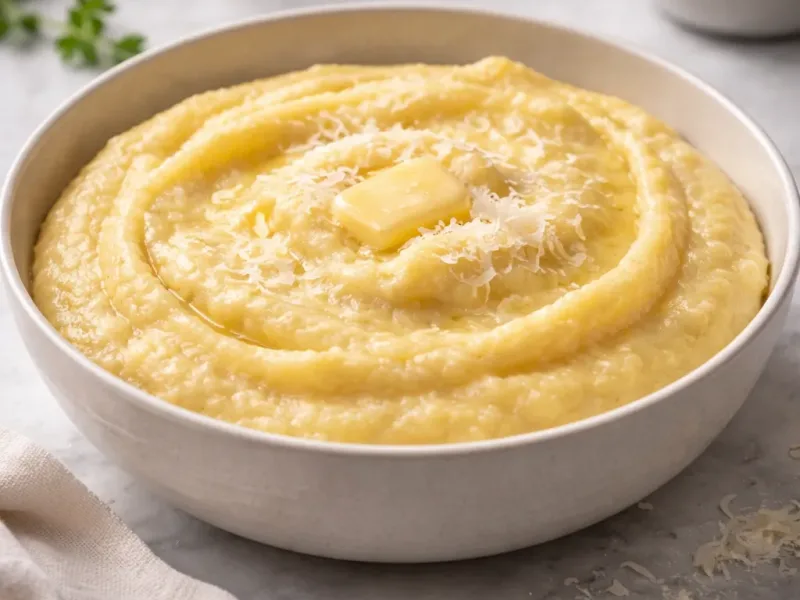
Base recipe: 4 servings
Your kitchen companion
Ingredients
Check off ingredients as you prepare them.
Follow the steps at your own pace.
Method
Heat the liquids: Pour 3 ¾ cups water (900 ml) and 1 ¼ cups whole milk (300 ml) into a 3–4 quart heavy-bottom saucepan. Add 1 tsp salt (6 g). Heat on medium until small bubbles appear around the edges, about 5 minutes. The liquid should look hot and lightly steaming, not violently boiling.
Whisk in the polenta: Lower the heat to medium-low. Slowly sprinkle in 1 cup polenta (200 g) while whisking constantly with a balloon whisk. Keep whisking for 1 full minute so the mixture looks smooth without lumps. If lumps form, whisk firmly until the surface becomes glossy and even.
Simmer gently: Switch to a wooden spoon. Cook on low heat for 18 minutes, stirring every 30 seconds and scraping the bottom of the pan. The polenta should bubble softly and thicken to a creamy porridge. If it thickens too fast, add ¼ cup hot water (60 ml) to loosen it. The texture should fall slowly from the spoon in a thick ribbon.
Finish with butter: Remove the pan from the heat. Stir in 2 ¾ tbsp unsalted butter (40 g) until fully melted. The polenta should look shiny and feel silky when you stir.
Add the cheese: Stir in ⅓ cup grated Parmigiano Reggiano (40 g). Mix for 30 seconds until fully incorporated. The polenta should now smell rich and savory and look smooth with no graininess.
Rest before serving: Let the polenta rest in the pan for 5 minutes. This allows the texture to stabilize so it becomes perfectly creamy and spoonable. Stir once before serving to release steam and ensure even consistency.
Extra technique, safety notes and details when you want to go deeper.
More tips & details
A Foolproof Way to Master Creamy, Silky Polenta at Home
Classic Italian comfort that delivers perfect texture every time
Golden, creamy polenta stands at the heart of countless Italian tables, prized for its ability to feel both humble and refined in the same bite. Made from finely ground corn and slowly cooked to a velvety consistency, this dish transforms a handful of simple ingredients into something deeply satisfying. The key lies in controlled heat, steady hydration, and a finishing touch of dairy that creates that unmistakable silky mouthfeel people associate with restaurant-quality polenta.
In modern home kitchens, polenta has earned a new reputation as a weeknight-friendly comfort dish that adapts easily to different meals. It pairs beautifully with roasted vegetables, braised meats, or simply stands on its own with butter and aged cheese. When served as part of a cozy dinner spread, many cooks like to start with a light, creamy soup such as creamy potato leek soup, which mirrors the same smooth texture and gentle flavors, creating a seamless transition from first course to main.
Historically, polenta was once known as the food of farmers in northern Italy, where cornmeal replaced wheat in many rural regions. Over time, what began as a practical staple evolved into a culinary icon, celebrated today in both rustic trattorias and fine-dining kitchens. That journey from necessity to timeless classic explains why polenta remains so beloved—it carries tradition while fitting perfectly into modern cooking rhythms.
Why you’ll love this recipe
- Reliable results that remove guesswork from cooking polenta
- Creamy consistency without heavy techniques or special tools
- Versatile base for vegetables, sauces, and proteins
- Comforting flavor profile that appeals to all ages
- Perfect for make-ahead meals and stress-free hosting
The flavor profile of this polenta leans on natural sweetness from corn balanced with gentle saltiness and rich dairy notes. Butter brings roundness, while aged cheese adds savory depth that elevates the dish from simple porridge to something worthy of a centerpiece role. For cooks exploring new pairings, polenta also complements other creamy Italian-style mains, such as pumpkin-based risottos that echo the same comforting spirit at the table.
Chef PEKIS Recommends
- Use a wide, heavy-bottomed pot to allow even heat distribution and prevent scorching.
- Add liquids gradually to encourage smooth starch release and avoid clumps.
- Finish with dairy off the heat to preserve fresh, clean flavors.
Why this method works
Slow hydration of the cornmeal allows starches to swell evenly, producing that signature luxurious texture. Gentle simmering prevents separation and keeps the grains tender, while the final enrichment stage locks in creaminess without dulling the natural corn flavor.
Common mistakes to avoid
- Cooking over high heat, which causes sticking and uneven texture.
- Adding cornmeal too quickly, leading to lumps.
- Skipping the resting phase, which helps the polenta settle into its ideal consistency.
Storage and make-ahead
Polenta stores exceptionally well, making it a smart option for meal prep. Once cooked, let it cool slightly before transferring to an airtight container. In the refrigerator, it keeps its quality for several days. To reheat, add a small splash of liquid and warm gently, stirring to restore the original creaminess. If you prefer a firmer texture for grilling or pan-searing later, allow the polenta to set fully before slicing—this transforms it into a versatile base for future meals.
For special occasions, polenta also works beautifully alongside richer dishes like pumpkin risotto, offering guests a choice between two classic textures that share the same comforting appeal without competing flavors.
With its deep roots in Italian tradition and its effortless fit into modern home cooking, this easy polenta recipe proves that mastering a classic doesn’t require complexity—just respect for the process and an appreciation for simple, honest ingredients.
A Creamy Classic That Fits Every Table
Polenta recipe lovers value dishes that deliver both comfort and confidence in the kitchen. This version stands out for its silky texture, gentle richness, and the way it transforms a few humble ingredients into something that feels genuinely special. The slow-cooked corn base develops natural sweetness, while butter and cheese bring depth that feels indulgent without being heavy. The result is a dish that tastes refined yet remains deeply familiar, making it a reliable choice whether you cook for family or guests.
Beyond flavor, this recipe shines for its simplicity. The method removes the guesswork that often intimidates home cooks, offering clear timing and a predictable outcome. In under half an hour, a bowl of warm, creamy polenta can anchor an entire meal, pairing effortlessly with vegetables, sauces, or hearty mains. Its naturally gluten-free base also makes it an easy option when cooking for mixed dietary needs, while simple swaps allow it to adapt to vegetarian or dairy-free preferences without sacrificing character.
Why This Polenta Recipe Stands Out
What makes this dish truly memorable is the balance between ease and elegance. Few recipes manage to feel both weeknight-friendly and worthy of a dinner party, yet polenta does exactly that. Served straight from the pot, it offers cozy comfort on cold evenings. Allowed to set and sliced, it becomes a versatile foundation for creative plating. That flexibility gives cooks freedom to shape the dish around the moment—casual or refined.
This polenta recipe earns its place as a kitchen staple because it respects tradition while fitting modern life. It delivers dependable results, rich flavor, and the kind of texture that invites you back for another spoonful. Perfect for relaxed family dinners, intimate gatherings, or as a warming side for festive meals, it proves that the simplest classics often create the strongest memories at the table.
Questions
Can polenta be made ahead of time?
Creamy polenta can be prepared up to three days in advance when stored properly. Chef’s explanation: Cook the polenta fully, cool it quickly, then refrigerate in an airtight container. Reheat gently on low heat with ¼ cup milk (60 ml) or ¼ cup water (60 ml) per serving to restore its smooth texture. Slow reheating prevents the starch from tightening and keeps the dish creamy rather than grainy.
Can polenta be frozen for later use?
Cooked polenta can be frozen for up to two months without losing quality. Chef’s explanation: Spread the hot polenta in a flat layer, let it cool completely, then portion and freeze. When reheating, thaw overnight in the fridge and warm slowly with added liquid. This method works especially well for gluten-free recipes like polenta, which retain structure better than wheat-based dishes.
What can replace butter in this recipe?
Plant-based butter can replace dairy butter in equal amounts. Chef’s explanation: Use 2 ¾ tbsp plant-based butter (40 g) to maintain richness while making the dish dairy-free. The fat is essential for mouthfeel, so avoid low-fat substitutes that could leave the polenta tasting dry or chalky.
How do I fix lumpy polenta?
Lumpy polenta can be smoothed by whisking vigorously while hot. Chef’s explanation: Keep the pot on low heat and use a balloon whisk to break up clumps. If lumps remain, add ¼ cup hot water (60 ml) and whisk again. The extra liquid rehydrates the cornmeal and restores a silky texture.
Why does polenta sometimes turn too thick?
Overcooked polenta thickens when moisture evaporates too quickly. Chef’s explanation: Maintain low heat and stir every 30 seconds to prevent excessive reduction. If the mixture becomes stiff, stir in 2–3 tbsp hot milk (30–45 ml) to bring it back to a creamy consistency without diluting flavor.
Is this recipe suitable for special diets?
This polenta recipe naturally fits a gluten-free and vegetarian lifestyle. Chef’s explanation: Cornmeal contains no gluten, making it safe for gluten-sensitive cooks. For a vegan version, replace whole milk with oat milk and Parmesan with nutritional yeast to preserve savory depth while keeping the dish plant-based.
Recivelle · /recipe/easy-polenta-recipe-perfect-every-time