Base recipe: 8
Your kitchen companion
Ingredients
Check off ingredients as you prepare them.
Follow the steps at your own pace.
Method
Activate the yeast: In a small bowl, combine ½ cup warm milk (120 ml), 1 tbsp sugar (15 g), and 1 packet of yeast (7 g). Stir gently and let sit for 10 minutes until foamy.
Mix the dough base: In a large mixing bowl, add 3 cups flour (375 g), remaining sugar, and salt. Make a well in the center, then pour in the yeast mixture, 2 beaten eggs, olive oil, and red wine (or grape must). Mix with a wooden spoon until a soft dough forms.
Knead the dough: Transfer to a floured surface and knead for about 10 minutes until smooth and elastic. If dough feels sticky, dust lightly with extra flour.
Add nuts and fruit: Incorporate raisins, pine nuts, walnuts, and almonds evenly into the dough. Knead briefly to distribute.
First rise: Place the dough in a lightly oiled bowl, cover with plastic wrap, and let rise in a warm place for 90 minutes, or until doubled in size.
Shape the loaf: Gently deflate the dough and form it into a round or oval loaf (about 25 cm long). Place on a parchment-lined baking sheet. Brush with beaten egg yolk and drizzle lightly with honey for shine.
Bake: Preheat the oven to 350°F (180°C). Bake for 30 minutes, or until golden brown and fragrant. The crust should sound hollow when tapped.
Cool and serve: Let cool completely on a wire rack before slicing. Serve slightly warm or at room temperature.
Extra technique, safety notes and details when you want to go deeper.
More tips & details
Traditional Autumn Piada dei Morti – Soft Italian Sweet Bread
A Celebration of Memory, Warmth, and Timeless Flavor
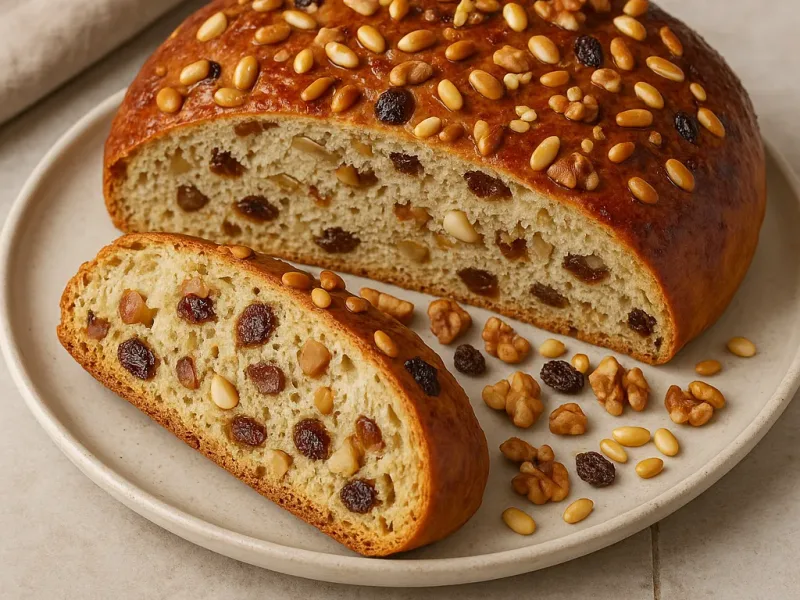
Piada dei Morti, a traditional Italian sweet bread, embodies the soul of Romagna’s autumn celebrations. Made with a delicate yeast dough enriched with olive oil, sugar, nuts, and dried fruit, this heritage bread tells a story of remembrance and gratitude. Each slice offers a comforting aroma of raisins, pine nuts, and walnuts, with a tender crumb that feels both festive and nostalgic. The bread’s golden surface, lightly glazed and scattered with crunchy nuts, represents abundance and the continuity of life—an edible tribute to family and tradition shared during All Souls’ Day.
The flavor of Piada dei Morti balances natural sweetness with the depth of grape must or red wine, which gives it its distinctive warm undertones and soft texture. The dough rises slowly, allowing the yeast to develop gentle complexity while the fruits soak up the liquid, creating bursts of sweetness in every bite. Its fragrance—notes of caramelized sugar, roasted nuts, and aromatic wine—fills the kitchen with the unmistakable scent of Italian autumn.
Origin and Cultural Significance
This centuries-old recipe comes from Rimini and the Romagna region of Italy, where it is prepared every year between late October and early November. The name “dei Morti”, meaning “of the dead,” connects the bread to All Souls’ Day traditions, when families honor departed loved ones with offerings of food. The Piada dei Morti evolved from older harvest breads, combining symbolic ingredients of prosperity—grains, nuts, and wine. In many villages, it was baked in communal ovens, shared with neighbors, and blessed before being brought home. Its rustic appearance and heartwarming flavor remain a cherished part of Italian seasonal baking, linking generations through taste and memory.
Ingredients and Texture
The composition of Piada dei Morti reflects simplicity and abundance. The wheat flour forms a supple base, providing structure while keeping the crumb light. Active yeast or natural sourdough starter gives the bread its soft rise and airy interior. The richness comes from olive oil and sugar, adding moisture and a subtle sweetness. Traditional recipes include raisins, pine nuts, walnuts, or almonds, each contributing texture and flavor contrast—chewy, nutty, and satisfying. The optional addition of red wine or grape must infuses the dough with a gentle fruitiness and deep color, reminiscent of autumn vineyards. After baking, the bread develops a soft interior and a thin golden crust that stays tender for days.
Why you’ll love this recipe
- Deeply authentic Italian tradition from Romagna, celebrating autumn and remembrance.
- Soft, sweet texture with nutty, fruity layers that stay moist for days.
- Naturally festive, perfect for sharing with family during fall gatherings.
- Simple ingredients, easily found in most kitchens, create a bakery-quality bread.
- Pairs beautifully with coffee, tea, or dessert wine, ideal for breakfast or after-dinner enjoyment.
Storage and Make-Ahead
Piada dei Morti keeps exceptionally well, which is one reason it became a traditional offering bread. Once cooled, it should be wrapped tightly in parchment and stored at room temperature for up to five days. The dried fruit continues to release subtle moisture, keeping the crumb soft without losing flavor. For longer storage, it can be frozen—slice before freezing to make thawing easier. To serve, warm slightly in the oven or toast briefly to revive its fragrance. The dough can also be prepared one day ahead, allowing it to rise slowly overnight in the refrigerator. This slow fermentation deepens the flavor and ensures a light, delicate texture.
The Spirit of Piada dei Morti
Beyond its role as a sweet bread, Piada dei Morti represents the culinary heritage of Emilia-Romagna, where recipes carry emotional and symbolic weight. It’s more than a treat—it’s a reflection of Italian hospitality, connection, and seasonal rhythm. The act of kneading, waiting, and sharing this bread echoes ancient rituals of gratitude for the harvest and remembrance of family. Its gentle sweetness and comforting aroma make it a timeless centerpiece for autumn baking and a delicious introduction to Italian festive breads.
Each loaf of Piada dei Morti is a reminder that food can preserve memory—soft, fragrant, and lovingly handmade, just as it has been for generations.
The Flavor and Texture of Piada dei Morti
Piada dei Morti delivers a perfect balance between sweetness and warmth. Its soft crumb, enriched with olive oil, raisins, and nuts, creates a comforting texture that stays moist for days. Each bite reveals subtle notes of red wine and honey, offering a distinctive depth that sets it apart from other Italian sweet breads. The crust turns beautifully golden and aromatic, while the interior remains fluffy and slightly chewy — a texture reminiscent of homemade foccaccia combined with the delicacy of festive pastries.
Effortless Baking and Versatile Enjoyment
This traditional Italian sweet bread is remarkably easy to prepare, even for beginners. With just a few staple ingredients and a simple kneading process, it transforms into a bakery-quality loaf within under 2.5 hours total time. The dough is forgiving and can be made in advance, making it perfect for busy home bakers or holiday preparations. The bread is also versatile — equally delicious for breakfast, dessert, or an afternoon treat. Serve it slightly warm, toasted, or paired with coffee, tea, or dessert wine for an authentic Italian experience.
Perfect for All Diets and Occasions
With simple adjustments, Piada dei Morti can suit various dietary needs — from gluten-free versions using 1:1 baking mixes to dairy-free alternatives made with almond or oat milk. These modifications preserve its signature flavor and festive spirit without compromising quality. Whether you enjoy it plain or with a drizzle of honey, this bread brings the essence of Italian autumn traditions to any table.
A Timeless Italian Celebration
Soft, fragrant, and rich in history, Piada dei Morti stands as one of Italy’s most meaningful seasonal recipes. It embodies remembrance, family, and togetherness, making it ideal for fall gatherings, All Souls’ Day celebrations, or cozy winter mornings. A loaf of Piada dei Morti is more than a sweet bread — it’s a piece of Italian heritage baked to share and remember.
Questions
What makes Piada dei Morti different from other Italian sweet breads?
Piada dei Morti is softer and fruitier than most Italian breads. It combines olive oil, wine, raisins, and nuts for a unique flavor balance of sweetness and warmth. The bread has a tender crumb, light crust, and a traditional connection to All Souls’ Day, giving it deep cultural significance.
Can I make Piada dei Morti without nuts?
Yes, simply replace the nuts with more dried fruit such as raisins, cranberries, or chopped figs. The bread will remain moist and flavorful. This is an ideal modification for anyone with nut allergies while keeping the texture rich and festive.
What should I do if my dough doesn’t rise properly?
If the dough doesn’t rise, check that your yeast is fresh and activated. The milk should be warm (not hot), around 100–105°F (38–40°C). Let it rest in a warm, draft-free place. If your kitchen is cold, place the bowl in the oven with the light on to encourage a steady rise.
How do I know when the bread is perfectly baked?
The bread is ready when it’s golden brown and sounds hollow when tapped underneath. Baking takes about 30 minutes at 350°F (180°C). The internal temperature should reach 190°F (88°C) for ideal doneness, ensuring a soft interior and slightly crisp crust.
How long does Piada dei Morti stay fresh, and can it be frozen?
The bread stays fresh for up to 5 days when wrapped in parchment or stored in an airtight container at room temperature. To freeze, slice the loaf, wrap tightly, and store for up to 2 months. Thaw at room temperature, then warm briefly in the oven to restore its softness.
Can I make Piada dei Morti gluten-free or dairy-free?
For a gluten-free version, substitute an all-purpose gluten-free flour blend; the texture will be slightly denser but still flavorful. To make it dairy-free, replace milk with almond or oat milk. Both adaptations maintain the bread’s sweetness and aroma without compromising quality.
How can I serve or decorate Piada dei Morti for a festive touch?
Serve it sliced with warm coffee, sweet wine, or tea. For presentation, brush the top with honey for a glossy finish and sprinkle with extra pine nuts or powdered sugar. This simple decoration enhances both appearance and taste, ideal for festive gatherings or breakfast tables.
Recivelle · /recipe/easy-piada-dei-morti-recipe-traditional-italian-sweet-bread