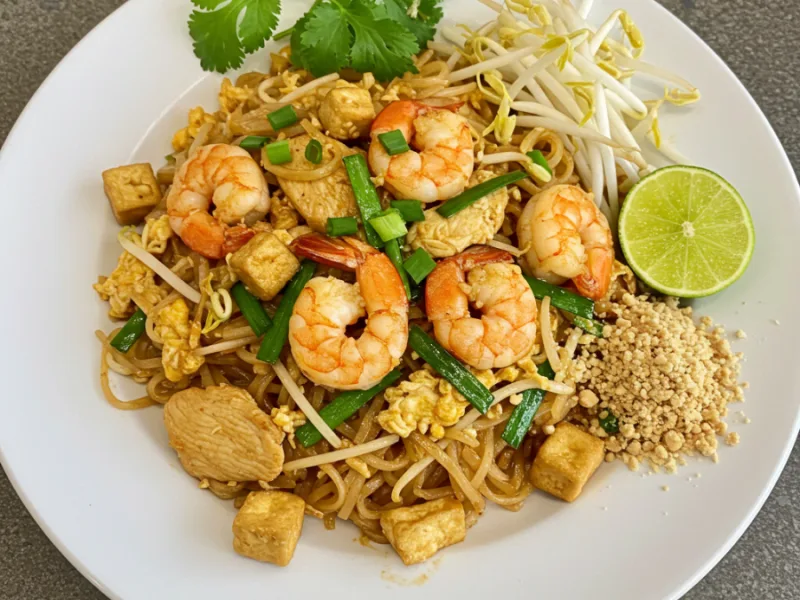
Base recipe: 4
Your kitchen companion
Ingredients
Check off ingredients as you prepare them.
Follow the steps at your own pace.
Method
Prepare the noodles by soaking them in warm water for about 10 minutes or until they soften. Drain and set aside.
Make the sauce by whisking together tamarind paste, fish sauce, palm sugar, soy sauce, and chili flakes in a small bowl until the sugar is fully dissolved.
Heat oil in a large wok or skillet over medium-high heat. Add minced garlic and cook for 30 seconds until fragrant.
Add the protein (chicken, shrimp, or tofu) and stir-fry for 3–4 minutes until cooked through. Remove from the pan and set aside.
Push ingredients to one side of the wok, pour in the beaten eggs, and scramble lightly.
Add the drained noodles and pour the sauce over them. Toss everything together to evenly coat the noodles.
Return the cooked protein to the pan and stir well. Add bean sprouts, half of the chopped spring onions, and crushed peanuts.
Serve immediately, garnished with fresh cilantro, the remaining spring onions, extra peanuts, and lime wedges.
Extra technique, safety notes and details when you want to go deeper.
More tips & details
Authentic and Flavorful Homemade Pad Thai
The Secret to Making Perfect Pad Thai at Home
Pad Thai is one of the most iconic Thai dishes, known for its bold flavors, satisfying textures, and perfectly balanced sweet, sour, salty, and umami taste. This classic stir-fried noodle dish is a street food favorite, offering a delicious combination of tender rice noodles, juicy shrimp or chicken, crunchy peanuts, fresh bean sprouts, and fragrant lime. The best part? You can easily recreate this restaurant-quality Pad Thai in your own kitchen with just a few simple ingredients.
Unlike many takeout versions, a homemade Pad Thai allows you to control the level of sweetness, acidity, and spice to suit your personal taste. The key lies in the sauce— a rich, tangy blend of tamarind paste, fish sauce, palm sugar, and a touch of chili—which coats every strand of noodle with an irresistible glaze. Whether you're looking for a quick weeknight meal or an impressive dish for guests, this easy Pad Thai recipe will satisfy every craving.
Why You’ll Love This Pad Thai Recipe
Homemade Pad Thai offers a perfect balance of flavors and textures, making it one of the most satisfying noodle dishes you can prepare. Here’s why this recipe stands out:
- Authentic Taste: By using the right ingredients, such as tamarind paste, fish sauce, and palm sugar, this recipe stays true to traditional Thai flavors.
- Quick & Easy: With a little preparation, this dish comes together in under 30 minutes, making it a great choice for a fast and flavorful meal.
- Customizable: Whether you prefer shrimp, chicken, tofu, or even a vegetarian version, this recipe is incredibly versatile.
- Better Than Takeout: Making Pad Thai at home means no artificial additives, excess sugar, or overly oily noodles—just fresh, high-quality ingredients.
The Essential Ingredients for Authentic Pad Thai
To achieve the best taste and texture, it's important to use the right authentic Thai ingredients. Here are the key components that bring this dish to life:
1. Rice Noodles
Soft yet chewy, thin rice noodles absorb the rich sauce beautifully. Soaking them in warm water before stir-frying ensures they cook evenly without becoming mushy.
2. Pad Thai Sauce
The heart of this dish is the savory, tangy, and slightly sweet sauce made from:
- Tamarind paste – Provides a distinct sourness that balances the dish.
- Fish sauce – Adds deep umami and saltiness.
- Palm sugar – A natural sweetness that enhances the flavors.
- Lime juice – A fresh citrusy finish.
3. Protein Choices
Pad Thai is highly versatile and can be made with various proteins:
- Shrimp – A classic choice for a seafood-rich flavor.
- Chicken – A great alternative for those who prefer a meaty bite.
- Tofu – Perfect for a vegetarian-friendly version.
4. Eggs
Scrambled eggs add a soft, creamy texture that blends perfectly with the noodles.
5. Garnishes & Toppings
No Pad Thai is complete without crushed peanuts, fresh bean sprouts, lime wedges, and chopped cilantro. These ingredients add crunch, freshness, and an extra depth of flavor.
Tips for the Best Homemade Pad Thai
Achieving the perfect restaurant-style Pad Thai at home is easier than you think. Follow these simple tips to elevate your dish:
- Use Fresh Ingredients: Fresh lime, garlic, and shallots enhance the overall taste.
- Don’t Overcook the Noodles: Soak them properly and avoid over-stirring to keep them tender but not mushy.
- Balance the Flavors: Adjust the sweetness, sourness, and saltiness to your liking by tweaking the sauce ingredients.
- Cook on High Heat: A quick stir-fry in a hot wok or pan helps the noodles absorb the sauce while keeping the texture just right.
- Add Peanuts Last: Sprinkle crushed peanuts just before serving for the best crunch.
Serving Suggestions
Pad Thai is best enjoyed fresh off the stove, but it pairs beautifully with a few simple sides:
- Thai Cucumber Salad – A refreshing, tangy salad to balance the richness of the noodles.
- Spicy Thai Papaya Salad (Som Tam) – Adds a touch of heat and crunch.
- Spring Rolls – Light and crispy rolls filled with fresh veggies or shrimp.
Whether you're cooking for yourself or sharing with family and friends, this easy Pad Thai recipe brings the vibrant flavors of Thailand straight to your table. It's a dish that never fails to impress, delivering a delicious balance of textures and bold, authentic taste in every bite.
Elevating Your Homemade Pad Thai: Tips for a More Authentic and Flavorful Dish
Enhancing the Depth of Flavor with Key Ingredients
The secret to an exceptional Pad Thai lies in the perfect balance of sweet, sour, salty, and umami flavors. While the traditional recipe is already well-balanced, slight adjustments to key ingredients can enhance the taste and bring out richer flavors.
- Tamarind Paste: Using a high-quality pure tamarind paste rather than pre-mixed sauces ensures a natural tanginess that is neither too sharp nor too mild. If you want a more pronounced sour note, increase the amount slightly.
- Fish Sauce: Opt for premium fish sauce, which has a deeper umami taste without excessive saltiness. A well-aged fish sauce will provide a more complex, savory depth.
- Palm Sugar: Instead of using white or brown sugar, authentic palm sugar contributes a mild caramel-like sweetness that rounds out the dish beautifully. If unavailable, raw cane sugar is a good substitute.
- Chili Flakes and Fresh Chilies: For those who enjoy spicier food, combining dried chili flakes with fresh Thai chilies will add both smokiness and a fresh heat that layers the spice level.
Why Making Pad Thai at Home is Superior to Takeout
Homemade Pad Thai has several advantages over restaurant or takeout versions, allowing for greater control over ingredients, flavors, and overall quality.
- No Excessive Oil: Many takeout versions tend to be overly greasy, which can make the dish heavy. Cooking at home allows you to use just enough oil to prevent sticking while keeping the noodles light and flavorful.
- Fresh, High-Quality Ingredients: Many restaurants use pre-made sauces or lower-quality ingredients to save time and cost. By making it at home, you can ensure fresh vegetables, high-quality protein, and an authentic homemade sauce.
- Balanced Sweetness: Some commercial Pad Thai recipes overload the dish with sugar, making it too sweet. Adjusting the sweetness at home ensures a well-balanced dish that highlights all the flavors equally.
- Gluten-Free and Healthier Options: Many store-bought Pad Thai sauces contain additives, preservatives, and gluten. By preparing your own sauce, you can keep the dish natural, clean, and allergen-free.
Avoiding Common Mistakes When Preparing Pad Thai
Even though Pad Thai is simple to make, there are common mistakes that can affect the final result. Being aware of these will help you achieve restaurant-quality texture and taste.
Overcooking the Noodles
One of the most common mistakes is overcooking the rice noodles, which results in mushy, clumpy, or broken strands. The best method is to soak them in warm water for about 10 minutes until they are pliable but still firm. They will continue to soften when stir-fried with the sauce.
Cooking with Low Heat
For an authentic texture, Pad Thai should be cooked on high heat in a wok or large skillet. This allows the noodles to absorb the sauce quickly without becoming soggy. Stir-frying on low heat can make the dish watery and less flavorful.
Adding the Sauce Too Early or Too Late
The timing of the sauce is crucial. If you add it too early, the noodles may become too soft and break apart. If added too late, they won’t absorb the flavors properly. The best approach is to mix the sauce in after the eggs are scrambled, ensuring it coats the noodles evenly.
Skipping the Garnishes
Many people underestimate the importance of toppings. Crushed peanuts, fresh cilantro, lime wedges, and bean sprouts enhance both texture and taste, adding crunch, freshness, and a citrusy finish. Skipping these elements can make the dish feel incomplete.
Healthier Alternatives and Ingredient Substitutions
For those looking to make a healthier or dietary-friendly version of Pad Thai, there are several ingredient substitutions that maintain the integrity of the dish while improving its nutritional profile.
Using Whole Grain or Alternative Noodles
Instead of traditional white rice noodles, consider brown rice noodles or zucchini noodles (zoodles) for a lower-carb option. Shirataki noodles are another excellent alternative for those looking to reduce calorie intake.
Plant-Based and Protein-Rich Options
- Tofu and Tempeh: These are excellent protein-rich substitutes for shrimp or chicken and absorb the flavors of the sauce beautifully.
- Legume-Based Noodles: Chickpea or lentil noodles provide more fiber and protein, making them a great alternative for a more nutrient-dense dish.
Lower-Sodium and Sugar-Free Versions
- Coconut Aminos Instead of Soy Sauce: If you need a lower-sodium version, replacing soy sauce with coconut aminos can reduce salt intake while maintaining a deep umami flavor.
- Stevia or Date Syrup Instead of Palm Sugar: If you want to cut down on sugar while keeping the natural sweetness, opt for stevia, date syrup, or a small amount of honey.
Experimenting with Additional Ingredients for a Unique Twist
If you want to take your Pad Thai to the next level, experimenting with additional ingredients can add new dimensions of flavor while keeping the dish exciting.
- Miso Paste: A teaspoon of white or red miso paste blended into the sauce enhances the umami taste, giving the dish a more robust and savory profile.
- Thai Basil: Adding a handful of fresh Thai basil leaves infuses the dish with a subtle anise-like fragrance, complementing the rich flavors.
- Coconut Milk: For a creamy variation, a small splash of coconut milk in the sauce adds depth and a slight richness while balancing the acidity.
- Mango or Pineapple: A few small cubes of ripe mango or pineapple can introduce a natural sweetness that enhances the tanginess of the tamarind.
Making the Dish More Aromatic
Aromatic elements can significantly enhance the sensory experience of Pad Thai. Here are some simple ways to make the dish even more fragrant:
- Lemongrass: Finely chopping fresh lemongrass and adding it while stir-frying infuses the dish with a refreshing citrus aroma.
- Roasted Peanuts: Instead of using plain peanuts, lightly toasting them before garnishing intensifies their nuttiness and adds extra crunch.
- Sesame Oil: A few drops of toasted sesame oil at the end of cooking can elevate the aroma and provide a subtle smokiness.
Perfecting the Balance of Texture
Texture plays a crucial role in making Pad Thai more enjoyable. Achieving the perfect combination of softness, crunch, and chewiness ensures a satisfying bite every time.
- Use Fresh Bean Sprouts: Their natural crispness contrasts beautifully with the soft noodles. Avoid pre-packaged sprouts that may be limp.
- Add Crushed Peanuts Last: This keeps them crunchy, preventing them from getting soggy from the heat.
- Stir-Fry Quickly: The entire stir-frying process should be fast and efficient to maintain the structure of the noodles and vegetables.
By fine-tuning each element, from ingredient quality to cooking technique, you can elevate your homemade Pad Thai beyond the standard recipe, making it a dish that is truly memorable and packed with authentic flavors.
Recivelle · /recipe/easy-pad-thai-recipe