Base recipe: 6
Your kitchen companion
Ingredients
Check off ingredients as you prepare them.
Follow the steps at your own pace.
Method
Preparing the eggplant:
Preheat the oven to 200°C (400°F).
Arrange the eggplant slices on a baking sheet, brush both sides with olive oil, and season with salt and pepper.
Roast for 20 minutes until golden brown, flipping halfway through. Set aside.
Cooking the meat sauce:
Heat olive oil in a pan over medium heat. Add chopped onion and cook until softened.
Stir in the garlic and ground meat, cooking until browned.
Add chopped tomatoes, tomato paste, and red wine. Stir well.
Season with cinnamon, oregano, salt, and black pepper. Let the sauce simmer for 20 minutes until thickened.
Making the béchamel sauce:
In a saucepan, melt the butter over medium heat. Stir in the flour and cook for 1 minute.
Gradually add milk, whisking constantly until smooth and thick.
Season with salt and nutmeg. Remove from heat, stir in Parmesan cheese and beaten egg.
Assembling the moussaka:
If using potatoes, layer them at the bottom of a greased baking dish.
Arrange half of the roasted eggplant slices on top.
Spread the meat sauce evenly over the eggplant.
Add another layer of eggplant.
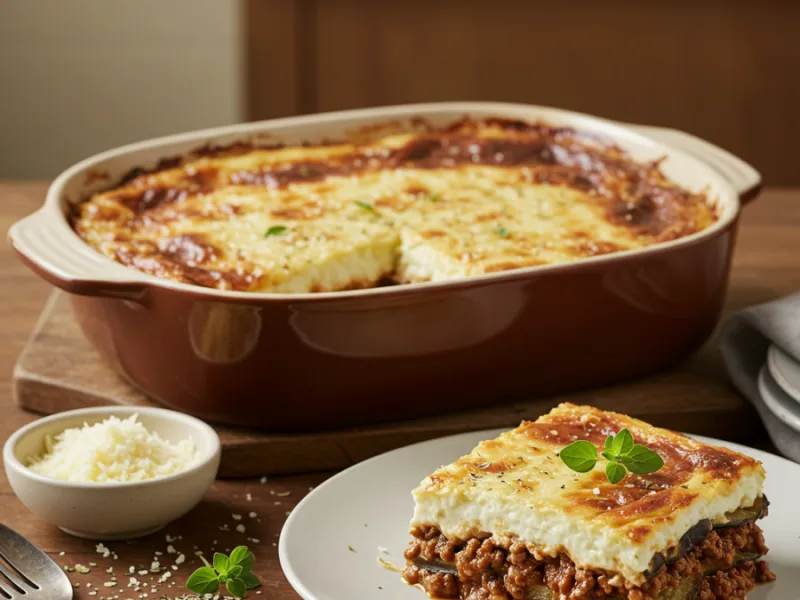
Pour the béchamel sauce over the top, spreading evenly.
Sprinkle with grated cheese.
Baking:
Reduce oven temperature to 180°C (350°F).
Bake for 40 minutes, until golden brown and bubbly.
Allow to rest for 10 minutes before slicing.
Extra technique, safety notes and details when you want to go deeper.
More tips & details
A Classic Greek Moussaka Recipe for a Taste of the Mediterranean
The Essence of Greek Moussaka
Greek moussaka is one of the most beloved Mediterranean dishes, bringing together rich layers of eggplant, seasoned meat sauce, and creamy béchamel. This traditional Greek comfort food is a perfect blend of flavors and textures, offering a savory, hearty, and satisfying meal that is ideal for any occasion. With its golden, velvety topping and fragrant spices, this dish embodies the essence of Greek cuisine.
Moussaka is often compared to lasagna, but instead of pasta, it features layers of roasted eggplant and sometimes potatoes, creating a wholesome and deeply flavorful dish. Whether you are hosting a dinner party, looking for an authentic taste of Greek home cooking, or simply craving a warming, oven-baked dish, this easy moussaka recipe delivers restaurant-quality results with simple ingredients and straightforward steps.
What Makes This Greek Moussaka Special?
Moussaka is more than just a casserole; it is a dish with deep cultural roots and a time-honored preparation method. Each bite carries the warmth of Mediterranean spices, the robustness of slow-cooked meat, and the comfort of a creamy béchamel topping.
- Authentic Flavor: This recipe stays true to traditional Greek moussaka, using classic spices like cinnamon and oregano to enhance the flavor.
- Perfectly Layered: The balance of eggplant, meat sauce, and béchamel creates a harmonious combination of textures and flavors.
- Rich & Creamy Topping: The buttery béchamel sauce adds a luxurious creaminess that brings everything together.
- Satisfying & Hearty: Ideal for family dinners, gatherings, or meal prepping, as it reheats beautifully and tastes even better the next day.
The Secret to a Perfect Moussaka
Achieving the perfect Greek moussaka requires a few essential techniques to ensure the dish is flavorful, well-balanced, and beautifully layered.
Choosing the Best Ingredients
The key to a rich and authentic moussaka lies in the quality of ingredients. Using fresh eggplant, high-quality minced meat, and a well-spiced tomato sauce ensures a flavor-packed dish with the perfect balance of acidity and sweetness.
- Eggplant: Roasting the slices until tender prevents excess moisture and keeps the layers from becoming soggy.
- Meat Sauce: A slow-simmered combination of ground beef or lamb with garlic, onions, tomatoes, and warm spices adds depth and richness.
- Béchamel Sauce: A smooth, creamy topping made from butter, flour, milk, and nutmeg creates a silky, golden layer that completes the dish.
Layering for the Best Texture
Each layer in moussaka plays a crucial role in the final taste and texture. The eggplant absorbs the flavors of the sauce, while the béchamel creates a contrast between the rich meat layer and the soft, velvety top.
- Roasted Eggplant: Ensures the base is flavorful and sturdy.
- Seasoned Meat Sauce: Provides a savory, spiced filling with just the right amount of tomato richness.
- Creamy Béchamel: Brings smoothness and a subtle buttery taste that ties everything together.
By carefully assembling the layers, you achieve a well-structured dish that is easy to slice and serve while retaining all the aromatic flavors of the Mediterranean.
Why You’ll Love This Easy Moussaka Recipe
This homemade Greek moussaka is designed to be simple, yet incredibly flavorful. Whether you're a seasoned cook or trying Greek cuisine for the first time, this recipe provides step-by-step guidance to make the process effortless.
- Great for meal prepping – Moussaka can be prepared in advance and refrigerated before baking.
- A crowd-pleaser – It’s a dish that satisfies everyone, making it ideal for family meals and special occasions.
- Easier than it looks – While the layers may seem complex, this recipe breaks it down into manageable steps so that anyone can make an authentic Greek moussaka with confidence.
How to Serve Moussaka
Moussaka is best enjoyed warm, allowing the flavors to meld together beautifully. Letting it rest after baking helps it set properly, making it easier to cut into perfect portions.
Pair it with:
- A fresh Greek salad with tomatoes, cucumbers, feta cheese, and olives.
- Tzatziki sauce for a cool, refreshing contrast.
- Crusty bread to soak up the delicious sauce.
- A glass of red wine to complement the rich, spiced flavors.
A Taste of Greece in Every Bite
This classic Greek moussaka recipe brings the heart of Mediterranean cuisine into your kitchen, delivering bold flavors, satisfying textures, and a truly comforting experience. Whether you are making it for a special occasion or a weekday dinner, this easy-to-follow recipe ensures that every bite is as delicious as the ones served in a traditional Greek taverna.
Enhancing the Classic Greek Moussaka for a Better Culinary Experience
Small Changes That Elevate Moussaka’s Flavor and Texture
A traditional Greek moussaka is already a rich and comforting dish, but there are many ways to refine it further and tailor it to personal tastes or dietary preferences. Whether you want to enhance the depth of flavor, lighten the dish, or add extra texture, small adjustments can make a significant difference in the final result.
Choosing the Right Eggplant for the Best Texture
Eggplant is a key ingredient in moussaka, so selecting the right variety and preparing it correctly dramatically impacts the dish. Some eggplants have a bitter taste, which can overpower the delicate flavors of the sauce and béchamel.
- Opt for smaller, firmer eggplants, as they tend to have fewer seeds and less bitterness.
- Salting and draining eggplant slices before roasting helps remove excess moisture, preventing a soggy texture.
- Grilling or charring the eggplant before layering adds a subtle smokiness that complements the richness of the meat sauce.
Enhancing the Meat Sauce for a Deeper, More Complex Flavor
The meat sauce is the heart of moussaka, providing a savory, spiced filling that binds all the layers together. While traditional recipes use ground lamb or beef, there are several ways to elevate the taste:
- Use a mix of meats – A combination of beef and lamb creates a more complex and well-rounded flavor.
- Slow-cook the sauce – Simmering for at least 30 minutes allows the spices to infuse deeply, resulting in a richer taste.
- Add a hint of sweetness – A small amount of honey or a grated carrot balances the acidity of tomatoes, bringing out the natural umami of the dish.
- Experiment with spices – While cinnamon and oregano are traditional, adding allspice or a pinch of nutmeg enhances the warmth of the sauce.
Perfecting the Béchamel for a Creamier, Lighter Topping
A well-made béchamel sauce provides a silky, creamy contrast to the hearty meat and eggplant layers. However, it can sometimes feel too heavy or dense. To achieve a lighter yet flavorful béchamel, consider the following adjustments:
- Use a blend of milk and broth – Replacing half of the milk with vegetable or chicken broth reduces heaviness while keeping the sauce smooth.
- Incorporate a touch of cheese – Adding grated Parmesan or Gruyère enhances the umami depth.
- Whip the egg separately before adding – This creates a fluffier top layer that bakes into a light, golden crust.
- Try a yogurt-based alternative – Mixing Greek yogurt with eggs and a bit of flour offers a tangy, protein-rich topping that is healthier yet still creamy.
The Benefits of Making Moussaka at Home vs. Store-Bought Versions
A homemade moussaka is undeniably superior to ready-made or frozen options, both in terms of flavor and health benefits. Store-bought versions often contain preservatives, excess sodium, and artificial ingredients, which compromise the authentic Mediterranean taste.
- Control over ingredients – You can choose fresh, high-quality components and adjust seasonings to suit your preferences.
- No unnecessary additives – Homemade versions avoid processed ingredients, ensuring a natural and wholesome meal.
- Better texture and layering – Pre-made moussaka is often too soft due to excess moisture in the eggplant and sauce, while home-cooked versions allow for properly roasted layers.
Common Mistakes to Avoid When Making Moussaka
Even experienced cooks can run into issues when preparing moussaka. Understanding the most common mistakes can help you achieve a flawless dish every time.
Not Draining the Eggplant Properly
Eggplant naturally holds a lot of water, which can cause the final dish to become mushy instead of firm. To avoid this:
- Salt the eggplant slices and let them sit for 30 minutes, then pat dry before roasting.
- Roast or grill the eggplant instead of frying to keep it from absorbing too much oil.
Using a Watery Meat Sauce
A thin meat sauce will result in a messy and runny moussaka that won’t hold its shape when sliced. To ensure a thick and flavorful sauce:
- Simmer the sauce uncovered until it reduces and thickens.
- Avoid adding too much liquid—only a small amount of wine or broth is needed.
- Let the sauce cool slightly before layering to prevent excessive moisture in the final dish.
Overloading the Béchamel Sauce
While the béchamel is essential, using too much can make the dish overly heavy and dense. Instead:
- Spread an even but thin layer to achieve a creamy yet balanced texture.
- Use a slightly lighter béchamel with milk and broth to avoid excessive richness.
Healthier Alternatives for a Nutrient-Dense Moussaka
Moussaka is naturally rich and satisfying, but there are ways to make it healthier while still keeping the traditional flavors intact.
Using Leaner Meat or Plant-Based Alternatives
While lamb and beef are traditionally used, switching to a leaner protein can reduce fat content without sacrificing taste.
- Ground turkey or chicken – Offers a lighter alternative while still absorbing the Mediterranean spices.
- Lentils or mushrooms – A great vegetarian substitution that adds protein and a meaty texture without the need for meat.
Swapping the Béchamel for a Healthier Topping
Traditional béchamel contains butter, flour, and whole milk, making it rich in fat and calories. Consider:
- Greek yogurt mixed with eggs for a lighter, protein-rich topping.
- Cauliflower purée with nutmeg for a creamy but low-calorie alternative.
Adding More Vegetables for Extra Nutrition
Enhance the nutrient profile of moussaka by adding extra layers of vegetables.
- Zucchini or bell peppers – Add extra fiber and vitamins while maintaining a Mediterranean feel.
- Spinach or kale – Can be layered into the meat sauce for a boost of iron and antioxidants.
Elevating Traditional Greek Moussaka
With a few simple adjustments, you can customize moussaka to your personal taste while enhancing its flavor, texture, and nutritional value. Whether it’s grilling the eggplant for added smokiness, refining the meat sauce for deeper richness, or creating a lighter topping, these small tweaks can make a big difference in the final dish. By avoiding common mistakes and experimenting with healthier alternatives, you can enjoy a delicious, balanced, and elevated version of this Mediterranean classic.
Recivelle · /recipe/easy-greek-moussaka