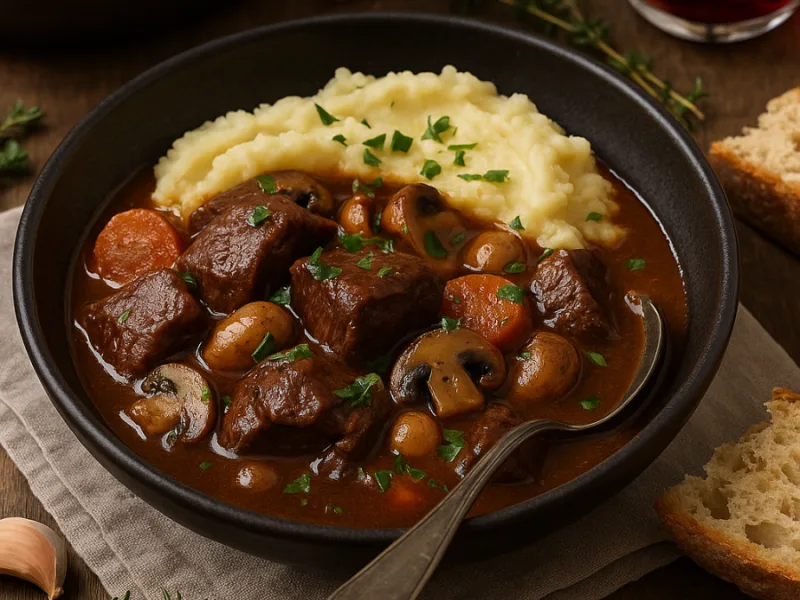
Base recipe: 6
Your kitchen companion
Ingredients
Check off ingredients as you prepare them.
Follow the steps at your own pace.
Method
1. Prepare the meat Pat the beef cubes dry with paper towels. Season with salt and black pepper on all sides.
2. Sear the beef In a large Dutch oven or heavy-bottomed pot, heat olive oil over medium-high heat. Add the beef in batches and brown on all sides. Transfer the seared meat to a plate.
3. Cook the bacon In the same pot, add the diced bacon and cook until crispy. Remove and set aside.
4. Sauté vegetables Add chopped onion and sliced carrots to the pot with bacon fat. Cook for 5–7 minutes until softened. Stir in the garlic and cook for 1 minute.
5. Build the base Add tomato paste and stir well. Sprinkle the flour over the vegetables and stir again. Cook for 2–3 minutes to form a thick base.
6. Deglaze with wine Pour in the red wine, scraping up any browned bits from the bottom of the pot. Bring to a simmer.
7. Add meat and herbs Return the seared beef and bacon to the pot. Add beef broth, Worcestershire sauce, thyme, and bay leaves. Stir to combine.
8. Simmer the stew Cover with a lid, reduce heat to low, and simmer for 2.5 hours. Stir occasionally.
9. Cook the mushrooms About 30 minutes before the stew is done, sauté the mushrooms in butter until golden brown. Add them to the stew and continue simmering.
10. Final touch Remove the bay leaves. Taste and adjust seasoning if needed. Garnish with fresh parsley before serving.
Extra technique, safety notes and details when you want to go deeper.
More tips & details
Classic French Beef Stew with Tender Red Wine Flavor
The timeless charm of a traditional French comfort dish
There’s something undeniably elegant and satisfying about a pot of slow-simmered stew that fills your kitchen with rich, aromatic depth. This classic French beef stew—a reimagined take on the timeless boeuf bourguignon—delivers precisely that. Combining melt-in-your-mouth beef, sweet caramelized onions, and earthy mushrooms, all bathed in a luxurious red wine sauce, this dish invites you into the heart of rustic French cuisine with every spoonful.
Crafted to balance sophistication with simplicity, this version of beef bourguignon is thoughtfully tailored for modern kitchens while still honoring the roots of its Burgundian origins. Whether you're cooking for family, planning an intimate dinner, or looking to elevate a Sunday meal, this easy red wine beef stew makes an unforgettable impression with surprisingly little effort.
Why this red wine beef stew deserves a place in your kitchen
The secret to a memorable beef bourguignon lies in patience and layering of flavors. First, the beef is gently seared to a deep golden crust, locking in its juices and building a robust base. Then, the stew gently simmers with aromatic herbs, garlic, tomato paste, and a full-bodied red wine that slowly reduces into a thick, velvety sauce. The result? A dish that’s deeply savory, with subtle hints of sweetness and acidity that complement each bite.
Unlike fast-paced meals, this is a dish that invites you to slow down, to relish each step of preparation, and to savor each bite. The texture of the beef becomes fork-tender, the sauce turns glossy and rich, and the vegetables absorb the full essence of the stew.
Rich flavor with minimal effort
Although traditionally time-intensive, this easy beef bourguignon recipe simplifies the process without compromising on taste. By streamlining steps and making thoughtful ingredient choices, you can enjoy the complexity of French cuisine without spending hours in the kitchen.
This recipe uses ingredients that are widely available, and the cooking method is designed to be approachable even for novice home cooks. Whether you use a Dutch oven, a heavy pot, or a slow cooker, the method adapts seamlessly to your kitchen setup.
The perfect centerpiece for cozy evenings
Few meals are as comforting and crowd-pleasing as this rustic beef stew. Ideal for fall and winter gatherings, it offers warmth and richness that pairs beautifully with mashed potatoes, creamy polenta, or fresh crusty bread. And while it tastes luxurious enough for special occasions, it’s also humble and familiar enough to become a regular feature in your repertoire.
Plus, like many great stews, this dish actually improves in flavor after resting. Cook it a day ahead and let it mellow overnight in the fridge—the next day, the flavors are even more harmonious and intense.
Why you’ll love this easy beef bourguignon
This dish captures the soul of traditional French cooking in a form that’s easy to master. Here’s what sets it apart:
- Simple ingredients, bold flavors: With only a few pantry staples and a good bottle of wine, you can create a meal with astonishing depth.
- Make-ahead friendly: Perfect for planning ahead, entertaining guests, or enjoying cozy leftovers.
- Versatile pairing options: Serve it with potatoes, noodles, polenta, or crusty baguette—every option works beautifully.
- Elegant but approachable: Impress without stress. This stew looks and tastes gourmet, but is accessible to all skill levels.
Cook, serve, and savor every bite
If you’re looking for a recipe that delivers both richness and comfort, this beef in red wine stew will exceed expectations. It’s a dish to gather around, to share with loved ones, and to enjoy in every season.
Get ready to transform a few simple ingredients into something truly special—a stew that speaks of tradition, love, and the pleasure of slow cooking.
Pour yourself a glass of wine, turn up the music, and start cooking. Your next great meal begins here.
Elevating Traditional Beef Bourguignon: Flavorful Upgrades and Smart Cooking Tips
Transforming the classic French stew into your signature dish
Beef Bourguignon is already considered a culinary treasure, but there are several thoughtful ways to refine the flavor, texture, and depth of this iconic dish. While the traditional recipe provides a solid foundation, small enhancements and intentional ingredient swaps can make it even more impressive—richer, more balanced, and uniquely your own.
These adjustments not only help personalize your dish but also adapt it to different preferences and dietary needs, all while preserving its hearty, slow-cooked essence. This guide will walk you through the most effective ways to enhance your beef stew, avoid common pitfalls, and explore healthier alternatives—without compromising the robust, comforting character of the original.
Add umami-rich elements for deeper flavor
If your stew tastes slightly flat or lacks depth, consider incorporating ingredients high in natural umami. These elements amplify savoriness and round out the stew’s overall profile:
- Anchovy paste: Just a small amount (½ tsp) stirred into the base with tomato paste can enhance flavor without adding a fishy taste.
- Miso paste: Replacing a portion of the salt with 1 tablespoon of white or red miso adds complexity and a subtle richness.
- Dried mushrooms: Soak porcini mushrooms and add the soaking liquid to the stew for earthy intensity.
These additions infuse the dish with layered, savory notes that meld beautifully with the wine and beef.
Boost aromatics for a fragrant stew
Aromatic vegetables and herbs create the foundation of any great stew. While the base recipe uses onions, carrots, and garlic, expanding the aromatic base can enhance both aroma and depth:
- Leeks: Add sliced leeks along with onions for a sweeter, more nuanced flavor.
- Celery root (celeriac): A few small cubes can subtly enhance earthiness and pair well with carrots.
- Herb bundles: Create a bouquet garni with thyme, rosemary, parsley stems, and a small piece of orange zest tied in cheesecloth. This gently infuses the stew without leaving herb bits behind.
Fresh herbs added at the end, such as chopped tarragon or flat-leaf parsley, bring brightness to contrast the slow-cooked richness.
How to enrich the sauce without over-thickening
A common mistake in preparing beef bourguignon is adding too much flour too early, resulting in a gluey or grainy texture. Instead, consider these adjustments:
- Add flour gradually and allow it to cook thoroughly before adding wine or broth.
- Use a beurre manié (a butter-flour paste) added at the end of cooking for controlled thickening and glossiness.
- For a gluten-free option, use a slurry of cornstarch and cold water, adding it slowly while stirring.
Remember: the reduction of wine and broth over time naturally thickens the stew, so additional agents should be subtle.
Healthier alternatives that retain indulgence
For those seeking a more nutritious version, several ingredient swaps can lighten the dish without losing the comforting flavor:
- Lean beef cuts: Choose sirloin tip or top round instead of chuck to reduce fat content. Marinate longer to maintain tenderness.
- Low-sodium broth: Using a reduced-sodium beef stock prevents the dish from becoming overly salty as it reduces.
- Skip bacon: Use smoked paprika or a few drops of liquid smoke for a similar smoky depth without the saturated fat.
- Add root vegetables: Swapping half the carrots for sweet potatoes or parsnips increases fiber and vitamins.
These options create a balanced version that’s still satisfying and rich in taste.
Enhancing the wine component for better results
The wine is not just a background ingredient—it’s central to the identity of beef bourguignon. Upgrading the wine used will significantly affect the outcome:
- Use a dry, full-bodied red such as Pinot Noir, Merlot, or Côtes du Rhône. Avoid sweet or cheap wines, which can lead to a bitter aftertaste.
- For extra complexity, combine red wine with a splash of port or Madeira during the last 30 minutes of cooking.
- Always cook off the alcohol at a simmer before adding the meat back in to ensure a rounded, mellow flavor.
A high-quality wine not only elevates the dish but also complements the richness of the beef and aromatics.
Common mistakes to avoid when cooking beef bourguignon
Even with the best ingredients, a few technical missteps can compromise the dish. Be mindful of the following:
- Overcrowding the pan: Sear the beef in batches to ensure a proper crust. Steaming the meat leads to bland results.
- Undercooking the vegetables: Carrots and onions should be softened before the simmering phase to avoid a raw texture.
- Adding wine too early: Let the flour and tomato paste cook briefly before deglazing. This prevents a chalky consistency.
- Skipping rest time: Like many stews, beef bourguignon tastes better the next day. Letting it sit overnight develops deeper flavors.
Awareness of these issues helps maintain texture, taste, and overall harmony in the dish.
Why homemade beef bourguignon is better than any restaurant version
While dining out can offer convenience, the homemade version of this stew holds several advantages:
- Customization: You control the ingredients, fat content, and seasoning, ensuring it suits your taste and dietary needs.
- Quality assurance: From meat selection to wine choice, every component reflects your standards.
- Freshness: Most restaurant stews are reheated; cooking it yourself means you enjoy it at its peak.
- Emotional value: The act of preparing and serving this dish creates memories and rituals that far outlast the meal itself.
There’s also great satisfaction in preparing a dish that has such deep cultural roots and history with your own hands.
Garnishes, pairings, and finishing touches
Once your beef bourguignon is ready, the right finishing touches bring it to life:
- Garnish with chopped fresh parsley or chives for color and freshness.
- Serve alongside buttery mashed potatoes, egg noodles, or creamy polenta to soak up the luscious sauce.
- Pair with a glass of the same red wine used in cooking to tie the flavors together.
These choices amplify the overall experience and turn a comforting meal into a memorable dining moment.
With just a few strategic enhancements, your beef bourguignon can evolve from a classic stew into a personalized, elevated masterpiece—tailored to your tastes, optimized for nutrition, and brimming with the rich, slow-cooked flavor that makes French cuisine so beloved.
Recivelle · /recipe/easy-beef-bourguignon-rich-french-stew