Base recipe: 8
Your kitchen companion
Ingredients
Check off ingredients as you prepare them.
Follow the steps at your own pace.
Method
In a large bowl, mix warm water, sugar, and active dry yeast. Let sit for 5–10 minutes until foamy.
Add flour, salt, and olive oil to the yeast mixture. Stir until a dough forms.
Transfer dough to a floured surface. Knead for about 8–10 minutes until smooth and elastic.
Place the dough in a lightly oiled bowl, cover with a clean towel, and let rise for 1 hour or until doubled in size.
Punch down the dough and transfer it to a greased baking pan. Gently stretch it to fit the pan.
Cover the pan and let the dough rise again for 30–60 minutes until puffy.
Preheat oven to 400°F (200°C).
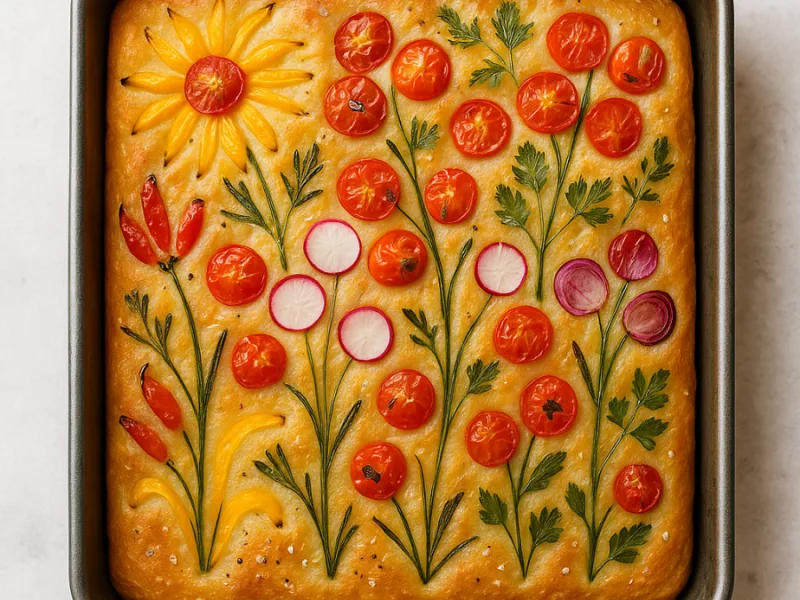
Arrange sliced bell peppers, cherry tomatoes, red onion, and radishes on top of the dough to create floral designs.
Sprinkle rosemary, thyme, and parsley over the decorated dough.
Brush the entire surface with olive oil and sprinkle with coarse sea salt.
Bake for 20–25 minutes until golden brown.
Remove from oven and let cool slightly before slicing and serving.
Extra technique, safety notes and details when you want to go deeper.
More tips & details
Beautiful Edible Flower Bread: Master the Art of Floral Focaccia Decoration
Exploring the creative world of decorative bread baking at home
The rise of decorative focaccia art has ignited a wave of creativity in home kitchens around the world. As people search for new ways to elevate simple recipes into spectacular visual experiences, floral focaccia bread stands out as one of the most accessible and stunning trends. Unlike complicated pastries or desserts, this easy floral bread trend allows even novice bakers to create edible masterpieces with just a few fresh ingredients and a little imagination. The vibrant designs, crafted from vegetables, herbs, and seeds, transform the rustic charm of focaccia into an eye-catching centerpiece perfect for any occasion.
The unique charm of edible floral focaccia designs
At its core, floral focaccia bread art is about turning simplicity into beauty. The dough serves as a neutral canvas, while sliced bell peppers, thin radish rounds, vibrant cherry tomatoes, fragrant rosemary sprigs, and delicate chive stems become the brushstrokes that form floral patterns. This fusion of baking and artistry has fueled the growing popularity of focaccia bread decoration, inspiring countless home bakers to experiment with their own edible garden scenes. Whether creating intricate floral motifs or simple, elegant arrangements, each loaf becomes a personal expression of style and taste.
The growing popularity of focaccia bread art across social media
In recent years, platforms like Instagram, Pinterest, and TikTok have helped propel decorative focaccia recipes into the spotlight. Millions of people have been drawn to this visually captivating trend, sharing their creations under hashtags such as #focacciaart and #floralfocaccia. The visual appeal of these homemade bread designs makes them ideal for sharing, while their approachable preparation process invites bakers of all skill levels to participate. Unlike many trending recipes that require specialized equipment or advanced techniques, floral focaccia bread remains grounded in basic bread-making principles while offering limitless artistic potential.
Why this floral focaccia recipe is perfect for any skill level
One of the key reasons behind the enduring popularity of decorative focaccia art is its accessibility. The dough itself is forgiving, requiring only simple ingredients like flour, yeast, water, olive oil, and salt. The preparation process allows for flexible timing, making it easy to fit into any schedule. Whether following a traditional slow-rise method or opting for a quick homemade bread recipe, the result is consistently flavorful and light. The decoration stage is where creativity shines. Even beginners can achieve professional-looking results by arranging sliced vegetables and herbs into floral patterns, resulting in a beautiful bread recipe that looks as impressive as it tastes.
Essential ingredients that bring floral focaccia to life
The magic of floral focaccia bread decoration lies in the thoughtful selection of toppings. Colorful bell peppers add bold hues, while cherry tomatoes offer bright pops of red and orange. Thinly sliced red onions create elegant spirals, and radish slices resemble delicate petals. Fresh rosemary, thyme, and parsley provide both aromatic depth and natural greenery, enhancing both flavor and appearance. A drizzle of extra virgin olive oil before baking ensures a golden, crisp crust that complements the tender interior. These accessible, everyday ingredients make decorative focaccia art achievable for any home baker.
How to achieve vibrant floral patterns on focaccia
Creating visually striking floral focaccia designs begins with proper planning and preparation. After allowing the dough to rise and relax, it is gently stretched into a baking pan. The toppings are then carefully arranged to form floral compositions, paying attention to color balance, spacing, and contrast. Lightly pressing each ingredient into the dough ensures they remain in place during baking. A final brush of olive oil enhances both the shine and flavor of the toppings, while a sprinkle of coarse salt adds texture. The result is an edible garden captured in golden, fragrant bread.
Serving ideas for your homemade decorative focaccia
Floral focaccia bread is not only a feast for the eyes but also a versatile addition to any meal. It makes a stunning centerpiece for brunch tables, garden parties, and holiday feasts. Paired with soups, salads, or antipasto platters, it elevates even the simplest menu. This beautiful bread recipe also serves as a thoughtful homemade gift, perfect for housewarmings or special celebrations. The artistry of decorative focaccia art transforms an everyday loaf into a memorable culinary statement that leaves a lasting impression.
Why everyone will love this decorative focaccia art recipe
This floral bread recipe offers more than just visual appeal—it invites a personal, creative experience that’s deeply satisfying. As the dough comes to life under your hands and the colorful toppings transform into blooming patterns, each step brings joy and anticipation. The process is calming and meditative, offering a break from the rush of daily life. Whether baked for a special gathering or simply as a creative afternoon project, decorative focaccia art offers a fulfilling sense of accomplishment. The final result—a warm, golden loaf bursting with color and flavor—never fails to impress family, friends, and guests.
Elevate your baking routine with floral focaccia art
Embracing the decorative focaccia bread trend adds a new dimension to your home baking repertoire. With endless variations and opportunities for personalization, each loaf becomes a canvas for your culinary creativity. Share your focaccia art creations with friends, inspire others to try their hand at edible design, and enjoy the satisfying blend of beauty and flavor that this unique baking experience provides.
Save this easy floral focaccia recipe for your next gathering, share your creations to inspire fellow bakers, and let the art of bread baking bring color and joy to your kitchen.
How to Elevate Your Decorative Focaccia with Professional Bread Art Techniques
Creating decorative focaccia art is more than just following a recipe; it’s an opportunity to transform simple ingredients into a stunning edible masterpiece. While the basic formula delivers beautiful results, subtle changes and expert adjustments can elevate both appearance and flavor, ensuring your homemade focaccia bread stands out. This in-depth guide explores practical ways to upgrade your floral focaccia, avoid common mistakes, and achieve bakery-quality results at home.
Understanding the foundation of focaccia dough for optimal results
The core of any excellent decorative focaccia bread is its dough. The recipe uses 4 cups all-purpose flour (480 g), 1 ½ cups warm water (360 ml), 2 ¼ tsp active dry yeast (7 g), 2 tsp sugar (8 g), 1 tbsp salt (15 g), and ¼ cup olive oil (60 ml). This combination produces a light, airy texture with a crisp exterior.
For bakers looking to upgrade their dough, small ingredient adjustments can make a noticeable difference. Substituting a portion of the all-purpose flour with bread flour enhances gluten development, producing a slightly chewier texture ideal for supporting heavier decorations. Additionally, incorporating a long, cold fermentation (refrigerating the dough for 12 to 24 hours after the first rise) deepens the flavor, creating subtle sour notes and a more complex taste.
The hydration ratio in this recipe is carefully balanced to allow easy handling while still achieving an open crumb structure. Avoid adding too much flour during kneading, as this can result in a dense, tough bread. Instead, work with lightly oiled hands and surfaces to maintain the dough’s natural moisture.
Ingredient benefits that enhance both flavor and presentation
The beauty of floral focaccia art lies in its toppings. This recipe uses 1 yellow bell pepper (150 g), 1 red bell pepper (150 g), ½ cup cherry tomatoes (75 g), 1 small red onion (80 g), 4 radishes (80 g), 2 tbsp rosemary (4 g), 2 tbsp thyme (4 g), 2 tbsp parsley (4 g), and 1 tbsp coarse sea salt (15 g), with 2 tbsp olive oil (30 ml) for brushing.
Each ingredient serves a dual purpose, contributing vibrant color and distinctive flavor. Bell peppers add sweetness and visual contrast, while cherry tomatoes provide juiciness and tang. Red onions create elegant spirals with mild sharpness, and radishes contribute crisp texture and peppery notes. Fresh rosemary, thyme, and parsley infuse the bread with herbal depth.
To upgrade both flavor and nutritional value, consider adding thin slices of zucchini, edible flowers like nasturtiums, or roasted garlic cloves. These ingredients complement the existing profile without overwhelming the balance. Always slice toppings thinly and evenly to ensure they cook at the same rate as the bread, preserving both texture and visual appeal.
Why this method works for home bakers
This recipe is designed to be approachable, even for beginners. The two-step rising process allows the yeast to fully develop, creating light, airy pockets in the crumb. Stretching the dough gently before the second rise ensures an even thickness, preventing uneven baking and ensuring that toppings remain securely embedded.
The preheating of the oven to 400°F (200°C) guarantees that the bread rises quickly once placed inside, locking in moisture while forming a golden, crisp crust. Brushing the surface with olive oil before baking enhances caramelization and protects delicate toppings from drying out.
The simplicity of this method allows home bakers to focus on creative decoration without worrying about technical pitfalls. The forgiving nature of the dough makes it ideal for experimentation while consistently producing reliable, delicious results.
Common mistakes that can compromise your focaccia art
Even with a solid recipe, several common mistakes can prevent bakers from achieving optimal results:
- Overproofing: Allowing the dough to rise too long can weaken its structure, causing it to collapse during baking and creating a flat, dense loaf.
- Heavy toppings: Using thick or overly large toppings can weigh down the dough, leading to uneven baking and soggy centers.
- Uneven slicing: Inconsistent topping thickness results in some ingredients burning while others remain undercooked.
- Skipping the second rise: The final proof allows the dough to relax and puff, contributing to the focaccia’s airy structure.
By paying close attention to these areas, bakers can ensure consistently successful outcomes with every loaf.
Chef’s Tip
To achieve the most vibrant colors in your decorative focaccia bread, soak certain toppings like onions and radishes in ice water for 10–15 minutes before arranging them on the dough. This simple technique crisps and brightens the vegetables, enhancing their appearance after baking.
Additionally, lightly scoring the dough with a knife before adding toppings can help guide placement and create more defined floral shapes. Use tweezers for delicate herbs to position leaves precisely without damaging the dough surface.
How to create healthier versions without sacrificing taste
For those seeking a more health-conscious version of floral focaccia bread, several adjustments can be made while maintaining flavor and texture:
- Substitute up to 25% of the all-purpose flour with whole wheat flour to add fiber and nutrients while preserving softness.
- Use a lower-sodium salt or reduce overall salt content slightly without affecting yeast activity.
- Increase the variety of fresh vegetables to boost antioxidant and vitamin intake.
- Incorporate heart-healthy flaxseeds or chia seeds into the dough or as part of the decoration for added omega-3 fatty acids.
These modifications ensure the bread remains delicious while supporting diverse dietary preferences.
Presentation and storage suggestions for long-lasting enjoyment
After baking, allow the decorative focaccia art to cool slightly before slicing. This rest period lets the crumb set and preserves the structure of your floral design. Serve at room temperature to fully appreciate the balance of flavors and textures.
If storing leftovers, wrap the focaccia in parchment paper and keep it in an airtight container at room temperature for up to two days. For longer storage, freeze individual portions wrapped tightly in plastic and foil. Reheat gently in a 300°F (150°C) oven to restore the crust’s crispness.
For presentation, serve your floral focaccia bread on wooden boards or slate trays to highlight the artistry of the design. Garnish with fresh herbs for added color and fragrance when serving at brunches, holiday gatherings, or as a showstopping centerpiece for special occasions.
The superior value of homemade decorative focaccia
Unlike store-bought options that may rely on preservatives, artificial colors, or limited topping variety, this homemade focaccia bread offers full control over ingredient quality and creative expression. Bakers can tailor each loaf to seasonal produce, personal tastes, and dietary needs while enjoying the therapeutic, rewarding process of bread-making.
By understanding the principles behind this recipe and applying professional adjustments, every home baker can transform a simple project into a stunning display of focaccia art that impresses visually and delights the palate with every bite.
Recivelle · /recipe/decorative-focaccia-art-easy-floral-bread-trend