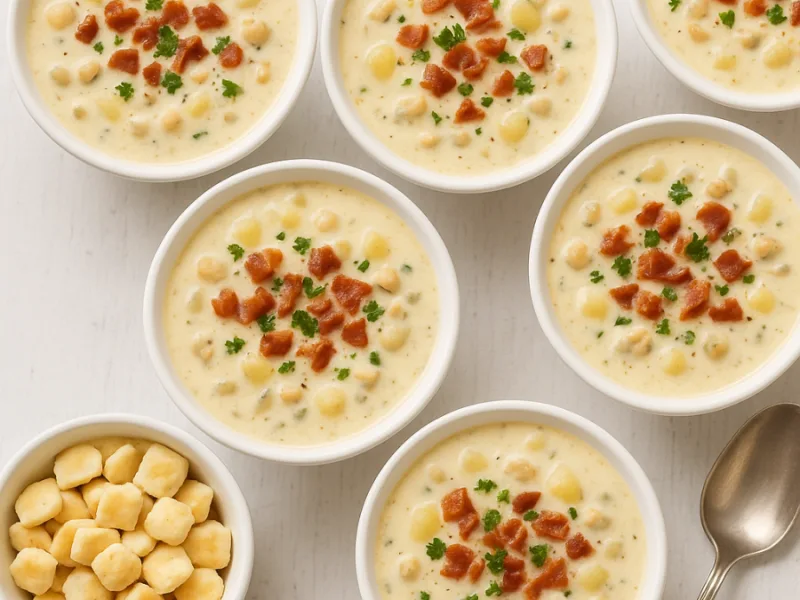
Base recipe: 6
Your kitchen companion
Ingredients
Check off ingredients as you prepare them.
Follow the steps at your own pace.
Method
Cook the bacon: In a large soup pot over medium heat, cook the chopped bacon for 5–6 minutes until it becomes crisp and golden. Remove with a slotted spoon and set aside on a paper towel-lined plate. Leave 1 tbsp (15 g) of bacon fat in the pot.
Sauté vegetables: Add the butter to the pot. Once melted, add the diced onion and celery. Cook for 5 minutes, stirring often, until vegetables are softened and the onion is translucent.
Add garlic and seasoning: Stir in the minced garlic, salt, and black pepper. Cook for 1 minute until fragrant.
Thicken the base: Sprinkle the flour over the vegetables. Stir constantly for 2 minutes until the flour is fully incorporated and forms a smooth paste.
Deglaze and add liquids: Gradually pour in the clam juice while stirring to avoid lumps. Add the milk and heavy cream. Stir well until the mixture is smooth and creamy.
Simmer with potatoes and herbs: Add the diced potatoes and bay leaves. Bring to a boil over medium-high heat, then reduce to a simmer. Cover and cook for 15–20 minutes, until the potatoes are fork-tender.
Add clams: Stir in the drained chopped clams and ½ cup (120 ml) of the reserved clam juice. Simmer uncovered for 5 minutes to heat through. Discard the bay leaves.
Finish and serve: Stir in chopped parsley and cooked bacon. Taste and adjust seasoning if needed. Serve hot, with oyster crackers or crusty bread on the side.
Extra technique, safety notes and details when you want to go deeper.
More tips & details
Classic Seafood Comfort for Cold Nights: The Ultimate Creamy Clam Chowder Experience
What makes New England clam chowder so comforting?
The moment a warm spoonful of creamy New England clam chowder reaches your lips, it delivers something more than taste—it offers nostalgia in a bowl. Silky cream wraps around chunks of tender clams and earthy potatoes, punctuated by the briny aroma of the sea and a gentle, savory backbone from smoky bacon. The broth glistens with richness, while the texture shifts from creamy to hearty with each bite. This is the kind of dish that instantly warms your fingers, your cheeks, and your spirit, evoking the comforting rhythm of East Coast kitchens and the salty air of New England harbors.
Why this creamy clam chowder is a dish you'll crave again and again
What sets this chowder apart is its depth of flavor combined with a foolproof preparation. We’ve tested countless versions to land on this one: the balance of milk and cream delivers a velvety body without overpowering the clams' natural sweetness. The addition of diced potatoes gives the soup its classic rustic heartiness, while celery and onion bring an aromatic base that simmers into a deeply satisfying spoonful.
The bacon isn’t just a garnish—it plays an integral role. Rendered slowly, it infuses the base with a subtle smokiness that enhances the chowder without dominating it. And because we add the clams at just the right moment, they remain juicy and tender rather than rubbery—a detail that shows how this isn’t just any chowder, but a refined take on a coastal classic.
This is the version I return to when I want something rich but grounding, something that feels luxurious but familiar. It’s the chowder I trust on cold nights and family weekends, and the one my guests always remember.
What to serve with New England clam chowder
A bowl of this hearty chowder can stand alone, but a well-chosen side will round out the meal beautifully. For balance, serve it with:
- Crusty sourdough bread or warm dinner rolls to soak up every drop of broth
- A light green salad with a citrus vinaigrette to contrast the richness
- Oyster crackers, of course, for a classic East Coast pairing
- A glass of chardonnay or dry cider to cut through the cream and elevate the brininess
These pairings transform the dish into an elegant lunch or cozy dinner, without stealing the spotlight.
When is the best time to serve creamy clam chowder?
This dish thrives during colder months, but its versatility makes it a year-round favorite. In winter, it offers that essential comfort we crave after long days. In spring and fall, it pairs beautifully with lighter accompaniments. It’s an excellent choice for holiday dinners, Sunday gatherings, or a weeknight indulgence. Because the ingredients are pantry-friendly and prep is straightforward, it also makes for a last-minute dinner idea when you want something fast, filling, and deeply satisfying.
Where this recipe finds its roots
The inspiration for this chowder lies in the harbors and diners of the New England coastline, where tradition dictates a broth that’s rich but not heavy, and every component is meant to celebrate the sea. Through multiple rounds of testing, we’ve preserved that classic flavor profile while refining the process for modern home kitchens. The result? A chowder that feels like it’s been simmering all day, yet comes together with surprising ease.
We also chose to thicken the soup without flour, relying instead on the natural starches of the potatoes and a careful reduction of cream. This gives the soup its signature texture while maintaining clarity of flavor—a trick we perfected over time through multiple iterations.
How long does it take to make homemade clam chowder?
Surprisingly, this dish is ready in just under an hour—ideal for both weeknight dinners and more formal occasions. With a few smart prep steps (like dicing the potatoes and rendering the bacon early), the rest unfolds naturally. You’ll be amazed at how something so satisfying and layered can be this simple to create at home.
Why home cooks trust this recipe
There’s a reason this has become a go-to comfort dish among our recipe testers and readers. It delivers on all fronts—flavor, texture, speed, and reliability. Whether you’re serving guests or curling up solo with a bowl in hand, this chowder guarantees consistent results every time. We designed it with home cooks in mind: minimal fuss, maximum flavor, and that sense of reward that only comes from making something truly special from scratch.
If you’re looking for a hearty seafood dish, a quick winter dinner idea, or a showstopper soup for guests, this creamy clam chowder promises to hit the mark. It brings people together, stirs memories, and satisfies even the most skeptical palate with its smooth richness and balanced flavors.
Try it once, and you’ll see why this recipe deserves a permanent place in your comfort food collection.
Perfect your creamy chowder base: pro techniques for a better New England clam chowder
How to elevate your New England clam chowder with expert techniques
If you want to improve homemade clam chowder and turn it from comforting to exceptional, it starts with mastering the balance of richness, texture, and ocean flavor. This isn’t about reinventing a classic—it’s about understanding what makes a truly great chowder stand out: the silky base, the delicate bite of clams, the subtle smokiness of bacon, and the creamy body that clings to the spoon without feeling heavy.
This article is crafted for serious home cooks looking to refine their creamy soup recipes and achieve restaurant-level results with this iconic New England dish. Whether you're looking to make it healthier, adjust textures, avoid common pitfalls, or improve presentation, you’ll find practical, expert-level advice based directly on the original tested recipe.
Professional tips for a richer, smoother chowder texture
A truly velvety chowder starts with layered aromatics and gradual thickening. One of the most effective ways to build depth is to sauté the onion and celery in both butter and bacon fat—this dual-fat method gives the vegetables a richer base to absorb flavors.
- Render the bacon slowly over medium heat, letting it crisp without burning. This ensures clean, non-bitter fat for your soup base.
- When adding the flour, stir constantly for 2 minutes. This cooks out the raw flour taste and forms a light roux that thickens without clouding the soup.
- Add liquids gradually—clam juice first, then milk and cream—stirring well between additions to prevent separation.
I’ve found that holding back the clams until the final minutes prevents them from toughening, giving you a soft, ocean-sweet bite every time.
Avoid these common mistakes when making clam chowder at home
One of the most frequent errors in homemade creamy soups is overcooking. With clam chowder, this can ruin texture and compromise flavor.
- Adding clams too early can lead to rubbery, chewy meat. Always stir them in at the end.
- Boiling the milk and cream can cause curdling. Maintain a gentle simmer after dairy is added.
- Skipping flour cooking time creates a gritty or chalky texture.
- Over-salting early can be risky, especially since clam juice and bacon both bring salinity. Taste at the end before final seasoning.
In my experience, the bay leaves release just enough earthiness when added with the potatoes—too long in the pot, and they overpower the seafood essence.
Smart substitution ideas and healthier upgrades
For those seeking lighter creamy seafood soups or managing dietary restrictions, you can make changes without losing the dish’s core comfort.
- Use cornstarch instead of flour for a gluten-free chowder. Mix it into the cold milk before adding.
- Replace heavy cream with evaporated milk or coconut cream for a lighter or dairy-free option.
- Swap bacon with smoked turkey or plant-based lardons for a lower-fat alternative.
- If sodium is a concern, use low-sodium clam juice and uncured bacon.
While these adjustments will slightly shift the traditional flavor, they retain the creamy, hearty character of the original.
Classic variations that respect tradition
Chowder variations are as regional as the coasts that inspired them. But even within New England style, you can make small, authentic changes for a fresh spin:
- Add a splash of dry white wine after the flour step to brighten the base.
- Mix in fresh corn kernels in summer for texture and natural sweetness.
- Top with chive oil or microgreens for visual contrast and modern flair.
- Use fresh chopped clams instead of canned, if available, for the purest briny bite.
What I love about this recipe is its reliability. But occasionally, I finish it with a few drops of lemon juice just before serving—it heightens the clam flavor without making the chowder sour.
Ingredient spotlight: why quality matters
Every ingredient in this recipe serves a purpose—there are no fillers here.
- Clams: Chopped clams offer texture; their juice enriches the broth.
- Potatoes: Starchy varieties like Russet or Yukon Gold help thicken naturally without overpowering.
- Bacon: More than just a garnish, it contributes umami and depth from the very first step.
- Whole milk and heavy cream: Together they strike the right balance of lightness and silkiness, unlike using cream alone which can feel too heavy.
- Bay leaves: Add structure and complexity that support the savory-sweet balance of the dish.
It’s the quality of the clam juice that makes or breaks the flavor integrity. Avoid brands with artificial flavoring or preservatives—your chowder deserves better.
How to store and reheat creamy clam chowder
Because this chowder uses dairy and seafood, proper storage is crucial.
- Refrigerate within 2 hours of cooking in an airtight container. Consume within 3 days.
- To reheat, use low heat on the stovetop, stirring often. Avoid boiling—it may cause the milk to separate or the clams to overcook.
- For freezer storage: we don’t recommend it. Cream-based soups and potatoes tend to change texture when frozen and thawed.
When reheating, I always cover the pot halfway to trap heat but allow steam to escape—this keeps the consistency perfect without overheating the dairy.
Common Questions
What’s the best potato for chowder texture?
Use Yukon Gold or Russet potatoes. They break down slightly and help naturally thicken the chowder, giving a creamy body without needing extra flour.
Can I use fresh clams instead of canned?
Yes, you can steam fresh clams and chop them. Be sure to strain and reserve their cooking liquid to use in place of bottled clam juice.
How do I keep the milk from curdling?
Keep your heat moderate and avoid boiling after dairy is added. Stir gently and maintain a steady simmer.
What’s the right time to add clams?
Always add chopped clams in the final 5 minutes of simmering. This preserves their tender texture and keeps them from becoming tough.
Is this chowder recipe suitable for meal prep?
Yes, it's great for make-ahead dinners. Store the base without clams and add them fresh when reheating, for best texture and flavor.
This approach allows for efficient weekly meal prep while preserving the comforting, briny essence that defines the best New England clam chowder.
Recivelle · /recipe/creamy-new-england-clam-chowder-easy-hearty