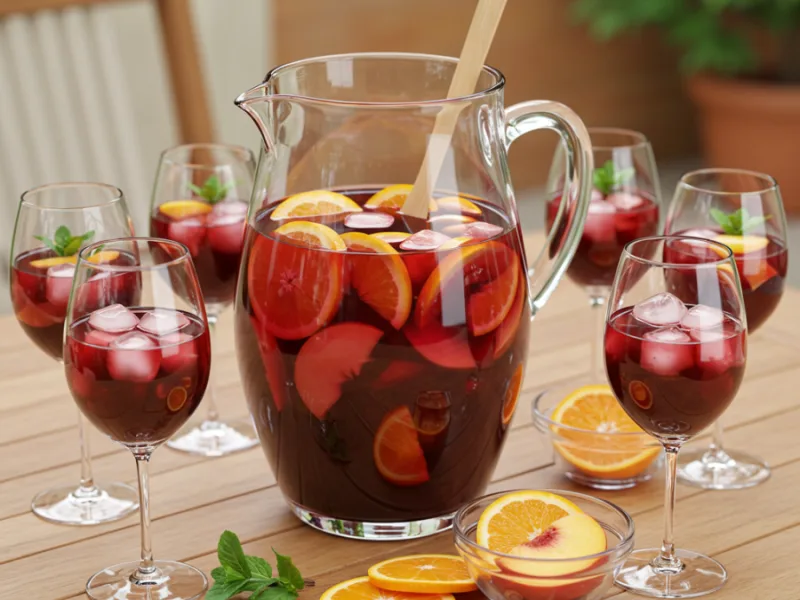
Base recipe: 6-8
Your kitchen companion
Ingredients
Check off ingredients as you prepare them.
Follow the steps at your own pace.
Method
Mix the liquids – In a large pitcher, combine the red wine, brandy, orange juice, and lemon juice. Stir well to blend the flavors.
Dissolve the sugar – Add the brown sugar and stir until fully dissolved.
Add the fruits – Place the sliced oranges, lemons, chopped apples, and peaches into the pitcher. Gently press them with a spoon to release some juice.
Chill and infuse – Cover the pitcher and refrigerate for at least 4 hours, preferably overnight, to allow the flavors to blend.
Serve with sparkle – Just before serving, add the soda water and stir gently.
Presentation – Fill glasses with ice cubes, pour the sangria, and garnish with fresh mint leaves if desired.
Extra technique, safety notes and details when you want to go deeper.
More tips & details
The Ultimate Guide to Making Traditional Spanish Sangria
A Refreshing and Fruity Wine Cocktail with a Rich Heritage
Spanish sangria is more than just a cocktail; it’s a symbol of celebration, warm summer evenings, and lively gatherings. This fruity wine punch captures the essence of Spain with its perfect balance of red wine, fresh fruit, citrus flavors, and a hint of sweetness. Whether served at a casual backyard barbecue, a festive dinner party, or a relaxing evening with friends, homemade sangria is always a crowd-pleaser.
Unlike many modern variations, an authentic Spanish sangria recipe stays true to its roots. The combination of full-bodied red wine, juicy oranges, crisp apples, and a touch of brandy creates a bold yet refreshing drink that embodies the Spanish tradition of hospitality. The flavors meld together beautifully as the fruits infuse the wine, enhancing its natural depth and sweetness.
The Origins of Sangria and Its Cultural Significance
Sangria has a long and fascinating history, dating back to Roman times, when wine was often infused with fruit, spices, and water to create a safe and flavorful drink. The name "sangria" itself is derived from the Spanish word "sangre," meaning blood, referring to its deep red hue. Over time, this Spanish wine cocktail became a staple at social gatherings, particularly in southern Spain, where the warm climate makes it the perfect refreshing beverage.
Today, traditional sangria remains a staple in Spanish cuisine, served in bustling tapas bars and restaurants across the country. Each region has its own twist on the recipe, incorporating local fruits, different wines, and unique liqueurs to enhance the flavor.
Choosing the Best Wine for an Authentic Sangria
One of the most important elements of classic Spanish sangria is selecting the right red wine. Traditionally, Tempranillo, Garnacha (Grenache), or Rioja wines are preferred due to their rich berry notes, medium tannins, and smooth finish. These wines pair beautifully with the citrus and fruit infusions, creating a well-rounded and vibrant taste.
For the best results, avoid overly expensive or heavily oaked wines, as the fruit, sweetener, and liqueur will modify the wine’s character. A good-quality, affordable Spanish red wine works perfectly, allowing the fresh ingredients to shine.
The Essential Ingredients That Make the Perfect Sangria
A well-balanced sangria consists of a few key elements that come together to create the ideal refreshing and flavorful drink:
1. Red Wine Base
A good-quality dry red wine serves as the foundation, providing structure and richness. The best choices are Spanish wines like Tempranillo or Garnacha, known for their fruity and smooth profiles.
2. Fresh Fruits
Traditional sangria recipes include a mix of citrus fruits (oranges and lemons) and crisp apples, adding natural sweetness and acidity to balance the wine. Some variations incorporate peaches, strawberries, or berries, depending on the season.
3. Brandy for Depth
A small amount of Spanish brandy enhances the flavor, giving the sangria a rich and warm undertone. This optional ingredient adds depth and complements the fruity and citrusy notes.
4. Sweetener for Balance
Depending on personal preference, a touch of honey, simple syrup, or brown sugar can be added to adjust the sweetness. The goal is to enhance the natural fruit flavors without overpowering the wine’s character.
5. Freshly Squeezed Citrus Juice
Adding orange juice or lemon juice brightens the sangria, balancing the sweetness and acidity. This step ensures a more refreshing and vibrant flavor.
6. A Hint of Sparkle (Optional)
For a bubbly touch, club soda, sparkling water, or cava can be added just before serving. This creates a light, effervescent texture that makes the sangria even more refreshing and drinkable.
How Long Should Sangria Be Left to Infuse?
One of the secrets to a perfectly balanced sangria is allowing it to rest before serving. Ideally, sangria should be prepared at least 4 hours in advance or, for even better results, left to chill overnight. This resting time allows the fruit to infuse the wine, developing deeper and more harmonious flavors.
If time is limited, a quick version can be made by gently muddling the fruit and wine together, but the best sangria always benefits from a longer steeping time.
The Best Way to Serve Classic Sangria
For an authentic presentation, sangria should be served chilled in a large pitcher filled with fruit slices and ice cubes. It is traditionally poured into stemless wine glasses or wide goblets, allowing the aromas and flavors to fully develop.
Garnishing with fresh mint leaves, a cinnamon stick, or additional fruit slices adds a visually appealing touch and enhances the overall experience.
Sangria pairs wonderfully with classic Spanish dishes such as paella, tapas, grilled seafood, and charcuterie platters. Its fruit-forward profile and smooth, slightly sweet taste make it a versatile drink that complements a wide range of savory and spicy flavors.
Variations of Sangria: Exploring Different Styles
While classic Spanish sangria is made with red wine, there are many delicious variations to explore:
- White Sangria (Sangria Blanca) – Made with white wine, peaches, citrus fruits, and sparkling water for a lighter and crisper taste.
- Rosé Sangria – Uses rosé wine, strawberries, and raspberries, creating a refreshing and floral twist on the traditional recipe.
- Winter Sangria – Incorporates spiced red wine, apples, pomegranates, and cinnamon, perfect for colder months and festive occasions.
Why Homemade Sangria is Better Than Store-Bought
Making sangria from scratch allows for better control over flavors, sweetness, and ingredients. Many store-bought versions contain artificial additives and excessive sugar, which can overpower the natural fruit and wine flavors.
By using fresh, high-quality ingredients, a homemade sangria recipe ensures a more authentic and enjoyable experience, customized to individual taste preferences.
A Timeless Drink That Captures the Spirit of Spain
There’s a reason why Spanish sangria remains one of the most iconic and beloved cocktails worldwide. Its fruity, refreshing, and slightly boozy character makes it the perfect drink for any occasion, whether enjoyed on a sunny afternoon, at a summer gathering, or during a festive celebration.
With its deep cultural roots, versatile flavors, and endless possibilities, sangria continues to be a drink that brings people together—one delicious sip at a time.
Elevating the Classic Spanish Sangria: Enhancing Flavor and Balance
How Small Adjustments Can Transform Your Sangria
A well-crafted sangria is already a refreshing and crowd-pleasing drink, but small tweaks and ingredient modifications can take it to a whole new level. From adjusting the fruit selection to experimenting with different sweeteners and spirits, there are plenty of ways to customize the traditional recipe to suit personal preferences. Understanding how each ingredient contributes to the final taste will help achieve the perfect balance of sweetness, acidity, and depth.
Choosing the Right Wine for a More Refined Taste
Since red wine is the base of a traditional Spanish sangria, selecting the right variety plays a crucial role in enhancing its flavor. While Tempranillo and Garnacha are excellent choices, experimenting with other medium-bodied or full-bodied wines can add complexity.
Best Wine Upgrades:
- Malbec – Offers bold berry flavors with a velvety finish, creating a richer and deeper sangria.
- Zinfandel – Known for its jammy fruit notes, this wine enhances the natural sweetness of the fruits.
- Cabernet Sauvignon – Adds structure and tannins, balancing the fruitiness with a more refined dryness.
- Merlot – Smooth and slightly fruity, it results in a mellow and easy-drinking sangria.
Using a blended wine (a mix of different grape varieties) can also add unique layers of flavor, creating a more complex and interesting sangria.
Enhancing the Fruit Selection for Deeper Flavors
While oranges, lemons, and apples are the traditional choices, incorporating seasonal and exotic fruits can enhance both the taste and visual appeal of sangria.
Best Fruits to Experiment With:
- Pineapple – Adds a natural sweetness with a tropical touch.
- Mango – Provides a silky texture and enhances the citrus notes.
- Cherries – Deepens the berry flavors and complements red wine beautifully.
- Pomegranate seeds – Add a tart burst and extra antioxidants.
- Figs – Create a richer, more sophisticated sangria with a touch of natural sweetness.
Using roasted or caramelized fruit (such as grilled peaches or roasted citrus slices) can add depth by introducing subtle smoky and caramelized flavors.
The Role of Spirits and How to Improve the Alcohol Balance
Brandy is traditionally used to add warmth and complexity, but other spirits can elevate the depth of sangria without overpowering the wine.
Alternative Spirits for a Unique Twist:
- Grand Marnier or Cointreau – Enhances the citrus flavors while adding a smooth orange essence.
- Dark rum – Brings a deeper, slightly spiced character, making it more complex.
- Port wine – Boosts fruit intensity and natural sweetness, resulting in a richer sangria.
- Limoncello – Adds a zesty and fresh lemon kick, making it brighter and more refreshing.
Adjusting the Sweetness for a More Balanced Taste
The amount of sweetener used in sangria directly influences its overall flavor. Traditional recipes use brown sugar or simple syrup, but switching to natural sweeteners can enhance the taste while reducing unnecessary added sugar.
Healthier and More Flavorful Sweetener Options:
- Honey – Adds a floral depth and blends well with citrus and spices.
- Agave syrup – Provides a mild sweetness without overpowering the fruit.
- Maple syrup – Introduces a subtle caramel undertone, complementing dark fruits.
- Coconut sugar – A less processed alternative with a slightly nutty flavor.
For a less sweet sangria, consider reducing the sugar and relying more on naturally sweet fruits such as ripe peaches, mangoes, or berries.
The Impact of Steeping Time and How to Optimize It
One of the key factors in achieving a well-balanced sangria is allowing it to infuse properly. Many people rush the process, leading to a drink that lacks depth.
Best Practices for Steeping:
- At least 4 hours: Allows the fruits to release their flavors and integrate with the wine.
- Overnight (8-12 hours): Results in a richer, fully infused sangria with a more harmonious balance.
- More than 24 hours: Can cause citrus rinds to become bitter, so remove them before extended steeping.
For a faster infusion, gently muddle the fruit before adding the liquid. This helps release more juices, speeding up the blending process.
Common Mistakes to Avoid When Making Sangria
Even with high-quality ingredients, certain mistakes can negatively impact the taste and texture of sangria.
Top Mistakes to Watch Out For:
- Using an overly expensive wine – A good-quality, affordable red wine is best. Premium wines with complex aging notes can clash with the fruit and sweetener.
- Adding ice too early – Ice should be added to the glass, not the pitcher, to prevent dilution.
- Skipping the chilling process – Serving sangria immediately doesn’t allow the flavors to meld properly.
- Using fruit with thick, bitter peels – Leaving the white pith of citrus fruits in the sangria too long can result in unwanted bitterness.
- Over-sweetening – Adding too much sugar or syrup can make the drink cloying instead of refreshing.
Healthier Modifications for a Lighter Sangria
For those who want a healthier version without sacrificing flavor, a few small changes can significantly reduce calories and sugar.
Ways to Make Sangria Lighter:
- Replace brandy with fresh fruit juice (such as cranberry or pomegranate juice) for natural sweetness without extra alcohol.
- Use sparkling water instead of soda to cut down on added sugars.
- Swap red wine for a dry white wine or rosé for a lighter, crisp version.
- Increase the amount of fresh fruit while reducing added sweeteners.
Why Homemade Sangria Is Always Better
While pre-made sangria bottles or bar versions might seem convenient, they often contain artificial flavors, excessive sugar, and preservatives, which dull the vibrant, fresh taste of a homemade batch.
Advantages of Homemade Sangria:
- Control over ingredients – Adjust the fruit, wine, and sweeteners to taste.
- No artificial additives – Only fresh, natural ingredients for a cleaner taste.
- Customizable alcohol content – Make it stronger or lighter based on preference.
- Better freshness – Store-bought versions often lack the bright, crisp flavors of freshly made sangria.
The Final Touch: How to Serve Sangria Like a Pro
A well-made sangria deserves an equally beautiful presentation. Serving it correctly enhances the experience and makes it even more inviting.
Best Ways to Serve Sangria:
- Chill glasses before serving for a crisp, refreshing sip.
- Use large wine glasses or goblets to showcase the vibrant fruit pieces.
- Garnish with fresh herbs like mint or basil to add a subtle aromatic touch.
- Serve with a stirring spoon so guests can mix and enjoy the infused fruit.
Elevate Your Sangria with Simple Yet Powerful Changes
By making small yet thoughtful adjustments to the ingredients, preparation, and serving methods, classic Spanish sangria can be transformed into a truly exceptional drink. Whether choosing a bolder wine, experimenting with different fruits, or adjusting the level of sweetness, these enhancements will create a more refined, flavorful, and well-balanced sangria.
Recivelle · /recipe/classic-spanish-sangria-fruity-wine-punch