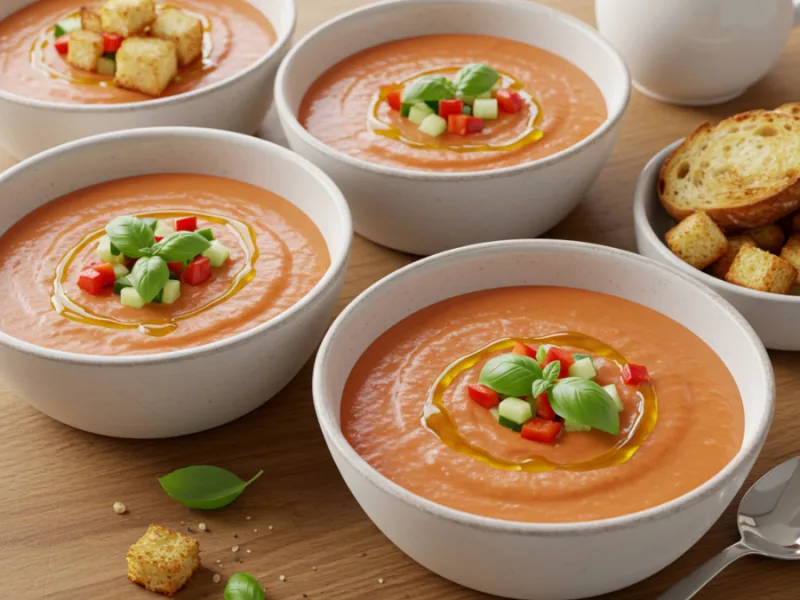
Base recipe: 4
Your kitchen companion
Ingredients
Check off ingredients as you prepare them.
Follow the steps at your own pace.
Method
Wash the tomatoes, cucumber, and bell pepper thoroughly. Remove the seeds from the bell pepper and peel the cucumber if desired.
Cut the tomatoes into quarters, ensuring to remove any tough stem parts. Chop the cucumber, bell pepper, onion, and garlic into smaller pieces for easier blending.
In a blender or food processor, add the chopped vegetables, minced garlic, sherry vinegar, and salt. Blend until smooth.
Slowly add the olive oil while blending, allowing it to emulsify and create a silky consistency. If the mixture is too thick, gradually add cold water until the desired texture is reached.
Taste the gazpacho and adjust seasoning with salt, black pepper, or additional vinegar.
Strain the gazpacho through a fine sieve for an ultra-smooth consistency (optional).
Transfer to a large bowl or pitcher and refrigerate for at least 1 hour before serving for the best flavor.
Extra technique, safety notes and details when you want to go deeper.
More tips & details
The Perfect Chilled Delight: Authentic Spanish Gazpacho
A Taste of Spain in Every Spoonful
Gazpacho is more than just a cold tomato soup—it’s a vibrant and refreshing dish that embodies the essence of Spanish cuisine. This traditional Andalusian recipe, made with ripe tomatoes, fresh vegetables, olive oil, and vinegar, has been a staple of Mediterranean kitchens for centuries. Served chilled, it offers a burst of flavors that makes it the ultimate dish for hot summer days.
This iconic Spanish dish dates back to Roman times, evolving over the centuries into the gazpacho we know today. With its smooth yet slightly textured consistency, the perfect balance of acidity and richness, and an unmistakably fresh taste, authentic Spanish gazpacho is a culinary masterpiece.
The Secret to the Best Gazpacho
The key to making an unforgettable gazpacho lies in selecting high-quality ingredients. Traditional Andalusian gazpacho is made with ripe tomatoes, crisp cucumbers, flavorful bell peppers, and the distinct touch of sherry vinegar, which enhances the depth of flavor. The addition of extra virgin olive oil creates a creamy and silky texture, transforming simple vegetables into a luxurious dish.
Unlike other cold soups, gazpacho does not rely on cream or dairy for its smoothness. Instead, it’s emulsified with olive oil, creating a rich yet light consistency. Some variations may include stale bread for additional thickness, but the most traditional versions remain naturally gluten-free.
Why Gazpacho is a Must-Try Dish
Gazpacho is not just a soup—it’s a versatile and nutritious meal that can be enjoyed as an appetizer, a light lunch, or even a refreshing drink. Whether served in a bowl with toppings like chopped vegetables, croutons, or a drizzle of olive oil, or sipped from a glass for a more casual experience, it remains one of the most beloved dishes in Spanish cuisine.
The beauty of homemade gazpacho is its ability to be customized. Some prefer a smoother blend, while others enjoy a chunkier texture with bits of vegetables for added crunch. It can be made spicy by adding a hint of chili or smoked paprika or kept classic with its pure, unaltered flavors.
The Refreshing Appeal of Cold Soups
Cold soups like gazpacho offer a unique contrast to traditional warm dishes. Their cool temperature and refreshing taste make them perfect for summer meals, allowing for a delightful and hydrating culinary experience. The combination of fresh tomatoes, cucumbers, and peppers delivers a natural cooling effect, making gazpacho a staple during Spain’s warmest months.
Perfect Pairings for a Complete Spanish Experience
Gazpacho pairs beautifully with crusty bread, Spanish tapas, or fresh seafood. A slice of jamón ibérico, a plate of patatas bravas, or a serving of grilled prawns can complement the soup’s lightness, creating a balanced meal that captures the essence of Spanish flavors. For a more refined experience, it can be served as an elegant starter before a paella or grilled fish dish.
A Timeless Recipe Passed Through Generations
Though gazpacho has evolved over time, it remains one of the most cherished Spanish dishes, enjoyed by families and restaurants alike. Whether made in a blender or a traditional mortar and pestle, this simple yet sophisticated dish has stood the test of time, proving that fresh ingredients and classic techniques always yield the best results.
Embrace the tradition of Spanish gazpacho, and discover why this chilled tomato soup continues to be a favorite worldwide.
Elevating the Classic Gazpacho for an Even Better Experience
Small Tweaks That Make a Big Difference
Gazpacho is already a refreshing and flavorful dish, but small adjustments can make it even more vibrant and delicious. By modifying ingredients, tweaking preparation techniques, and choosing the best quality produce, this traditional Spanish soup can be elevated to new heights. Whether you want to enhance its creaminess, acidity, or depth of flavor, there are various ways to refine this classic recipe.
Choosing the Best Ingredients for Maximum Flavor
The quality of ingredients is the most crucial factor in achieving an exceptional gazpacho. Since this dish relies on fresh vegetables, using the best available produce will significantly improve the final taste.
- Tomatoes: Opt for vine-ripened tomatoes such as Roma, San Marzano, or heirloom varieties. They should be deep red, fragrant, and free from excess water content. Avoid using unripe or watery tomatoes, as they lack the sweetness and intensity needed for a balanced gazpacho.
- Olive oil: A high-quality extra virgin olive oil enhances the texture and adds a mild fruitiness. Spanish Arbequina olive oil works exceptionally well due to its smooth, slightly nutty taste.
- Vinegar: Traditional sherry vinegar gives gazpacho its signature tang, but you can experiment with aged balsamic vinegar for a sweeter depth or apple cider vinegar for a brighter acidity.
- Garlic: Using roasted garlic instead of raw can mellow out the sharpness and bring a subtle sweetness, making the gazpacho smoother on the palate.
Adding Depth and Complexity to the Flavor
While classic gazpacho is delicious in its simplicity, a few ingredients can elevate its depth and complexity.
- Roasted peppers: Instead of using raw bell peppers, try roasting them first. Roasting intensifies their sweetness and removes the slightly bitter aftertaste that some raw peppers can have.
- Smoked paprika: Adding a pinch of Spanish smoked paprika (pimentón de la Vera) introduces a warm, smoky undertone that enhances the overall richness of the dish.
- Cumin: A small amount of ground cumin complements the natural sweetness of the tomatoes and adds a slightly earthy note.
- Fresh herbs: While gazpacho is traditionally made without herbs, adding fresh basil, cilantro, or mint can introduce an aromatic freshness.
Achieving the Perfect Texture
The consistency of gazpacho can vary depending on personal preference and regional traditions. Some prefer it silky smooth, while others enjoy a slightly chunky texture.
- For a smoother gazpacho: Blend the soup longer and strain it through a fine mesh sieve to remove seeds and skins, achieving a velvety texture.
- For a thicker consistency: Add stale bread soaked in water, as it gives the gazpacho a creamier texture without altering its flavor.
- For a chunkier texture: Instead of pureeing all the ingredients, reserve some diced vegetables to mix in at the end, creating a more rustic version.
Common Mistakes to Avoid
Even though gazpacho is a simple dish, small mistakes can affect its taste and texture. Here are some common pitfalls and how to avoid them:
- Using unripe tomatoes: This results in a bland gazpacho lacking natural sweetness. Always use fully ripe, in-season tomatoes for the best flavor.
- Overpowering with garlic: While garlic is essential, too much of it can make the gazpacho taste harsh and overpowering. One or two cloves are usually sufficient.
- Skipping the resting time: Gazpacho develops deeper flavors when allowed to chill for at least an hour before serving. This step enhances the harmony of flavors.
- Over-blending with olive oil: Adding olive oil too early while blending can cause the soup to turn slightly bitter. Instead, blend the vegetables first, then slowly drizzle in the oil at the end.
- Serving it too cold: While gazpacho should be chilled, serving it ice-cold can dull the flavors. Let it sit for a few minutes at room temperature before serving.
Healthier Alternatives and Customizations
Gazpacho is already a nutritious dish, but small modifications can make it even healthier while maintaining its deliciousness.
- Lower sodium: Reduce the amount of added salt and enhance flavor with ingredients like lemon juice, roasted garlic, or smoked paprika.
- No bread version: If avoiding gluten or carbs, simply omit the bread. The soup will still be smooth and flavorful when blended properly.
- More protein: Add Greek yogurt or silken tofu for a protein boost while keeping the texture creamy.
- Spicy kick: For those who enjoy heat, adding red chili flakes, cayenne pepper, or a splash of hot sauce can enhance the soup’s vibrancy.
Why Homemade Gazpacho is Always Better
While store-bought gazpacho is convenient, nothing compares to the freshness and control of a homemade version. Pre-packaged versions often contain preservatives, excessive salt, or low-quality oils, which can compromise the authentic taste. Making gazpacho at home allows you to:
- Choose the freshest ingredients for the best flavor and nutritional benefits.
- Adjust seasoning and consistency based on your personal preference.
- Avoid unnecessary additives found in commercial versions.
- Enjoy a farm-to-table experience by using locally sourced produce.
Creative Ways to Serve Gazpacho
Beyond the traditional bowl presentation, gazpacho can be served in unique and elegant ways for special occasions or casual meals.
- In a glass: Serve gazpacho in a small glass or shot glass as a refreshing appetizer at summer gatherings.
- As a dipping sauce: Use gazpacho as a dip for grilled vegetables, shrimp, or crusty bread.
- Paired with proteins: Serve alongside grilled seafood, roasted chicken, or cured meats for a balanced meal.
- Garnished creatively: Top with microgreens, edible flowers, or a swirl of yogurt for a more sophisticated presentation.
By fine-tuning ingredients, avoiding common mistakes, and experimenting with textures and flavors, gazpacho can be transformed into an even more delicious and personalized dish. Whether you stick to the traditional recipe or add a modern twist, this Spanish classic is endlessly adaptable and always satisfying.
Recivelle · /recipe/classic-spanish-gazpacho-recipe