Base recipe: This recipe serves 4 people.
Your kitchen companion
Ingredients
Check off ingredients as you prepare them.
Follow the steps at your own pace.
Method
Step 1: Preparing the Fish
Soak the Cod: Place the dried cod in a large container. Add cold water until the fish is fully submerged. Soak for 6-7 days, changing the water daily to remove excess salt and impurities.
Lye Treatment: Mix 4 liters (1 gallon) of cold water with 100 g (3.5 oz) of lye in a non-metallic container. Add the soaked fish and leave it for 2-3 days, ensuring the fish becomes gelatinous.
Neutralizing the Lye: Rinse the fish thoroughly under cold running water to remove any traces of lye. Soak in fresh cold water for an additional 4-5 days, changing the water daily.
Step 2: Cooking the Fish
Prepare the Boiling Water: In a large pot, boil 2 liters (8 cups) of water and add 15 g (1 tbsp) of salt.
Cook the Lutefisk: Cut the fish into portions and place them in the boiling water. Reduce the heat to a gentle simmer and cook for 8-10 minutes or until the fish becomes tender and translucent.
Step 3: Preparing the Accompaniments
Boil the Potatoes: Peel and boil the potatoes in salted water for 20 minutes or until tender. Drain and keep warm.
Cook the Vegetables: Steam or boil the peas or green beans for 5-7 minutes until vibrant and tender.
Make the White Sauce: Prepare a creamy white sauce using butter, flour, and milk, seasoned with salt, pepper, and a pinch of nutmeg. Keep warm.
Crisp the Bacon: Fry the bacon bits in a skillet until crispy. Drain on a paper towel.
Step 4: Serving the Lutefisk
Place a portion of lutefisk on a plate.
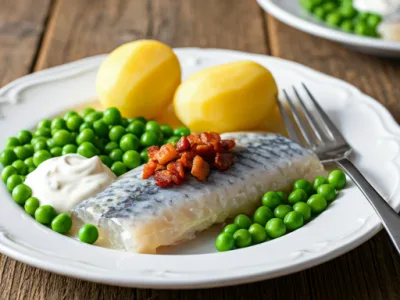
Add a serving of boiled potatoes, a side of peas or green beans, and a generous drizzle of white sauce.
Sprinkle crispy bacon bits on top and garnish with fresh parsley for a pop of color.
Extra technique, safety notes and details when you want to go deeper.
More tips & details
Lutefisk, a classic Norwegian dish, is more than just food—it's a culinary tradition that captures the heart of Scandinavian culture. With its unique preparation and deep historical roots, lutefisk is celebrated for its distinct flavor and soft, gelatinous texture. This dish has been a staple at holiday feasts and gatherings for centuries, especially during Christmas, where it holds a place of honor on Norwegian tables.
What Makes Norwegian Lutefisk Special?
The story of lutefisk begins with dried whitefish, typically cod, carefully prepared through a process involving lye and water. While this may sound unusual, it transforms the fish into a tender, melt-in-your-mouth delicacy. The aromatic blend of spices, accompaniments like boiled potatoes, and creamy white sauce perfectly complement the fish’s delicate flavor, creating a dish that is both traditional and timeless.
The preparation process may require patience, but the result is a dish that embodies the rich heritage of Norway. Whether you’re Norwegian by heritage or simply an adventurous food lover, lutefisk offers an opportunity to experience something truly extraordinary.
Why You’ll Love This Recipe
- Authentic Taste of Norway: This recipe provides an authentic way to enjoy one of Norway’s most beloved traditional dishes.
- Simple Ingredients, Rich Flavor: Made with basic, high-quality ingredients, the dish highlights the natural flavors of fish and traditional accompaniments.
- Perfect for Special Occasions: Lutefisk is a centerpiece dish for holidays or celebratory gatherings, offering a unique culinary experience for your guests.
- High in Protein: This meal is not only delicious but also nutritionally rich, with high levels of protein and essential nutrients.
A Dish Rooted in History
The origins of lutefisk date back to medieval Norway, where preserving fish through drying and curing was essential for survival. Over time, this practical necessity evolved into a cherished delicacy, celebrated for its cultural significance. The unique preparation method symbolizes Norway’s ingenuity in adapting to its natural environment and resources.
Today, lutefisk is more than a meal—it’s a connection to the past, a way to celebrate Norwegian identity, and an opportunity to explore flavors unlike any other.
How to Serve Lutefisk Like a Pro
The beauty of lutefisk lies in its versatility. Serve it with traditional sides such as:
- Boiled potatoes: The perfect mild counterpart to the flavorful fish.
- Peas or green beans: Add a fresh, vibrant touch to the plate.
- Creamy white sauce: A rich and indulgent topping that enhances every bite.
- Crisp bacon bits: For a smoky, savory contrast.
Finish your presentation with a sprinkle of fresh parsley for color and a touch of elegance. Each bite combines smooth textures and balanced flavors, making lutefisk a meal to remember.
Tips for First-Time Lutefisk Lovers
If you’re new to lutefisk, don’t let its unique preparation intimidate you. Follow this recipe step-by-step for perfect results:
- Start with high-quality dried cod for the best texture and flavor.
- Don’t rush the soaking process—it’s essential to achieving the ideal consistency.
- Use fresh, local ingredients for the sides to complement the fish’s natural flavors.
Why This Recipe Stands Out
- Rich Cultural Significance: This dish is not just food—it’s a piece of history and tradition.
- A True Norwegian Experience: Bring a touch of Norway into your home, no matter where you are in the world.
- Balanced Flavors: The creamy white sauce and perfectly cooked sides enhance the lutefisk’s delicate taste without overpowering it.
- Family-Friendly: Despite its reputation, lutefisk is surprisingly approachable when paired with the right accompaniments.
Your Turn to Try Lutefisk
Are you ready to explore the flavors of Norway and impress your family and friends with an authentic culinary experience? Follow this recipe for perfect lutefisk every time. Whether you’re honoring your heritage or just looking for something new, this dish will transport you to the heart of Scandinavia.
Serve it at your next gathering, and let the rich history and unique taste of lutefisk bring people together around your table. Don't wait—discover the magic of this Norwegian classic today!
Enhancing the Classic Norwegian Lutefisk Recipe
Lutefisk is a treasured Norwegian delicacy known for its unique preparation and unmistakable flavor. While it may seem like a dish set in stone, there are countless ways to customize and enhance this recipe. Adjustments to ingredients, cooking techniques, and accompaniments can transform the dish into a personalized culinary experience.
How Ingredient Changes Can Affect the Recipe
Substituting the Type of Fish
While cod is the traditional choice for lutefisk, other white fish such as haddock or pollock can be used.
- Haddock: Offers a milder flavor and slightly firmer texture, appealing to those who find cod too delicate.
- Pollock: Provides a sweeter undertone but may become softer than cod after the lye process.
Using different fish may slightly alter the soaking and cooking times due to varying textures and thicknesses.
Adjusting the White Sauce
The white sauce is a crucial accompaniment that balances the dish’s flavors. Small adjustments can significantly impact its richness and taste:
- Substitute heavy cream for milk to make a richer, creamier sauce.
- Add a touch of Dijon mustard for a hint of tanginess.
- Incorporate finely chopped dill or parsley to introduce herbal freshness.
Enhancing the Accompaniments
Traditional sides like boiled potatoes and peas are mild to let the lutefisk shine, but modern tweaks can elevate the meal:
- Roasted Potatoes: Roasting potatoes with olive oil and rosemary adds crispness and aromatic depth.
- Sautéed Vegetables: Replace steamed peas with a medley of sautéed zucchini, carrots, and onions for added sweetness and texture.
- Pickled Vegetables: Serve with pickled beets or cucumbers for a bright, acidic contrast to the fish.
Adding a Smoky Element
Crispy bacon is a traditional topping, but other smoky elements can be introduced:
- Smoked Paprika: Sprinkle a small amount over the dish for subtle smoky warmth.
- Smoked Sea Salt: Use this instead of regular salt to enhance the overall flavor profile.
Customizing the Cooking Process
Adjusting the Soaking Time
The soaking time for lutefisk can affect its texture:
- Longer Soaking: Creates a softer, more gelatinous fish, ideal for those who enjoy the traditional lutefisk texture.
- Shorter Soaking: Results in a firmer texture, appealing to those new to lutefisk.
Cooking Techniques Beyond Boiling
While boiling is the classic method, alternative techniques can enhance the dish:
- Steaming: Preserves the fish’s delicate flavor while ensuring even cooking.
- Baking: Bake lutefisk in a covered dish at 180°C (350°F) for 20 minutes. This method intensifies its natural flavors without additional water.
- Grilling: For a modern twist, grill the lutefisk briefly to add a slight charred flavor. Ensure the fish is well-supported on a grill-safe tray to avoid falling apart.
Balancing the Flavors
Adding Spices and Herbs
While traditional recipes avoid strong seasonings, subtle additions can bring out the dish's natural flavors:
- Bay Leaves: Add to the boiling water for a light, aromatic infusion.
- Lemon Zest: Sprinkle over the fish before serving to brighten the dish.
- Fresh Dill: A classic Scandinavian herb that pairs beautifully with fish and white sauce.
Incorporating Acidity
Acidic elements help balance the rich and gelatinous nature of lutefisk:
- Serve with a lemon wedge for squeezing over the fish.
- Add a splash of white wine vinegar to the white sauce for subtle tanginess.
- Include pickled onions or capers for a bold contrast.
Serving Variations
Traditional Presentation
For an authentic experience, serve lutefisk with boiled potatoes, white sauce, peas, and crispy bacon bits. Garnish with fresh parsley for a simple, elegant finish.
Modern Plate Ideas
Experiment with creative plating for a more contemporary approach:
- Arrange the lutefisk on a bed of mashed potatoes instead of boiled potatoes.
- Use a ring mold to present the sides as neatly layered portions around the fish.
- Drizzle the sauce artistically across the plate for visual appeal.
Pairing Suggestions
To round out the meal, consider these drink pairings:
- Aquavit: A classic Scandinavian spirit with herbal notes that complement the fish.
- Chardonnay: A creamy white wine balances the dish’s richness.
- Sparkling Water: With a slice of lemon, it keeps the meal light and refreshing.
Tips for First-Time Lutefisk Cooks
- Start with High-Quality Ingredients: The quality of the dried fish will greatly impact the final dish. Look for sustainably sourced cod.
- Follow the Soaking Process: Be patient with the lye and water treatments—they’re essential for achieving the desired texture.
- Taste Test the Sides: Ensure the potatoes and sauce are perfectly seasoned to balance the dish.
- Experiment Cautiously: Introduce one or two changes at a time to maintain the dish’s authenticity while exploring new flavors.
How These Adjustments Influence the Dish
Texture
- Firm Texture: Shorter soaking and alternative cooking methods like grilling or baking create a firmer consistency.
- Traditional Softness: Longer soaking and boiling ensure the classic gelatinous texture.
Flavor
- Richness: Creamier sauces and roasted sides deepen the dish's flavor profile.
- Balance: Acidity and herbs provide freshness and prevent the dish from feeling too heavy.
Visual Appeal
- Contemporary plating and colorful sides enhance the dish's presentation, making it more inviting for guests.
The beauty of Norwegian lutefisk lies in its flexibility. While deeply rooted in tradition, this dish welcomes modern interpretations and creative tweaks. Whether you stick to the classic recipe or venture into new territory, lutefisk offers a flavorful journey into Scandinavian culinary heritage.
Take these tips and adapt the recipe to suit your preferences, ensuring each bite is a celebration of Norway’s rich food culture.
Recivelle · /recipe/classic-norwegian-lutefisk