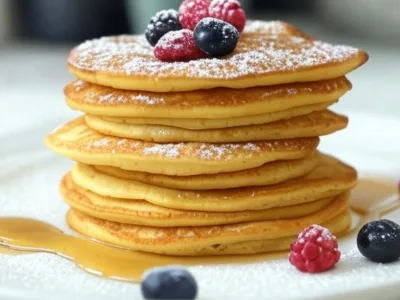
Base recipe: 4 (makes 8 pancakes)
Your kitchen companion
Ingredients
Check off ingredients as you prepare them.
Follow the steps at your own pace.
Method
1. Prepare the Batter
In a mixing bowl, whisk together the eggs, milk, and melted butter until smooth.
Gradually sift in the flour, stirring continuously to avoid lumps.
Add the salt and sugar (if making sweet Pfannkuchen). Mix until you have a smooth, slightly runny batter. Let it rest for 5–10 minutes to relax the gluten.
2. Heat the Pan
Heat a non-stick skillet or crepe pan over medium heat. Add a small knob of butter and allow it to melt, ensuring the pan is evenly greased.
3. Cook the Pancakes
Pour approximately 60 ml (¼ cup) of batter into the pan, tilting it to spread the batter into a thin, even layer.
Cook for 1–2 minutes, or until the edges begin to lift and the bottom is golden brown.
Flip the pancake carefully using a spatula, cooking for another 1–2 minutes until both sides are golden.
Transfer the cooked pancake to a warm plate and repeat with the remaining batter, adding more butter as needed.
4. Serve
For sweet Pfannkuchen, sprinkle with powdered sugar, drizzle with honey, or serve with fresh fruit and jam.
For savory Pfannkuchen, fill with ham, cheese, or sautéed vegetables.
Extra technique, safety notes and details when you want to go deeper.
More tips & details
There's something undeniably charming about German cuisine, and at the heart of its simplicity lies the timeless Pfannkuchen. These golden, fluffy pancakes have graced breakfast tables, cozy kitchens, and festive celebrations for generations. Whether you're indulging in a leisurely brunch or looking for a comforting dessert, this easy homemade Pfannkuchen recipe is bound to become your go-to favorite.
What Makes German Pfannkuchen Special?
Unlike traditional American pancakes, Pfannkuchen is lighter, thinner, and carries an elegance that pairs beautifully with both sweet and savory toppings. The secret lies in the balance of ingredients and the method of preparation, creating a pancake that is perfectly crisp on the edges yet soft and tender inside. With their versatile nature, Pfannkuchen can be enjoyed any time of the day, offering a canvas for endless flavor combinations.
Why You'll Love This Recipe
- Authenticity at Its Best: This recipe delivers a taste of traditional German culture, crafted with simple ingredients that let the flavors shine.
- Perfect for All Occasions: Whether it's a family breakfast, a quick snack, or a dessert to impress, Pfannkuchen fits the bill.
- Customizable to Your Taste: Add a sprinkle of sugar and lemon juice, a dollop of jam, or even a savory twist with cheese and ham.
- Easy to Make: With clear steps and minimal effort, you'll have perfect Pfannkuchen on your plate in no time.
A Bite of Tradition in Every Pancake
One bite of these delightful pancakes and you’ll be transported to the heart of Germany, where these culinary gems are a staple. Their golden-brown finish and subtly sweet aroma make them impossible to resist. What’s even better is how easily they come together, making them a perfect choice even for beginners in the kitchen.
Tips for the Perfect Pfannkuchen
- Use the Right Pan: A non-stick pan is essential to achieve the ideal thinness and even cooking.
- Don't Overmix the Batter: Whisk until just combined to keep the texture light and fluffy.
- Adjust for Sweet or Savory: For a dessert-like Pfannkuchen, add a touch of vanilla extract. For savory, skip the sugar and consider adding herbs or spices.
- Temperature is Key: Cook on medium heat to prevent burning and ensure even cooking.
What Sets This Recipe Apart?
This recipe doesn't just teach you how to make pancakes—it guides you through a journey of flavor and culture. It uses classic techniques passed down through generations and ensures a result that’s not just delicious but also deeply authentic.
Make It Your Own
Pair your Pfannkuchen with a variety of toppings:
- Sweet Lovers: Dust with powdered sugar, drizzle with maple syrup, or spread your favorite fruit jam.
- Savory Fans: Try smoked salmon with a dollop of sour cream or melted cheese with fresh herbs.
- Seasonal Treats: Top with fresh berries, caramelized apples, or a cinnamon sprinkle for a cozy twist.
Ready to Try It Yourself?
Now’s the perfect time to roll up your sleeves and bring a taste of German culinary heritage into your home. These classic Pfannkuchen pancakes are sure to become a family favorite, delivering smiles with every bite. So grab your ingredients, heat up your pan, and let’s make this day a little sweeter (or savory) with this delightful recipe.
Bring your kitchen alive with the aroma of these heavenly pancakes—your perfect Pfannkuchen awaits!
Mastering the Classic German Pfannkuchen: Expert Tips and Variations
German Pfannkuchen are beloved for their light texture, golden-brown edges, and versatility. Whether you're crafting them for breakfast, dessert, or a savory meal, small adjustments can make a big difference in flavor and texture. In this guide, we’ll explore ways to elevate your Pfannkuchen recipe, offering suggestions to adapt ingredients and techniques for various tastes and dietary preferences.
How to Enhance the Flavor and Texture of Pfannkuchen
Use Different Types of Milk
While whole milk is traditional, experimenting with other options can subtly alter the flavor:
- Buttermilk: Adds a slight tang and richness, giving the pancakes a fluffier texture.
- Plant-based milks: Almond or oat milk provides a nutty undertone, while soy milk keeps the texture creamy.
Adjust the Butter
- For a richer flavor, increase the amount of melted butter in the batter. This enhances the pancake's golden color and creates a more indulgent taste.
- For a healthier alternative, substitute butter with coconut oil, which adds a subtle tropical aroma.
Sweet vs. Savory: Changing the Flavor Profile
Sweet Variations
To make your Pfannkuchen extra sweet, incorporate additional elements:
- Add vanilla extract or almond extract (2–3 ml = ½ tsp) for a fragrant aroma.
- Mix a small amount of grated citrus zest (lemon or orange) into the batter for a refreshing twist.
- Increase the sugar slightly (up to 30 g = 2 tbsp) if you plan to pair them with sweet toppings like syrup or jam.
Savory Variations
Savory Pfannkuchen are perfect for a main course. Here's how to tweak the recipe:
- Omit the sugar entirely and add fresh herbs like chopped parsley, chives, or dill (5–10 g = 1–2 tbsp).
- Include a pinch of paprika or nutmeg for a subtle spiced note.
- Experiment with grated cheese (e.g., Parmesan or Gouda) in the batter for a richer taste.
How Changing Flour Affects the Recipe
The type of flour you use can significantly impact the texture and taste of Pfannkuchen:
- All-purpose flour: Produces traditional, tender pancakes with a light chew.
- Whole wheat flour: Adds a nuttier flavor and denser texture. Ideal for a hearty breakfast option.
- Gluten-free flour blends: Work well for those with dietary restrictions. Choose a blend with xanthan gum for best results.
- Buckwheat flour: Common in savory European pancakes, offering an earthy and robust taste.
Tips for Perfecting Cooking Techniques
Controlling Heat
Cooking Pfannkuchen at the right temperature ensures consistent results:
- Medium heat is ideal for even browning without burning.
- Avoid high heat, which can cause uneven cooking and burnt edges.
Getting the Right Thickness
The batter's consistency plays a crucial role:
- For thin, crepe-like pancakes, add 20–30 ml (1–2 tbsp) more milk to thin the batter.
- For thicker, heartier pancakes, reduce the milk slightly or add 1–2 tbsp of additional flour.
Adding Fillings to Pfannkuchen Batter
Incorporating fillings directly into the batter can save time and add flavor:
- For sweet pancakes, mix in small pieces of fruit like blueberries or thin apple slices before cooking.
- For savory options, stir in diced cooked bacon, grated cheese, or finely chopped vegetables.
Dietary Adaptations and Their Impact
Gluten-Free Pfannkuchen
Switching to a gluten-free flour blend ensures that everyone can enjoy this dish. The result is slightly less elastic pancakes, but still delicious when paired with toppings.
Dairy-Free Adjustments
Substituting plant-based milk and using coconut oil or vegan butter makes this recipe dairy-free without compromising flavor.
Egg Substitutes
For those avoiding eggs, replace each egg with:
- 60 ml (¼ cup) of unsweetened applesauce for a slight sweetness.
- 1 tbsp of ground flaxseed mixed with 3 tbsp of water, which adds a nutty flavor.
Impact of Ingredient Substitutions on Flavor
Sweeteners
- Replacing granulated sugar with honey or maple syrup creates a natural sweetness and softer batter.
- For savory options, omit sugar entirely or use a pinch of umami-rich miso paste.
Fats
- Using olive oil instead of butter provides a slightly fruity and robust flavor, especially for savory pancakes.
Liquids
- Sparkling water or club soda can replace part of the milk to create an airier texture, ideal for thinner pancakes.
Experimenting with Toppings and Garnishes
Classic Sweet Toppings
- Powdered sugar and lemon juice for a simple, timeless pairing.
- Warm fruit compotes (e.g., berry or apple) for a seasonal twist.
- Drizzle of dark chocolate ganache for indulgence.
Creative Savory Options
- Smoked salmon with dill and sour cream for an elegant brunch.
- Sautéed mushrooms and spinach for a hearty meal.
- A dollop of spicy tomato chutney with melted cheese for a bold flavor.
The beauty of Pfannkuchen lies in its adaptability. Small tweaks to the batter, toppings, or cooking method allow you to tailor the recipe to your preferences or dietary needs. Whether you’re sticking to the classic recipe or experimenting with flavors, these tips ensure that every Pfannkuchen you make is a masterpiece.
Let your creativity shine and enjoy every delicious bite!
Recivelle · /recipe/classic-german-pfannkuchen-recipe-easy-homemade-pancakes