Base recipe: 6
Your kitchen companion
Ingredients
Check off ingredients as you prepare them.
Follow the steps at your own pace.
Method
Preparing the crust: In a large bowl, combine the flour and salt. Add the cold butter cubes and rub them into the flour using your fingertips until the mixture resembles coarse crumbs. Add the egg and mix. Gradually add cold water, one tablespoon at a time, and knead until a dough forms. Wrap in plastic wrap and refrigerate for 30 minutes.
Pre-baking the crust: Preheat the oven to 180°C (350°F). Roll out the chilled dough on a floured surface to fit a 24 cm (9-inch) tart pan. Press the dough into the pan and trim the edges. Prick the base with a fork, cover with parchment paper, and add pie weights or dried beans. Blind bake for 15 minutes, then remove the weights and bake for another 5 minutes until lightly golden.
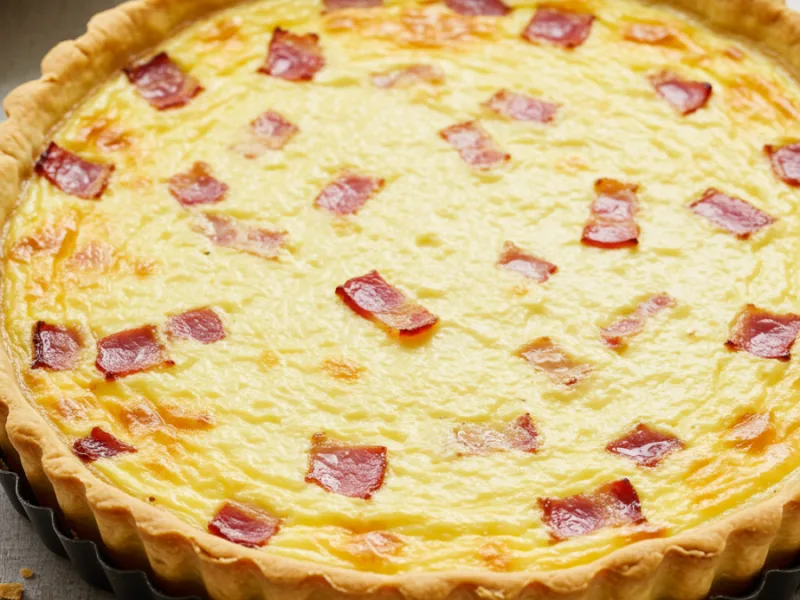
Preparing the filling: In a dry pan over medium heat, cook the diced bacon until crispy. Remove from heat and drain excess fat. In a bowl, whisk together eggs, cream, milk, black pepper, and nutmeg.
Assembling the quiche: Evenly distribute the bacon over the pre-baked crust. Slowly pour in the egg mixture, ensuring an even spread.
Baking: Reduce the oven temperature to 160°C (320°F) and bake for 30–35 minutes or until the custard is set but slightly wobbly in the center. Let it cool for at least 10 minutes before slicing.
Extra technique, safety notes and details when you want to go deeper.
More tips & details
A Timeless French Delight: The Art of Making Quiche Lorraine
The Origins and Tradition of Quiche Lorraine
Quiche Lorraine is a classic French dish that embodies the essence of French cuisine—simple yet deeply flavorful. Originating from the Lorraine region of France, this savory tart has stood the test of time, gracing the tables of both casual brunch gatherings and elegant dinners. Known for its buttery, flaky crust filled with a rich, creamy custard made from eggs, cream, and smoky bacon, this dish captures the balance between indulgence and refinement.
The original Quiche Lorraine recipe dates back to the Middle Ages when it was made with bread dough rather than the delicate pastry crust we recognize today. Over the centuries, the recipe evolved, incorporating shortcrust pastry (pâte brisée) and omitting the use of cheese, which was a later addition in more modern adaptations. While variations now exist worldwide, a true Quiche Lorraine remains pure and simple—highlighting eggs, cream, bacon, and a perfectly baked crust.
What Makes Quiche Lorraine So Special?
One of the defining characteristics of a perfect Quiche Lorraine is its silky, custard-like filling. The combination of fresh eggs and rich cream creates a delicate yet firm texture that contrasts beautifully with the crisp pastry. When baked correctly, the filling is creamy yet set, with a slight jiggle in the center, ensuring every bite is luxuriously smooth.
Another key element is the bacon. Unlike other quiches that incorporate a variety of ingredients such as vegetables, cheese, or seafood, a traditional Quiche Lorraine is all about the smoky, savory depth of bacon. French lardons—small, thick-cut pieces of cured pork belly—are typically used to provide a more intense flavor than standard bacon strips. These lardons are lightly crisped before being folded into the custard mixture, releasing their rich, salty essence throughout the filling.
The Perfect Balance of Ingredients
Achieving the ideal Quiche Lorraine texture and flavor comes down to precise ingredient proportions and proper preparation. Here’s what makes this dish exceptional:
- Flaky Crust – The foundation of any great quiche is a well-prepared shortcrust pastry. A homemade crust made with butter and chilled water ensures a light, crisp texture that supports the creamy filling without becoming soggy.
- Rich Custard – The classic ratio of eggs to cream (usually one egg per 100 ml of cream) creates a silky-smooth consistency. Using full-fat dairy enhances the richness and structure of the custard.
- Authentic Bacon Flavor – Traditional French lardons provide an intense depth of taste, but high-quality, thick-cut smoked bacon can also be used for a more accessible option.
- Gentle Baking – A low and slow baking process ensures the custard sets evenly without curdling or overcooking. The ideal baking temperature is between 160–180°C (320–350°F) for a smooth, creamy texture.
When to Serve Quiche Lorraine
The versatility of Quiche Lorraine makes it perfect for any occasion. It can be served warm, at room temperature, or even cold, making it a convenient dish for a variety of settings. Whether it's a brunch centerpiece, a light lunch with a side salad, or an elegant appetizer for a French-inspired dinner, this quiche always delivers.
Many enjoy Quiche Lorraine as part of a classic French breakfast, paired with a simple green salad dressed in a light vinaigrette. Its richness also makes it an excellent addition to a picnic or buffet spread, as it travels well and tastes just as delicious hours after baking.
Tips for Achieving the Perfect Quiche Lorraine
For those seeking to master the art of Quiche Lorraine, attention to detail is key. Here are a few expert tips to ensure your quiche turns out flawless every time:
- Pre-bake the crust – Blind baking the crust before adding the filling prevents a soggy bottom and ensures a crisp, golden base.
- Use the right cream-to-egg ratio – Too much cream will make the custard too runny, while too many eggs can result in a rubbery texture. The ideal proportion is around 4 eggs per 250 ml (1 cup) of cream.
- Avoid overbaking – The quiche should have a slight jiggle in the center when removed from the oven, as it will continue to set while cooling.
- Let it rest before slicing – Allowing the quiche to cool for at least 10–15 minutes before cutting helps the custard firm up and makes serving easier.
- Use high-quality ingredients – A dish as simple as Quiche Lorraine relies on the quality of its components, so opt for fresh farm eggs, premium bacon, and real cream for the best flavor.
A Dish That Never Goes Out of Style
Despite its humble origins, Quiche Lorraine remains a timeless classic in both home kitchens and fine dining establishments. Its balance of richness and simplicity makes it an essential recipe for any cook looking to explore authentic French cuisine. With a delicate custard, smoky bacon, and buttery crust, this dish continues to be a favorite across generations.
Whether enjoyed as a light lunch, a satisfying dinner, or a delightful brunch dish, Quiche Lorraine is a true celebration of French culinary tradition. Mastering this iconic recipe allows you to bring a taste of France into your own home, elevating everyday meals with a touch of elegance and sophistication.
Elevating the Classic Quiche Lorraine: Expert Tips and Variations
The Power of High-Quality Ingredients
One of the simplest yet most effective ways to enhance the flavor and texture of Quiche Lorraine is by using fresh, high-quality ingredients. The traditional recipe consists of just a few key elements—pastry, eggs, cream, bacon, and seasoning—so each component plays a crucial role in the final taste and consistency.
- Flour for the crust: Opting for pastry flour instead of all-purpose flour results in a lighter, more delicate crust. Pastry flour has a lower protein content, which helps achieve a flakier texture without becoming too tough.
- Butter quality: Using European-style butter (which has a higher fat content) in the crust adds richness and a superior, melt-in-your-mouth texture.
- Eggs and cream: Farm-fresh eggs and full-fat cream significantly impact the custard's silkiness and depth of flavor. Using organic or free-range eggs enhances the color and natural richness of the filling.
- Bacon selection: While traditional French lardons provide an intense smoky taste, pancetta or even smoked prosciutto can introduce a slightly different but equally delicious depth of flavor.
Enhancing Flavor with Additional Ingredients
While the classic version of Quiche Lorraine is loved for its simplicity, small modifications can introduce new layers of taste and texture without overpowering the dish.
- Cheese variations: Although the original recipe does not include cheese, adding a small amount of Gruyère, Comté, or aged cheddar provides an extra depth of umami and richness. If opting for cheese, it is best to use only a light sprinkle to avoid making the custard too dense.
- Caramelized onions: A small portion of slow-cooked caramelized onions can add a subtle sweetness that complements the smoky bacon and creamy filling. This works particularly well when using milder, unsmoked bacon or pancetta.
- Fresh herbs: Introducing chives, thyme, or tarragon brings a fresh contrast to the richness of the dish. Thyme, in particular, pairs beautifully with the buttery crust and savory bacon.
- Mustard for depth: A thin layer of Dijon mustard brushed onto the pre-baked crust adds an unexpected but delightful tang that balances the richness of the filling.
Why Homemade Quiche Lorraine is Superior
While store-bought quiches offer convenience, homemade versions are significantly superior in flavor, texture, and nutritional value. There are several reasons why preparing Quiche Lorraine from scratch leads to a better dish:
- No preservatives or artificial additives: Many commercially available quiches contain stabilizers, preservatives, and flavor enhancers, which can diminish the authentic taste.
- Control over ingredients: Making it at home allows for customization—using organic dairy, nitrate-free bacon, or a healthier crust alternative.
- Perfectly balanced texture: Store-bought quiches are often overcooked or have a rubbery filling. Homemade preparation ensures a creamy, delicate custard with a crisp, golden crust.
- Freshness and aroma: The experience of baking a quiche at home fills the kitchen with a rich, buttery aroma, something that pre-packaged quiches lack.
Common Mistakes to Avoid
Achieving the perfect Quiche Lorraine requires attention to detail. Avoiding these common pitfalls ensures a flawless, well-balanced dish every time.
- Not pre-baking the crust: Skipping this step leads to a soggy bottom, as the wet filling will soak into the pastry.
- Overbaking the quiche: A dry, rubbery filling is often the result of excessive baking time. The quiche should be slightly jiggly in the center when removed from the oven, as it will continue to set while cooling.
- Using too much bacon fat: While the bacon adds flavor, leaving too much grease in the filling can make the texture oily. Draining excess fat ensures a well-balanced custard.
- Incorrect dairy ratio: A balance of cream and milk prevents the filling from being too dense. Using only cream makes the quiche overly heavy, while too much milk results in a watery consistency.
- Cutting too soon: Allowing the quiche to rest for at least 10–15 minutes before slicing helps the filling set properly.
Healthier Alternatives Without Sacrificing Flavor
For those looking for a lighter version of Quiche Lorraine, several adjustments can be made to reduce fat and calories while maintaining flavor.
- Crust alternatives:
- Whole wheat pastry: Adds fiber and a slight nuttiness.
- Almond flour crust: A great gluten-free option with a rich, buttery flavor.
- Crustless quiche: Omitting the crust entirely makes the dish naturally lower in carbohydrates while still delivering a creamy filling.
- Healthier dairy options:
- Half-and-half instead of heavy cream: Reduces fat while keeping the custard smooth.
- Greek yogurt: A protein-rich alternative that adds slight tanginess and creaminess.
- Leaner protein substitutions:
- Turkey bacon: Provides a smoky element with less fat.
- Smoked salmon: Adds a gourmet twist while increasing omega-3 fatty acids.
Perfect Pairings for Quiche Lorraine
A well-crafted Quiche Lorraine pairs beautifully with light, refreshing side dishes that complement its richness. Some ideal accompaniments include:
- Green salad with vinaigrette: The acidity of a mustard or lemon-based dressing cuts through the richness of the quiche.
- Roasted asparagus or steamed green beans: Lightly seasoned vegetables add a delicate contrast.
- Fresh fruit: A simple fruit salad or sliced pears balances the savory elements with natural sweetness.
- Sparkling wine or dry white wine: A crisp Chardonnay, Sauvignon Blanc, or a dry Crémant enhances the creamy texture of the quiche.
A Classic Dish with Endless Possibilities
Quiche Lorraine remains a timeless favorite, yet it offers endless opportunities for refinement and personalization. Whether sticking to tradition or adding a modern twist, careful ingredient selection and technique elevate this dish from ordinary to extraordinary. By mastering small adjustments—such as using premium ingredients, balancing flavors, and avoiding common mistakes—you can create a quiche that is both authentic and uniquely your own.
Recivelle · /recipe/classic-french-quiche-lorraine-recipe