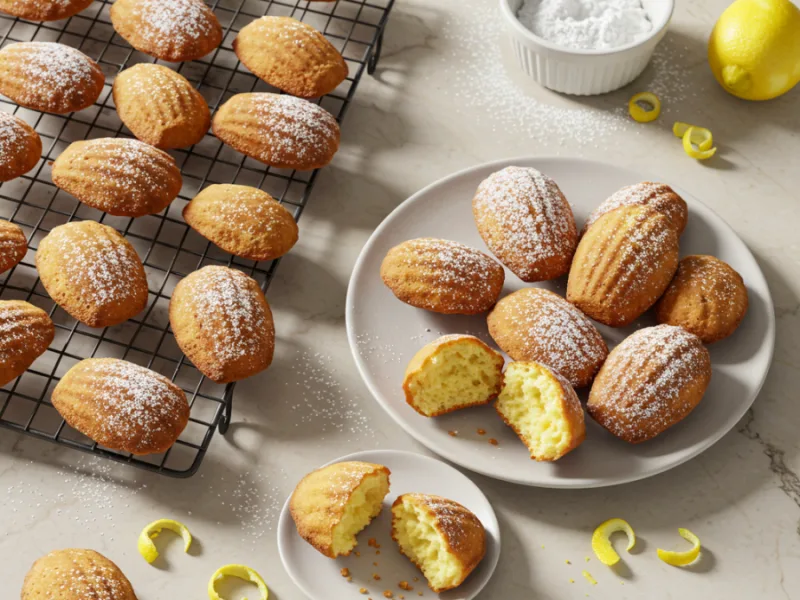
Base recipe: 24 madeleines (standard 12-shell pan, baked in 2 batches)
Your kitchen companion
Ingredients
Check off ingredients as you prepare them.
Follow the steps at your own pace.
Method
Crack the eggs into a large mixing bowl and add the granulated sugar. Whisk vigorously by hand or with an electric mixer for 4–5 minutes until the mixture is pale, thick, and forms ribbons when the whisk is lifted.
Stir in the vanilla extract and lemon zest until evenly incorporated.
In a separate bowl, sift together the flour, baking powder, and salt. Gradually fold the dry ingredients into the egg mixture using a spatula. Be gentle to maintain the airy structure.
In another small bowl, combine the melted butter and milk. Slowly drizzle the butter mixture into the batter while gently folding until fully incorporated. Do not overmix.
Cover the bowl with plastic wrap and refrigerate the batter for 1 hour. This resting time is essential for achieving the classic madeleine hump.
Preheat the oven to 375°F (190°C). Grease a madeleine pan thoroughly with softened butter or non-stick spray, then lightly dust with flour. Shake off excess flour.
Remove the chilled batter from the fridge. Spoon approximately 1 tablespoon of batter into each shell of the pan—do not spread it out. The batter will distribute as it bakes.
Bake for 9–10 minutes or until the madeleines are golden brown around the edges and the centers have risen into a gentle hump.
Remove the pan from the oven and allow the madeleines to cool for 2 minutes in the pan. Carefully transfer them to a wire rack to cool completely.
Once cooled, dust with powdered sugar if desired. Serve plain or with tea or coffee. Store in an airtight container at room temperature for up to 3 days.
Extra technique, safety notes and details when you want to go deeper.
More tips & details
Irresistible French Madeleine Cakes with a Golden Crust
A timeless treat from the heart of France
The elegance of French patisserie is captured beautifully in every delicate bite of a madeleine. These shell-shaped sponge cakes, with their tender crumb and subtly crisp edges, are a staple of French culinary tradition. Often served alongside tea or coffee, these little cakes are more than just a sweet indulgence—they’re a symbol of refined simplicity and time-honored craftsmanship.
Classic French madeleines are beloved not only for their distinct scalloped shape, but also for their light, buttery texture and gentle aroma of vanilla and lemon. Each bite delivers a perfect harmony of flavor and structure, showcasing the precision and care required to create such a delicate pastry. Whether you are an experienced baker or just starting your culinary journey, this recipe brings you the essence of authentic French baking straight into your kitchen.
The secret behind perfect madeleines
The key to a perfect madeleine lies in its iconic hump—a signature rise that forms in the center of the cake. Achieving this requires a well-rested batter, a properly greased and chilled pan, and a brief blast of high heat. These techniques may sound technical, but they are well within reach for home bakers. The results are rewarding: golden-brown shells with a soft interior and a slight crispness around the edges that make every bite unforgettable.
To create that classic flavor, our recipe incorporates pure vanilla extract, zesty lemon, and the richness of melted butter. The combination is both bright and indulgent, offering a refined sweetness that never overwhelms the palate. The texture is moist, tender, and airy—exactly as a true madeleine should be.
Why these madeleines are worth mastering
There is a reason why madeleines have stood the test of time. Their versatility makes them suitable for a variety of occasions—from elegant tea parties and brunch spreads to simple afternoon snacks or thoughtful homemade gifts. They are sophisticated without being fussy, and impressive without requiring elaborate decoration. Just a dusting of powdered sugar is enough to elevate their already graceful appearance.
This recipe honors the classic French approach, using traditional methods and simple ingredients to achieve a truly professional result. The focus is on achieving the ideal balance of flavor and texture, ensuring that each madeleine is as beautiful to look at as it is delicious to eat.
What makes this recipe special
These French madeleines are more than just another baked good—they're a moment of indulgence, a nod to a slower pace of life, and a reminder of the joy of baking from scratch. Our carefully tested recipe ensures that each detail—from chilling the batter to baking at the right temperature—is perfectly explained for success at home. You won’t need any exotic ingredients or specialized equipment beyond a madeleine pan. With a little patience and care, you’ll enjoy results that are worthy of a Parisian patisserie.
For those who enjoy baking with precision and care, this recipe offers a rewarding experience with consistently delicious outcomes. The finished madeleines store well, making them ideal for preparing ahead of time or sharing with others.
Why readers will love this recipe
- Authentic French flavor with ingredients you already have in your pantry
- A step-by-step method that ensures perfect texture and rise
- Ideal for any occasion—from festive gatherings to quiet coffee breaks
- Easily adaptable with subtle variations like orange zest, almond extract, or a chocolate drizzle
- A satisfying and approachable baking project with professional-quality results
Bring a touch of France to your home
Now is the perfect time to bring a bit of French charm into your kitchen. Whether you’re baking for yourself or to impress guests, these madeleines are sure to become a go-to recipe in your repertoire. Light, buttery, and delicately flavored, they offer the perfect balance of elegance and comfort. Make them once, and you’ll return to them again and again.
Experience the pleasure of baking something truly special—start your madeleine adventure today and discover the joy of creating a timeless French classic, one scalloped shell at a time.
Creative Ways to Elevate Your French Madeleines at Home
Mastering flavor balance: enhancing the classic taste profile
While the traditional French madeleine is admired for its simplicity, it also offers a wonderful canvas for experimentation. The light vanilla-lemon base can be enhanced with subtle yet impactful ingredient additions that elevate the overall flavor without compromising the delicate structure.
One way to refine the flavor is by incorporating browned butter instead of regular melted butter. This not only deepens the richness of the madeleines but also introduces warm, nutty notes that pair beautifully with the lemon zest. Browned butter contains aromatic compounds created through the Maillard reaction, offering a complexity that enhances the buttery essence of the cake.
Another elegant addition is a small amount of almond flour, replacing about 10% of the all-purpose flour. This adds a slightly denser texture and a refined nutty flavor, giving the madeleines a more luxurious mouthfeel while keeping their lightness intact.
You can also experiment with citrus alternatives like orange or grapefruit zest to provide a different aromatic twist. These alternatives still provide brightness but offer a new dimension of citrus complexity, appealing to those who seek variation within classic parameters.
Homemade vs store-bought: the unmatched advantages
When made at home, madeleines have a freshness and texture that cannot be replicated by store-bought versions. The shell-like crust is delightfully crisp when fresh out of the oven, while the center stays moist and sponge-like. Commercial products, on the other hand, are often dense, overly sweet, or dry due to preservatives and packaging requirements.
Baking madeleines yourself also allows full control over ingredients, ensuring the use of high-quality eggs, real butter, and natural flavorings. This contributes not only to better taste and texture but also to fewer additives and healthier results. Moreover, homemade madeleines can be customized in flavor and form—gluten-free, dairy-free, or even filled—making them more versatile than any store version.
Common baking mistakes and how to avoid them
Achieving the perfect hump, that characteristic rise in the center of the madeleine, is one of the trickiest aspects for beginners. One common mistake is skipping the resting period. Resting the batter in the refrigerator for at least one hour helps to firm the structure and allows for better oven spring when baked. Without this, the madeleines may remain flat and uneven.
Another frequent error is overmixing the batter, which leads to a dense, rubbery texture. The key is to gently fold the flour into the whipped egg and sugar mixture to retain the airy structure. Using a spatula with a delicate hand is far more effective than a whisk or electric mixer at this stage.
Incorrect oven temperature is also a culprit for poor results. A properly preheated oven (375°F / 190°C) with an initial high temperature ensures the rapid expansion needed for the hump to form. Starting with a cool oven or fluctuating temperature can ruin the texture and appearance.
Better-for-you ingredient swaps for healthier indulgence
For those looking to make healthier madeleines, there are several smart ingredient substitutions. Replace half of the all-purpose flour with whole wheat pastry flour to increase fiber content while still maintaining tenderness. Using honey or maple syrup instead of granulated sugar offers a more complex sweetness and lowers the glycemic index of the dessert.
You can also substitute unsweetened almond milk for regular milk, and choose plant-based butter to make the recipe dairy-free. When making these substitutions, it’s important to keep an eye on the texture of the batter—especially its fluidity and consistency—adjusting slightly with more flour or liquid if needed.
For added nutritional benefit, try folding in finely chopped nuts, chia seeds, or even matcha powder. Matcha not only gives the madeleines a striking green hue but also adds antioxidants and earthy depth to the flavor, creating a modern twist on the classic.
Creative filling and coating ideas to personalize your batch
Another delightful way to enhance your madeleines is by introducing light fillings or glazes. After baking, you can gently pipe lemon curd, raspberry jam, or hazelnut spread into the base of each madeleine for a surprising burst of flavor.
Alternatively, dip half of the cooled madeleine in dark chocolate and allow it to set for a glossy, elegant finish. This not only adds richness and visual appeal but also offers a satisfying contrast to the cake’s airy texture. You can even sprinkle the chocolate with crushed pistachios or sea salt flakes for added complexity.
Glazing madeleines with a thin citrus syrup while still warm is another technique used in French patisseries. This enhances moisture, boosts flavor, and gives the cakes a delicate sheen. Syrups infused with lavender, orange blossom, or vanilla bean bring an aromatic quality that elevates your homemade pastries to gourmet status.
Seasonal variations to inspire creativity
One of the great joys of baking madeleines is their seasonal adaptability. In spring, you can infuse the batter with floral notes like elderflower syrup or rosewater. In summer, replace citrus zest with fresh berry purees or top the batter with small pieces of fruit before baking.
Autumn is ideal for incorporating spices like cinnamon, nutmeg, or a dash of clove. For winter, a touch of molasses and ginger transforms madeleines into a comforting holiday treat. These seasonal changes allow you to enjoy the tradition of madeleines throughout the year while keeping your repertoire dynamic and engaging.
Bringing professional flair to your baking
To take your presentation to the next level, consider the final touches that make a difference. Lightly dust the madeleines with powdered sugar through a fine sieve for a clean, professional look. Alternatively, you can plate them with a swirl of cream or coulis, or arrange them elegantly for a dessert platter.
Using a silicone madeleine pan can also enhance consistency and simplify removal from the mold. These pans create smooth shells and eliminate sticking—one of the most common frustrations among home bakers.
If you're aiming to impress, serve your madeleines warm with a complementary drink pairing like Earl Grey tea, dessert wine, or a light espresso. Their buttery aroma and delicate crumb will shine even more when paired thoughtfully.
Recivelle · /recipe/classic-french-madeleines-recipe-light-and-buttery-cakes