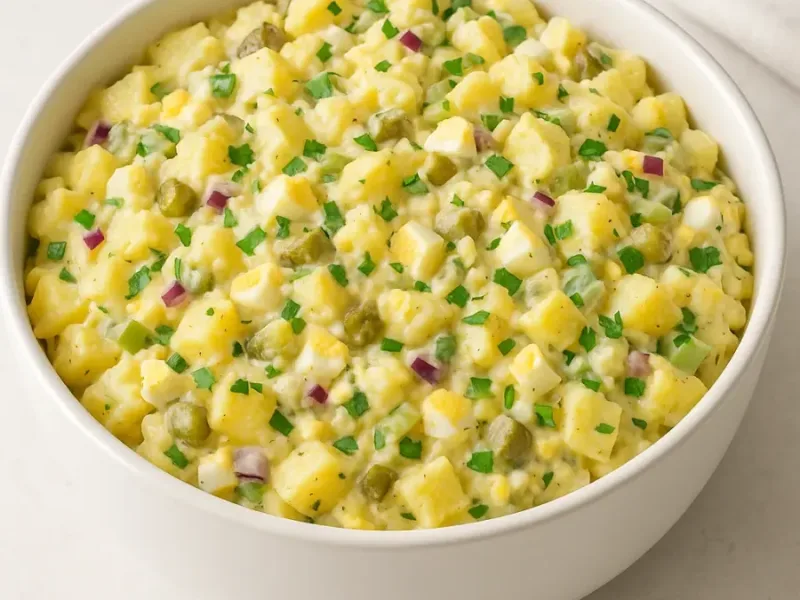
Base recipe: 6
Your kitchen companion
Ingredients
Check off ingredients as you prepare them.
Follow the steps at your own pace.
Method
Boil the potatoes: Place 3 lbs (1.4 kg) of potatoes, unpeeled, in a large pot and cover with cold water. Add 1 tsp (6 g) of salt. Bring to a boil over medium-high heat, then reduce to simmer. Cook for about 20–25 minutes until the potatoes are fork-tender but not mushy.
Cool and peel the potatoes: Drain the potatoes and spread them on a baking sheet. Let them cool for 10 minutes until they can be handled. Peel the skins off while warm for best texture.
Cut the potatoes: Slice the peeled potatoes into bite-sized cubes (about 2 cm). Place them in a large mixing bowl.
Mix the dressing: In a medium bowl, whisk together 1 cup (240 g) mayonnaise, 2 tbsp (30 g) yellow mustard, 2 tbsp (30 ml) apple cider vinegar, ½ tsp (2 g) black pepper, and a pinch of salt until smooth.
Combine potatoes with dressing: Pour the dressing over the warm potato cubes. Gently fold with a spatula until the potatoes are evenly coated without breaking them apart.
Add vegetables and eggs: Stir in ½ cup (75 g) diced celery, ½ cup (75 g) diced red onion, ½ cup (75 g) chopped dill pickles, and 3 chopped hard-boiled eggs (150 g). Mix gently until well combined.
Add herbs: Sprinkle 2 tbsp (8 g) chopped parsley over the salad and fold in lightly.
Chill before serving: Cover the bowl with plastic wrap and refrigerate for at least 1 hour. The salad should be cold and flavors well blended before serving.
Extra technique, safety notes and details when you want to go deeper.
More tips & details
Creamy and Classic Potato Salad for Every Occasion
A timeless side dish with flavor, texture, and tradition
Few side dishes carry the same universal appeal as potato salad. Its combination of tender potatoes, creamy dressing, and fresh accents makes it a favorite at gatherings year-round. Whether served with grilled meats, alongside roasted vegetables, or as part of a festive buffet, this dish stands out as a versatile, crowd-pleasing recipe. Its balance of flavors allows it to adapt to different cuisines and occasions, from summer barbecues to cozy winter meals.
The base of a great potato salad always begins with carefully chosen potatoes. Waxy varieties hold their shape after cooking and provide a firm, satisfying bite, while starchy potatoes lend creaminess and softness. Combined with ingredients like mayonnaise, mustard, vinegar, and fresh herbs, the result is a dish that is both rich and refreshing. Additions such as pickles, celery, or onions bring contrast, crunch, and sharpness, making each bite lively and complex.
Why you’ll love this recipe
- Easy preparation with simple techniques
- Creamy texture balanced by crunchy ingredients
- Perfect for barbecues, picnics, and holidays
- Customizable flavors to suit any preference
- Classic comfort food with endless variations
History and cultural roots of potato salad
The story of potato salad traces back to Europe, where recipes using boiled potatoes, vinegar, and oil were common in German cuisine during the 16th and 17th centuries. As potatoes spread across the continent, variations appeared in different regions, from warm vinegar-based salads in Bavaria to creamy versions in France. Immigrants later brought these traditions to America, where mayonnaise became a central ingredient, giving rise to the classic American potato salad enjoyed today. Over time, the dish has become an essential feature of outdoor gatherings, family dinners, and festive meals.
Related potato salad inspiration
For those who love exploring international flavors, there is also a delicious option available: Perfect Cold Potato Salad for BBQs. This version highlights the refreshing, chilled style often chosen for summer celebrations.
Storage and make-ahead tips
- Room temperature: Up to 2 days, stored in a cool place covered.
- Refrigerator: Keeps best for 3–4 days in a sealed container.
- Freezing: Can be frozen for up to 2 months, though the texture of potatoes and dressing may change slightly.
- Reheating: Place in the oven at 150 °C (300 °F) for 8–10 minutes if serving warm.
Flavor balance and ingredient influence
Every element in creamy potato salad contributes to the final character of the dish. Potatoes provide a hearty base, mayonnaise offers smooth richness, mustard gives a tangy edge, and vinegar balances flavors with brightness. Fresh herbs like parsley or dill add aroma and color, while vegetables such as celery and onions bring crispness. Small details—like seasoning with salt and pepper at the right stage—ensure that the flavors meld perfectly. For additional depth, smoked paprika or finely chopped pickles can be introduced, making the salad both familiar and unique.
Serving ideas and variations
- As a side dish for barbecue meats, burgers, or sausages
- Paired with roasted chicken or turkey during festive meals
- Served chilled for a refreshing picnic option
- Enhanced with boiled eggs for extra richness
- Lightened with yogurt or sour cream for a healthier twist
Chef’s insight into texture and consistency
A truly remarkable potato salad achieves harmony between creamy dressing and structured potatoes. Overcooked potatoes turn mushy, while undercooked ones remain unpleasantly firm. Gentle folding of the dressing prevents breaking the potato pieces, keeping the salad attractive in presentation. Letting it rest for a few hours in the refrigerator helps flavors blend, making it even more satisfying when served.
Common mistakes to avoid
- Using the wrong type of potato, which can lead to overly soft or grainy texture
- Adding dressing while potatoes are too hot, causing it to separate
- Under-seasoning, which results in a flat taste
- Skipping the resting time, leaving flavors underdeveloped
Why this method works
Balancing warm potatoes with cool dressing allows absorption of flavors without compromising texture. The layered combination of acidity, creaminess, and herbs ensures a dish that feels both indulgent and refreshing. This approach respects the traditional roots of potato salad while adapting it for modern preferences and gatherings.
Easy Flavorful Side for Every Meal
Potato salad combines tender potatoes, creamy mayonnaise, tangy mustard, and fresh herbs into a balanced dish that works for many occasions. Ready in less than 2 hours with only 20 minutes of prep, it is a reliable choice when time is limited but flavor is important. Simple steps make it easy for beginners, while customization options give experienced cooks room to adjust.
Perfect Balance of Texture and Taste
Each bite offers a mix of soft potatoes, crunchy celery, sharp onion, and refreshing dill pickles. The dressing binds everything together with richness and acidity, while chopped eggs add extra depth. Herbs like parsley brighten the salad, making it refreshing as well as filling. This balance between creamy and crisp makes the dish stand out on any table.
Storage and Make-Ahead Flexibility
Potato salad can be prepared in advance and stored in the refrigerator for up to 4 days, making it practical for parties or weekly planning. It is also possible to freeze for 2 months, though the texture may change slightly. Served chilled, it delivers peak freshness, but it can also be gently reheated if a warm version is preferred.
Dietary Options and Variations
The dish is naturally gluten-free, and with a few adjustments it becomes suitable for different dietary needs. Vegan versions are made with plant-based mayonnaise and no eggs, while lactose-free options use dairy-free substitutes. Flavor additions such as smoked paprika, fresh dill, or a touch of sour cream allow easy personalization without losing the essence of the recipe.
Why This Dish Stands Out
Best described as a classic side dish with timeless appeal, potato salad adapts to barbecues, picnics, festive buffets, and family dinners. It brings comfort, freshness, and color to the table, complementing grilled meats, roasted poultry, or vegetarian mains. Its combination of creamy dressing, tender potatoes, and crunchy vegetables makes it not only versatile but also one of the most loved accompaniments for gatherings of all kinds.
Questions
What are the best potatoes for potato salad?
The best choice is waxy potatoes like Yukon Gold or red potatoes, as they hold shape after boiling. Starchy potatoes can be used for a softer, creamier texture but may break apart when mixed with dressing.
Can I substitute mayonnaise in potato salad?
Yes, mayonnaise can be replaced with Greek yogurt or sour cream for a lighter version, or vegan mayonnaise for a dairy-free option. Each substitution changes the flavor and consistency, but still gives a creamy result.
Why does my potato salad turn watery?
Potato salad turns watery if potatoes are overcooked or not cooled before mixing. Always boil until fork-tender, drain fully, and let them steam-dry. Adding dressing while potatoes are still hot can also thin out the texture.
How long can potato salad be stored in the fridge?
Potato salad keeps safely in the refrigerator for 3–4 days in a sealed container. Always serve cold and avoid leaving it at room temperature for more than 2 hours to prevent bacterial growth.
Can potato salad be frozen?
Potato salad can be frozen for up to 2 months, but the texture may change after thawing. Mayonnaise-based dressings often separate, so freezing is not recommended unless absolutely necessary.
How do I make potato salad gluten-free or lactose-free?
Potato salad is naturally gluten-free. For lactose-free, replace mayonnaise with a lactose-free version or plant-based alternative. For a vegan option, omit eggs and use vegan mayonnaise or yogurt.
How should I serve and decorate potato salad?
Serve potato salad cold in a large bowl or platter. Garnish with fresh parsley, dill, or sliced boiled eggs for color. A light sprinkle of paprika or chives adds extra flavor and makes presentation more attractive.
Recivelle · /recipe/best-potato-salad-recipe-easy-creamy