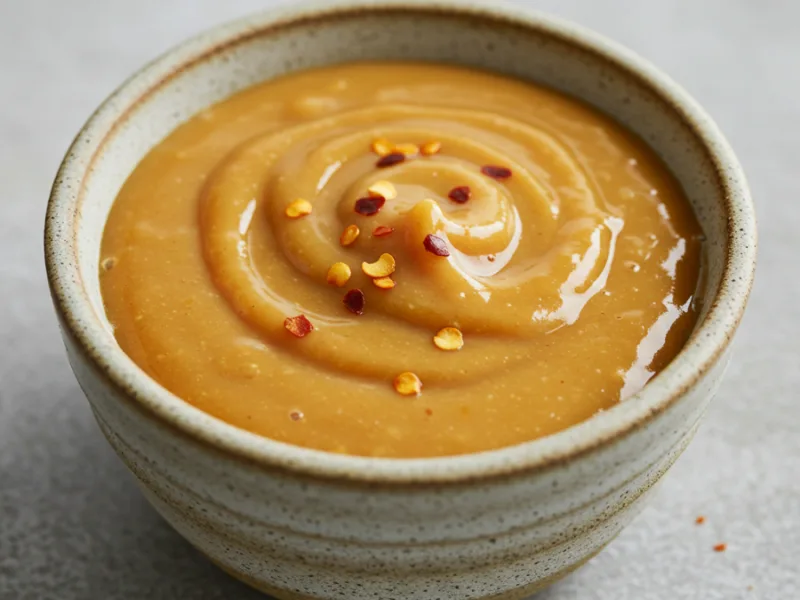
Base recipe: This recipe makes 4 servings, ideal for dipping, drizzling, or mixing into your favorite dishes.
Your kitchen companion
Ingredients
Check off ingredients as you prepare them.
Follow the steps at your own pace.
Method
Prepare the Ingredients Measure all ingredients and ensure the peanut butter is at room temperature to facilitate mixing.
Combine the Base Ingredients In a medium mixing bowl, add peanut butter, soy sauce, lime juice, rice vinegar, honey (or maple syrup), and sesame oil.
Incorporate Aromatics Add the grated ginger, minced garlic, and sriracha for a flavorful kick.
Whisk to Combine Use a whisk or fork to blend the ingredients until smooth and creamy.
Adjust Consistency Gradually add warm water while whisking until the sauce reaches the desired consistency. For a thicker sauce, use less water; for a thinner sauce, add more.
Taste and Adjust Adjust flavors by adding more lime juice for tanginess, honey for sweetness, or sriracha for heat.
Serve and Enjoy Use immediately as a dipping sauce, marinade, or dressing, or store in an airtight container in the fridge for up to 1 week. Stir before use.
Extra technique, safety notes and details when you want to go deeper.
More tips & details
Best Peanut Sauce Recipe – Creamy, Flavorful, and Ready in 3 Minutes
A rich, creamy peanut sauce can transform any dish, adding a perfect balance of savory, sweet, and umami flavors. Whether you’re looking for a dipping sauce, a salad dressing, or a delicious topping for stir-fries and noodles, this quick and easy peanut sauce recipe is the only one you’ll ever need. Made with simple pantry ingredients, it comes together in just 3 minutes, delivering a restaurant-quality experience with minimal effort.
If you've ever wondered how to make authentic peanut sauce at home, this foolproof recipe ensures a smooth, luscious texture with a deep, nutty flavor. Forget store-bought versions filled with additives—this homemade peanut sauce is fresher, healthier, and packed with natural ingredients that you can customize to your taste.
Why You’ll Love This Peanut Sauce
Quick and Easy to Make
With just a few simple ingredients and no cooking required, this sauce is ready in only 3 minutes. It’s a perfect solution for busy weeknights, meal prepping, or adding an instant flavor boost to your favorite dishes.
Versatile and Delicious
This peanut sauce is incredibly versatile—use it as a dipping sauce for spring rolls, a marinade for grilled chicken, a salad dressing, or drizzle it over noodles, rice bowls, or roasted vegetables.
Naturally Creamy and Packed with Flavor
Made with natural peanut butter, soy sauce, fresh lime juice, and a touch of sweetness, this sauce delivers the perfect balance of flavors—nutty, tangy, salty, and slightly sweet.
Healthier Than Store-Bought Versions
Unlike pre-made sauces, this homemade peanut sauce is free from preservatives, artificial flavors, and excessive sugar. You control the ingredients, ensuring a healthier, cleaner option that suits your dietary preferences.
The Perfect Balance of Flavors
The secret to an amazing peanut sauce is the balance of flavors. This recipe achieves a perfect combination of:
- Nutty richness from creamy peanut butter
- Savory depth from soy sauce
- A hint of sweetness from honey or maple syrup
- Tangy freshness from lime juice
- A touch of heat from sriracha or chili flakes
Each spoonful delivers a smooth, velvety texture that coats your favorite foods beautifully, making every bite more flavorful and satisfying.
How to Use This Peanut Sauce
Wondering how to enjoy this incredibly versatile sauce? Here are some delicious ways to incorporate it into your meals:
- Dipping Sauce – Serve it with spring rolls, dumplings, or fresh veggies for a flavorful appetizer.
- Stir-Fry Sauce – Toss it with noodles, tofu, shrimp, or chicken for an easy, flavorful dish.
- Marinade – Use it as a marinade for grilled meats or vegetables to infuse them with bold flavor.
- Salad Dressing – Thin it out with a little water and drizzle it over Asian-inspired salads.
- Rice Bowl Topping – Pour it over a bowl of steamed rice, roasted vegetables, and proteins for a quick, delicious meal.
No matter how you use it, this homemade peanut sauce will take your dishes to the next level with rich, savory goodness.
Make It Your Own – Easy Customization
One of the best things about this easy peanut sauce recipe is that you can adjust it to your preferences:
- For a thinner sauce: Add a splash of water or coconut milk until you reach the desired consistency.
- For extra heat: Increase the amount of sriracha, chili flakes, or fresh ginger.
- For a touch of sweetness: Adjust the honey or maple syrup to balance the flavors.
- For a nut-free version: Substitute almond butter or sunflower seed butter for peanut butter.
- For a gluten-free version: Use tamari or coconut aminos instead of soy sauce.
This flexible recipe allows you to create a custom peanut sauce that perfectly matches your tastes and dietary needs.
Get Ready to Make the Best Peanut Sauce!
With just a few simple ingredients and 3 minutes of your time, you can whip up this incredibly delicious peanut sauce that’s sure to become a kitchen staple. Whether you use it as a dip, a dressing, or a marinade, this homemade peanut sauce recipe will bring bold, irresistible flavors to every meal.
Try it today, and experience the creamy, nutty goodness that will have you coming back for more!
How to Customize and Enhance This Peanut Sauce Recipe
The best peanut sauce recipe is not only quick and easy but also highly adaptable. With a few ingredient swaps and adjustments, you can fine-tune the flavor, texture, and consistency to match your personal taste and dietary needs. Whether you prefer a smoother texture, a spicier kick, or a nut-free alternative, there are plenty of ways to make this peanut sauce your own. Below, you'll find a detailed guide on how different ingredient changes impact the overall taste and function of this sauce.
Adjusting the Texture and Consistency
How to Make It Thicker
If you prefer a thicker peanut sauce, ideal for dipping or using as a spread, try these adjustments:
- Reduce the amount of water – Start with 30 ml (2 tbsp) of warm water and add more only if needed.
- Use crunchy peanut butter – This adds more texture and creates a richer mouthfeel.
- Add more peanut butter – Increasing the amount to 150 g (⅔ cup) will create a heavier, richer sauce.
- Chill the sauce – Letting the sauce sit in the fridge for 30 minutes will naturally thicken it as the peanut butter firms up.
How to Make It Thinner
For a pourable peanut sauce, perfect for salads, noodles, and marinades, you can:
- Increase the warm water to 100 ml (6-7 tbsp) – Add gradually while whisking until the sauce reaches the desired consistency.
- Use light coconut milk instead of water – This makes the sauce silkier with a mild coconut undertone.
- Add extra lime juice – The acidity will thin out the sauce while enhancing the freshness.
Adjusting the Flavor Balance
Making It More Sweet
For a smoother, sweeter peanut sauce, try:
- Increasing the honey or maple syrup – Adding an extra 5-10 ml (1-2 tsp) makes it more balanced and reduces bitterness.
- Using coconut sugar or brown sugar instead – These add a deeper caramelized sweetness.
- Mixing in a bit of coconut milk – This adds natural sweetness while softening the peanut flavor.
Enhancing the Umami Depth
If you love savory-rich flavors, enhance the umami taste by:
- Using dark soy sauce instead of regular soy sauce – This adds more depth and a slightly thicker consistency.
- Adding a small amount of miso paste (5 g / 1 tsp) – This intensifies the umami and gives a complex, fermented depth.
- Using a splash of fish sauce (optional) – It enhances the savory elements, making it more authentic.
Adding More Tanginess
For a brighter, fresher peanut sauce, increase the acidity with:
- Extra lime juice – A bit more lime juice (up to 40 ml / 3 tbsp) will make it zestier.
- A dash of rice vinegar – Adds a sharp yet subtle tang.
- A small amount of apple cider vinegar – This brings a mild fruity acidity.
Increasing the Spice Level
If you love spicy peanut sauce, consider these modifications:
- Double the sriracha or chili flakes – Increase to 10 ml (2 tsp) for more heat.
- Add fresh chopped chilies – Red Thai chilies add a bold, fiery kick.
- Use a bit of chili oil – This gives it a rich, smoky heat.
- Incorporate a pinch of cayenne pepper – Enhances the spiciness without changing the flavor balance.
Substituting Ingredients for Dietary Preferences
Making It Gluten-Free
To make this peanut sauce completely gluten-free, replace:
- Soy sauce with tamari or coconut aminos – These alternatives provide the same umami depth without gluten.
Creating a Nut-Free Version
For those with peanut allergies, try:
- Sunflower seed butter – Mimics the richness and texture of peanut butter with a mild, nutty flavor.
- Almond butter – A slightly milder alternative that works well in this recipe.
- Cashew butter – Creates a creamier and more neutral-flavored sauce.
Making a Low-Sodium Version
If you need a low-sodium peanut sauce, consider:
- Using low-sodium soy sauce – Reduces salt without affecting the umami taste.
- Replacing soy sauce with coconut aminos – Naturally lower in sodium while still flavorful.
- Reducing sesame oil – Although rich in taste, it adds a small amount of sodium.
Making It Vegan
This peanut sauce is almost entirely plant-based, but for a fully vegan version:
- Use maple syrup instead of honey – This keeps it sweet yet completely vegan.
Enhancing the Nutritional Value
If you want to boost the health benefits of this peanut sauce, consider adding:
- Chia seeds or flaxseeds – A teaspoon of ground flax or chia increases fiber and omega-3s.
- Turmeric (¼ tsp) – Adds anti-inflammatory properties and a subtle earthiness.
- A touch of nutritional yeast (1 tbsp) – Enhances the umami flavor while providing B vitamins.
Best Ways to Use This Peanut Sauce
Once you've perfected your peanut sauce, you can use it in various delicious ways:
As a Dipping Sauce
- Spring rolls – Pairs perfectly with fresh vegetable spring rolls.
- Grilled meats – Ideal for chicken skewers or satay.
- Vegetable platters – A great dip for carrots, cucumbers, and bell peppers.
As a Dressing
- Asian-style salads – Toss with shredded cabbage, carrots, and fresh herbs.
- Rice bowls – Drizzle over brown rice, tofu, and avocado.
As a Stir-Fry Sauce
- Noodle stir-fries – Works well with rice noodles, soba, or udon.
- Vegetable stir-fries – Coat roasted broccoli, bell peppers, and zucchini for added flavor.
As a Marinade
- Grilled chicken or tofu – Infuses a deep nutty flavor into proteins.
- Roasted vegetables – Toss with eggplant, mushrooms, or cauliflower before roasting.
Elevate Your Peanut Sauce to Perfection
This best peanut sauce recipe is more than just a condiment—it's a flavor powerhouse that brings depth, richness, and balance to every dish. By making small adjustments, you can customize it to match your preferences, whether you want a thicker, spicier, tangier, or nut-free version.
Experiment with different variations and find your perfect peanut sauce that transforms simple ingredients into something extraordinary. Try it today and discover how a few pantry staples can create a sauce that’s both versatile and irresistible!
Recivelle · /recipe/best-peanut-sauce-recipe-easy-3-minute-recipe