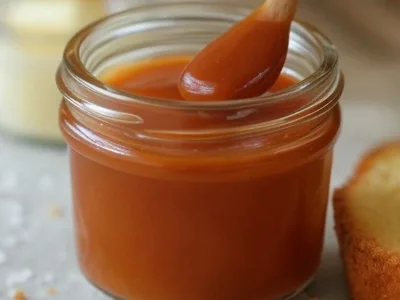
Base recipe: This recipe makes approximately 300 ml (1 ¼ cup) of salted caramel, enough for about 10 servings when used as a drizzle or topping.
Your kitchen companion
Ingredients
Check off ingredients as you prepare them.
Follow the steps at your own pace.
Method
Prepare ingredients
Measure all ingredients before you start. Caramelization happens quickly, so having everything ready is essential.
Use a heavy-bottomed saucepan to ensure even heat distribution.
Dissolve the sugar
Pour 200 g sugar into the saucepan and add 60 ml water.
Stir lightly just to moisten the sugar, then place over medium heat.
Let the sugar dissolve completely without stirring.
Caramelize the sugar
Once the sugar dissolves, increase to medium-high heat and bring to a boil.
Do not stir. Instead, gently swirl the pan to ensure even caramelization.
The mixture will go through stages: first clear, then pale golden, and finally a deep amber color.
Add butter
Once the caramel reaches a deep amber shade, carefully add 90 g butter.
Whisk continuously as the butter melts and incorporates into the caramel.
Incorporate heavy cream
Remove the saucepan from heat. Slowly pour in 80 ml heavy cream while whisking.
The mixture will bubble aggressively, so be careful. Continue stirring until smooth.
Season and finish
Stir in ½ tsp fine sea salt and optionally ½ tsp vanilla extract.
Let the caramel cool for 10-15 minutes, then transfer to a jar for storage.
Storage tips
Store in a sealed glass jar at room temperature for up to 3 days, or in the refrigerator for up to 3 weeks.
If refrigerated, warm slightly before use to restore its smooth texture.
Extra technique, safety notes and details when you want to go deeper.
More tips & details
Indulge in the Perfect Balance of Sweet and Salty with This Best Homemade Salted Caramel Recipe
There’s something truly irresistible about salted caramel. The way it combines deep, buttery caramel flavors with a subtle touch of sea salt creates an unforgettable contrast that enhances everything it touches. Whether drizzled over ice cream, swirled into coffee, or used as a filling for cakes and pastries, this homemade salted caramel will take your desserts to the next level.
This recipe is the ultimate guide to making rich, silky, and perfectly balanced salted caramel in your own kitchen. Forget store-bought versions filled with unnecessary additives—this simple yet luxurious recipe delivers pure, golden caramel perfection using just a handful of pantry staples.
Why You’ll Love This Recipe
Making homemade salted caramel might seem intimidating, but this foolproof recipe ensures perfect results every time. Here’s why you’ll love it:
- Incredible Flavor: The deep caramelization combined with just the right amount of sea salt creates a rich, smooth, and decadent sauce.
- Versatile Use: This silky salted caramel can be used in endless ways—drizzle it over desserts, mix it into frostings, or simply enjoy it by the spoonful.
- Easy and Quick: With just a few ingredients and minimal effort, you can make a batch in under 15 minutes.
- Better Than Store-Bought: No preservatives, no artificial flavors—just pure, homemade goodness with the perfect balance of sweetness and salt.
- Customizable: Want it thicker for a spread or thinner for drizzling? This recipe lets you adjust the consistency to your preference.
The Magic of Salted Caramel
What makes salted caramel so addictive? It’s all about the contrast between the deep, nutty sweetness of caramelized sugar and the sharp, savory hit of salt. This combination enhances flavors, making desserts taste more complex and satisfying. It’s why salted caramel has become a staple in everything from lattes to gourmet chocolates.
When you make it at home, you can control every element—the richness of the caramel, the intensity of the salt, and the consistency. This recipe gives you the power to create the perfect salted caramel every single time.
A Must-Have for Every Dessert Lover
Imagine drizzling warm salted caramel over a scoop of vanilla ice cream, watching it slowly melt into a golden, glossy layer. Picture it cascading down the sides of a moist chocolate cake, or blending seamlessly into your morning coffee for a luxurious twist. Once you have this homemade salted caramel in your kitchen, you’ll find yourself reaching for it again and again.
This recipe is your key to unlocking a world of dessert possibilities. Whether you're a home baker, a coffee enthusiast, or someone who simply enjoys gourmet flavors, this easy salted caramel recipe will become one of your favorites.
Try It Today and Elevate Your Desserts
Once you see how simple and rewarding it is to make homemade salted caramel, you’ll never go back to store-bought versions. It’s time to bring out your saucepan, gather your ingredients, and create a batch of the most delicious salted caramel you’ve ever tasted.
Ready to experience the perfect blend of sweet and salty? Follow this step-by-step recipe, and in just a few minutes, you’ll have a jar of golden, silky caramel goodness waiting to transform your favorite treats.
How to Perfect Your Best Homemade Salted Caramel Recipe
Making homemade salted caramel is a simple yet delicate process, where small adjustments can significantly impact the flavor, texture, and consistency. Whether you prefer a thicker caramel for spreading, a lighter sauce for drizzling, or a deeper, richer flavor, understanding how each ingredient and technique affects the final result is key.
Choosing the right sugar for caramelization
The type of sugar used in this recipe influences not only the flavor but also the texture of the caramel.
- White granulated sugar – The most commonly used sugar, it produces a clean, pure caramel flavor with a smooth texture.
- Brown sugar – Contains molasses, which adds a deeper, slightly bitter complexity. However, it may create a softer caramel with a grainier texture.
- Demerara or turbinado sugar – Has larger crystals and a slight molasses flavor, producing a richer, more intense caramel.
- Coconut sugar – A great natural alternative, though it creates a slightly darker caramel with subtle toasty notes.
If substituting, remember that brown or unrefined sugars contain more moisture, which may require a slightly longer cooking time to achieve the right consistency.
Adjusting the butter for a different texture
Butter contributes to the richness and smoothness of the caramel. Depending on the type of butter, you can adjust the flavor and texture of your homemade salted caramel.
- Unsalted butter – Allows you to control the level of salt, ensuring a perfect balance of flavors.
- Salted butter – Adds extra depth, but be cautious with additional salt in the recipe.
- Brown butter (beurre noisette) – Enhances the caramel with a nutty, toasted aroma, adding a layer of complexity.
- Plant-based butter – Works well for a dairy-free version, but make sure to choose a high-fat, unsweetened variety for the best results.
If you want a richer, more decadent caramel, increase the butter slightly by an extra 10-15 g (1 tbsp). This will create a creamier consistency.
Modifying the consistency with heavy cream
Heavy cream plays a crucial role in determining how thick or thin your caramel will be.
- More heavy cream (100 ml instead of 80 ml) – Results in a thinner, pourable caramel perfect for drizzling over desserts.
- Less heavy cream (60 ml instead of 80 ml) – Produces a thicker, more spreadable caramel, ideal for filling pastries or macarons.
- Coconut cream as a substitute – Creates a dairy-free option with a slightly tropical undertone, but maintains a similar consistency to regular heavy cream.
For an extra smooth texture, always use room-temperature cream and add it slowly while whisking continuously to prevent sugar from hardening.
Controlling the caramelization for different flavor profiles
The cooking time and temperature directly affect the flavor intensity of your salted caramel.
- Light caramel (golden color, cooked to 165-170°C / 330-338°F) – Delivers a milder, buttery sweetness with subtle toffee notes.
- Medium caramel (amber color, cooked to 175-180°C / 347-356°F) – Balances richness and depth, creating the classic salted caramel taste.
- Dark caramel (deep brown color, cooked to 185-190°C / 365-374°F) – Results in a more intense, slightly bitter caramel, perfect for sophisticated desserts.
If you prefer a less sweet caramel, allow it to cook 5-10 seconds longer until it turns a darker amber before adding butter. However, be cautious—waiting too long may cause burning and a bitter aftertaste.
Choosing the right salt for enhanced flavor
The type and amount of salt dramatically impact the final taste of your homemade salted caramel.
- Fine sea salt – Dissolves easily, creating a consistent salty-sweet balance.
- Flaky sea salt (like Maldon or Fleur de Sel) – Adds crunchy bursts of salt, enhancing both texture and taste.
- Himalayan pink salt – Provides a slightly milder saltiness with trace minerals that subtly enrich the flavor.
- Smoked sea salt – Infuses the caramel with a unique, slightly smoky taste, perfect for gourmet pairings.
For a more intense salted caramel, increase the salt from ½ tsp to ¾ tsp. However, be mindful of over-salting, as caramel should maintain a delicate balance between sweet and savory.
How to fix common caramel mistakes
Even with the best techniques, caramel-making can sometimes be tricky. Here are some common problems and how to fix them.
- Sugar crystallizing – If the sugar seizes up, add 1 tbsp of water and let it dissolve slowly over low heat without stirring.
- Caramel too thick – Whisk in an extra splash of heavy cream until the desired consistency is reached.
- Caramel too thin – Return to low heat and simmer for 1-2 extra minutes, stirring constantly.
- Caramel tastes bitter – This means it’s overcooked. Start a new batch and remove from heat a few seconds earlier.
- Lumpy caramel – If lumps form, strain the caramel through a fine mesh sieve while still warm.
Customizing your caramel for different desserts
Homemade salted caramel is incredibly versatile and can be adjusted to suit different desserts.
- For ice cream topping – Keep it slightly thinner by adding an extra 10 ml (2 tsp) of cream.
- For caramel-filled chocolates – Let it thicken more by cooking for an extra 30 seconds before adding butter.
- For coffee syrup – Stir in 1 tsp of vanilla extract for extra warmth.
- For caramel frosting – Allow the caramel to cool completely before mixing into buttercream or whipped cream.
Experimenting with additional flavors
Enhance the depth and complexity of your salted caramel by adding different infusions:
- Vanilla bean – Scrape in the seeds of ½ a vanilla pod for a subtle floral aroma.
- Espresso powder – Mix in ¼ tsp for a bold, coffee-infused caramel.
- Bourbon or rum – Add 1 tbsp of alcohol for a sophisticated, grown-up twist.
- Cinnamon or nutmeg – Stir in a pinch of warm spices for holiday-themed caramel.
Final thoughts on making the perfect salted caramel
Mastering homemade salted caramel means understanding how each ingredient and step affects the final outcome. By experimenting with different sugars, butters, salts, and cooking techniques, you can create a caramel sauce tailored to your taste preferences.
Once you've perfected the balance of sweetness, richness, and saltiness, you'll never need store-bought caramel again. Enjoy your homemade salted caramel drizzled over your favorite desserts, swirled into coffee, or simply by the spoonful!
Recivelle · /recipe/best-homemade-salted-caramel-recipe