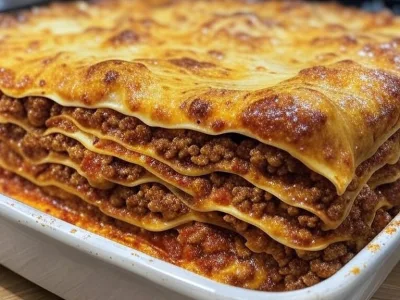
Base recipe: 8 portions
Your kitchen companion
Ingredients
Check off ingredients as you prepare them.
Follow the steps at your own pace.
Method
Step 1: Prepare the Meat Sauce
Heat olive oil in a large skillet over medium heat. Add the chopped onion and sauté for 3-4 minutes until translucent.
Add minced garlic and cook for another minute.
Add ground beef, breaking it up with a spoon, and cook until browned (about 6-8 minutes).
Stir in crushed tomatoes, tomato puree, sugar, oregano, basil, salt, and pepper. Reduce heat to low and simmer uncovered for 20 minutes, stirring occasionally.
Step 2: Prepare the Cheese Mixture
In a medium bowl, combine ricotta cheese, shredded mozzarella, grated Parmesan, and the egg. Mix until smooth and set aside.
Step 3: Preheat and Assemble
Preheat your oven to 180°C (356°F). Grease a 23x33 cm (9x13 inch) baking dish.
Spread a thin layer of meat sauce at the bottom of the dish.
Add a layer of lasagna sheets, ensuring they slightly overlap.
Spread a portion of the cheese mixture over the lasagna sheets.
Top with meat sauce. Repeat the layers (pasta, cheese, meat sauce) until all ingredients are used, ending with a layer of meat sauce.
Sprinkle the top with shredded mozzarella and grated Parmesan.
Step 4: Bake the Lasagna
Cover the dish with aluminum foil (to prevent sticking, lightly grease the foil with oil).
Bake in the preheated oven for 25 minutes. Remove the foil and bake for an additional 15-20 minutes until the cheese is golden and bubbling.
Let the lasagna rest for 15 minutes before slicing and serving.
Extra technique, safety notes and details when you want to go deeper.
More tips & details
There's nothing quite like homemade lasagna, layered with rich, flavorful meat sauce, creamy cheese, and perfectly cooked pasta sheets. This classic Italian-inspired dish brings the whole family together, making every meal feel like a celebration. Whether you're preparing a cozy dinner or impressing guests at a gathering, this lasagna recipe guarantees to steal the spotlight. Its delightful aroma, irresistible flavors, and indulgent textures will leave everyone asking for seconds.
What Makes This Lasagna Recipe Truly Special?
This homemade lasagna is crafted with care, combining premium ingredients to achieve the perfect balance of taste and texture. Here's what sets it apart:
- Rich Meat Sauce: A hearty sauce made with a blend of ground beef, ripe tomatoes, garlic, and aromatic herbs ensures every bite bursts with flavor.
- Creamy Cheese Layers: A luscious mix of ricotta, mozzarella, and Parmesan adds creaminess, melting beautifully as it bakes.
- Perfect Pasta Layers: Tender lasagna sheets hold the dish together, creating a satisfying structure for each layer of goodness.
Each component is prepared with attention to detail, ensuring that the lasagna is flavorful, moist, and satisfying.
Why You'll Love This Recipe
1. It’s Comfort Food at Its Finest There’s something magical about the combination of meat sauce, cheese, and pasta. This dish brings warmth and comfort, making it a perfect choice for weeknight dinners or festive occasions.
2. Versatile and Adaptable You can easily adapt this recipe to suit dietary preferences. Swap out ground beef for turkey, or try a vegetarian version with roasted vegetables.
3. Make-Ahead Friendly This lasagna is perfect for meal prep. You can assemble it in advance, refrigerate it, and bake it fresh when needed. It also freezes beautifully, ensuring you always have a delicious meal ready to go.
4. Loved by Everyone From kids to adults, this lasagna is a crowd-pleaser. Its comforting flavors and hearty layers make it a favorite for any occasion.
Tips for Perfecting Your Homemade Lasagna
To make the best lasagna, here are a few tips:
- Use High-Quality Ingredients: Fresh tomatoes, quality cheese, and flavorful herbs make all the difference.
- Layer Strategically: Start with a thin layer of meat sauce to prevent sticking, then alternate with pasta, cheese, and sauce.
- Let It Rest: Allow the lasagna to rest for at least 15 minutes after baking to set the layers and make slicing easier.
- Customize to Taste: Feel free to add fresh spinach, mushrooms, or even a hint of spice with red pepper flakes to make it your own.
Imagine This at Your Dinner Table
Picture this: You pull the lasagna out of the oven, and the bubbling cheese creates a golden crust that hints at the goodness inside. As you slice into the dish, the layers of pasta, sauce, and cheese reveal themselves, inviting you to take the first bite. The first forkful delivers an explosion of flavors—savory, creamy, and just the right amount of tang from the tomatoes. Paired with a crisp green salad and a glass of wine, this lasagna transforms any meal into a memorable dining experience.
Ready to Make the Best Homemade Lasagna?
This homemade lasagna recipe is waiting to become a staple in your kitchen. Gather your ingredients, follow the step-by-step instructions, and enjoy the process of creating something truly special. Don’t wait—bring a taste of Italy to your table today and experience the joy of homemade cooking like never before.
Prepare, bake, and savor every moment of this comforting, delicious dish. Share it with your loved ones, and watch as it becomes a favorite in your household. Once you’ve tried this recipe, you’ll never look at store-bought lasagna the same way again!
Tips and Tricks for Perfecting The Best Homemade Lasagna with Meat Sauce
Mastering a classic lasagna recipe allows you to create a dish that’s both versatile and indulgent. Whether you want to tweak the flavors, adjust for dietary needs, or enhance the texture, small changes can make a big impact. Below, we’ll explore how ingredient substitutions and cooking techniques can influence the final result of your lasagna.
Adjusting the Meat Sauce
Using Different Types of Meat
While the traditional recipe calls for ground beef, you can substitute or mix it with other meats:
- Ground Turkey or Chicken: These leaner meats reduce the fat content, resulting in a lighter lasagna. However, the flavor may be milder, so consider adding extra spices like paprika or chili flakes for depth.
- Pork or Sausage: Mixing ground pork or Italian sausage with beef enhances the richness and adds a slightly sweet and spicy kick.
- Vegetarian Option: Replace the meat with finely chopped mushrooms, lentils, or a plant-based ground meat substitute. These alternatives maintain the hearty texture while keeping the dish vegetarian.
Enhancing Tomato Flavor
For a bolder tomato taste in the sauce:
- Add a tablespoon of tomato paste during cooking to intensify the richness.
- Use fire-roasted tomatoes for a smoky undertone.
- Incorporate a splash of red wine to add complexity to the sauce. Let it simmer for a few minutes to cook off the alcohol.
Customizing the Cheese Layers
Selecting Different Cheeses
The cheese layer contributes to the creaminess of lasagna. Experimenting with different types can alter the texture and flavor:
- Fresh Mozzarella: For a more authentic and milky taste, use fresh mozzarella instead of shredded.
- Goat Cheese or Feta: These cheeses introduce tanginess, perfect for those who enjoy a bold flavor.
- Gruyère or Fontina: Both melt beautifully and provide a nutty, buttery flavor.
Making it Creamier
If you prefer an ultra-creamy lasagna:
- Mix mascarpone cheese with ricotta for a silkier texture.
- Use a small amount of béchamel sauce (white sauce) between layers for added richness.
Experimenting with Pasta Sheets
Fresh vs. Dried Pasta
- Fresh Lasagna Sheets: These offer a more tender texture and absorb flavors better. However, they require a shorter cooking time and may be more delicate to handle.
- Dried Lasagna Sheets: Easier to use, these hold their structure well, especially if you're making lasagna in advance or freezing it.
No-Boil Lasagna Sheets
Using no-boil sheets saves time, but they require a slightly wetter sauce to cook properly. If using these, ensure your meat sauce isn’t overly reduced.
Adding Vegetables
Incorporating vegetables can enhance the flavor, texture, and nutritional value of the lasagna:
- Spinach: Add fresh or frozen spinach to the cheese mixture for a subtle earthy flavor and a nutrient boost.
- Zucchini or Eggplant: Thinly sliced zucchini or eggplant can replace pasta layers for a gluten-free or low-carb option.
- Roasted Bell Peppers or Carrots: These add natural sweetness and a vibrant color to the dish.
Seasoning Enhancements
Fresh Herbs vs. Dried Herbs
- Fresh Herbs: Use fresh basil, oregano, or parsley for a bright and aromatic finish. Add them during assembly or as a garnish after baking.
- Dried Herbs: These work well in the meat sauce, as they infuse more deeply during the longer cooking time.
Spices for Extra Depth
If you enjoy bold flavors, consider adding:
- A pinch of nutmeg to the cheese mixture for warmth.
- A dash of cinnamon or allspice to the meat sauce for a Mediterranean twist.
- Red pepper flakes to add a gentle heat without overpowering the dish.
Substitutions for Dietary Needs
Gluten-Free Lasagna
- Use gluten-free lasagna sheets or thinly sliced vegetables like zucchini or sweet potatoes as pasta substitutes.
- Ensure all other ingredients, such as canned tomatoes or cheese, are labeled gluten-free.
Dairy-Free Lasagna
- Replace ricotta and mozzarella with dairy-free cheese alternatives. Look for those that melt well, such as almond-based or cashew-based options.
- Use a tofu-based mixture blended with nutritional yeast to mimic ricotta's texture and flavor.
Lower-Calorie Option
- Use low-fat ricotta and mozzarella.
- Replace half the meat with finely chopped vegetables or plant-based proteins.
- Opt for whole-wheat lasagna sheets for added fiber and nutrients.
Cooking Techniques to Elevate Your Lasagna
Building the Layers
- Spread a thin layer of meat sauce on the bottom of the baking dish to prevent sticking.
- Alternate layers evenly to ensure every slice has a perfect ratio of pasta, cheese, and sauce.
- Avoid overloading any single layer, as it may cause the lasagna to collapse when served.
Baking Tips
- Cover the lasagna with foil for the first half of the baking time to trap steam and cook the pasta evenly. Remove the foil during the last 15-20 minutes for a golden, bubbly cheese topping.
- Let the lasagna rest for at least 15 minutes after baking. This step allows the layers to set, making slicing easier and more visually appealing.
Freezing and Reheating
- Assemble the lasagna but don’t bake it. Cover tightly with foil and freeze for up to three months. When ready to cook, bake directly from frozen at 180°C (356°F) for about 1 hour and 15 minutes, uncovering for the last 15 minutes.
- To reheat leftover lasagna, cover with foil to prevent drying out and bake at 175°C (347°F) until heated through.
How Ingredient Changes Affect the Flavor
Sweet vs. Savory Balance
- Adding sugar to the meat sauce balances the acidity of the tomatoes, creating a smoother flavor profile. Omit the sugar if you prefer a tangier sauce.
- Using unsalted cheese and low-sodium canned tomatoes reduces the saltiness, but you may need to adjust seasoning accordingly.
Richness and Creaminess
- Incorporating mascarpone or béchamel makes the lasagna creamier but heavier. For a lighter option, stick with ricotta and reduce the cheese topping slightly.
Depth of Flavor
- Cooking the meat sauce for longer allows the flavors to meld and deepen. Adding wine or balsamic vinegar gives the sauce a richer, more complex taste.
Experiment with these tips to create a lasagna tailored to your preferences, and enjoy the process of making this timeless dish even more extraordinary!
Recivelle · /recipe/best-homemade-lasagna-meat-sauce