Base recipe: 8
Your kitchen companion
Ingredients
Check off ingredients as you prepare them.
Follow the steps at your own pace.
Method
Whisk the yolks: In a large heatproof bowl, whisk 6 egg yolks with 1 cup granulated sugar until the mixture becomes pale and thick. This should take about 2–3 minutes of vigorous whisking.
Heat the milk and cream: In a medium saucepan, combine 4 cups whole milk and 1 cup heavy cream. Add ½ tsp cinnamon, 1 tsp nutmeg, 1 tsp vanilla extract, and a pinch of salt. Heat gently over medium heat until the mixture is steaming but not boiling (about 75–80 °C / 170–175 °F).
Temper the eggs: Slowly pour about 1 cup (240 ml) of the hot milk mixture into the yolks while whisking constantly. Continue whisking until smooth, then gradually return the tempered mixture into the saucepan with the remaining milk.
Cook until thickened: Stir constantly with a wooden spoon over medium-low heat until the mixture coats the back of the spoon (about 82–85 °C / 180–185 °F). Do not let it boil, or the eggs may curdle.
Chill the base: Remove from heat and let the custard cool slightly. Pour into a clean bowl, cover with plastic wrap pressed directly onto the surface to prevent a skin, and refrigerate for at least 4 hours or until fully chilled.
Whip the egg whites: Before serving, whisk 4 egg whites in a clean bowl until soft peaks form. Gently fold them into the chilled custard for a light and airy texture.
Add alcohol (optional): Stir in ½ cup brandy or rum just before serving if desired. Adjust the strength to taste.
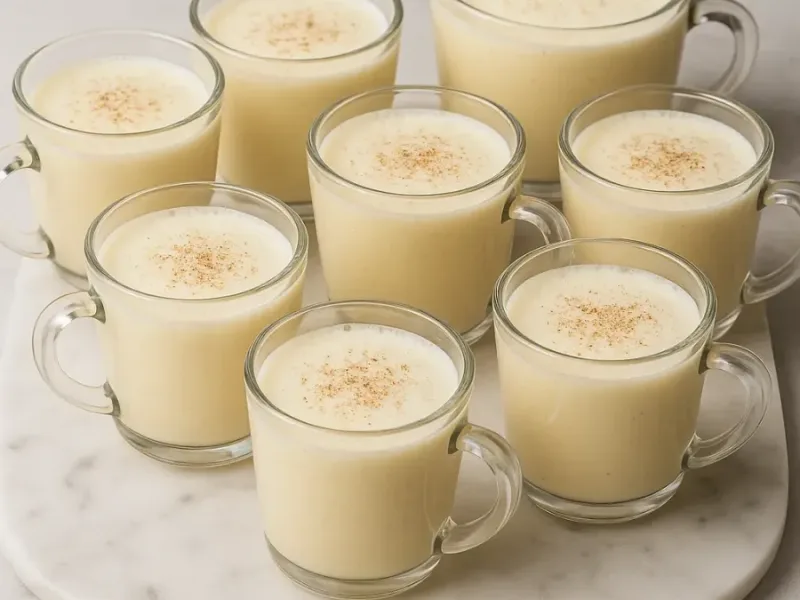
Serve and garnish: Ladle into glasses or mugs, sprinkle with freshly grated nutmeg, and optionally add a cinnamon stick for decoration.
Extra technique, safety notes and details when you want to go deeper.
More tips & details
Festive Drink for Winter Gatherings
A traditional holiday beverage with timeless flavor
Rich, velvety eggnog embodies the essence of holiday celebrations, combining smooth creaminess with warming spices that make every sip feel indulgent. The mixture of eggs, milk, cream, and a touch of sugar creates a luxurious base, while nutmeg and cinnamon provide depth and fragrance. A splash of rum, brandy, or bourbon is often added, though non-alcoholic versions remain equally satisfying. This balance of creaminess, spice, and optional spirits is what has made homemade eggnog a cherished tradition across generations.
The cultural roots of eggnog
The origins of eggnog trace back to medieval Europe, where a hot, milky drink known as “posset” was popular among the upper class. Over time, the recipe evolved, incorporating eggs and alcohol as it traveled across continents. By the 18th century, eggnog had firmly established itself in North America, where abundant dairy and accessible rum made it an affordable holiday staple. Today, it remains an iconic beverage, often associated with Christmas gatherings, winter festivities, and family traditions.
Why you’ll love this recipe
- Classic holiday flavor with the perfect balance of sweet and spiced.
- Creamy texture that feels indulgent yet comforting.
- Versatile preparation with options for both alcoholic and non-alcoholic versions.
- Easy to customize with different spice blends or alternative sweeteners.
- Perfect make-ahead drink for busy holiday schedules.
Key flavors and textures in eggnog
The richness of eggs provides body and a silky consistency, while cream and milk create the smooth, velvety mouthfeel. Sweetness from sugar balances the warm bitterness of spices, ensuring harmony in every sip. Nutmeg, cinnamon, and cloves are the signature flavor elements, transforming a simple base into a festive specialty. Alcohol not only adds depth but also enhances the warming quality, though the recipe works beautifully without it for all ages to enjoy.
Storage and make-ahead tips
- Room temperature: Safe for up to 2 hours during serving, but not longer.
- Refrigeration: Store chilled in a sealed container for 2 days to preserve freshness.
- Freezing: Keep in airtight portions for up to 2 months; thaw overnight in the fridge before serving.
- Reheating: Warm gently at 150 °C / 300 °F for 8–10 minutes if serving hot, stirring to maintain creaminess.
Festive serving and pairing ideas
- Garnish with a sprinkle of freshly grated nutmeg for aroma and visual appeal.
- Add a cinnamon stick as a natural stirrer for elegance.
- Pair with holiday cookies, pastries, or fruit-based desserts for a complete festive spread.
- Serve in small punch cups for a cozy family setting or tall glasses for an elegant party presentation.
Chef’s perspective on homemade eggnog
Crafting eggnog from scratch allows complete control over sweetness, creaminess, and strength of spices. Using fresh, high-quality eggs and dairy enhances both safety and flavor. A slow heating process ensures a smooth consistency without curdling, while whisking creates the light, airy texture associated with premium versions. The ability to adjust alcohol levels or exclude them altogether makes this drink suitable for a wide audience, ensuring everyone at the table can raise a glass.
Common mistakes to avoid
- Overheating the mixture, which may lead to curdled eggs.
- Adding alcohol too quickly, risking separation of the creamy base.
- Using pre-ground spices that lack the intensity of freshly grated ones.
- Over-sweetening, which can mask the delicate balance of flavors.
Seasonal significance and traditions
Beyond its flavor, eggnog carries cultural meaning as a symbol of hospitality and celebration. Families often prepare it together, passing recipes from generation to generation. The drink’s association with Christmas carols, winter gatherings, and holiday cheer ensures its place as more than just a beverage—it is an experience that unites people across tables worldwide.
Classic Flavor with Creamy Texture
Best Homemade Eggnog Recipe delivers the perfect balance of rich creaminess and warming spices. The combination of milk, cream, eggs, and sugar creates a silky base, while nutmeg and cinnamon add festive depth. Optional rum or brandy enhances the character, but the non-alcoholic version remains equally satisfying. Whipped egg whites lighten the drink, giving it an airy finish that makes every sip smooth and indulgent.
Easy Preparation for Holiday Gatherings
With only 15 minutes prep, 10 minutes cooking, and a few hours of chilling, this recipe fits seamlessly into busy holiday schedules. The step-by-step method ensures success, whether preparing for a small family evening or a large seasonal party. Make-ahead storage and freezing options add flexibility, allowing you to plan in advance without stress.
Flexible for Every Lifestyle
The recipe adapts to different dietary needs. It is naturally gluten-free, and with plant-based milk and coconut cream, it can be made lactose-free. Alcohol can be included for adult gatherings or omitted for family-friendly occasions. These variations make the drink versatile and inclusive, so everyone can enjoy a cup of creamy eggnog during the festive season.
Perfect Moments to Enjoy
Eggnog is more than a drink—it is a symbol of warmth, hospitality, and holiday tradition. Serve it chilled in mugs with a sprinkle of nutmeg, or add a cinnamon stick for decoration. Pair it with cookies, cakes, or pastries to complete a seasonal spread. This beverage is ideal for Christmas celebrations, winter evenings by the fire, or as a centerpiece at festive gatherings.
Why It Stands Out
The Best Homemade Eggnog Recipe combines tradition, flavor, and ease in one timeless drink. Its creamy texture, customizable options, and rich seasonal taste make it a favorite for all ages. A glass of eggnog transforms ordinary moments into festive memories, making it the perfect highlight for any winter celebration.
Questions
What can I substitute if I don’t have heavy cream?
You can replace heavy cream with a mix of whole milk and half-and-half, though the eggnog will be less rich. For a dairy-free version, use coconut cream or oat cream to keep the texture thick and smooth.
Does eggnog always contain alcohol?
No, alcohol is optional in eggnog. Traditional recipes often include rum, brandy, or bourbon, but you can leave it out completely for a family-friendly version. The flavor remains festive and spiced even without spirits.
Why did my egg mixture curdle while cooking?
Eggs curdle if overheated. Always cook the base gently and remove it from the heat once it reaches 82–85 °C (180–185 °F). Constant stirring prevents clumps and ensures a smooth, creamy custard for your eggnog.
How long can I store homemade eggnog?
Homemade eggnog keeps for up to 2 days in the refrigerator in a sealed container. For longer storage, freeze portions for up to 2 months, then thaw overnight in the fridge before serving.
Can I make eggnog vegan or lactose-free?
Yes, replace milk and cream with almond milk, soy milk, or oat milk plus coconut cream for richness. For eggs, there is no true substitution that mimics the original, so the result will be different but still a festive drink.
How should I serve eggnog for guests?
Serve chilled eggnog in mugs or punch cups, topped with freshly grated nutmeg. A cinnamon stick makes a natural stirrer and decoration. Pair with cookies, cakes, or pastries to enhance the holiday mood.
Is eggnog gluten-free?
Yes, traditional eggnog is naturally gluten-free, as it uses milk, cream, eggs, sugar, and spices. Always check labels for store-bought versions or flavorings, but the classic homemade recipe does not contain gluten.
Recivelle · /recipe/best-homemade-eggnog-recipe