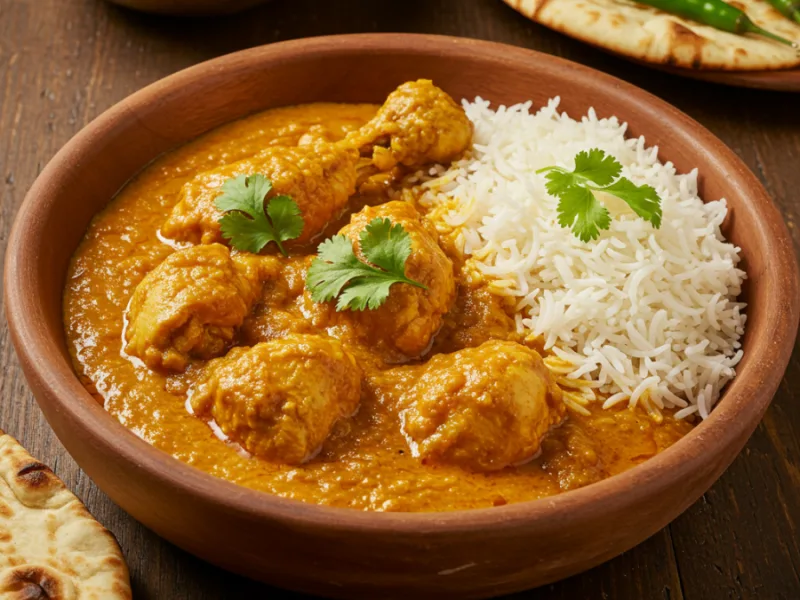
Base recipe: 4
Your kitchen companion
Ingredients
Check off ingredients as you prepare them.
Follow the steps at your own pace.
Method
Prepare the base: Heat oil in a pan over medium heat. Add cumin seeds and toast them for 30 seconds until aromatic. Add chopped onions and sauté for 5-7 minutes until golden brown.
Add aromatics: Stir in minced garlic and grated ginger, cooking for another minute.
Incorporate tomatoes: Add tomato puree, mix well, and cook for 5 minutes until the mixture thickens.
Add spices: Stir in coriander powder, turmeric, garam masala, cinnamon, cardamom, cloves, black pepper, and chili powder. Cook for another minute, allowing the spices to release their flavors.
Cook the chicken: Add chicken pieces, coating them well with the spice mixture. Cook for 5 minutes until slightly browned.
Simmer: Pour in water or broth, reduce heat to low, cover, and simmer for 25-30 minutes, stirring occasionally.
Finish the curry: Stir in yogurt or coconut milk and cook for another 5 minutes until the sauce is creamy and well blended.
Garnish and serve: Sprinkle fresh cilantro over the curry and serve hot with basmati rice or naan.
Extra technique, safety notes and details when you want to go deeper.
More tips & details
Authentic Chicken Curry with a Perfect Balance of Spice and Aroma
A Rich and Flavorful Dish for Every Occasion
Chicken curry is one of the most beloved dishes worldwide, offering a perfect blend of fragrant spices, tender chicken, and a rich, velvety sauce. This recipe brings together the essence of traditional curry, using a harmonious mix of bold flavors to create a truly satisfying meal. Whether you prefer mild warmth or intense heat, this dish can be adjusted to suit any palate while maintaining its deep, aromatic complexity.
The Secret to an Irresistible Chicken Curry
A truly exceptional chicken curry is defined by its layers of flavor, achieved through a careful combination of fresh ingredients and whole spices. Unlike pre-made curry powders, this recipe builds flavor from scratch, allowing each spice to release its natural oils and fragrance for a richer, more dynamic taste. The result? A curry that is not only bold and spicy but also deeply aromatic—the kind that fills your kitchen with an intoxicating scent before the first bite is even taken.
The Role of Spices in a Perfect Chicken Curry
Spices are the heart and soul of any great curry. This recipe incorporates a balanced blend of:
- Cumin and coriander for an earthy depth
- Turmeric for its vibrant color and subtle warmth
- Cardamom and cinnamon for a touch of sweetness
- Cloves and black pepper for a hint of smokiness
- Chili powder and fresh chilies for that signature heat
By toasting the whole spices before grinding them, their essential oils are released, creating a richer, more intense flavor profile that elevates the entire dish.
How to Achieve the Perfect Texture
A great chicken curry is not just about flavor—it’s also about texture. The key to a lusciously thick and creamy sauce lies in the slow cooking process, which allows the onions, tomatoes, and yogurt or coconut milk to break down completely, creating a silky, well-integrated gravy. The addition of:
- Caramelized onions brings a natural sweetness and depth
- Pureed tomatoes add acidity to balance the richness
- Garlic and ginger paste enhances the overall complexity
- Coconut milk or yogurt provides a smooth, luxurious finish
Each ingredient plays a crucial role in ensuring the sauce is flavorful, balanced, and rich, perfectly coating the tender, juicy pieces of chicken.
The Best Chicken to Use for This Recipe
The type of chicken you choose can make or break the dish. Bone-in, skinless chicken thighs are ideal, as they remain juicy and flavorful even after prolonged cooking. The bones enrich the curry, infusing the sauce with an extra depth of flavor that boneless cuts cannot provide. However, for a quicker version, boneless chicken breast or thighs can also be used—just be sure to adjust the cooking time to prevent dryness.
Why This Chicken Curry Stands Out
This recipe is authentic yet adaptable, ensuring that every bite is bursting with bold flavors. It is:
- Customizable – Easily adjust the spice level to suit your preference
- Deeply aromatic – Freshly ground spices make all the difference
- Perfectly balanced – A mix of heat, sweetness, acidity, and creaminess
- Versatile – Serve it with rice, naan, or roti for a complete meal
Serving Suggestions for the Ultimate Experience
A well-prepared chicken curry deserves the right accompaniments to enhance its flavors. Some of the best pairings include:
- Steamed basmati rice – A fluffy, fragrant base that absorbs the sauce beautifully
- Garlic naan or roti – Perfect for scooping up the thick, flavorful curry
- Pickled onions – A tangy contrast that cuts through the richness
- A dollop of yogurt – To mellow out the heat and add a creamy touch
This spicy and aromatic chicken curry is more than just a meal—it’s an experience. Whether you’re making it for a weeknight dinner or a special gathering, it’s guaranteed to impress with its depth of flavor, warmth, and irresistible aroma.
Elevating Your Chicken Curry: Tips for a More Flavorful and Authentic Dish
The Key to a More Aromatic and Balanced Flavor
A great chicken curry is built on a foundation of spices, slow cooking, and carefully balanced flavors. While the traditional method already delivers a delicious result, there are several ways to enhance the aroma, richness, and depth of this dish. By adjusting certain ingredients, refining cooking techniques, and avoiding common mistakes, you can transform your homemade curry into a restaurant-quality masterpiece.
Choosing the Right Chicken for Maximum Flavor
The type of chicken you use has a significant impact on the final taste and texture. Many people opt for boneless chicken breasts for convenience, but bone-in, skinless chicken thighs are a far better choice. Why?
- More flavor – The bones release natural collagen, which enriches the sauce and enhances the overall taste.
- Juicier texture – Thighs contain more fat, making them tender and moist, even after longer cooking times.
- Better absorption – The marbling of chicken thighs allows them to soak up spices more effectively, leading to a deeper, richer flavor.
For a more succulent and flavorful dish, consider marinating the chicken in yogurt, turmeric, and salt for at least 30 minutes before cooking. This tenderizes the meat and allows the flavors to penetrate more deeply.
Enhancing the Depth of Flavor with Whole Spices
One of the best ways to elevate a chicken curry is by incorporating whole spices instead of just powdered ones. Toasting whole cumin seeds, coriander seeds, cardamom pods, and cinnamon in hot oil before adding other ingredients releases their essential oils, creating a richer and more complex aroma.
- Cumin seeds provide an earthy, nutty base.
- Coriander seeds add citrusy, floral notes.
- Cardamom pods introduce a hint of sweetness and warmth.
- Cloves and cinnamon contribute a mild, lingering heat and depth.
If you’re using ground spices, consider dry-roasting them in a pan for a minute before adding them to the curry. This enhances their natural flavors and prevents a raw, powdery taste.
Using Fresh Ingredients for a Vibrant Taste
Pre-packaged spice blends and canned ingredients may save time, but they often result in a dull, less aromatic curry. Using fresh, high-quality ingredients makes a noticeable difference.
- Freshly ground spices have a more intense and authentic taste compared to pre-ground powders that may have lost their potency.
- Fresh tomatoes (instead of canned ones) give the curry a brighter, more natural acidity that balances the spices.
- Fresh garlic and ginger paste creates a more vibrant base, enhancing the depth of the dish.
The Secret to a Creamier and More Luxurious Sauce
Many people struggle with achieving the perfect curry consistency—either it's too thin, too thick, or lacking the richness of a restaurant-style dish. Here’s how to create a smooth, velvety sauce:
- Sauté onions slowly until they are golden brown. This brings out their natural sweetness and adds depth to the sauce.
- Use full-fat yogurt or coconut milk instead of low-fat alternatives for a richer texture.
- Puree part of the sauce (blending a portion of the onions and tomatoes) to create a naturally thickened base.
- Simmer the curry slowly – rushing the process can prevent the flavors from developing fully.
If the sauce is too thin, adding a small amount of ground cashews or almonds can naturally thicken it while enhancing the creaminess.
Avoiding Common Mistakes That Can Ruin Your Curry
Even experienced cooks sometimes make small errors that affect the final dish. Here are some key mistakes to avoid:
- Adding spices too late – Spices need time to bloom in hot oil for full flavor development. Adding them too late results in a weaker, less aromatic curry.
- Not cooking onions properly – Rushing the onion-cooking stage prevents the natural sweetness from developing, leading to a sharper, harsher taste.
- Using too much water – Excess water dilutes the flavors, making the curry bland. Stick to broth or a small amount of water for a more concentrated taste.
- Skipping the marination step – A yogurt-based marinade helps infuse the chicken with deeper flavors and ensures tenderness.
- Cooking chicken at high heat – Simmering the curry on low heat allows the meat to absorb more flavor and results in a more tender texture.
Healthier Alternatives Without Losing Flavor
If you want a healthier version of this curry without compromising taste, here are some simple modifications:
- Reduce oil – Use a non-stick pan and limit oil to 1 tablespoon, or opt for healthier alternatives like avocado oil.
- Swap coconut milk for Greek yogurt – This cuts down on fat while maintaining creaminess.
- Increase vegetable content – Adding spinach, bell peppers, or sweet potatoes boosts the nutritional value and enhances the texture.
- Use leaner protein options – If you prefer, replace chicken with turkey or tofu for a lower-fat alternative.
Why Homemade Chicken Curry Is Superior to Takeout
Many people assume that restaurant or takeout curries are more flavorful than homemade versions, but this often isn’t true. When prepared correctly, homemade chicken curry surpasses restaurant quality in several ways:
- Control over ingredients – No artificial additives, excess oil, or excessive salt.
- Fresher and higher-quality spices – Many restaurants use pre-mixed spice blends, which lack depth compared to freshly ground spices.
- Healthier preparation methods – Home cooking allows you to adjust oil, dairy, and spice levels according to preference.
- More balanced flavor – Takeout curries are often overly salty or greasy, whereas a homemade version is customizable and well-rounded.
Customizing Spice Levels to Suit Your Taste
A perfect chicken curry should have just the right amount of heat without overpowering the other flavors. Here’s how you can adjust the spice levels:
- For a milder curry: Reduce chili powder and use sweet paprika for color without heat. Adding a spoonful of coconut milk or yogurt also helps mellow the spice.
- For a spicier curry: Use fresh green chilies along with chili powder, and add a pinch of black pepper for an extra kick.
Experimenting with Additional Ingredients
Once you’ve mastered the traditional version, you can experiment with new flavors to make it your own:
- Adding fenugreek leaves (kasuri methi) – Provides a unique, slightly bitter note that deepens the flavor.
- Stirring in tamarind paste – Adds a subtle tangy-sweet contrast to balance the heat.
- Incorporating roasted nuts – Cashew or almond paste creates a richer, nutty undertone.
- Using saffron-infused milk – A luxurious touch for special occasions.
By making small but impactful changes, you can enhance the complexity, richness, and overall experience of your homemade chicken curry, turning it into a dish that’s even better than restaurant versions.
Recivelle · /recipe/best-chicken-curry-recipe-spicy-and-aromatic