Base recipe: 4
Your kitchen companion
Ingredients
Check off ingredients as you prepare them.
Follow the steps at your own pace.
Method
Prepare the chips:
Peel and cut the potatoes into thick strips (about 1.5 cm / 0.6 inches thick).
Rinse them in cold water to remove excess starch, then pat dry with a towel.
Heat the vegetable oil to 130°C (265°F) in a deep fryer or large pan.
Fry the potatoes in batches for 5 minutes, until soft but not browned.
Remove from oil and drain on paper towels. Set aside.
Prepare the batter:
In a large bowl, mix flour, cornstarch, baking powder, salt, black pepper, and paprika.
Slowly whisk in the cold beer or sparkling water until a smooth, thick batter forms.
Let the batter rest for 5 minutes.
Fry the fish:
Heat the oil to 180°C (350°F).
Pat the fish fillets dry with a paper towel to remove excess moisture.
Lightly coat the fillets in plain flour, shaking off the excess.
Dip each fillet into the batter, ensuring it's fully coated.
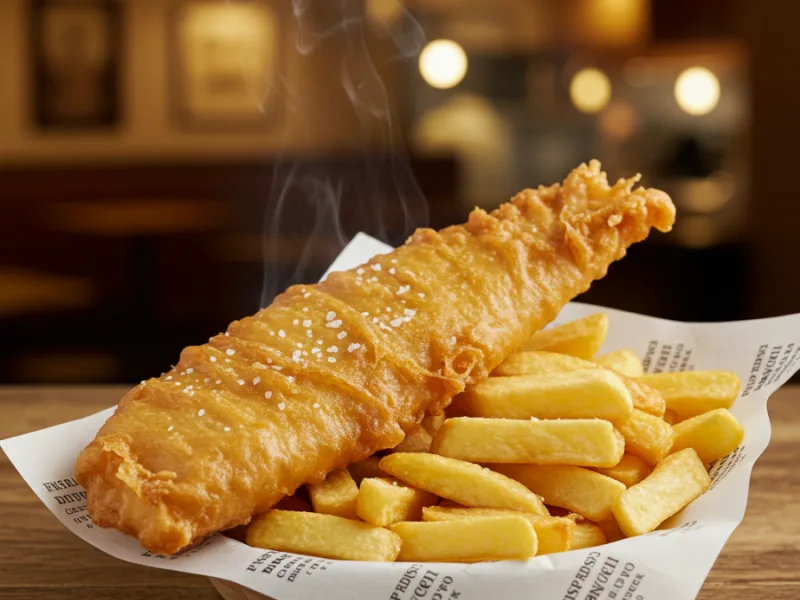
Carefully lower the fillets into the hot oil and fry for 6-8 minutes until golden brown and crispy.
Remove from oil and place on a wire rack to drain.
Final fry for the chips:
Increase the oil temperature to 180°C (350°F).
Fry the pre-cooked chips for 3-4 minutes until golden and crispy.
Remove from oil, drain, and season with salt.
Serving:
Serve the crispy fish and chips immediately with malt vinegar, tartar sauce, and mushy peas.
Extra technique, safety notes and details when you want to go deeper.
More tips & details
The Ultimate Guide to Authentic British Fish and Chips
A Taste of Tradition in Every Bite
Few dishes capture the essence of British cuisine quite like fish and chips. This iconic meal has been a staple of UK food culture for over a century, delivering a perfect balance of crispy, golden-battered fish and fluffy yet crunchy chips. Whether enjoyed at a seaside town, in a cozy pub, or wrapped in paper for a nostalgic takeaway experience, British fish and chips remain a beloved comfort food worldwide.
The beauty of this dish lies in its simplicity and execution. A delicate white fish, typically cod or haddock, is coated in a light, airy batter and deep-fried to golden perfection. Accompanied by thick-cut, perfectly cooked chips, this meal is best enjoyed with a splash of malt vinegar and a side of tangy tartar sauce or mushy peas.
The Rich History Behind British Fish and Chips
The origins of fish and chips date back to the 19th century, when fried fish was introduced to Britain by Sephardic Jewish immigrants. Around the same time, fried potatoes became popular among the working class, leading to the birth of this famous pairing. The first official fish and chip shop opened in London and Lancashire during the mid-1800s, and from there, the dish quickly gained popularity across the UK.
By the early 20th century, fish and chips had become a working-class favorite, offering an affordable, satisfying, and nourishing meal. During both World Wars, the British government protected this national dish from rationing, ensuring its availability and reinforcing its importance in British culture. Today, fish and chip shops, or "chippies," can be found in almost every town and city across the UK.
What Makes the Perfect Fish and Chips?
The Right Choice of Fish
The best fish for fish and chips should have a mild, flaky texture that holds up well when battered and fried. The two most common choices are:
- Cod – Known for its mild flavor and delicate texture, cod is the classic choice for fish and chips. It produces a light, tender fillet with a perfectly crisp batter.
- Haddock – Slightly firmer than cod, haddock offers a richer, slightly sweeter flavor that pairs beautifully with traditional sides.
Other fish varieties, such as pollock, plaice, and hake, can also be used, but cod and haddock remain the gold standard for authentic British fish and chips.
The Secret to a Perfectly Crisp Batter
The batter is arguably the most important element of a great fish and chips recipe. A light, airy, and ultra-crispy texture is key to achieving that signature golden crunch. The secret? Cold ingredients, a fizzy liquid, and the right frying temperature.
- Cold, carbonated liquid – Using beer or sparkling water helps create a light, crispy batter that puffs up beautifully during frying.
- Flour blend – A mix of plain flour and cornstarch ensures a delicate, non-greasy coating.
- Proper frying temperature – Keeping the oil at 180°C (350°F) prevents the batter from absorbing excess oil, ensuring a crispy exterior without becoming heavy.
Perfectly Cooked Chips
Traditional British chips are not the same as French fries. They are thicker-cut, fluffy inside, and crispy on the outside. Achieving the perfect texture requires a double-cooking technique:
- First fry at a lower temperature (130°C / 265°F) – This allows the potatoes to cook through without browning.
- Second fry at a higher temperature (180°C / 350°F) – This creates the golden, crispy exterior.
The best potatoes for authentic chips include Maris Piper, King Edward, or Russet potatoes, as they have a high starch content and a fluffy interior.
Classic Side Dishes and Condiments
While the fish and chips themselves are the star of the show, the right accompaniments elevate the experience even further.
- Malt vinegar – A generous splash of malt vinegar adds the perfect tangy contrast to the crispy fish and chips.
- Tartar sauce – This creamy, zesty condiment made from mayonnaise, capers, pickles, and lemon juice complements the dish perfectly.
- Mushy peas – A classic British side dish made from marrowfat peas, butter, and a touch of seasoning.
- Pickled onions or gherkins – A popular addition for those who enjoy a sharp, tangy bite alongside their meal.
The Best Way to Serve British Fish and Chips
For the most authentic experience, fish and chips are best served hot and fresh, straight from the fryer. Traditionally, they were wrapped in newspaper, but today, they are often served in greaseproof paper or cardboard boxes to maintain their crispiness.
Pair your homemade fish and chips with a cold British ale or a glass of lemonade, and enjoy a taste of true British culinary heritage. Whether made at home or enjoyed from a seaside chippy, this dish remains a timeless classic loved by generations.
Enhancing the Classic British Fish and Chips Recipe
Choosing the Best Ingredients for a Superior Flavor
The quality of fish and chips largely depends on the freshness and selection of ingredients. While the traditional recipe calls for cod or haddock, opting for higher-quality or alternative fish varieties can improve both taste and texture.
Selecting the Right Fish
- Fresh over frozen – Using fresh fish instead of frozen ensures a firmer texture and a cleaner taste. If frozen fish is the only option, make sure it is properly thawed and patted dry before use to prevent soggy batter.
- Alternative fish choices – While cod and haddock are traditional, switching to pollock, halibut, hake, or even sea bass can introduce richer flavors and varied textures. These fish offer mild yet slightly sweet flavors, elevating the dish beyond the classic version.
Upgrading the Batter for Extra Crispiness
- Beer selection matters – A high-quality pale ale or lager adds a deeper, maltier flavor to the batter, while sparkling water provides a lighter, crispier texture. Experimenting with different carbonation levels can significantly change the crunch factor.
- Adding cornstarch or rice flour – Replacing a portion of the wheat flour with cornstarch or rice flour results in a lighter, airier crust that stays crispy for longer.
- A touch of seasoning – Enhancing the batter with a pinch of garlic powder, smoked paprika, or a dash of cayenne pepper can add depth of flavor without overpowering the fish.
The Secret to Better Chips
Traditional British chips are thicker than French fries, offering a fluffy interior and a crispy golden exterior. Small tweaks in potato selection, preparation, and cooking techniques can drastically improve the final result.
Choosing the Right Potatoes
- Maris Piper, King Edward, or Russet potatoes are ideal due to their high starch content and low moisture, ensuring crispy outsides and soft insides.
- If using waxy potatoes, the chips will be creamier but less crispy—a matter of personal preference.
Double-Frying for Perfection
- First fry at a lower temperature (130°C / 265°F) – This softens the inside of the potatoes without browning them.
- Second fry at a higher temperature (180°C / 350°F) – This creates the golden, crispy outer layer.
- Soaking in water before frying – Removing excess starch by soaking the cut potatoes in cold water for at least 30 minutes leads to better crisping. Dry thoroughly before frying to avoid excess oil absorption.
Common Mistakes to Avoid
Even experienced cooks can run into issues when preparing fish and chips. Avoiding these common mistakes ensures the best results.
Mistake #1: Overcrowding the Fryer
Adding too many pieces of fish or chips at once lowers the oil temperature, leading to greasy, soggy results. Cooking in small batches maintains the ideal frying temperature.
Mistake #2: Using the Wrong Oil
The best frying oils have a high smoke point and a neutral taste. Avoid olive oil as it burns too quickly. Instead, use vegetable oil, sunflower oil, or peanut oil for the best flavor and crispness.
Mistake #3: Skipping the Resting Time for Batter
Letting the batter rest for at least 5-10 minutes allows the ingredients to bind properly, creating a smoother, more even texture. A well-rested batter sticks better to the fish and fries to a crispier finish.
Mistake #4: Not Draining Excess Oil
To avoid greasy fish and chips, place fried items on a wire rack rather than paper towels. Paper towels trap steam, causing the batter to soften quickly.
Healthier Alternatives Without Compromising Taste
Traditional fish and chips are deep-fried, but with a few adjustments, the dish can be made healthier while maintaining its signature taste and texture.
Baking Instead of Frying
- Coat the fish fillets in a light panko breadcrumb mixture and bake at 220°C (425°F) for 15-18 minutes for a crispy yet lower-fat alternative.
- Toss the potato wedges in a small amount of oil and bake at 200°C (400°F) until golden brown.
Air Fryer Version
- An air fryer significantly reduces oil use while maintaining crispiness.
- Cook fish at 200°C (400°F) for 10-12 minutes, flipping halfway through.
- Cook chips at 180°C (360°F) for 20 minutes, shaking the basket halfway.
Lighter Batter Options
- Using whole wheat flour instead of white flour adds fiber and a slightly nutty flavor.
- Egg whites can replace some liquid in the batter for a lighter, protein-rich coating.
Why Homemade Fish and Chips Are Better Than Takeout
While fish and chips from a traditional shop can be delicious, making them at home offers several advantages:
- Control over ingredients – You can choose higher-quality fish, fresher potatoes, and better oils for frying.
- Healthier options – Reducing oil content, baking instead of frying, and using lighter batters make the dish less greasy but equally flavorful.
- Customization – Adjusting the seasoning, type of fish, and side dishes allows for a personalized dining experience.
Elevating the Dish with Unique Variations
For those who enjoy creative twists, adding modern flavors can bring this classic to a new level.
Beer-Battered Fish with Herbs
Adding fresh dill, chives, or parsley into the batter infuses the fish with a subtle aromatic lift.
Spiced Chips
Tossing the chips in a smoked paprika, garlic, or Cajun seasoning blend before serving gives them a bold, flavorful upgrade.
Asian-Inspired Fish and Chips
- Swap traditional beer batter for tempura-style batter for an extra-light crispiness.
- Serve with a side of wasabi mayo or soy-ginger dipping sauce instead of tartar sauce.
The Final Touch – Perfect Pairings
Serving fish and chips with the right accompaniments enhances the overall meal.
- Homemade tartar sauce – Mixing mayonnaise, chopped capers, pickles, and lemon juice creates a fresh, tangy dip.
- Mushy peas with mint – Adding fresh mint leaves to classic mushy peas enhances the freshness and balance.
- Pickled onions or gherkins – Their tangy, slightly sour taste cuts through the richness of the fried fish.
By making small improvements to the ingredients, cooking techniques, and serving options, you can transform traditional fish and chips into a restaurant-quality dish at home while still honoring its rich culinary heritage.
Recivelle · /recipe/best-british-fish-and-chips