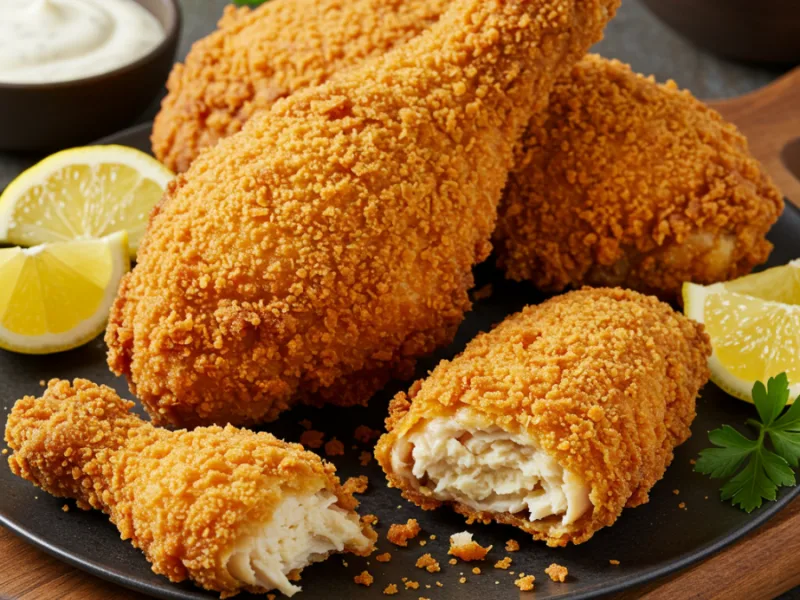
Base recipe: 4
Your kitchen companion
Ingredients
Check off ingredients as you prepare them.
Follow the steps at your own pace.
Method
Marinate the chicken: In a large bowl, combine buttermilk, salt, black pepper, garlic powder, onion powder, paprika, and cayenne pepper. Add the chicken pieces, ensuring they are fully submerged. Cover and refrigerate for at least 4 hours (preferably overnight) to tenderize and enhance flavor.
Prepare the coating: In a separate bowl, mix flour, cornstarch, paprika, garlic powder, onion powder, cayenne pepper, black pepper, and salt. Stir well to ensure even seasoning.
Coat the chicken: Remove the marinated chicken from the buttermilk. Allow excess liquid to drip off, then dredge each piece in the flour mixture, pressing firmly to ensure the coating adheres well. For an extra crispy texture, dip the coated chicken back into the buttermilk and then dredge again in the flour mixture (double-dredging technique).
Heat the oil: In a deep fryer or a large heavy-bottomed pot, heat the vegetable oil to 175°C (350°F). Maintaining the correct oil temperature is crucial for achieving a crispy exterior without over-absorbing oil.
Fry the chicken: Carefully lower the coated chicken into the hot oil, a few pieces at a time. Avoid overcrowding the pan to maintain even frying. Fry each piece for 12-15 minutes (depending on size), turning occasionally, until golden brown and crispy. The internal temperature should reach 75°C (165°F).
Drain and rest: Remove the fried chicken and place it on a wire rack over a baking sheet to drain excess oil. Let it rest for a few minutes before serving to allow the juices to redistribute.
Serve hot: Enjoy with classic sides such as coleslaw, mashed potatoes, or cornbread for an authentic American meal.
Extra technique, safety notes and details when you want to go deeper.
More tips & details
The Ultimate Crispy and Juicy Fried Chicken Recipe
A Perfectly Golden and Crunchy Coating
There’s something truly irresistible about perfectly fried chicken—the combination of a golden, crispy crust and tender, juicy meat makes it one of the most beloved comfort foods in American cuisine. Achieving that ideal crunch while keeping the inside moist is an art, requiring the right balance of ingredients, seasonings, and frying techniques. This classic American fried chicken recipe delivers everything you love: an ultra-crispy coating, deep flavor, and a deliciously tender bite every time.
The key to authentic Southern-style fried chicken lies in a few essential steps: a well-seasoned buttermilk marinade, a perfectly spiced flour coating, and the right frying method. When done correctly, each bite offers a crunchy texture that gives way to flavorful, succulent meat—guaranteeing a meal that satisfies every craving.
The Secret to Extra Crispy Fried Chicken
Many home cooks wonder: How do you make fried chicken extra crispy? The answer is in the coating and frying process. This recipe ensures that the crust adheres beautifully to the chicken while developing a deep, golden brown crunch. Here are the most important factors:
- The Buttermilk Marinade: Soaking the chicken in buttermilk before frying helps to break down the proteins, making the meat incredibly tender while also providing a perfect surface for the flour coating to adhere to. The natural acidity of the buttermilk enhances flavor and moisture retention.
- The Perfect Flour Mixture: A well-seasoned blend of flour and cornstarch creates a light yet crispy crust. Cornstarch plays a crucial role in making the coating extra crunchy and helps prevent it from becoming greasy.
- Double Dredging Technique: Coating the chicken in flour, dipping it back into buttermilk, and dredging it again creates a thick, textured crust that fries up beautifully. This method ensures an even coating and a delightful crispiness.
- The Right Frying Temperature: Maintaining the oil at 175-180°C (350-360°F) is essential. If the temperature is too low, the chicken absorbs too much oil, resulting in a greasy texture. If it's too high, the exterior burns before the inside cooks properly.
Choosing the Best Cut of Chicken for Frying
For the most flavorful and juicy fried chicken, using bone-in, skin-on pieces is highly recommended. The bone helps retain moisture, while the skin crisps up beautifully. Popular choices include:
- Chicken thighs – The most flavorful and juicy option, perfect for frying.
- Drumsticks – A classic favorite, offering a great meat-to-crust ratio.
- Chicken wings – Ideal for a smaller, snackable option with an extra crispy coating.
- Chicken breasts – While leaner, they can still be tender when marinated properly.
Each cut provides a unique texture and experience, making it easy to mix and match based on your preference.
Essential Seasonings for Maximum Flavor
A great fried chicken seasoning blend enhances the natural flavors of the meat while ensuring a delicious, well-balanced taste. This recipe includes a mix of:
- Garlic powder & onion powder – Adding depth and a savory aroma.
- Paprika – Providing a hint of smokiness and color to the crust.
- Black pepper & cayenne pepper – Bringing a touch of heat without overpowering.
- Salt – Enhancing all the flavors while helping to tenderize the chicken.
- Dried herbs – Such as oregano or thyme, for a subtle aromatic note.
This homemade spice mix allows for full control over the flavor, making each bite even more delicious.
The Best Oil for Frying
Choosing the right oil for deep frying is crucial for achieving the best results. The ideal oil should have a high smoke point and a neutral flavor to avoid overpowering the chicken. Some of the best options include:
- Peanut oil – A top choice due to its stability at high temperatures and mild taste.
- Canola oil – A budget-friendly alternative with a light flavor.
- Sunflower oil – Providing a clean taste and excellent crisping ability.
- Vegetable oil – A common and accessible option for frying.
Avoid oils with low smoke points, such as olive oil or butter, as they burn too quickly and can leave an unpleasant taste.
Serving Suggestions and Pairings
A plate of homemade fried chicken is best enjoyed with classic Southern side dishes that complement its rich, crispy texture. Some perfect pairings include:
- Fluffy buttermilk biscuits – A soft and buttery side that balances the crunch.
- Creamy mashed potatoes with gravy – Providing a comforting contrast to the crispiness.
- Coleslaw – A fresh, tangy addition that cuts through the richness.
- Cornbread – A slightly sweet and crumbly side that enhances the flavors.
- Mac and cheese – A cheesy, indulgent pairing that completes the meal.
For an extra Southern-style experience, a drizzle of hot honey or homemade dipping sauces adds the perfect finishing touch.
Mastering the Art of Fried Chicken
Cooking the best American fried chicken requires patience, technique, and high-quality ingredients. Whether you're preparing it for a casual family dinner or a special gathering, this classic crispy fried chicken recipe delivers unbeatable flavor and texture. With the right marinade, coating, and frying method, you can enjoy restaurant-quality fried chicken right in your own kitchen.
By following these expert tips and techniques, you’ll achieve the ultimate crunchy, juicy, and flavorful fried chicken every time—ensuring a dish that’s impossible to resist.
Elevating the Classic Fried Chicken Recipe
Enhancing Flavor with Additional Ingredients
A traditional fried chicken recipe is already packed with flavor, but small tweaks and ingredient adjustments can take it to another level. By incorporating a few carefully selected ingredients, you can add depth, spice, or even a subtle sweetness that enhances the crispy coating and juicy interior.
- Adding mustard to the marinade: A teaspoon of Dijon or yellow mustard in the buttermilk mixture enhances the flavor profile with a tangy kick, while also helping the coating adhere better.
- Incorporating pickle juice: Mixing a small amount of pickle juice into the marinade tenderizes the meat further, giving it a slight acidity that balances the richness of the fried crust.
- Using smoked paprika instead of regular paprika: This simple switch infuses a deep smoky flavor, adding complexity to every bite.
- Experimenting with hot sauce: A splash of hot sauce in the buttermilk marinade provides subtle heat and intensifies the overall seasoning.
These small but effective additions can bring new dimensions to homemade fried chicken, making it even more flavorful and dynamic.
Why Homemade Fried Chicken is the Best Option
There is a significant difference between homemade fried chicken and store-bought or fast-food versions. While restaurants may use industrial frying methods, artificial preservatives, or excessive sodium, a home-cooked version offers complete control over the ingredients, cooking method, and final taste.
- No unnecessary additives: Many commercial fried chicken recipes contain artificial flavors, preservatives, and excessive sodium to prolong shelf life. Making it at home ensures fresh and natural ingredients.
- Better quality ingredients: When preparing it yourself, you can choose organic, free-range chicken and high-quality oils for frying.
- Customization: Whether you prefer extra crispy, lightly battered, or spicier seasoning, you can easily tailor the recipe to match your personal preferences.
- Healthier frying options: Choosing the right oil, reducing sodium, or adjusting frying techniques makes home-fried chicken a better alternative to fast food.
The ability to control the entire cooking process is what truly sets homemade versions apart, ensuring a delicious and high-quality meal.
Common Mistakes to Avoid
Even experienced cooks can encounter problems when frying chicken. Avoiding these common mistakes will ensure the best texture, flavor, and crispiness.
- Skipping the marinade: The marinade is crucial for flavor and tenderness. Rushing the process or skipping it altogether results in dry, less flavorful meat.
- Using cold chicken: Frying cold chicken straight from the fridge can lead to uneven cooking, with the outside browning too fast while the inside remains undercooked. Always allow the chicken to sit at room temperature for about 20-30 minutes before frying.
- Coating the chicken too early: If the flour coating sits on the chicken too long before frying, it can become soggy and won’t crisp up properly. Coat it just before frying for the best results.
- Frying at the wrong temperature: If the oil is too hot, the crust will burn before the meat is fully cooked. If it’s too cool, the chicken will absorb too much oil, making it greasy. Maintaining an oil temperature of 175-180°C (350-360°F) is key.
- Overcrowding the pan: Frying too many pieces at once lowers the oil temperature, resulting in soggy and unevenly cooked chicken. Always fry in small batches to maintain the right frying conditions.
- Not draining the chicken properly: Letting fried chicken sit directly on paper towels can cause steam buildup, making the crust soft. Instead, place it on a wire rack to keep it crispy.
By paying attention to these details, you can achieve restaurant-quality fried chicken every time.
Healthier Alternatives for a Lighter Version
While traditional fried chicken is indulgent, there are ways to make a healthier version without sacrificing too much flavor and texture.
- Using an air fryer: Instead of deep frying, cooking the chicken in an air fryer at 200°C (400°F) for 20-25 minutes significantly reduces oil content while keeping the crust crispy.
- Baking instead of frying: Coating the chicken in a mixture of crushed cornflakes or panko breadcrumbs and baking it at 220°C (425°F) for 30-35 minutes provides a lighter alternative with a satisfying crunch.
- Swapping white flour for whole wheat or almond flour: Using whole wheat flour adds fiber, while almond flour reduces the carb content for a low-carb variation.
- Choosing healthier frying oils: Opting for avocado oil or coconut oil instead of traditional vegetable oil can provide healthier fats while still achieving crispiness.
For those looking to enjoy crispy chicken with fewer calories and fats, these alternatives offer a great compromise.
The Impact of Different Oils on Flavor and Texture
The type of oil used for frying affects the overall taste and texture of the chicken. While some oils provide a neutral flavor, others can subtly enhance the seasoning.
- Peanut oil: One of the best options due to its high smoke point and mild taste, keeping the crust light and crispy.
- Canola oil: A neutral-flavored oil that works well for those who prefer a clean, simple taste.
- Sunflower oil: Provides a neutral flavor and ensures a crispy texture without adding an oily aftertaste.
- Coconut oil: While not a common choice, it adds a mild sweetness and can be used for a tropical-style fried chicken.
Choosing the right oil makes a significant difference in how the fried chicken turns out, affecting both the flavor and crispiness.
Adjusting the Spiciness and Seasoning for Different Preferences
Fried chicken can be adapted to suit various taste preferences by adjusting the level of heat and seasoning.
- For extra spicy chicken: Increase the amount of cayenne pepper, add chili powder, or mix hot sauce into the buttermilk marinade.
- For a milder version: Reduce the cayenne pepper or omit it altogether while still keeping flavorful seasonings like paprika and garlic powder.
- For a more aromatic touch: Adding dried herbs such as thyme, oregano, or rosemary into the flour mixture provides a more complex flavor.
- For a touch of sweetness: A pinch of brown sugar or honey in the marinade balances out the spice and enhances the golden color of the crust.
These small modifications allow the recipe to be tailored to different taste preferences while keeping the crispy, juicy texture intact.
Perfecting the Texture with Double-Dredging
One of the best techniques for extra crispy fried chicken is the double-dredging method. By coating the chicken in flour, dipping it back into buttermilk, and then dredging it again in the seasoned flour mixture, the crust becomes thicker and crunchier.
- Why it works: The second layer of flour creates a more textured coating that fries up beautifully.
- Best tip: After dredging, let the chicken rest for 10 minutes before frying. This allows the coating to adhere better, reducing the chances of it falling off during frying.
For those who love extra crispy fried chicken, this method is a game-changer.
Bringing Out the Best in Fried Chicken
By making small adjustments to ingredients, frying techniques, and seasonings, this classic American fried chicken recipe can be transformed into an even more flavorful, crispy, and perfectly cooked dish. Whether you choose to spice it up, make it healthier, or enhance its crunch, these techniques will ensure every bite is as delicious as possible.
Recivelle · /recipe/best-american-fried-chicken