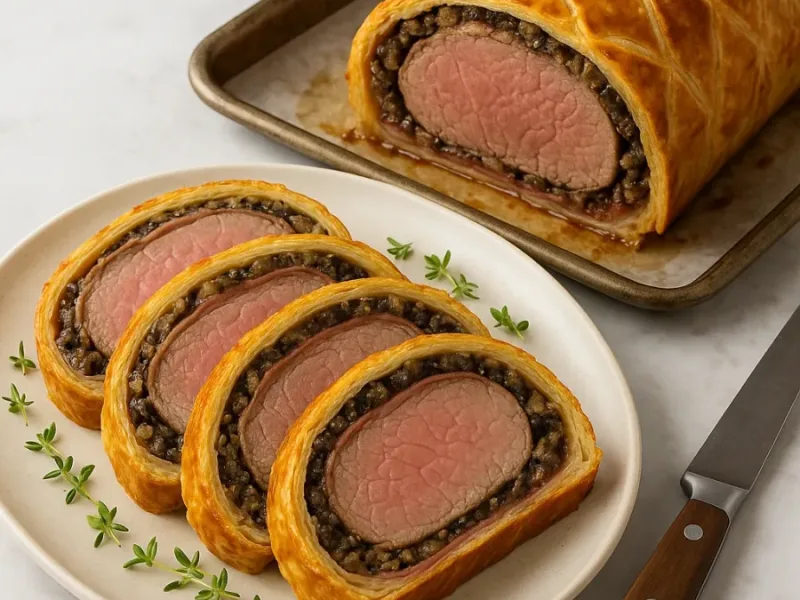
Base recipe: 6
Your kitchen companion
Ingredients
Check off ingredients as you prepare them.
Follow the steps at your own pace.
Method
Sear the beef: Heat 1 tbsp olive oil (15 ml) in a large skillet over high heat. Season 2 lbs beef tenderloin (900 g) with ½ tsp salt (3 g) and ¼ tsp black pepper (0.75 g). Sear on all sides for about 2 minutes each until evenly browned. Transfer to a plate and let it cool. Brush with 2 tbsp Dijon mustard (30 g) while still warm.
Prepare the mushroom duxelles: In the same skillet, melt 1 tbsp butter (15 g) over medium heat. Add 1 lb finely chopped mushrooms (450 g), 2 diced shallots (40 g), and 2 minced garlic cloves (6 g). Season with ½ tsp salt (3 g), ¼ tsp pepper (0.75 g), and 1 tbsp fresh thyme leaves (3 g). Cook for 10–12 minutes, stirring occasionally, until all moisture evaporates and mixture becomes dry and fragrant. Cool completely.
Assemble the prosciutto layer: Lay a large piece of plastic wrap on a flat surface. Arrange 6 slices of prosciutto (90 g) slightly overlapping to form a rectangle large enough to wrap around the beef. Spread the cooled mushroom duxelles evenly over the prosciutto. Place the mustard-coated beef in the center and roll tightly into a log using the plastic wrap. Twist the ends to secure and chill for 30 minutes to firm up.
Wrap with puff pastry: Preheat oven to 400°F (200°C). On a floured surface, roll out 1 sheet puff pastry (250 g) into a rectangle large enough to enclose the beef. Unwrap the chilled beef and place it in the center. Fold the pastry over the beef, trimming any excess. Seal edges with a little water and press to close. Place seam side down on parchment-lined baking sheet.
Brush and decorate: Mix 1 egg yolk (20 g) with 1 tbsp water (15 ml) and brush evenly over the pastry. Optionally, score the surface gently with a knife for a decorative pattern. Brush with 1 tbsp milk (15 ml) for added shine.
Bake the Wellington: Bake in the preheated oven for 35–40 minutes or until the pastry is deep golden brown and the beef reaches 125°F (52°C) for medium-rare. Remove from the oven and let rest for 10 minutes before slicing.
Serve: Slice into 2.5 cm (1 inch) thick portions. Serve with red wine reduction, roasted vegetables, or mashed potatoes for a complete festive meal.
Extra technique, safety notes and details when you want to go deeper.
More tips & details
A Luxurious Beef Wellington for Special Occasions
Perfect balance of tender beef, golden puff pastry, and rich mushroom duxelles
Few dishes capture culinary elegance and timeless tradition quite like Beef Wellington. Wrapped in layers of buttery puff pastry, filled with earthy mushroom duxelles, and encasing a perfectly seared beef tenderloin, this dish represents the pinnacle of gourmet dining. Every slice reveals a mosaic of textures — crisp pastry, savory filling, and tender meat — harmonizing into one of the most celebrated festive main courses across the world.
The essence of Beef Wellington
What makes Beef Wellington so extraordinary lies in its balance of flavor, precision, and texture. The golden pastry envelops the meat to seal in the juices, while the finely chopped mushrooms — the duxelles — bring depth and a subtle umami character. Sometimes a thin layer of prosciutto or crêpe is added to prevent moisture from softening the pastry, ensuring that coveted crisp exterior. The result is a show-stopping centerpiece worthy of holidays, weddings, or any celebration where sophistication meets comfort.
Each component plays a crucial role:
- Beef tenderloin delivers a melt-in-the-mouth tenderness.
- Mushroom duxelles provides rich, earthy undertones.
- Puff pastry creates a flaky, golden shell that contrasts the juicy interior.
- Herbs and Dijon mustard add subtle aromatic notes and a sharp edge that lifts the dish.
A brief look at its origin
The origins of Beef Wellington trace back to 19th-century England, named in honor of Arthur Wellesley, the Duke of Wellington, who famously defeated Napoleon at Waterloo. Some culinary historians suggest that the dish evolved from the French “filet de bœuf en croûte,” later adopted and Anglicized by British chefs who admired its grandeur. Over time, Beef Wellington became synonymous with fine dining and festive celebrations, admired for its intricate preparation and regal presentation. Today, it remains an enduring symbol of culinary craftsmanship that bridges classical technique and modern refinement.
Why you’ll love this recipe
- Elegant centerpiece that instantly elevates any dinner table.
- Rich and layered flavors combining buttery pastry, tender beef, and savory mushrooms.
- Perfect for holidays, romantic dinners, or festive gatherings.
- Impressive presentation with surprisingly approachable preparation steps.
- Make-ahead friendly, allowing stress-free entertaining.
The harmony of ingredients
The secret to a perfect Beef Wellington lies in balancing moisture and flavor. The beef tenderloin must be seared just long enough to develop a caramelized crust without overcooking the center. Mushroom duxelles, prepared by finely chopping and slowly cooking mushrooms with shallots, thyme, and butter, should reach a dry consistency to prevent sogginess. Puff pastry, chilled before wrapping, ensures even baking and a crisp, golden surface. When baked, these elements fuse beautifully, creating a restaurant-quality result at home.
Complementary flavors can elevate the dish further:
- Truffle oil enhances the mushroom aroma for an indulgent twist.
- Prosciutto adds a delicate saltiness and helps protect the pastry.
- Dijon mustard sharpens the overall taste while sealing the meat’s juices.
- Fresh thyme and rosemary infuse the layers with herbal complexity.
Storage and make-ahead tips
Beef Wellington can be partially prepared in advance without compromising quality. After assembling, it can be refrigerated for several hours before baking, allowing the pastry to firm up and the flavors to meld. For longer storage, wrap the unbaked Wellington tightly in plastic wrap and freeze; when ready to serve, bake directly from frozen, adding extra time to ensure full doneness.
After baking, any leftovers should be cooled completely, then stored in an airtight container in the refrigerator for up to two days. To reheat, use a preheated oven instead of a microwave to preserve the pastry’s crispness and the beef’s tenderness. This flexibility makes it ideal for holiday entertaining and stress-free meal planning.
Culinary craftsmanship and presentation
A perfect Beef Wellington demands both precision and patience — from the even sear on the beef to the delicate folding of the pastry. The most successful versions use high-quality ingredients, maintain precise temperature control, and allow the beef to rest properly before slicing. The final presentation — golden, flaky pastry enveloping a blushing pink center — captures both artistry and appetite.
When plated, a drizzle of red wine reduction or Madeira sauce enriches the flavor profile even further. Paired with sides like roasted vegetables, creamy mashed potatoes, or sautéed green beans, it becomes the ultimate holiday feast centerpiece — a dish that speaks of celebration, mastery, and timeless taste.
Perfect Flavor and Texture in Every Slice
Beef Wellington brings together the finest elements of classic cuisine — tender beef, buttery puff pastry, and a rich layer of mushroom duxelles infused with herbs and Dijon mustard. Every bite offers a luxurious balance of flavor and texture, from the crisp pastry shell to the melt-in-your-mouth center. It’s a dish that transforms simple ingredients into a culinary masterpiece suitable for both special occasions and intimate dinners.
Easy Preparation and Reliable Results
Despite its elegant appearance, Beef Wellington can be prepared with confidence at home. Each stage — searing, assembling, and baking — follows clear, achievable steps that guarantee consistent success. The make-ahead option makes entertaining stress-free, allowing the Wellington to rest in the refrigerator until ready to bake. Once in the oven, it turns golden and aromatic, filling the kitchen with the unmistakable scent of fine dining perfection.
Dietary Adaptations and Versatility
For those with dietary restrictions, gluten-free puff pastry or lactose-free butter alternatives make this dish accessible without losing flavor. It pairs beautifully with both vegetable sides and potato-based accompaniments, adapting easily to different preferences. Whether served medium-rare or cooked through, it retains its signature juiciness and rich taste.
A Show-Stopping Centerpiece for Every Celebration
Few dishes rival the impact of Beef Wellington on the table. Its golden crust, elegant layers, and irresistible aroma make it the ultimate holiday centerpiece — ideal for Christmas, New Year’s Eve, weddings, or anniversaries. Beyond its beauty, it reflects skill, patience, and culinary tradition, bringing warmth and sophistication to any gathering. Beef Wellington stands as a timeless symbol of celebration — a dish that impresses visually, delights the palate, and turns every meal into a memorable occasion.
Questions
What cut of beef is best for Beef Wellington?
The best choice is center-cut beef tenderloin (also called filet mignon). It’s evenly shaped, cooks uniformly, and delivers the tender texture that defines authentic Beef Wellington. Avoid cheaper cuts like sirloin, as they won’t achieve the same tenderness or flavor balance.
Can I make Beef Wellington ahead of time?
Yes, partially. Assemble the uncooked Wellington and refrigerate for up to 12 hours before baking. This firms the pastry and enhances structure. For longer storage, freeze the wrapped Wellington, then bake directly from frozen—adding 10–15 extra minutes to the baking time.
How do I prevent the puff pastry from getting soggy?
Keep the mushroom duxelles dry by cooking out all moisture before assembly, and wrap the beef in prosciutto or a crêpe layer. Chill the Wellington before baking to firm up the layers. Always bake on a preheated tray for even bottom crispness.
What can I use instead of prosciutto?
For a similar salty barrier, use thinly sliced pancetta or turkey ham. For a vegetarian-friendly version, use crepes or blanched spinach leaves to separate the filling from the pastry and prevent moisture absorption.
Can Beef Wellington be made gluten-free or lactose-free?
Yes. Use gluten-free puff pastry and substitute butter with plant-based margarine. Brush the crust with plant milk instead of dairy. However, there’s no suitable substitute for egg wash, which provides shine and sealing.
How long does Beef Wellington last after baking?
Store leftovers in an airtight container in the refrigerator for up to 2 days. To reheat, use a 350°F (175°C) oven for 10–12 minutes to keep the pastry crisp. Avoid microwaving—it softens the pastry and ruins texture.
How should I serve and decorate Beef Wellington?
Slice into 1-inch thick portions and plate with red wine reduction, roasted vegetables, or creamy mashed potatoes. Garnish with fresh thyme or microgreens for a refined finish. For an elegant look, drizzle sauce around, not over, the pastry to preserve its crisp shine.
Recivelle · /recipe/beef-wellington-recipe-ultimate-holiday-classic