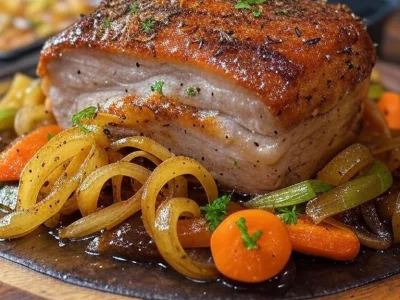
Base recipe: This recipe serves 6 people.
Your kitchen companion
Ingredients
Check off ingredients as you prepare them.
Follow the steps at your own pace.
Method
Prepare the Pork:
Preheat your oven to 200°C (400°F).
Score the skin of the pork shoulder in a crisscross pattern, being careful not to cut into the meat.
Rub the pork generously with salt, pepper, minced garlic, mustard, and caraway seeds. Allow it to marinate for 15 minutes.
Prepare the Vegetables:
Place the chopped onion, carrots, and celery in a large roasting pan. This will serve as the base for your gravy.
Roasting the Pork:
Position the pork shoulder on top of the vegetables in the pan, skin side up.
Pour half of the beer (250 ml) and half of the broth (250 ml) into the pan. Cover the pan with aluminum foil.
Roast in the preheated oven for 1 hour.
Baste and Roast Further:
After the first hour, remove the foil and pour the remaining beer and broth over the pork.
Lower the oven temperature to 180°C (350°F) and continue roasting for 1 hour, basting the pork every 15 minutes with the pan juices.
Achieve a Crispy Crust:
For the final 30 minutes, increase the oven temperature to 220°C (430°F) to crisp up the skin. Watch closely to prevent burning.
Prepare the Gravy:
Remove the pork from the pan and let it rest, loosely covered, for 10 minutes.
Strain the vegetables and juices through a sieve into a saucepan, pressing to extract all the liquid. Discard the solids.
Simmer the liquid over medium heat until slightly thickened. Adjust seasoning with salt and pepper if needed.
Serve:
Slice the pork shoulder and serve with the gravy on the side. Garnish with chopped parsley, if desired. Pair with traditional sides like potato dumplings or red cabbage for an authentic experience.
Extra technique, safety notes and details when you want to go deeper.
More tips & details
Indulge in the rich and hearty flavors of Bavarian Roast Pork, a dish that has graced family tables for centuries. This classic recipe captures the essence of traditional Bavarian cuisine, featuring a succulent, juicy pork roast cooked to perfection. Infused with aromatic spices and accompanied by a luscious crispy crust, this dish is the ultimate comfort food for any occasion. Whether you're hosting a festive dinner or simply craving a taste of Germany, this recipe is guaranteed to impress.
A Journey Through Tradition and Flavor
Bavarian Roast Pork, or Schweinebraten, is a symbol of German culinary heritage. With its origins rooted in Bavarian kitchens, this dish reflects a love for simple, wholesome ingredients transformed into something extraordinary. The hallmark of this recipe is its balance of textures and flavors: the tender, flavorful meat and the golden, crispy crust that crackles with every bite. Paired with traditional sides like potato dumplings (Kartoffelknödel) and tangy red cabbage (Rotkohl), this roast becomes a complete feast.
Why You’ll Love This Recipe
- Juicy and Flavorful: Each bite of the pork roast bursts with a harmonious blend of spices, garlic, and the natural richness of the meat itself.
- Perfectly Crispy Crust: The roasting process ensures a golden, crunchy crust that provides a delightful contrast to the tender interior.
- Authentic Bavarian Experience: This recipe transports you straight to the heart of Bavaria, delivering an authentic taste of German tradition.
- Easy to Follow: With clear steps and readily available ingredients, even beginner cooks can achieve delicious results.
- Versatile for Any Occasion: Whether it's a family dinner, holiday gathering, or Oktoberfest celebration, this dish fits the bill every time.
The Secret to Perfect Bavarian Roast Pork
The secret to achieving the perfect Bavarian Roast Pork lies in the careful preparation and roasting process. A generous rub of spices and garlic infuses the meat with bold flavors, while the roasting technique locks in moisture and ensures a crisp, golden crust. By basting the roast with beer or broth during cooking, you create a rich gravy that enhances the dish even further. This combination of techniques guarantees a roast that is both visually stunning and mouthwateringly delicious.
Bring Germany to Your Table
Picture your dinner table adorned with a beautifully roasted pork shoulder, its aroma filling the room and whetting everyone’s appetite. With this recipe, you can recreate the authentic flavors of Bavaria in the comfort of your own kitchen. Serve it with classic sides for a traditional experience, or pair it with your favorite vegetables for a modern twist.
Make It Your Own
While this recipe stays true to its roots, there’s room to customize. Experiment with additional spices or herbs to match your personal taste, or swap the beer for apple cider for a sweeter undertone. No matter how you adapt it, this Bavarian Roast Pork will remain the star of your meal.
Experience the Magic
Don’t miss out on the opportunity to create a dish that brings people together. Gather your ingredients, preheat your oven, and prepare to wow your family and friends with a meal that’s both memorable and satisfying. The joy of sharing a hearty, home-cooked roast is unmatched, and this recipe promises to deliver every time.
Take Your Taste Buds on a Journey
With its unbeatable flavor, easy preparation, and stunning presentation, this Bavarian Roast Pork is more than just a meal—it’s an experience. Make it today and discover why this traditional recipe has stood the test of time. Get ready to savor every bite, and let the flavors of Bavaria bring warmth and joy to your table.
Tips and Variations for Perfecting Bavarian Roast Pork
Bavarian Roast Pork is a dish steeped in tradition, but there’s always room to customize and enhance it based on your preferences or dietary needs. Below, you’ll find detailed advice on ingredient substitutions, preparation techniques, and serving ideas, along with how each change impacts the overall flavor and texture of this classic recipe.
Choosing the Right Cut of Pork
The type of pork you use significantly affects the taste and texture of the dish:
- Pork Shoulder: The traditional cut for Bavarian roast pork, offering a balance of lean meat and fat that ensures a juicy roast.
- Pork Belly: If you prefer a richer flavor and an even crispier crust, pork belly is an excellent option. Its higher fat content results in a melt-in-your-mouth texture.
- Pork Loin: For a leaner version, use pork loin, but be cautious as it tends to dry out more easily. To prevent this, increase the basting frequency during roasting.
Experimenting with Seasonings
The seasoning blend is what makes this roast stand out. Here’s how you can modify it to create subtle variations:
- Caraway Seeds: A staple in traditional Bavarian cooking, they impart a slightly nutty, earthy flavor. If you’re not a fan, try substituting them with fennel seeds for a milder, sweeter profile.
- Garlic: For a more robust taste, double the amount of minced garlic or roast whole garlic cloves with the vegetables for a milder, caramelized flavor.
- Mustard: While yellow mustard is traditional, Dijon mustard adds a tangy sophistication. For a sweeter glaze, use honey mustard instead.
Adjusting the Liquid Base
The choice of liquid used in roasting and basting the pork dramatically influences the final flavor:
- Dark Beer: Essential for an authentic Bavarian flavor, it adds malty richness and depth. If unavailable, replace it with:
- Apple Cider: Creates a slightly sweeter and fruitier roast, complementing the pork’s natural flavors.
- Chicken Broth: A milder option that lets the spices and pork shine without additional complexity.
- Broth or Stock: Using beef stock enhances the umami flavors, while vegetable stock provides a lighter taste.
Enhancing the Gravy
The gravy ties the entire dish together, and a few tweaks can elevate its flavor:
- Thickness: For a thicker gravy, whisk in 1-2 teaspoons of cornstarch or flour dissolved in cold water. Simmer until the desired consistency is reached.
- Richness: Add a splash of cream or a pat of butter to make the gravy velvety and indulgent.
- Herbs: Fresh thyme or rosemary can be simmered with the gravy for an aromatic boost. Remove before serving.
Customizing the Vegetables
The vegetables used as the roasting base contribute flavor to the gravy. Changing them slightly can offer exciting new profiles:
- Onions, Carrots, and Celery: Traditional and reliable, these provide a classic, hearty flavor.
- Parsnips: Replace carrots with parsnips for a slightly sweeter and nuttier undertone.
- Leeks: Substitute onions with leeks for a softer, more delicate flavor in the gravy.
Making It Gluten-Free
If you or your guests are gluten-intolerant, it’s easy to adapt this recipe:
- Beer: Replace dark beer with gluten-free beer or apple cider.
- Gravy Thickener: Use cornstarch or gluten-free flour instead of all-purpose flour.
Flavor and Texture Adjustments
Achieving the Perfect Crust
The crispy crust is one of the highlights of Bavarian roast pork. These tips will help you get it just right:
- Scoring the Skin: Always score the skin before roasting. The crisscross pattern allows the fat to render evenly, resulting in a crispier texture.
- High Heat Finish: Increasing the oven temperature to 220°C (430°F) in the last 30 minutes ensures the skin becomes golden and crackles beautifully.
- Salt Rub: Generously rub the skin with salt before roasting. This draws out moisture, helping it crisp up.
Balancing Moisture and Juiciness
- Resting the Meat: Let the roast rest for at least 10 minutes after cooking. This allows the juices to redistribute, ensuring a moist and tender bite.
- Frequent Basting: Baste the meat every 15 minutes during roasting. This not only keeps it juicy but also enhances the flavor of the crust.
Dietary Modifications
Lowering the Fat Content
To create a lighter version of this dish:
- Trim the Fat: Remove excess fat from the pork before roasting, leaving just enough for flavor and moisture.
- Choose Lean Cuts: Opt for pork loin instead of shoulder.
- Use Less Oil: Limit oil in the seasoning rub or skip it entirely.
Reducing Sodium
To make a heart-healthier roast:
- Low-Sodium Broth: Use reduced-sodium beef or vegetable broth.
- Salt Alternatives: Replace some of the salt with dried herbs like thyme or oregano for flavor without the sodium.
Elevating the Presentation
Impress your guests by adding some finishing touches:
- Garnish: Sprinkle fresh parsley or thyme over the roast before serving for a pop of color.
- Serve with Sides: Traditional accompaniments like potato dumplings, sauerkraut, or red cabbage complete the Bavarian theme.
How Changes Influence Flavor
- Adding More Garlic: Boosts the savory and slightly pungent profile, ideal for garlic lovers.
- Using Sweet Mustard: Introduces a tangy sweetness that pairs well with apple-based sides.
- Swapping Beer for Cider: Creates a fruity and slightly acidic note that complements the pork’s richness.
This detailed guide ensures you can personalize Bavarian Roast Pork while maintaining its traditional essence. Experiment with these suggestions to make the recipe your own while delivering a meal that is as memorable as it is delicious.
Recivelle · /recipe/bavarian-roast-pork-traditional-recipe-juicy-roast