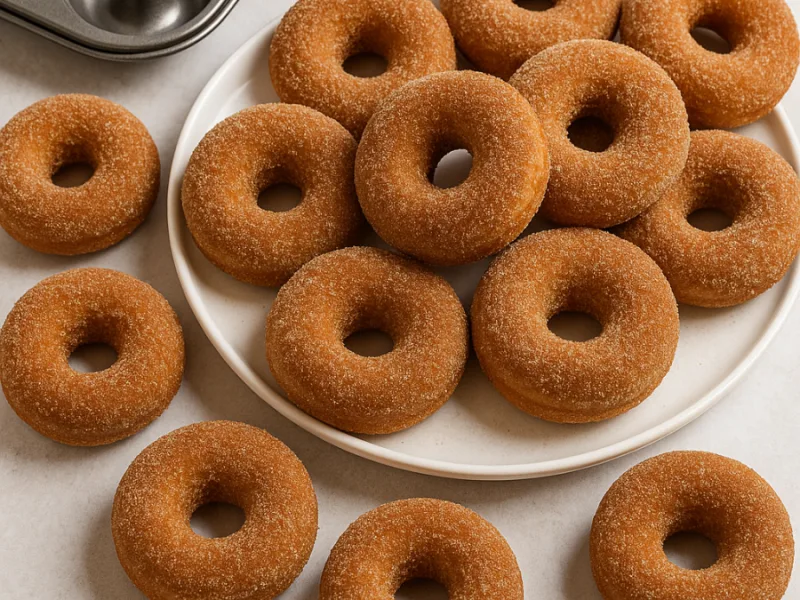
Base recipe: 12 donuts
Your kitchen companion
Ingredients
Check off ingredients as you prepare them.
Follow the steps at your own pace.
Method
Pour the apple cider into a small saucepan. Bring it to a simmer over medium heat and cook for about 10–12 minutes, until it reduces to approximately ½ cup (120 ml). The cider should look slightly syrupy and smell intensely fragrant. Let it cool for 5 minutes.
Preheat the oven to 350°F (175°C). Lightly grease a 12-cavity donut pan with melted butter or non-stick spray, ensuring all surfaces are coated to prevent sticking.
In a medium bowl, whisk together the flour, baking powder, baking soda, cinnamon, nutmeg, and salt. The mixture should look uniform and smell warmly spiced.
In a large mixing bowl, whisk the egg, brown sugar, milk, melted butter, and vanilla extract until smooth and slightly frothy. The mixture should have a light caramel color.
Add the cooled reduced cider to the wet ingredients and stir well until evenly combined. The aroma will deepen at this point.
Gradually add the dry ingredients into the wet mixture, whisking gently until no dry streaks remain. The batter should be thick and smooth, similar to pancake batter.
Spoon the batter into a piping bag or a large zip-top bag with the corner snipped off. Pipe the batter into the donut pan, filling each cavity about ¾ full. The surface should be smooth and level.
Bake for 15 minutes, until the edges of the donuts are firm, the tops are puffed, and the surface looks golden brown with a slight spring when touched.
Remove from the oven and let the donuts cool in the pan for 5 minutes. Then transfer them to a wire rack to cool for another 5 minutes. The donuts should feel tender but hold their shape well.
In a shallow bowl, combine the granulated sugar and cinnamon for the coating.
Brush each warm donut lightly with melted butter, ensuring even coverage. Immediately roll or sprinkle the donuts with the cinnamon sugar mixture. The coating should stick easily and appear slightly sparkly.
Serve warm or at room temperature. The donuts should be soft, aromatic, and coated with a crisp layer of cinnamon sugar.
Extra technique, safety notes and details when you want to go deeper.
More tips & details
Cozy Fall Baking Ideas: Homemade Baked Donuts with Apple Cider and Cinnamon
What do apple cider donuts taste like when baked?
There’s a soft, golden richness to these baked apple cider donuts that instantly evokes the cozy spirit of autumn. As you lift one from the plate, still faintly warm, your fingers sink into the sugar-dusted crust, and a sweet cloud of cinnamon rises in the air. The first bite is tender and pillowy—cake-like, yet light, with a soft crumb that holds the concentrated flavor of reduced apple cider. These are not just donuts. They are a seasonal tradition, a sensory memory wrapped in warmth and spice.
The decision to bake rather than fry wasn't just about technique—it was about texture and depth. Baking allows the flavor of the cider and spices to shine without being masked by oil. In testing, we found that reducing the apple cider was crucial. This step transforms the liquid into a syrupy elixir, intensifying its natural sweetness and infusing every bite with a nostalgic, orchard-fresh tang. The batter bakes up with a gentle dome and golden edges, while the warm coating of cinnamon sugar provides a delicate crunch and aromatic finish.
From the moment the cider simmers on the stove, to the final sugar dusting, this recipe is a celebration of hands-on, heartwarming baking. It fills the kitchen with a scent so inviting that even neighbors have knocked to ask what’s in the oven. These donuts offer more than flavor—they offer the feeling of fall, captured in a circle of softness and spice.
Why this is the best baked donut recipe for fall
This recipe brings together classic fall ingredients in the most satisfying way. The apple cider isn't just a flavor—it’s the foundation. By slowly reducing it, we draw out its deep, natural sweetness, layering that orchard-fresh intensity into every bite. The spices—cinnamon, nutmeg, and a hint of vanilla—round out the flavor profile, giving the donuts that nostalgic warmth you crave as the leaves begin to turn.
One of the reasons I keep coming back to this recipe is the consistency. Whether you're baking a half batch for a quiet morning or a double tray for guests, the results are always dependable. These are my go-to for fall gatherings, cozy Sunday breakfasts, or any moment when something sweet and fragrant feels right. The preparation is straightforward, and there’s a certain joy in piping the thick batter into the donut pan, watching them rise, then rolling them—still warm—in cinnamon sugar.
Even more than the flavor, it’s the experience that stands out. These donuts bring people into the kitchen. They draw smiles. They're the kind of treat that disappears quickly, always leaving someone asking for the recipe.
What to serve with apple cider cinnamon sugar donuts
These baked apple cider donuts are incredibly versatile. For a breakfast pairing, serve them with a mug of hot spiced tea, pumpkin chai, or steamed milk with honey and cinnamon. The spice and sugar coating is especially good with darker roasts like French press coffee, which balances the sweetness with a slight bitterness.
If you're serving these as part of a brunch spread, they sit beautifully alongside caramelized pear compote, baked eggs with herbs, or thick Greek yogurt topped with roasted nuts. For a midday dessert, add a scoop of vanilla bean or cinnamon ice cream and a light drizzle of maple syrup. They also make a delightful pairing with aged cheddar or creamy brie, offering a contrast between sweet and savory.
During autumn holidays, these donuts shine on the dessert table beside spiced pumpkin bars, pecan tarts, or apple galettes. They hold their own at every meal—equally at home beside cozy classics or more refined holiday offerings.
What makes these donuts different from fried versions?
The most notable difference between these baked cinnamon sugar donuts and traditional fried ones is in the texture. Fried donuts are often heavier, with an oily crispness. These are softer, cleaner, and gently springy—closer in feel to a well-made muffin or sponge cake, but with that unmistakable donut character.
We ran multiple side-by-side tests to compare both methods. While fried donuts do deliver a nostalgic crunch, they often overshadow the cider and spice with the flavor of oil. In contrast, these homemade baked donuts let the apple shine. The crumb is airy but moist, the edges slightly crisp, and the sugar coating clings without soaking.
Another benefit? Clean-up is easier, and the process is more approachable for home bakers. There's no need for deep frying equipment or oil disposal. Just prep your batter, pipe it into a donut pan, bake, and coat. It’s the kind of recipe that encourages you to bake more often—and enjoy every step.
When to serve baked apple cider donuts
These homemade apple cider donuts with cinnamon sugar are ideal for everything from casual breakfasts to special occasions. They're perfect for a fall breakfast idea, whether you're enjoying a quiet morning at home or hosting a weekend brunch. Their warm spices and soft texture make them especially comforting on cold mornings.
They’re also a favorite at autumn festivals, Halloween parties, or as a festive addition to your Thanksgiving brunch. We’ve even used them in creative dessert spreads—stacked like a donut cake, paired with dipping sauces, or served alongside seasonal fruits.
If you're planning a baking day with kids or friends, this recipe is both fun and rewarding. The batter is easy to work with, and the final cinnamon sugar coating is a joy to apply—especially when done assembly-line style with others. They also work wonderfully as edible gifts, wrapped in parchment and ribbon for a rustic homemade touch.
How do you make baked apple cider donuts from scratch?
The process begins with reducing apple cider. It’s a step you shouldn’t skip—boiling it down to about one-third of its original volume concentrates the flavor, creating a syrupy base that’s rich and aromatic. Once cooled, this reduction is mixed with melted butter, eggs, brown sugar, and vanilla, forming the base of your batter.
Dry ingredients—flour, baking powder, salt, and spices—are folded in until a thick, pipeable batter forms. Using a piping bag or spoon, you’ll fill each cavity of a non-stick donut pan about two-thirds full. After baking, the donuts are cooled just enough to handle, then rolled in a mix of cinnamon and sugar that clings perfectly to their still-warm surface.
The result is a golden, fragrant donut that tastes of fall in every bite. No frying, no mess—just soft, spiced perfection from your oven to the table.
A celebration of fall flavors, simply baked
These baked apple cider donuts with cinnamon sugar are more than just a seasonal treat—they’re a reason to gather, to savor, and to enjoy the quiet rhythm of fall baking. Whether shared with family, brought to a gathering, or enjoyed solo with a cup of something warm, they offer comfort in every bite. Their homemade charm, unmistakable aroma, and irresistible texture make them a favorite you’ll reach for again and again.
Perfect your fall baking: how to elevate baked apple cider donuts with cinnamon sugar
Professional tips to get bakery-level results at home
Mastering baked apple cider donuts means paying attention to balance—between spice and sweetness, softness and structure, warmth and texture. One of the most important upgrades you can make is to reduce the apple cider slowly and thoroughly. This step isn’t optional—it transforms the cider from watery juice to a deep, syrupy concentrate, intensifying both flavor and aroma. A proper reduction will leave you with a golden, slightly thickened liquid that smells like spiced caramelized apple. If the cider still looks thin after 10 minutes, let it simmer longer. Patience here is rewarded.
Use room temperature ingredients to ensure even mixing and a smoother batter. Cold eggs or milk can cause the butter to seize, creating a lumpy texture. Pre-whisking the dry ingredients ensures your spices and leaveners are distributed evenly, preventing bitter pockets or uneven rising.
When piping the batter into your donut pan, avoid overfilling. Two-thirds full is ideal—it gives the batter room to rise into a rounded shape without spilling over. And always let the donuts sit in the pan for about 5 minutes after baking. This brief rest helps them firm up just enough to release cleanly from the pan without tearing.
At this point, I always take in the aroma—the blend of warm apple, cinnamon, and baked dough is what makes this recipe feel like fall in my kitchen.
Common mistakes to avoid when baking apple cider donuts
One of the most frequent errors home bakers make is skipping the cider reduction or not reducing it enough. Undercooked cider adds too much moisture and dilutes the flavor, leading to a bland and soggy donut. On the other hand, reducing it too far can caramelize the sugars and turn bitter. Aim for a reduction that visibly thickens and reduces to ½ cup (120 ml) from 1 cup.
Overmixing the batter is another major issue. Once you combine the dry and wet ingredients, stir only until you see no dry streaks. Overworking activates gluten and results in a dense, chewy crumb instead of a soft, tender bite.
Don’t be tempted to coat the donuts in cinnamon sugar when they’re fully cooled. The sugar adheres best while the donuts are still warm, and brushing with melted butter helps the coating stick without making the donut soggy. Skipping the butter can cause uneven coverage and dry patches.
I’ve learned to always taste the sugar-spice mixture before rolling—sometimes just an extra pinch of cinnamon makes all the difference in flavor depth.
Smart substitutions and healthier alternatives
If you’re looking to make these cinnamon sugar donuts a bit lighter or allergen-friendly, there are a few swaps that work well without compromising texture or flavor. For a dairy-free version, substitute the milk with unsweetened almond milk or oat milk, and replace the butter with a plant-based alternative that’s suitable for baking. These substitutions will still give you a moist donut with a clean flavor.
For an egg-free version, ¼ cup (60 ml) of unsweetened applesauce makes a great stand-in for one egg. It keeps the donut soft while enhancing the apple flavor. Be aware that this may slightly affect the rise, so check for doneness by touch and color rather than just time.
Gluten-free flours can be used if they include xanthan gum or are specifically formulated for 1:1 substitution in baking. Avoid using almond or coconut flour on their own—they won’t provide the right structure. Choose a gluten-free baking mix for the best results.
No suitable substitution available for the cider—this ingredient defines the flavor and can’t be replaced with apple juice or concentrate without major loss of depth.
Delicious ways to customize and vary the recipe
Though the classic apple cider cinnamon sugar donut stands beautifully on its own, you can easily personalize the flavor with small, impactful additions. Try incorporating a pinch of allspice or ground cloves into the dry mix for extra warmth, or replace the vanilla extract with maple extract for a deeper autumn flavor profile.
For an eye-catching finish, drizzle the donuts with a maple glaze or cream cheese icing instead of rolling in cinnamon sugar. This transforms the donut from a breakfast pastry into a show-stopping dessert.
Mini donuts or donut holes are another variation—just adjust the baking time accordingly. Mini versions bake faster (around 9–10 minutes) and work perfectly as party snacks or festive gifts. You can also make them in a muffin tin if you don’t have a donut pan; just note that the shape and baking time will vary.
I occasionally brush the finished donuts with a little cider syrup for extra shine—it adds flavor and gives them a beautiful bakery-style finish.
Why these ingredients make such a difference
Every ingredient in this recipe plays a role in delivering the ideal texture and flavor. Apple cider, once reduced, becomes a flavor powerhouse—it adds both sweetness and acidity that enhance the spices. Brown sugar deepens the sweetness with a light molasses undertone, while butter brings richness and structure to the crumb.
Cinnamon and nutmeg aren’t just for aroma—they add warmth and balance that bring out the apple notes without overpowering. Using both baking powder and baking soda gives the donuts a light rise with a tender bite. Milk contributes to the moistness and helps blend the dry ingredients evenly.
The cinnamon sugar coating is more than decorative—it delivers texture contrast. As you bite through the slightly crisp crust into the soft center, you get a layered sensory experience that feels indulgent yet homemade.
When I whisk the dry ingredients together, I always pause to smell the spice blend—there’s something deeply nostalgic about it that reminds me of cool mornings and warm kitchens.
Best ways to store and reheat baked donuts
Fresh is always best, but these homemade apple cider donuts can be stored for up to 2 days at room temperature in an airtight container. Line the container with a paper towel to absorb moisture and prevent the sugar coating from dissolving. Avoid stacking donuts directly on top of each other to preserve the crisp coating.
For longer storage, refrigerate for up to 4 days, though the texture will soften slightly. To refresh, warm the donuts in a 300°F (150°C) oven for 5 minutes. This restores their soft crumb and slightly crisps the sugar coating.
Avoid microwaving, as it causes the coating to melt unevenly and the crumb to become rubbery. If storing without sugar coating, wait to coat them until just before serving.
I usually store them uncovered for the first hour after baking—this prevents steam buildup and keeps the coating crisp.
Common questions about baked apple cider donuts
How do I know when the donuts are fully baked?
Bake for 15 minutes, or until the tops are puffed, edges feel firm, and the surface appears golden brown and slightly domed. Gently press one donut—it should spring back lightly.
Can I make these donuts ahead of time?
Yes, you can bake the donuts a few hours in advance and coat them just before serving. If needed, store uncoated donuts in an airtight container and refresh them briefly in the oven.
What’s the best pan for baking donuts?
Use a non-stick metal donut pan for even heat distribution and easy release. Silicone pans can work, but they often yield a softer exterior and may require extra cooling time.
Can I double the recipe?
Absolutely. This recipe scales well—just double all ingredients and bake in two batches to ensure even baking and space in the oven.
Is it okay to skip reducing the cider?
No. Skipping the reduction will result in bland, watery donuts. The reduced cider is essential for concentrated flavor and balanced moisture. Always simmer until you reach ½ cup (120 ml) for the best results.
Recivelle · /recipe/baked-apple-cider-donuts-cinnamon-sugar