Base recipe: 6
Your kitchen companion
Ingredients
Check off ingredients as you prepare them.
Follow the steps at your own pace.
Method
Rinse the beef bones under cold running water to remove any impurities.
Fill a large stockpot with water, add the bones, and bring to a rolling boil over high heat. Boil for 10 minutes, then drain and rinse the bones again to ensure a clean broth.
Return the bones to the pot and add 5 quarts (4.7 liters) of fresh water. Set over medium heat.
Place the onion halves and ginger pieces directly over an open flame or under a broiler, turning occasionally until charred on all sides. This step enhances the broth’s aroma.
Add the charred onion and ginger to the pot with the bones.
In a dry skillet over medium heat, toast the coriander seeds, star anise, cloves, and cinnamon stick until fragrant, about 2–3 minutes.
Wrap the toasted spices in a piece of cheesecloth or a spice bag and place them in the pot.
Add the salt, fish sauce, and sugar to the broth. Bring to a simmer, then reduce heat to low and cook uncovered for 4 hours. Occasionally skim off any foam or fat that rises to the surface to keep the broth clear.
After 4 hours, remove the brisket and set it aside to cool slightly. Thinly slice the brisket across the grain.
Strain the broth through a fine mesh sieve or cheesecloth into a clean pot, discarding the solids. Keep the broth hot over low heat.
Prepare the rice noodles according to the package instructions. Drain and rinse with cool water to prevent sticking.
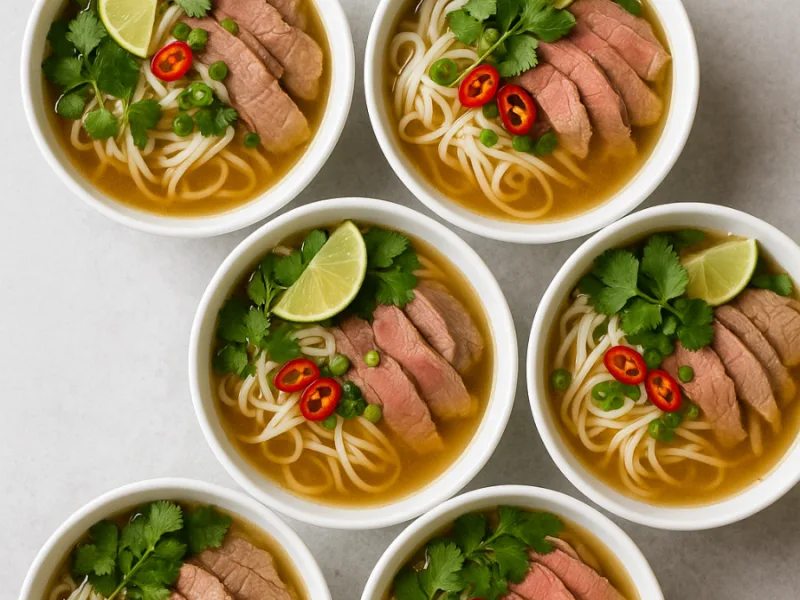
To assemble, divide the noodles evenly among 6 large bowls. Top with slices of cooked brisket and raw sirloin.
Ladle the hot broth carefully over the beef to gently cook the raw slices.
Garnish each bowl with bean sprouts, Thai basil, cilantro, green onions, lime wedges, and sliced chilies. Serve immediately.
Extra technique, safety notes and details when you want to go deeper.
More tips & details
Discover the Rich Flavors of Traditional Pho Bo: Classic Vietnamese Beef Noodle Soup Experience
The History and Cultural Significance of Pho Bo
Pho Bo is more than just a traditional Vietnamese soup recipe; it is a national treasure, a warm embrace of culinary heritage in a single bowl. Originating in Northern Vietnam in the early 20th century, this iconic beef noodle soup quickly became a symbol of comfort and resilience. Today, it transcends generations, carrying with it a story of migration, adaptation, and deep-rooted family traditions. Unlike many simplified noodle broths, authentic Pho Bo demands meticulous preparation, from slow-simmered marrow-rich bones to perfectly balanced aromatics. Each sip evokes bustling street corners of Hanoi, where simmering cauldrons perfume the air with star anise, charred onion, and warm cinnamon. This dish embodies both cultural pride and an invitation to gather around the table to savor every fragrant spoonful.
Why You’ll Fall in Love with Authentic Vietnamese Pho Bo
There are few dishes that combine such profound depth of flavor with such an elegantly clear presentation. Homemade Pho Bo captures a delicate balance: a broth that is simultaneously light and intensely beefy, rice noodles that soak up the aromatic liquid, and thinly sliced brisket or rare beef that melts effortlessly with each bite. The experience is multisensory—rich umami aromas, silky textures, and a chorus of fresh herbs like Thai basil and cilantro brightening the palate. Whether you’re seeking a healthy comfort food on a cool evening or a nourishing meal to share with loved ones, this soup delivers a memorable experience. The preparation becomes an almost meditative process, rewarding you with a result that tastes undeniably genuine. Every time you ladle broth over tender noodles and watch the raw beef bloom pink, you’ll be reminded why traditional Vietnamese beef noodle soup has inspired devotion across the globe.
What to Serve with Authentic Vietnamese Pho Bo
Side dishes for Pho Bo are designed to complement its savory complexity without overwhelming the palate. A crisp plate of Vietnamese fresh spring rolls filled with shrimp and herbs makes a refreshing appetizer. Pickled vegetables, such as daikon and carrot, lend a bright contrast to the warm, aromatic broth. If you want to keep the meal light, consider a simple green papaya salad with lime dressing, which provides a tangy counterpoint. For a more filling spread, a platter of steamed bao buns stuffed with caramelized pork or tofu creates a satisfying textural contrast. And don’t forget small bowls of hoisin sauce, sliced chili, and extra lime wedges—these traditional accompaniments invite diners to tailor each bite. When paired thoughtfully, these sides transform Pho Bo from a single dish into a Vietnamese feast at home.
The Art of Creating an Authentic Pho Bo Broth
Crafting a restaurant-quality Pho Bo broth demands patience and precision. Unlike many quick recipes, this process begins by charring onion and ginger over an open flame, intensifying their natural sweetness. Next, high-quality marrow bones and brisket simmer gently for hours, releasing a milky richness balanced by aromatic spices like star anise, coriander seeds, cloves, and cinnamon. Skimming impurities is essential to achieve a clear, golden broth—a hallmark of authenticity. The final broth should be deeply savory but never heavy, with layered nuances that reveal themselves with each sip. Many home cooks underestimate the impact of properly toasting the spices or blanching the bones before simmering. These small, disciplined steps set truly authentic Pho Bo recipes apart from generic adaptations. The result is a liquid so fragrant and complex, it can stand alone as a meal in itself.
Ingredient Selection: Choosing the Best Beef and Noodles
Sourcing the right ingredients defines the success of your homemade beef noodle soup. Traditional recipes call for a combination of marrow bones for body and thinly sliced raw beef—often sirloin or eye of round—for delicate tenderness. Brisket or shank provides richness and texture, while tendon can be added for an authentic gelatinous mouthfeel. Fresh rice noodles are essential, offering a springy chew that contrasts beautifully with the clear broth. When selecting herbs, opt for bright, perky Thai basil, crisp bean sprouts, and plenty of coriander. Fresh lime wedges and bird’s eye chilies allow each guest to customize their bowl to their taste. Investing time in sourcing high-quality ingredients elevates the dish from everyday soup to an unforgettable Vietnamese culinary experience.
Serving and Presentation: Creating a True Pho Bo Experience
Presentation matters as much as preparation when it comes to authentic Pho Bo. The traditional approach layers softened rice noodles first, followed by brisket slices and raw beef. Piping hot broth is then poured over the meat, cooking it to perfect tenderness. Each bowl is crowned with an abundant garnish plate—sprigs of fresh herbs, crunchy bean sprouts, and wedges of lime. Small dipping dishes of hoisin sauce and fiery sriracha complete the spread, allowing guests to fine-tune each bite. A carefully arranged bowl not only highlights the delicate textures and colors but also invites conversation and connection around the table. When you serve Pho Bo this way, you recreate the communal spirit of Vietnamese dining, transforming your kitchen into a welcoming haven of authentic Asian recipes.
Why Pho Bo Deserves a Place at Your Table
In a world of quick meals and shortcuts, taking the time to prepare traditional Vietnamese Pho Bo is a profound act of care and intention. From the first sip of the shimmering broth to the last bite of tender noodles, every element tells a story of patience, technique, and devotion. Whether you are recreating cherished family memories or introducing new palates to the marvels of Vietnamese cooking, this recipe promises an experience that transcends mere sustenance. It becomes a ritual, a celebration of authenticity, and a reminder that sometimes the most meaningful meals are the ones that require your time and heart. When you prepare and share Pho Bo, you are not simply making soup—you are preserving a legacy of flavor, tradition, and connection.
Take a moment to bookmark this recipe and share it with fellow food lovers who appreciate the art of homemade Asian cuisine—because extraordinary meals deserve to be passed on.
Master the Art of Vietnamese Pho Bo: Expert Tips to Elevate Your Beef Noodle Soup Recipe
Professional Tips to Achieve Restaurant-Quality Pho Bo at Home
Crafting authentic Vietnamese Pho Bo with the depth of flavor found in Hanoi street stalls demands thoughtful attention to detail at every stage. Start by investing in the highest-quality beef bones, ideally a mix of marrow bones and knuckle bones. These will infuse your broth with body and a silky mouthfeel that cheaper cuts can’t deliver. When charring your onions and ginger, use an open flame rather than an oven if possible—this technique unlocks a deeper, smokier sweetness that permeates the broth.
Control the simmer carefully. Maintaining a gentle, barely bubbling simmer is crucial. Too vigorous a boil emulsifies fats and proteins into the liquid, creating a cloudy, greasy broth instead of a pristine, golden clarity. Another expert-level tactic is to salt your broth gradually rather than all at once. Taste it at intervals as it cooks, noting how the salt integrates with the natural beef reduction. This layered seasoning builds complexity that feels balanced on the palate.
Before serving, always reheat the broth to a rolling boil to ensure it’s hot enough to cook the raw beef slices instantly. This step not only guarantees food safety but also creates that signature blush of perfectly tender rare beef floating at the surface.
Common Mistakes That Undermine Authentic Pho Bo Flavor
Even skilled cooks can make missteps that detract from an otherwise traditional Vietnamese beef noodle soup. One of the most frequent errors is skipping the bone blanching step. Blanching removes impurities that would otherwise cloud the broth and produce off-flavors. Equally problematic is neglecting to skim the simmering pot consistently. Leaving scum and fat to accumulate leads to bitterness and a muddied appearance.
Another common issue is over-toasting the spices. While some char adds depth, burning your star anise or cinnamon will produce a harsh, acrid undertone that’s impossible to mask. Use medium heat and watch the spices closely, removing them as soon as they release their fragrance.
Many home cooks also slice the beef too thickly. For best results, place the beef in the freezer for 20 minutes before cutting, which firms it enough to shave into delicate, paper-thin pieces. These thin slices cook almost instantly under the boiling broth, achieving the tender texture that defines best homemade Pho Bo.
Lastly, don’t underestimate the importance of fresh herbs and garnishes. Tired or wilted basil and cilantro rob the final bowl of the brightness that balances the savory broth.
Substitution Ideas and Healthier Alternatives for Pho Bo
While traditional recipes are revered for their authenticity, you can customize homemade Vietnamese beef noodle soup to meet dietary goals or ingredient availability. For a lower-sodium version, replace standard fish sauce with a reduced-sodium alternative or even a splash of tamari blended with a little fresh lime juice.
If you wish to create a gluten-free Pho Bo, double-check that your rice noodles are certified gluten-free, as some brands process them in facilities with wheat. For a lighter broth, skim off more of the surface fat after cooking and chill the broth overnight to solidify the remaining fat for easy removal.
Vegetarians can achieve an aromatic base by simmering charred onions, ginger, shiitake mushrooms, and toasted spices in vegetable broth for several hours. Though it’s not traditional Pho Bo, this version retains the essence of the spices and the pleasure of building your bowl with fresh herbs and rice noodles.
Lean cuts like eye of round or sirloin tip reduce the fat content compared to brisket. If you prefer to limit red meat, substitute thinly sliced chicken breast, though you’ll need to adjust broth seasoning to maintain richness.
Inspiring Recipe Variations to Suit Every Palate
Once you’ve mastered the classic, you can experiment with creative Pho Bo variations that respect tradition while offering fresh takes. In Northern Vietnam, some families serve Pho with additional cuts like tendon or beef tripe, enhancing texture. In Southern styles, the broth is often sweeter and garnished with Thai basil and sawtooth herb.
For a bolder flavor, infuse your broth with a splash of aged fish sauce or a roasted shallot during the last hour of simmering. Some cooks finish the broth with a few drops of sesame oil, adding a subtle nutty aroma.
You can also try a spicy Pho Bo variation by incorporating a spoonful of chili paste into the broth before serving or offering a small dish of sriracha alongside traditional hoisin. This approach elevates heat without overpowering the broth’s delicate layers.
Modern adaptations sometimes add bone marrow or oxtail for deeper richness. While less common, this creates a luxurious texture perfect for special occasions.
Ingredient Benefits That Make Pho Bo So Nourishing
Each ingredient in traditional Pho Bo plays a functional role beyond flavor. The long-simmered bones release collagen, which gives the broth body and supplies naturally occurring gelatin, a substance that supports joint health and digestion.
Charred onion and ginger bring antioxidants and natural sweetness without relying on added sugar. Star anise and cinnamon contain beneficial plant compounds that may aid digestion and reduce inflammation.
Fresh herbs like Thai basil, cilantro, and lime offer vitamin C and bright, clean flavors that balance the richness of the broth. Even the simple bean sprouts contribute vitamins and a crisp texture that contrasts with the silky noodles.
When prepared with attention to detail, Pho Bo becomes more than comfort food—it transforms into a meal that nourishes body and soul.
Expert Strategies for Storing and Reheating Pho Bo
Proper storage ensures your homemade Pho Bo maintains its quality over several days. Always cool the broth rapidly after cooking to avoid bacterial growth. Transfer it to shallow containers and refrigerate within two hours. Once chilled, you’ll notice a layer of solidified fat at the top. Skim this off before reheating for a cleaner, lighter flavor.
To reheat, warm the broth gently over medium heat until steaming hot but not boiling, which preserves clarity. Store the noodles and garnishes separately to maintain texture. When ready to serve, rehydrate noodles in hot water for a few seconds before assembling each bowl.
Frozen broth can be stored in airtight containers for up to three months. Thaw overnight in the refrigerator, then reheat as usual. Always add fresh herbs and lime just before serving to restore brightness.
This careful approach ensures every bowl remains as delicious as the first, whether you enjoy it the same day or weeks later.
Elevate Your Pho Bo with Simple Enhancements
While the traditional process creates outstanding results, small enhancements can make your Vietnamese beef noodle soup even more memorable. Use filtered water to avoid mineral interference in your broth’s taste. Layer your seasoning gradually, adjusting salt and fish sauce only after the broth has reduced significantly.
For an elegant presentation, warm your serving bowls before assembly so the broth retains its temperature longer. Consider offering a platter of herbs, lime wedges, and chili slices at the table, inviting guests to personalize each bowl.
Lastly, practice patience. The magic of Pho Bo emerges not from shortcuts but from the slow unfolding of flavor. When you invest in every detail—from toasting spices to slicing beef paper-thin—you create an experience that captures the essence of Vietnamese culinary artistry.
By mastering these techniques, you transform your kitchen into a place where tradition and personal touch meet—delivering a bowl of authentic Pho Bo that rivals the finest Vietnamese eateries.
Recivelle · /recipe/authentic-vietnamese-pho-bo-beef-noodle-soup