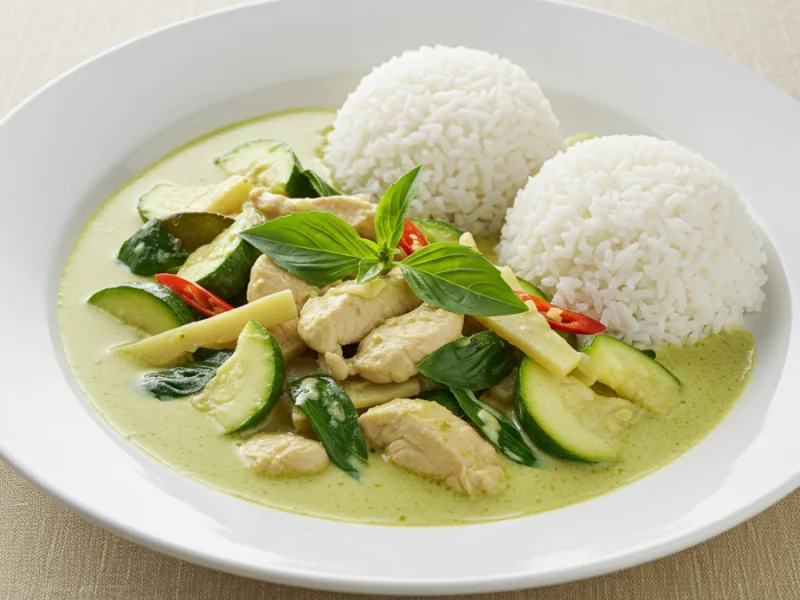
Base recipe: 4 portions
Your kitchen companion
Ingredients
Check off ingredients as you prepare them.
Follow the steps at your own pace.
Method
Heat the coconut oil in a large saucepan or wok over medium heat.
Add 2 tablespoons of the coconut milk and cook for 2–3 minutes until it starts to separate and become fragrant.
Stir in the green curry paste and sauté for another 2 minutes to release the aromas.
Slowly pour in the remaining coconut milk and bring to a gentle simmer.
Add the chicken slices and cook for 10–12 minutes until tender and cooked through.
Stir in the bamboo shoots, bell pepper, and zucchini. Simmer for 5–7 minutes until vegetables are just tender but still vibrant.
Add the fish sauce, palm sugar, and torn kaffir lime leaves. Stir well to combine all the flavors.
Add water or broth to adjust the consistency of the sauce if needed.
Simmer for another 3–4 minutes.
Turn off the heat, then stir in the lime juice and fresh Thai basil leaves.
Serve hot over steamed jasmine rice. Garnish with cilantro if desired.
Extra technique, safety notes and details when you want to go deeper.
More tips & details
Creamy Coconut Thai Delight with Fresh Green Curry Paste
The essence of traditional Thai flavors in every spoonful
Dive into the vibrant world of Thai cuisine with this aromatic and richly layered dish that brings the heart of Thailand straight to your kitchen. This Authentic Thai Green Curry offers a delicate balance of spicy, creamy, and herbaceous notes, capturing the soul of Southeast Asian culinary traditions in the most captivating way. Perfect for a weeknight dinner or an impressive weekend gathering, this recipe invites you to explore the depth of flavor that only a freshly made green curry paste and high-quality coconut milk can provide.
A journey into Thailand’s culinary heritage
Originating from central Thailand, green curry (Gaeng Keow Wan) is considered one of the most beloved dishes in the country’s rich food culture. Known for its distinctive green hue, derived from fresh green chilies and fragrant herbs like Thai basil and cilantro, this curry offers a vibrant contrast between its creamy coconut base and the intense punch of spices. The dish reflects Thailand’s approach to food — a harmonious blend of sweet, spicy, salty, and umami notes that create a completely satisfying meal.
Rich coconut base meets bold aromatics
The foundation of this Thai green curry is built on a lush blend of full-fat coconut milk, offering a velvety mouthfeel that soothes the heat of the green chilies. Layered with lemongrass, galangal, kaffir lime leaves, and fish sauce, every bite carries a whisper of tropical heat and citrusy complexity. Whether made with chicken, shrimp, tofu, or simply seasonal vegetables, this dish is incredibly versatile and adapts to every palate.
Why fresh ingredients make all the difference
One of the secrets to an unforgettable Thai curry lies in the use of fresh herbs and homemade curry paste. Store-bought options may offer convenience, but preparing your own paste transforms the dish from good to extraordinary. The depth of flavor from pounding together green chilies, shallots, garlic, shrimp paste, and fragrant roots creates a paste that’s both sharp and fresh. Combined with creamy coconut milk, the result is a rich and flavorful curry that feels as though it’s come straight from the streets of Bangkok.
A dish that adapts to your taste
What makes Thai green curry so appealing is its flexibility. While traditionally made with chicken, it pairs just as beautifully with prawns, tofu, or even a variety of seasonal vegetables like baby eggplants, bell peppers, zucchini, and bamboo shoots. Whether you prefer it mild or extra spicy, with rice or noodles, this dish can be tailored to match your preferences without losing its authentic charm.
The perfect meal for any occasion
Warm, comforting, and visually stunning with its vivid green color, this curry turns any mealtime into a celebration. It’s a standout choice for family dinners, elegant date nights, or festive gatherings where bold flavors are appreciated. Serve it over a bed of steamed jasmine rice or with sticky rice to soak up the luxurious sauce, and you have a complete dish that satisfies both the body and soul.
Tips for a truly authentic experience
To truly honor the Thai culinary tradition, try using authentic ingredients such as Thai green chilies, fish sauce, and palm sugar. Garnishing with fresh Thai basil leaves right before serving not only enhances the aroma but adds a layer of freshness that makes each spoonful burst with flavor. Don’t rush the cooking process—letting the curry simmer gently allows the flavors to meld and deepen, creating a more profound taste with every minute.
This creamy coconut curry is more than just a dish—it’s an experience, a trip through the bustling markets and home kitchens of Thailand. Rich in flavor, beautifully balanced, and incredibly satisfying, it’s a recipe you’ll return to again and again. Whether you’re new to Thai cooking or an experienced home chef, this Authentic Thai Green Curry offers both a comforting familiarity and an exotic twist that will quickly become a favorite in your culinary repertoire.
Elevating the Thai Green Curry Experience with Creative Enhancements
Thoughtful ingredient swaps that boost complexity
Thai green curry is already a masterclass in balancing spice, sweetness, salt, and creaminess, but thoughtful tweaks can take the dish from traditional to extraordinary. For instance, replacing part of the coconut milk with a splash of evaporated milk or cashew cream introduces a subtly nutty note while keeping the curry rich. This small adjustment adds an earthy depth that complements the herbal backbone of the green curry paste without overpowering the dish.
Another impactful change lies in the choice of protein. While chicken is the classic option, incorporating duck breast gives the dish a luxurious feel, bringing a slightly gamey flavor that pairs beautifully with the bold herbs and spices. For a pescatarian alternative, firm white fish such as cod or halibut creates a lighter but equally satisfying experience.
For vegetarians or those seeking a plant-based alternative, tofu and tempeh absorb the curry flavors well, especially when pre-marinated. Roasted chickpeas or seared king oyster mushrooms also add a satisfying meaty texture while keeping the dish vegan.
How homemade components unlock flavor potential
The heart of Thai green curry is its paste. While convenient store-bought versions offer a shortcut, nothing rivals the flavor intensity and freshness of a homemade green curry paste. By blending fresh ingredients such as green chilies, galangal, lemongrass, shallots, kaffir lime zest, and coriander roots, you ensure every spoonful bursts with authentic Thai aromatics. Additionally, making your own paste allows full control over the spice level, salt content, and overall balance.
Grinding the paste using a mortar and pestle rather than a food processor releases essential oils more effectively, resulting in a more robust and complex flavor. Though it takes a bit more effort, the payoff is a curry that’s noticeably more fragrant and vivid.
Ways to intensify or balance flavors
Even with a great base, certain enhancements can tailor the curry to your taste or make it more dynamic. Adding a few Makrut lime leaves during simmering deepens the citrusy aroma. A small amount of green mango or pineapple juice can enhance the acidity and sweetness without overpowering the dish.
Incorporating a spoonful of fermented soybean paste or a drop of fish sauce caramel adds umami depth and complexity. If the curry turns out too spicy, balance it with a bit more palm sugar or an additional dash of coconut cream to soften the heat without diluting flavor.
Fresh herbs like Thai holy basil or mint can be stirred in at the end for extra layers of flavor, while toasted sesame seeds or peanuts on top add contrasting texture and nutty undertones.
Common mistakes to avoid during preparation
A frequent misstep is overheating the coconut milk. When boiled too vigorously, it can separate and develop an oily texture. Always keep the heat at a gentle simmer to preserve its creamy consistency.
Another issue arises from using too much store-bought curry paste without adjusting for salt or spice levels. These pastes are often saltier and spicier than their homemade counterparts, so balance them with care.
Overcrowding the pan with vegetables or meat can also lead to uneven cooking. It's better to sauté in batches if necessary, especially when working with ingredients that release water like zucchini or mushrooms.
Skipping the resting period is another missed opportunity. Letting the curry sit for 10–15 minutes after cooking allows the flavors to meld and develop more fully.
Health-forward adjustments for a lighter version
For a lighter version of Thai green curry, several small changes can reduce saturated fat and sodium without sacrificing flavor. Replace full-fat coconut milk with light coconut milk or a combination of coconut milk and vegetable broth.
Substitute fish sauce with low-sodium soy sauce or a blend of tamarind paste and sea salt to maintain the salty-sour balance while cutting down on sodium.
Using quinoa or brown rice instead of jasmine rice increases the dish’s fiber content and makes it more nutritious. Adding legumes like edamame or lentils can increase the protein content while reducing reliance on meat.
Incorporating more green vegetables such as broccoli, spinach, or bok choy not only boosts the nutrient density but also introduces refreshing bitterness that contrasts nicely with the richness of the curry.
The value of local and seasonal ingredients
While traditional Thai ingredients like Thai basil and kaffir lime leaves can sometimes be hard to source, local alternatives can work surprisingly well. Italian basil, lemon zest, or cilantro stems can replicate some of the flavor profiles when authentic ingredients aren't available.
Choosing seasonal produce such as asparagus in spring, pumpkin in autumn, or fresh peas in summer adds unique flair and keeps the recipe sustainable and budget-friendly. Roasted root vegetables in winter give the curry a heartier character, making it suitable for colder months.
How presentation and texture elevate the final result
Beyond flavor, texture and presentation play a major role in how the dish is experienced. Garnish with fresh herbs, microgreens, or thinly sliced red chilies for a pop of color and contrast. A swirl of thick coconut cream on top not only adds visual appeal but also a final layer of richness.
Consider serving the curry in a pre-warmed bowl to maintain temperature, alongside steamed rice molded in a cup shape for a professional look. Crisp toppings like fried shallots or toasted coconut flakes offer pleasant contrast and make the curry more engaging to eat.
A dish that grows with your creativity
The beauty of Thai green curry lies in its flexibility. Whether you're enhancing it for health reasons, tailoring it to dietary needs, or simply exploring new flavors, it’s a dish that invites creativity while respecting tradition. By understanding its foundations and experimenting with thoughtful variations, you can turn a classic into your own signature dish—rich with flavor, personality, and soul.
Recivelle · /recipe/authentic-thai-green-curry