Base recipe: 4
Your kitchen companion
Ingredients
Check off ingredients as you prepare them.
Follow the steps at your own pace.
Method
Prepare the ingredients – Peel the potatoes and cut them into thin slices (about 3 mm or ⅛ inch thick). Peel and finely slice the onion.
Cook the potatoes and onions – Heat extra virgin olive oil in a large non-stick pan over medium heat. Add the potatoes and onions, stirring gently to ensure even cooking. Cook for about 15 minutes, stirring occasionally, until the potatoes are soft but not browned. Remove from heat and drain the excess oil using a sieve, reserving about 2 tablespoons of oil for later.
Prepare the egg mixture – In a large bowl, whisk the eggs until smooth. Season with salt and black pepper. Add the cooked potatoes and onions, mixing gently to coat everything with the eggs. Let the mixture rest for 5 minutes to allow the flavors to blend.
Cook the tortilla – Heat the reserved olive oil in the same non-stick pan over medium heat. Pour in the tortilla mixture and spread it evenly. Cook for 5-7 minutes, until the bottom is golden and set.
Flip the tortilla – Carefully place a large plate over the pan, invert the tortilla onto the plate, and slide it back into the pan to cook the other side. Cook for another 5 minutes, until the tortilla is firm but still slightly soft in the center.
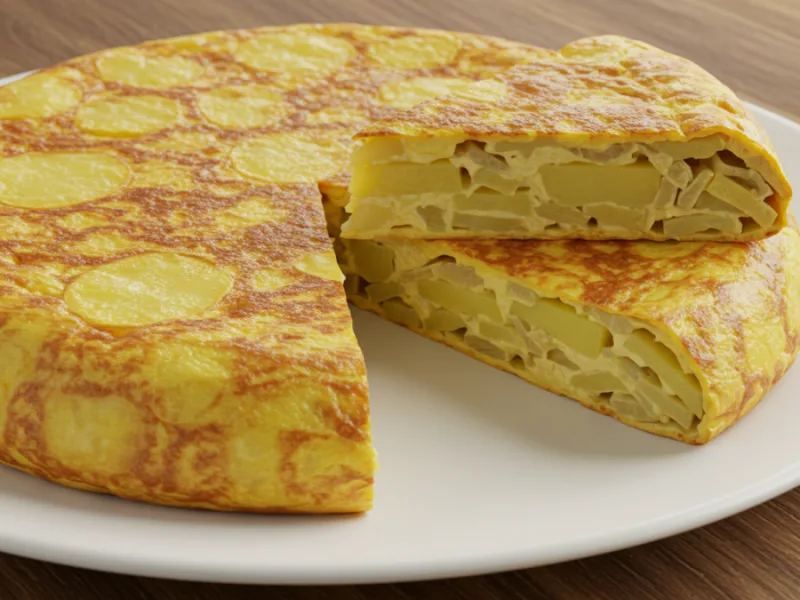
Serve – Transfer the tortilla to a serving plate and let it cool slightly before slicing. Serve warm or at room temperature, as a main dish or part of a tapas spread.
Extra technique, safety notes and details when you want to go deeper.
More tips & details
Traditional Spanish Tortilla: A Timeless Culinary Classic
The Essence of Spanish Cuisine in a Single Dish
The Spanish tortilla, also known as tortilla de patatas, is one of Spain’s most beloved traditional dishes. With just a handful of simple ingredients—potatoes, onions, eggs, and olive oil—this humble yet flavorful omelette has earned its place at the heart of Spanish cuisine. Whether served as a tapa in a bustling Madrid tavern, enjoyed as a light meal, or packed for a picnic in the countryside, this dish captures the essence of Spanish home cooking.
The History Behind the Spanish Tortilla
The origins of the Spanish tortilla date back centuries, with its first recorded mention appearing in the 19th century. Some believe it was invented as an accessible and filling dish for farmers and laborers, offering a nutritious meal made from affordable and widely available ingredients. Others trace its roots to Navarra, where a similar recipe was used as a practical way to feed large numbers of people. Over time, this simple dish evolved into an iconic part of Spanish gastronomy, loved in every region of the country.
The Key to a Perfectly Cooked Tortilla
While the Spanish tortilla may seem straightforward, achieving the perfect balance of soft, tender potatoes, caramelized onions, and fluffy eggs requires skill and attention to detail. The most traditional method involves slowly cooking the potatoes and onions in extra virgin olive oil until they reach a delicate, melt-in-your-mouth consistency. The eggs are then whisked and gently folded into the mixture before being cooked to golden perfection. The challenge lies in flipping the tortilla, a technique that requires confidence and a steady hand to ensure an even, beautiful finish.
Variations and Regional Twists
Although the classic Spanish tortilla is made with just potatoes and onions, countless variations exist across Spain. In Catalonia, some prefer to add garlic or chorizo for an extra layer of flavor, while in Andalusia, bell peppers and zucchini are popular additions. In the Basque Country, tortilla often contains bacalao (salted cod), giving it a unique maritime twist. Meanwhile, some Spaniards engage in an ongoing debate about whether the tortilla should include onions—con cebolla (with onion) or sin cebolla (without onion). Regardless of preference, each variation showcases the versatility of this dish.
How to Serve and Enjoy Spanish Tortilla
One of the reasons for the enduring popularity of tortilla de patatas is its incredible versatility. It can be served hot, warm, or even cold, making it perfect for any meal of the day. Spaniards often enjoy it as a light breakfast, accompanied by a cup of café con leche, or as part of a traditional tapas spread alongside dishes like patatas bravas, jamón ibérico, and pan con tomate. In many households, a slice of tortilla is tucked into a piece of fresh crusty bread to create a beloved sandwich known as bocadillo de tortilla—a simple yet satisfying meal.
The Secret Ingredient: High-Quality Olive Oil
The rich, velvety texture of an authentic Spanish tortilla owes much to high-quality olive oil. Extra virgin olive oil is the preferred choice, as it imparts a delicate fruitiness while ensuring the potatoes cook to tender perfection without becoming greasy. In Spain, selecting the right olive oil is just as important as choosing the finest potatoes and eggs, with many home cooks swearing by Arbequina or Picual varieties for their balance of flavor and smoothness.
Spanish Tortilla: A Dish for Every Occasion
The beauty of the Spanish tortilla lies in its ability to bring people together. Whether enjoyed as an elegant tapa in a fine-dining restaurant, shared among friends at a family gathering, or prepared as a quick and comforting meal after a long day, this dish remains a symbol of Spanish hospitality and tradition. Its simple yet irresistible flavors make it a staple in Spanish homes and a must-try for anyone eager to experience the heart of Spain’s culinary heritage.
Elevating the Classic Spanish Tortilla: Expert Tips and Enhancements
Small Changes That Make a Big Difference
While the traditional Spanish tortilla is already a masterpiece of simplicity, small modifications can take it to the next level. Whether you're looking for a richer texture, a deeper flavor, or a healthier twist, adjusting certain elements can significantly enhance the dish. Understanding how each ingredient and cooking technique affects the final result allows for better control over the outcome.
Choosing the Right Potatoes for Texture and Flavor
Not all potatoes are created equal, and selecting the right variety plays a crucial role in achieving the perfect tortilla texture. Waxy potatoes, such as Yukon Gold or Charlotte, maintain their shape during cooking and offer a creamy interior. Starchy potatoes, like Russet or Maris Piper, tend to break down more, creating a softer, almost mashed texture within the tortilla.
For the best results, many Spanish chefs recommend using a combination of both—waxy potatoes for structure and starchy potatoes for a tender, melt-in-your-mouth consistency.
The Impact of Onion Caramelization
The onion debate is a long-standing one, with some preferring a tortilla without onions, while others insist that onions add depth and complexity. To enhance the natural sweetness of the onions, slow-cooking them until caramelized before mixing them with the potatoes can bring a richer, more balanced flavor.
Adding a small amount of brown sugar or balsamic vinegar can intensify the caramelization process, giving the tortilla a delicate sweetness that complements the savoriness of the eggs and potatoes.
Enhancing the Egg Mixture
The quality of eggs directly impacts the flavor and texture of the tortilla. Using free-range or organic eggs results in a richer, more vibrant color and deeper taste. To achieve a creamier consistency, some chefs incorporate a splash of milk or heavy cream into the beaten eggs.
For a fluffier texture, whisking the eggs vigorously to incorporate air before adding the potatoes can make the tortilla lighter. Letting the mixture rest for a few minutes allows the flavors to meld together before cooking.
Cooking Techniques for a Better Finish
The cooking process is just as important as the ingredients. A low and slow cooking method ensures that the potatoes remain tender and do not become crispy or burnt.
One common mistake is overcooking the tortilla, which can result in a dry and rubbery texture. To achieve the perfect balance, aim for a slightly runny center, similar to a soft omelette, by reducing the heat and shortening the final cooking time by 1-2 minutes.
For those who struggle with flipping the tortilla, using a double-sided frying pan or finishing it in the oven under a broiler can provide an even cook without the risk of breaking the tortilla.
Creative Ingredient Additions
For those looking to elevate the traditional recipe, subtle ingredient additions can bring exciting new dimensions to the dish:
- Garlic or shallots – Adds depth and a mild sweetness that enhances the flavor of the eggs and potatoes.
- Paprika or smoked paprika – Provides a subtle smokiness, making the dish even more authentically Spanish.
- Fresh herbs like parsley or thyme – Introduces freshness and an aromatic touch.
- Chorizo or Serrano ham – Brings a savory, salty contrast to the creamy potatoes.
- Cheese (Manchego or aged cheddar) – Melts into the tortilla, creating a richer and creamier bite.
Healthier Alternatives Without Sacrificing Flavor
For a healthier version of the Spanish tortilla, consider these modifications:
- Reduce the amount of oil – Instead of deep-frying the potatoes, bake or air-fry them for a lighter alternative.
- Use sweet potatoes – A nutrient-rich alternative to regular potatoes, adding a subtle sweetness.
- Add vegetables – Incorporating spinach, bell peppers, or zucchini increases fiber and vitamins without compromising the texture.
- Use egg whites or plant-based substitutes – Reducing yolks or using chickpea flour instead of eggs creates a lower-cholesterol option.
The Advantages of a Homemade Spanish Tortilla
A homemade tortilla is always superior to a store-bought version. When preparing it at home, you have complete control over:
- Ingredient quality – Fresh, high-quality potatoes, eggs, and olive oil result in a more authentic and flavorful dish.
- Texture preference – Whether you like it slightly runny or fully set, making it at home allows you to customize the texture.
- No artificial preservatives – Many pre-packaged tortillas contain additives that alter the taste and texture.
- Tailored seasoning and additions – Personalizing the dish to suit individual preferences ensures the best possible result.
Common Mistakes to Avoid
Even experienced cooks can fall into certain pitfalls when making Spanish tortilla. Avoid these common mistakes for a flawless outcome:
- Overcrowding the pan – Cooking too many potatoes at once can result in uneven cooking. Cook them in batches if necessary.
- Using the wrong type of pan – A non-stick pan is essential to prevent the tortilla from sticking and breaking apart.
- Not letting the egg mixture rest – Allowing the eggs and potatoes to sit for a few minutes before cooking enhances the flavors.
- Flipping too early or too late – If flipped too early, the tortilla may break apart; if flipped too late, it may become dry.
Experimenting with International Variations
For those who love to experiment, international influences can be introduced into the Spanish tortilla:
- French-inspired tortilla – Add Gruyère cheese and leeks for a French twist.
- Mexican-style tortilla – Incorporate jalapeños, black beans, and a touch of cumin for a Tex-Mex feel.
- Mediterranean variation – Include sun-dried tomatoes, feta cheese, and olives for a vibrant Mediterranean flair.
Perfecting the Spanish Tortilla for Every Occasion
Whether served as a quick breakfast, a light lunch, or a tapas dish, the Spanish tortilla can be adjusted to suit any occasion. By experimenting with different textures, flavors, and cooking techniques, this classic dish can be adapted to fit modern tastes while preserving its traditional essence.
Recivelle · /recipe/authentic-spanish-tortilla-potato-and-onion-omelette