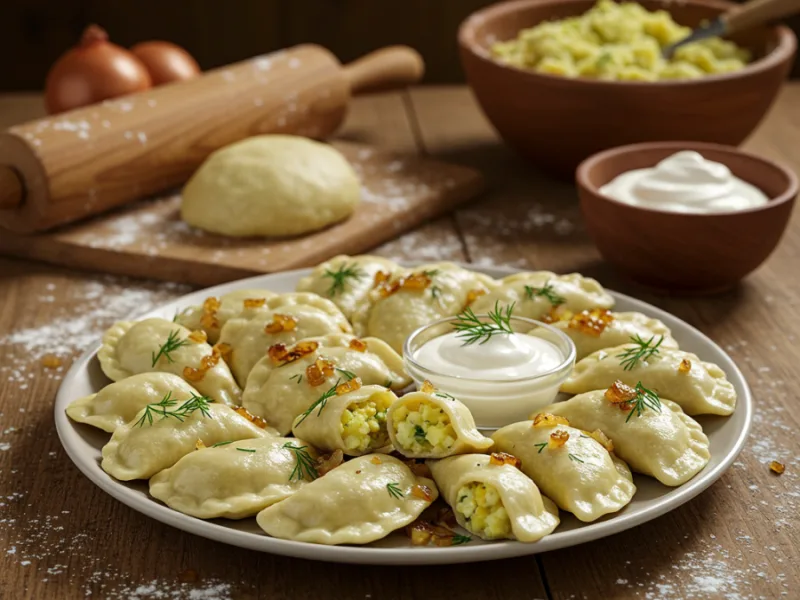
Base recipe: 6 (approximately 36 pierogi)
Your kitchen companion
Ingredients
Check off ingredients as you prepare them.
Follow the steps at your own pace.
Method
1. Prepare the dough In a large bowl, combine flour and salt. Add the egg and mix. Gradually pour in warm water and melted butter, kneading until a smooth, elastic dough forms. Cover with a damp towel and let it rest for 30 minutes.
2. Prepare the filling Boil potatoes until soft, then mash them until smooth. In a pan, melt butter and sauté onions until golden. Add the onions to the mashed potatoes, then mix in farmer’s cheese. Season with salt and pepper, stirring until well combined.
3. Assemble the pierogi On a floured surface, roll out the dough to about 2-3 mm (1/8 inch) thickness. Using a round cutter or glass (about 7-8 cm / 3 inches in diameter), cut out circles. Place a teaspoon of filling in the center of each circle. Fold the dough over the filling, pressing the edges firmly to seal. If needed, use a fork to crimp the edges for a decorative touch.
4. Cook the pierogi Bring a large pot of salted water to a boil. Drop the pierogi in batches, stirring gently. When they float to the surface, cook for an additional 2-3 minutes, then remove with a slotted spoon.
5. Pan-fry (optional) For added flavor, melt butter in a pan and sauté onions until golden. Add the boiled pierogi and fry until lightly crispy.
6. Serve Serve warm with sautéed onions and butter, and a side of sour cream.
Extra technique, safety notes and details when you want to go deeper.
More tips & details
Traditional Polish Pierogi: A Taste of Authentic Comfort
The Rich History Behind This Iconic Dish
Polish pierogi are more than just dumplings—they represent centuries of tradition, passed down from one generation to the next. These delicate, hand-crafted pockets of dough are filled with a variety of ingredients, ranging from savory to sweet, making them one of the most beloved comfort foods in Polish cuisine. Whether served during festive celebrations, family gatherings, or as an everyday meal, authentic Polish pierogi embody the essence of home-cooked goodness.
Their origins trace back to medieval Poland, with influences from Eastern European and Slavic culinary traditions. Over time, different regions of Poland developed their own variations, each with unique fillings and preparation methods. From the classic pierogi ruskie (potato and cheese) to hearty meat-filled versions or sweet fruit-filled delights, this dish remains a cherished staple of Polish heritage.
What Makes Polish Pierogi So Special?
Unlike dumplings from other parts of the world, traditional Polish pierogi are made with a soft, delicate dough that is first boiled, then often pan-fried in butter to achieve a crispy, golden exterior. The result is a perfect contrast between a tender, chewy interior and a lightly crispy surface. The dough, made with a simple combination of flour, eggs, and water, provides the ideal texture to encase the rich and flavorful fillings.
The beauty of homemade pierogi lies in their versatility. While the most well-known variations include potato and cheese, mushrooms and sauerkraut, and ground meat, they can also be enjoyed with sweet fillings like blueberries, strawberries, or sweet farmer’s cheese. Served with sour cream, caramelized onions, or crispy bacon, these dumplings create an unforgettable flavor experience.
The Heart of Polish Home Cooking
Making authentic pierogi from scratch is a time-honored tradition in many Polish households. It is often a communal activity, bringing together family members to roll out dough, shape dumplings, and prepare the fillings. The process is as rewarding as the final dish itself, with each pieróg crafted by hand, ensuring a personal touch in every bite.
In Poland, pierogi are served on various occasions, from Christmas Eve feasts to weddings and casual family dinners. They are particularly popular during the holiday season, when variations like mushroom and sauerkraut pierogi take center stage. However, they are just as commonly found in everyday meals, enjoyed as a comforting and satisfying dish that never goes out of style.
Why You Should Try Making Pierogi at Home
Preparing traditional Polish pierogi is a culinary experience that connects you to one of the most celebrated dishes in Eastern European cuisine. The process allows you to experiment with different fillings, customize flavors to your preference, and enjoy a truly authentic homemade meal. Unlike store-bought versions, homemade pierogi have a fresher, more delicate texture and richer taste, making them well worth the effort.
While the steps may seem time-consuming, making pierogi dough and filling is easier than it looks. With a bit of practice, you can master the technique of folding and sealing the dumplings, ensuring they hold their shape while cooking. Whether boiled, pan-fried, or even baked, freshly made pierogi offer a heartwarming meal that is both nostalgic and satisfying.
Perfect Pairings for the Ultimate Pierogi Experience
To enhance the flavors of authentic Polish pierogi, they are often paired with simple yet flavorful toppings. Traditional accompaniments include:
- Caramelized onions – adding a touch of sweetness and depth
- Crispy bacon bits – for a smoky, salty crunch
- Sour cream – a cool, tangy contrast to the warm, rich filling
- Fresh herbs – such as dill or parsley for a burst of freshness
For those who enjoy sweet variations, a drizzle of honey, powdered sugar, or a dollop of whipped cream can transform fruit-filled pierogi into a delightful dessert.
A Taste of Poland in Every Bite
There’s something truly special about authentic Polish pierogi—they are a dish steeped in history, culture, and tradition. Whether you are reminiscing about childhood memories, exploring new culinary experiences, or simply looking for a hearty, satisfying meal, homemade pierogi deliver an unbeatable combination of flavors and textures.
By trying your hand at making traditional pierogi, you not only enjoy a delicious meal but also take part in a culinary tradition that has stood the test of time. Whether you stick to the classics or create your own unique fillings, these beloved dumplings are guaranteed to bring comfort and joy to your table.
Enhancing the Classic Polish Pierogi Recipe
Small Changes That Make a Big Difference
While traditional Polish pierogi are already a beloved dish, there are several ways to elevate their taste, texture, and nutritional value. By adjusting the dough composition, modifying the filling ingredients, or perfecting the cooking technique, you can create pierogi that are even more flavorful and satisfying. Whether you want a richer, more delicate dough, a more complex filling, or a healthier alternative, small tweaks can transform this classic dish into something extraordinary.
Improving the Dough for Better Texture
The dough is the foundation of a good pierogi, and achieving the perfect balance between softness and elasticity is crucial. A few adjustments can help you create a dough that is easier to work with and produces a more delicate texture when cooked.
- Adding sour cream or yogurt – Incorporating a small amount of sour cream or Greek yogurt (about 2 tbsp) into the dough makes it more tender while adding a slight tangy note that enhances the flavor.
- Using milk instead of water – Replacing warm water with warm milk results in a richer and softer dough, making it less chewy and more delicate.
- Letting the dough rest longer – Allowing the dough to rest for at least 45 minutes instead of the standard 30 minutes gives the gluten more time to relax, making it easier to roll out and shape.
- A touch of oil – A teaspoon of vegetable oil in the dough improves its elasticity and makes it less sticky, making it easier to handle.
Elevating the Filling with Deeper Flavors
The potato and cheese filling is already delicious, but there are several ways to enhance its taste and make it even more satisfying.
- Caramelized onions instead of raw onions – Slowly cooking onions until they turn golden brown adds a deeper, slightly sweet flavor that enhances the filling’s complexity.
- Roasted garlic – Instead of using regular garlic, roasting the garlic first adds a milder, nuttier depth of flavor that pairs well with potatoes.
- Aged cheese for extra richness – Instead of using only farmer’s cheese, incorporating a small amount of aged cheese such as Parmesan or sharp cheddar gives the filling a more robust and savory taste.
- Fresh herbs for brightness – Adding chopped fresh dill, chives, or parsley brings freshness and a subtle contrast to the creamy texture.
- Sautéed mushrooms – Finely chopped sautéed mushrooms add an umami boost, making the filling more complex and hearty.
Common Mistakes to Avoid
Making pierogi from scratch is a rewarding experience, but there are a few common mistakes that can affect the final result.
- Overworking the dough – Kneading the dough too much develops too much gluten, making it tough and difficult to roll out. It should be kneaded just enough to bring the ingredients together smoothly.
- Not sealing the edges properly – If the edges are not sealed tightly, the filling can leak out during boiling. Press the edges firmly and consider using a fork to crimp them for extra security.
- Rolling the dough too thick or too thin – Thick dough results in chewy pierogi, while too thin dough makes them fragile and prone to bursting. The ideal thickness is 2-3 mm (1/8 inch).
- Filling with too much moisture – If the filling is too wet, it can make the dough soggy and harder to seal. Make sure potatoes are well-drained before mashing, and avoid adding excess liquid to the mixture.
- Boiling at too high a temperature – Pierogi should be boiled in gently simmering water, not rapidly boiling water, to prevent them from breaking apart.
Healthier Alternatives for a Lighter Dish
While traditional pierogi are indulgent, there are several ways to make them healthier without compromising on taste.
- Whole wheat or spelt flour – Replacing some or all of the all-purpose flour with whole wheat flour or spelt flour adds fiber and nutrients while still maintaining a soft dough.
- Sweet potatoes instead of regular potatoes – Using mashed sweet potatoes instead of regular potatoes adds a natural sweetness and boosts vitamin A content.
- Low-fat cheese options – Using low-fat farmer’s cheese or cottage cheese reduces saturated fat while maintaining creaminess.
- Baking instead of pan-frying – If you want to cut down on excess butter, you can bake pierogi at 200°C (400°F) for 15-20 minutes instead of pan-frying them. This creates a crisp exterior while using less fat.
- Greek yogurt instead of sour cream – Serving pierogi with Greek yogurt instead of sour cream provides a similar tangy flavor but with more protein and less fat.
Why Homemade Pierogi Are Always Better
While store-bought pierogi are convenient, making them from scratch has several advantages.
- Fresher ingredients – Homemade pierogi are made with fresh, high-quality ingredients, without preservatives or artificial additives.
- Customizable fillings – You can adjust the filling to suit your personal preferences, experimenting with flavors that store-bought versions don’t offer.
- Better texture – Freshly made dough has a softer, more delicate texture, whereas frozen pierogi can sometimes be dense or rubbery.
- Control over sodium and fat levels – Many commercial pierogi contain high amounts of sodium and unhealthy fats. Making them yourself allows you to choose healthier alternatives without sacrificing flavor.
Creative Variations to Try
If you want to expand beyond the traditional recipe, consider trying these variations:
- Spinach and ricotta pierogi – A creamy, nutritious filling with added greens.
- Sauerkraut and mushroom pierogi – A tangy, umami-packed alternative, popular in Poland during Christmas.
- Pumpkin and sage pierogi – A perfect autumn-inspired variation with a slightly sweet and earthy taste.
- Smoked salmon and cream cheese pierogi – A luxurious take on pierogi, adding a delicate seafood flavor.
Mastering the Art of Pierogi
Improving a traditional pierogi recipe is all about understanding the balance of flavors, textures, and techniques. By making small adjustments to the dough, filling, and cooking method, you can create pierogi that are more flavorful, healthier, and tailored to your preferences. Whether you prefer a classic potato and cheese filling, a lighter, healthier version, or an innovative twist, homemade pierogi allow you to celebrate Polish culinary traditions while making them uniquely your own.
Recivelle · /recipe/authentic-polish-pierogi