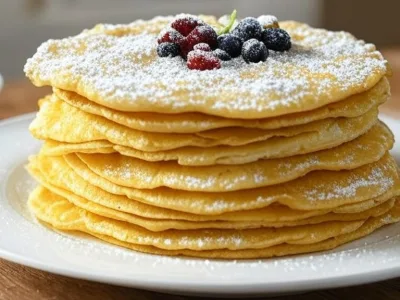
Base recipe: Serves: 4 (8 pancakes)
Your kitchen companion
Ingredients
Check off ingredients as you prepare them.
Follow the steps at your own pace.
Method
1. Prepare the Batter
In a large mixing bowl, combine the flour, sugar, and salt.
In a separate bowl, whisk the eggs and milk until smooth. Gradually pour the wet mixture into the dry ingredients while whisking continuously to prevent lumps.
Add the melted butter to the batter and mix until smooth and slightly runny. Let the batter rest for 10–15 minutes to allow the flour to hydrate.
2. Heat the Pan
Heat a non-stick skillet or crepe pan over medium heat. Add a small amount of butter and swirl it around to coat the pan evenly.
3. Cook the Pancakes
Pour approximately 60 ml (¼ cup) of batter into the pan, tilting it to spread the batter evenly.
Cook for 1–2 minutes, or until the edges begin to brown and the bottom is golden. Flip the pancake carefully and cook the other side for an additional 1–2 minutes.
Transfer the cooked pancake to a plate and cover with a clean kitchen towel to keep warm. Repeat with the remaining batter, adding a small amount of butter to the pan as needed.
4. Serve
Serve the Pfannkuchen warm with your favorite toppings, such as powdered sugar, jam, fresh fruits, or maple syrup.
Extra technique, safety notes and details when you want to go deeper.
More tips & details
When it comes to indulging in the simple pleasures of traditional European cuisine, Pfannkuchen—Germany's beloved pancakes—hold a special place on breakfast and dessert tables alike. This iconic dish combines delicate textures, subtly sweet flavors, and a comforting aroma that transports you to a quaint German kitchen with every bite. Whether you’re serving them for a leisurely weekend breakfast or as a decadent treat for guests, this authentic Pfannkuchen recipe is your key to culinary success.
What Makes Authentic Pfannkuchen Special?
Unlike American pancakes, which are fluffy and thick, or French crêpes, which are ultra-thin, Pfannkuchen are a delightful balance of the two. These versatile pancakes are slightly thicker than crêpes yet lighter and more tender than traditional buttermilk pancakes, making them the perfect canvas for sweet or savory toppings.
With just a handful of pantry staples like eggs, flour, milk, and sugar, you can whip up a batch of Pfannkuchen in no time. What truly sets them apart is their rich, buttery flavor and golden edges that are achieved through careful cooking in a well-heated skillet. Every bite is a celebration of simplicity and quality ingredients.
Why You'll Love This Recipe
- Easy to Make: With straightforward steps and minimal ingredients, this recipe is ideal for both novice and seasoned cooks.
- Versatile: Serve Pfannkuchen sweet with a dusting of powdered sugar, a drizzle of maple syrup, or a dollop of jam. For savory lovers, pair them with smoked salmon, cream cheese, or sautéed vegetables.
- Authentic Flavors: This recipe adheres to the traditional German method, ensuring a genuine taste experience that brings the flavors of Germany into your kitchen.
- Family-Friendly: Both kids and adults will adore these pancakes, making them a hit for any occasion.
A Glimpse into German Culinary Heritage
Germany's love for pancakes dates back centuries, with Pfannkuchen being a staple in many households. The name itself is derived from the words "Pfanne" (pan) and "kuchen" (cake), reflecting their nature as a pan-cooked delight. Regional variations abound, but this recipe stays true to the classic preparation, offering you a taste of Germany's culinary history.
Tips for Perfect Pfannkuchen Every Time
- Use Fresh Ingredients: For the best results, ensure your eggs, milk, and flour are fresh and of high quality.
- Preheat the Pan: A properly heated skillet is crucial for achieving that beautiful golden-brown color and crispy edges.
- Don’t Overmix: Stir the batter gently to avoid over-developing gluten, which can make the pancakes tough.
- Keep Warm in the Oven: If making multiple batches, place cooked Pfannkuchen in a warm oven to keep them fresh and ready to serve.
Bring the Taste of Germany to Your Table
There’s nothing quite like the joy of savoring an authentic Pfannkuchen, whether you’re reminiscing about travels to Germany or simply looking for a unique addition to your recipe repertoire. These pancakes are a delightful way to explore new flavors while indulging in a comforting classic.
So why wait? Gather your ingredients, heat up your skillet, and treat yourself to a stack of golden, tender Pfannkuchen that will leave everyone asking for seconds.
Experience the Magic of Pfannkuchen Today
Ready to elevate your breakfast game or surprise your family with a new dessert favorite? This authentic Pfannkuchen recipe is guaranteed to impress. Once you take your first bite, you’ll understand why this dish has been a beloved part of German kitchens for generations.
Let your culinary journey begin with the warm, inviting aroma of freshly cooked Pfannkuchen. Your table is about to become the coziest corner of Germany—one pancake at a time.
How to Perfect and Customize Your Authentic Pfannkuchen Recipe
The beauty of authentic Pfannkuchen lies in its simplicity and versatility. While the traditional recipe is perfect as is, there are countless ways to customize and refine it to suit your taste preferences or dietary needs. Below, you’ll find detailed tips and advice on ingredient substitutions, flavor enhancements, and cooking techniques to ensure your Pfannkuchen is always a success.
Adjusting Ingredients for Flavor and Texture
Changing the Flour
- All-Purpose Flour: The traditional choice, delivering a balanced texture with a slight chewiness.
- Whole Wheat Flour: Replacing part or all of the all-purpose flour with whole wheat flour adds a nutty flavor and more fiber but may result in a denser pancake.
- Gluten-Free Flour: Use a gluten-free all-purpose blend to make the recipe gluten-free. Ensure the blend contains xanthan gum for structure; otherwise, the pancakes might fall apart.
Modifying the Liquid
- Dairy Milk: Provides richness and a slightly sweet undertone. Use full-fat milk for a creamier batter.
- Plant-Based Milk: Almond, oat, or soy milk can be used for a dairy-free alternative. Almond milk adds a subtle nuttiness, while oat milk offers a creamier texture.
- Sparkling Water: Replace part of the milk with sparkling water for lighter, airier pancakes.
Sweetness Level
- Granulated Sugar: The traditional choice for sweetness. Increase to 2 tablespoons for a sweeter pancake.
- Brown Sugar: Adds a subtle caramel flavor. Best used if you prefer a richer, deeper taste.
- Honey or Maple Syrup: Natural sweeteners that complement sweet toppings. Reduce the liquid slightly to maintain batter consistency.
Enhancing the Flavor Profile
Adding Spices and Flavorings
- Vanilla Extract: A teaspoon of vanilla extract infuses the batter with a sweet, aromatic flavor.
- Cinnamon or Nutmeg: A pinch of these spices brings warmth and depth, pairing beautifully with sweet toppings like fruit or syrup.
Zest and Citrus
- Lemon or Orange Zest: Adding 1 teaspoon of zest enhances the freshness and lightness of the pancakes, balancing the richness of butter.
Savory Variations
- Herbs and Cheese: For a savory twist, add chopped chives, parsley, or grated cheese to the batter. This variation pairs well with savory toppings like smoked salmon or sour cream.
Adjusting the Cooking Method
Temperature Control
- Cook over medium heat to achieve evenly golden pancakes. High heat can cause burning before the batter cooks through, while low heat may result in pale, soggy pancakes.
Using Different Fats
- Butter: The traditional option for frying, giving the pancakes a rich, buttery taste and golden edges.
- Vegetable Oil: A neutral option that prevents sticking without altering the flavor.
- Coconut Oil: Adds a subtle tropical note, ideal for sweet pancakes with fruit toppings.
Portion Adjustments and Serving Ideas
Making Larger or Smaller Pancakes
- Use 30 ml (2 tbsp) of batter for mini Pfannkuchen, perfect for appetizers or stacking.
- Increase batter to 125 ml (½ cup) for larger, crepe-style pancakes ideal for rolling with fillings.
Creative Serving Suggestions
- Sweet Combinations:
- Fresh berries with whipped cream for a light and fruity option.
- Chocolate spread and sliced bananas for a decadent dessert.
- Savory Pairings:
- Layer with ham, cheese, and sautéed spinach for a hearty brunch.
- Top with avocado slices, poached eggs, and a sprinkle of chili flakes for a modern twist.
Dietary Adjustments and Their Impact on Taste
Lowering Calories
- Replace butter with a low-fat cooking spray for frying to reduce calories without compromising texture.
- Use skim or reduced-fat milk instead of whole milk for a lighter batter.
Increasing Protein
- Add 1–2 tablespoons of protein powder to the batter for a post-workout treat. Choose vanilla or unflavored powder to maintain the classic taste.
- Incorporate Greek yogurt (reduce milk slightly) for added creaminess and protein.
Making It Vegan
- Substitute eggs with flaxseed meal (1 tbsp flaxseed + 2.5 tbsp water = 1 egg) to retain structure.
- Use plant-based milk and vegan butter for a dairy-free version.
Troubleshooting Common Issues
Batter Too Thick or Thin
- Thick Batter: Thin it out with an additional 1–2 tablespoons of milk.
- Thin Batter: Add a small amount of flour, 1 tablespoon at a time, to achieve the right consistency.
Uneven Cooking
- Ensure the pan is fully heated before adding batter to cook pancakes evenly.
- Rotate the pan gently to spread the batter for uniform thickness.
Sticking to the Pan
- Preheat the pan and add enough butter or oil before pouring the batter.
- Use a high-quality non-stick pan for the best results.
How Ingredient Changes Affect the Recipe
Richer Pancakes
Using cream instead of milk creates a thicker, richer batter, resulting in ultra-luxurious pancakes.
Lighter Pancakes
Incorporating sparkling water or beer adds bubbles to the batter, making the pancakes airy and delicate.
Subtle Sweetness
Replacing sugar with honey or agave syrup adds a natural, mild sweetness with floral undertones.
Experimenting with ingredients and techniques is a wonderful way to make this authentic Pfannkuchen recipe your own. Whether you stick to tradition or explore creative variations, these tips ensure your pancakes will always turn out perfectly. Enjoy the process of tweaking this recipe to match your preferences, and discover just how versatile and delightful Pfannkuchen can be.
Recivelle · /recipe/authentic-pfannkuchen-traditional-german-pancake-recipe