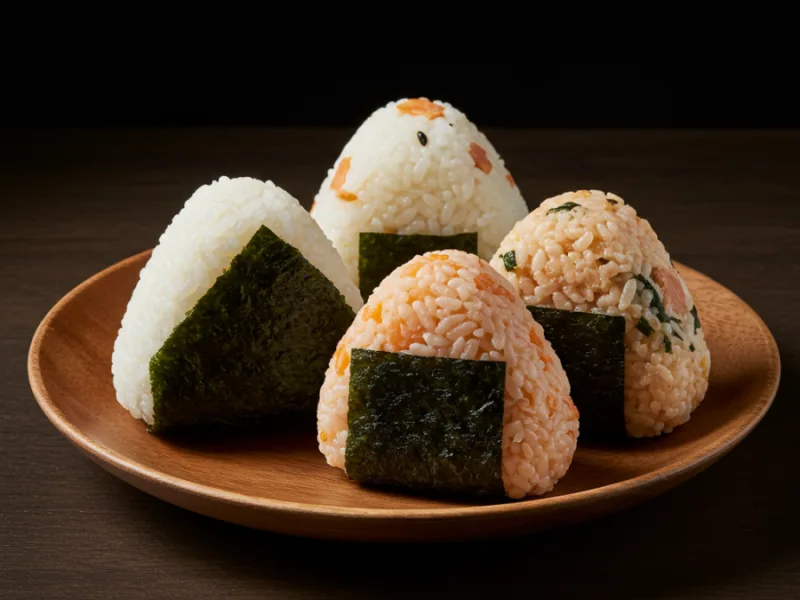
Base recipe: Makes 6 onigiri
Your kitchen companion
Ingredients
Check off ingredients as you prepare them.
Follow the steps at your own pace.
Method
Prepare the rice Rinse the Japanese short-grain rice under cold water until the water runs clear. Drain and let it rest for 10 minutes. Add the rinsed rice to a pot with water (375 ml) and bring to a boil over medium heat. Cover, reduce heat to low, and simmer for 15 minutes. Remove from heat and let it steam for another 10 minutes, covered.
Season and cool the rice Transfer the cooked rice to a wide bowl. Sprinkle salt (1 g) over the rice and mix gently with a rice paddle or spoon. Allow it to cool slightly so it's warm but not too hot to handle.
Prepare your fillings If using cooked salmon, break it into small flakes. If using tuna, mix it with mayonnaise. Mash the umeboshi if using, or chop teriyaki chicken, pickled radish, or miso paste into small pieces.
Shape the onigiri Prepare a small bowl with water (100 ml) and dissolve salt (2 g) in it. Wet your hands with this salted water to prevent rice from sticking. Take about 100 g of warm rice (⅓ cup) and flatten it into your palm.
Add the filling Place a teaspoon of your chosen filling in the center of the rice. Gently fold the rice around the filling, shaping it into a triangle or round ball by pressing lightly with your hands. Be careful not to squeeze too hard to keep the rice fluffy.
Wrap with nori Place a small sheet of nori around the onigiri, wrapping it halfway or fully, depending on preference. Press gently to make it stick.
Serve and enjoy Enjoy your onigiri fresh or wrap them in plastic wrap for later. Store at room temperature for up to 6 hours or in the refrigerator for up to 24 hours.
Extra technique, safety notes and details when you want to go deeper.
More tips & details
Discover the Irresistible Taste of Onigiri – Japanese Rice Balls
When it comes to Japanese cuisine, few dishes are as iconic and beloved as onigiri. These delightful rice balls are not only a staple in Japan but have also gained popularity worldwide. Simple yet incredibly satisfying, onigiri are made with seasoned Japanese rice, shaped into triangles or rounds, and filled with a variety of delicious ingredients. Wrapped in a crisp sheet of nori seaweed, they offer a perfect balance of textures and flavors—soft, chewy rice combined with the slight crunch of seaweed and the savory goodness of the filling inside.
Whether you enjoy them as a quick snack, a lunchbox favorite, or part of a Japanese-inspired meal, onigiri never fail to impress. Their versatility, ease of preparation, and satisfying taste make them a must-try dish for anyone who loves authentic Japanese food.
Why You Will Love This Onigiri Recipe
This onigiri recipe is designed to help you create perfectly seasoned rice balls with the ideal texture and taste. Here’s why you’ll love making them:
- Authentic flavors – The combination of lightly salted rice, crisp nori, and flavorful fillings delivers an experience straight from Japan.
- Endless variety – You can customize your onigiri with classic fillings like tuna mayo, salmon, pickled plum (umeboshi), or teriyaki chicken.
- Quick and easy – No complicated techniques are required, making this a great recipe for beginners.
- Great for meal prep – Prepare them in advance for lunchboxes, picnics, or quick meals on the go.
- Naturally gluten-free – A fantastic option for those looking for a simple, wholesome, and gluten-free meal.
A Brief History of Onigiri
Onigiri has been a part of Japanese cuisine for centuries, dating back to the Heian period (794-1185). Initially, these hand-pressed rice balls were created as a convenient way to carry food on long journeys. Over time, onigiri evolved from a simple traveler’s meal to a beloved everyday dish, commonly found in Japanese bento boxes, convenience stores, and home kitchens.
Today, onigiri remains a favorite in Japan, often enjoyed as a quick meal or snack. The beauty of onigiri lies in its simplicity and adaptability—from traditional salted rice balls to modern variations stuffed with innovative flavors, these rice balls continue to delight food lovers across the globe.
What Makes the Perfect Onigiri?
Achieving the perfect onigiri starts with the right rice. Short-grain Japanese rice is essential for its sticky texture, which allows the rice to hold its shape. It should be properly rinsed and cooked to achieve a slightly firm yet tender consistency.
Shaping onigiri by hand requires a gentle but firm touch. Wetting your hands with a little salted water prevents the rice from sticking and enhances the flavor. The final step is wrapping the rice ball with a sheet of nori, which adds a delightful crunch and enhances the overall taste.
How to Serve Onigiri
Onigiri is best enjoyed fresh, but it can also be stored for later. If you’re making them ahead of time, wrap them in plastic wrap or store them in an airtight container to keep them from drying out. They can be eaten at room temperature or slightly warmed.
Pair onigiri with a bowl of miso soup, a side of Japanese pickles, or a simple salad for a well-balanced meal. Whether enjoyed as a snack, lunch, or dinner, these Japanese rice balls are a fantastic way to experience the flavors of Japan in every bite.
Try This Easy Onigiri Recipe Today
If you’ve never made onigiri before, now is the perfect time to start! With just a few ingredients and easy-to-follow steps, you can create authentic Japanese rice balls in the comfort of your own kitchen. Experiment with different fillings, adjust the seasoning to your taste, and enjoy the satisfaction of making your own homemade onigiri.
Get your rice ready, choose your favorite filling, and start shaping these delicious Japanese rice balls today!
How to Perfect Your Onigiri – Japanese Rice Balls
Onigiri, also known as Japanese rice balls, are a staple of Japanese cuisine, loved for their simplicity, versatility, and comforting taste. Made from short-grain rice, these handheld treats are shaped into triangles, rounds, or cylinders and can be filled with an array of ingredients, from classic umeboshi (pickled plum) to savory grilled salmon. Wrapped in crispy nori seaweed, onigiri offer a satisfying balance of flavors and textures that make them an ideal snack, lunch, or meal-on-the-go.
Whether you prefer them plain, stuffed with fillings, or grilled, onigiri are highly adaptable. The key to making perfect onigiri lies in the right rice texture, seasoning balance, and proper shaping technique. Let’s explore how you can customize and enhance this recipe to suit your taste while maintaining the essence of this traditional Japanese dish.
Choosing the Right Rice for Onigiri
The foundation of great onigiri starts with the right rice. Using the wrong type of rice can lead to crumbly, dry, or hard-to-shape onigiri.
Why Japanese Short-Grain Rice is Essential
Japanese short-grain rice contains a high amount of amylopectin, a type of starch that makes the rice naturally sticky and cohesive. This stickiness is crucial for shaping onigiri, as it helps the rice hold its form without falling apart.
Alternative Rice Options and Their Effects
- Medium-grain rice (such as Calrose rice) – Works as a substitute but is slightly less sticky, which may require more pressing when shaping.
- Long-grain rice (such as Basmati or Jasmine) – Not recommended, as it lacks the necessary stickiness, making it difficult to form compact rice balls.
- Brown rice – A healthier alternative, but it is less sticky and more challenging to mold. To improve its texture, try mixing white and brown rice in a 70:30 ratio.
How Different Fillings Affect the Flavor of Onigiri
Onigiri fillings play a crucial role in determining the overall taste. Some fillings enhance the umami (savory depth), while others provide a balance of saltiness, tanginess, or sweetness.
Classic Onigiri Fillings and Their Flavor Profiles
- Umeboshi (Pickled Plum) – Offers a salty, tangy, and slightly sour taste, balancing the natural sweetness of the rice. Ideal for those who enjoy refreshing, punchy flavors.
- Grilled Salmon – A rich, umami-packed filling that pairs well with lightly seasoned rice. Using miso-marinated salmon enhances its depth.
- Tuna Mayo – A creamy and slightly salty filling that adds a smooth texture to contrast with the rice’s chewiness.
- Teriyaki Chicken – A sweet and savory option that brings a rich, caramelized flavor to the dish.
- Miso Paste – Adds a bold umami punch with a slightly salty and earthy taste. Best suited for those who love fermented flavors.
- Pickled Vegetables – Provide a crunchy, tangy element, making the onigiri feel lighter and more refreshing.
How to Customize Fillings
You can experiment with different fillings to adjust the flavor intensity and texture:
- For a spicier twist, mix chili flakes or a dash of wasabi into the rice or fillings.
- To add creaminess, blend fillings with mashed avocado or Japanese mayonnaise.
- For an extra umami boost, add bonito flakes (katsuobushi) or a drizzle of soy sauce to the filling.
How Seasoning Affects Onigiri
Although onigiri may seem simple, their flavor can be dramatically enhanced with proper seasoning.
The Role of Salt in Onigiri
Salt is essential for balancing the natural sweetness of rice and preventing it from tasting bland. Lightly salted rice (by mixing a pinch of salt into the cooked rice or rubbing salt on your hands while shaping) enhances the flavor without overpowering the filling.
If you want a milder taste, use less salt and rely on the filling’s seasoning for flavor. For a stronger, more robust taste, try seasoning the rice with a few drops of soy sauce or furikake (Japanese rice seasoning).
How Different Wrappings Affect Texture
The nori (seaweed) wrapping plays a significant role in the overall mouthfeel of onigiri.
- Crispy nori – Best for immediate consumption, as it provides a satisfying crunch.
- Soft, slightly moist nori – Happens when onigiri is stored for a few hours, giving it a chewier, melt-in-the-mouth texture.
- No nori – Some people prefer to eat onigiri plain, focusing on the rice and filling alone.
For a richer flavor, try brushing the outside of the onigiri with soy sauce and toasting it in a pan for a crispy, grilled effect (yaki onigiri).
How Storage Methods Affect the Texture and Freshness
Onigiri tastes best when freshly made, but if you need to store them for later, proper storage is key to preventing the rice from becoming dry or hard.
Best Ways to Store Onigiri
- Short-term (same day) – Wrap onigiri in plastic wrap or place them in an airtight container at room temperature for up to 6 hours. Avoid refrigerating plain onigiri, as cold temperatures harden the rice.
- Overnight storage – If needed, wrap onigiri in plastic wrap and place them in the refrigerator, then microwave for 10-15 seconds before eating to soften the rice.
- Freezing option – Onigiri can be frozen for up to one month. Wrap them tightly in plastic wrap and store them in a sealed container. To reheat, microwave from frozen for 1-2 minutes.
How Cooking Methods Change the Onigiri Experience
Traditional onigiri is served fresh and ungrilled, but there are other ways to prepare them for different textures and flavors.
Grilled Onigiri (Yaki Onigiri)
Grilling onigiri adds a crispy outer layer while deepening the umami flavor. To make it:
- Lightly brush the onigiri with soy sauce or miso glaze.
- Cook on a non-stick pan or grill over medium heat for 2-3 minutes per side until golden brown.
- Serve hot for a crisp, smoky finish.
Fried Onigiri
For a crispy and indulgent twist, coat onigiri in panko breadcrumbs and shallow-fry them in vegetable oil. The result is a crunchy, golden exterior while maintaining the soft, chewy rice inside.
Elevate Your Onigiri Experience
With so many ways to customize, season, and cook onigiri, this dish offers endless possibilities. Whether you prefer them classic, filled with unique flavors, grilled, or fried, mastering onigiri-making ensures you always have a delicious, satisfying meal at your fingertips.
Try experimenting with different fillings, seasonings, and techniques to create your perfect version of onigiri—and enjoy a taste of Japan in every bite!
Recivelle · /recipe/authentic-onigiri-recipe-how-make-japanese-rice-balls