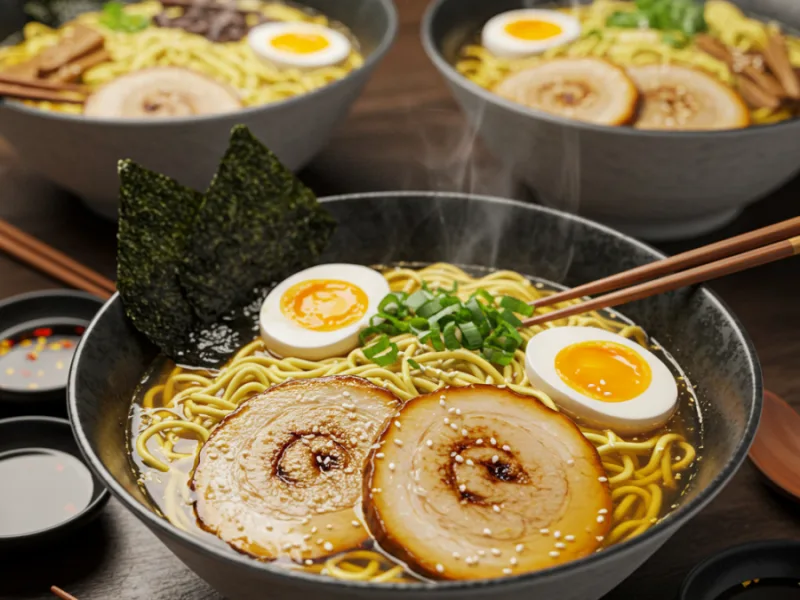
Base recipe: 4
Your kitchen companion
Ingredients
Check off ingredients as you prepare them.
Follow the steps at your own pace.
Method
Prepare the broth: Place the pork bones in a large pot, cover with water, and bring to a boil for 10 minutes. Drain and rinse the bones under cold water to remove impurities.
Return the bones to the pot, add fresh water, and bring to a simmer. Add the onion, garlic, ginger, leek, and dried shiitake mushrooms.
Simmer on low heat for 3 hours, skimming any foam that rises to the surface.
Strain the broth through a fine-mesh sieve and return it to the pot. Add soy sauce, mirin, sake, and salt. Adjust seasoning to taste.
Cook the noodles: Boil a separate pot of water and cook the ramen noodles according to package instructions (usually 2–3 minutes). Drain and rinse briefly under cold water to remove excess starch.
Assemble the ramen: Divide the cooked noodles evenly among four bowls.
Ladle the hot broth over the noodles.
Arrange the chashu pork, soft-boiled eggs, nori, scallions, bamboo shoots, and sesame seeds on top.
Drizzle with chili oil if desired. Serve immediately.
Extra technique, safety notes and details when you want to go deeper.
More tips & details
Traditional Japanese Ramen: A Rich and Savory Noodle Soup Experience
The Essence of Authentic Japanese Ramen
Japanese ramen is more than just a bowl of noodle soup—it is a culinary masterpiece that combines deep, umami-rich broth, perfectly cooked noodles, and carefully selected toppings to create a harmonious balance of flavors and textures. This beloved dish has a history that dates back centuries, evolving from Chinese-style wheat noodles into a true symbol of Japanese cuisine.
The secret to an exceptional bowl of ramen lies in the complexity of its broth. Whether it's a creamy tonkotsu, a fragrant shoyu-based broth, a robust miso ramen, or a delicate shio ramen, each style carries its own distinct character. These broths are meticulously prepared, often simmered for hours—or even days—to extract every ounce of depth and richness. Combined with springy, chewy noodles, tender slices of chashu pork, soft-boiled eggs, fresh scallions, and crunchy bamboo shoots, each bite is a flavorful journey through the artistry of Japanese cooking.
The Irresistible Appeal of This Iconic Noodle Dish
Few dishes in the world can match the satisfaction of enjoying a steaming bowl of ramen. It is a dish that embodies warmth, comfort, and indulgence. The first sip of the rich broth, the slurp of perfectly cooked noodles, and the combination of fresh ingredients create a multi-sensory experience that captivates food lovers worldwide.
Ramen is not just about flavor—it’s about texture, aroma, and contrast. The interplay between the silky fat of the broth, the firm bite of the noodles, the soft, flavorful egg, and the crispy freshness of toppings makes each bowl a perfectly balanced composition. Whether enjoyed in a bustling Tokyo ramen shop, a cozy home kitchen, or an upscale restaurant, the appeal of this dish remains universal.
Exploring the Different Types of Japanese Ramen
Shoyu Ramen: The Classic Soy Sauce-Based Broth
Shoyu ramen is perhaps the most traditional style, featuring a clear, savory broth seasoned with soy sauce. The deep, slightly salty yet balanced taste enhances the natural umami of the stock, making it a favorite among ramen lovers.
Tonkotsu Ramen: The Rich and Creamy Pork Bone Broth
A specialty from Kyushu, tonkotsu ramen is known for its milky-white, collagen-rich broth, achieved by simmering pork bones for extended hours. This results in a velvety texture that coats the palate, delivering a luxurious and deeply flavorful experience.
Miso Ramen: A Bold and Hearty Flavor
Originating from Hokkaido, miso ramen is a heartier version, featuring a robust broth enriched with fermented soybean paste. It carries a slightly nutty, earthy undertone and is often paired with toppings like corn, butter, and spicy ground pork for extra depth.
Shio Ramen: The Delicate and Light Option
Shio ramen, meaning "salt ramen," is the lightest of all varieties, offering a clear, golden broth that highlights the purity of its ingredients. This version focuses on a delicate balance of flavors, making it a perfect choice for those who appreciate simplicity.
The Art of Crafting the Perfect Ramen Bowl
Creating an authentic ramen experience at home requires precision, patience, and attention to detail. The broth forms the foundation, so slow-simmering high-quality ingredients like pork bones, chicken, kombu (kelp), dried fish, or mushrooms is essential. Noodles should be cooked to the perfect chewiness, neither too soft nor too firm, ensuring they absorb just the right amount of broth.
The toppings play an equally vital role in enhancing the overall dish. From the melt-in-your-mouth tenderness of chashu pork to the runny yolk of a marinated soft-boiled egg, every ingredient should complement the depth of the broth. Garnishes such as nori (seaweed), scallions, sesame seeds, pickled ginger, and chili oil add layers of complexity, allowing for customization based on personal preference.
Why Japanese Ramen Is More Than Just a Meal
Beyond its extraordinary flavors, ramen holds a special place in Japanese culture. It is a dish that brings people together, whether in the bustling streets of Tokyo, the intimate settings of small ramen bars, or home kitchens where families prepare their own versions. It reflects tradition and innovation, with chefs continuously refining recipes and creating new variations that honor the dish’s deep-rooted history while catering to evolving tastes.
For many, enjoying a bowl of ramen is more than just eating—it’s about embracing the warmth, craftsmanship, and dedication that goes into every element of the dish. From the careful preparation of the broth to the final touch of toppings, each bowl tells a story, making it a deeply personal and unforgettable experience.
Enhancing the Depth and Flavor of Homemade Japanese Ramen
Elevating the Broth for a More Intense Umami Experience
A well-crafted ramen broth is the foundation of this dish, and there are several ways to improve its depth and richness. One key technique is prolonged simmering. Traditional recipes often call for three to four hours of simmering, but extending this to six or even twelve hours allows for even more collagen and fat extraction, leading to a silkier, more velvety mouthfeel.
Another method to intensify the umami factor is to incorporate kombu (kelp) and dried bonito flakes (katsuobushi) into the broth. These Japanese ingredients are rich in glutamates, which naturally enhance the savory elements of the soup. Adding a small amount of dried anchovies or dried shrimp can also provide a deeper, slightly smoky undertone that complements the base flavors.
For a more balanced broth, consider using a mix of meats rather than just pork bones. Adding chicken carcasses or beef bones can bring additional layers of complexity and create a more refined taste. If a lighter broth is preferred, a combination of vegetables like carrots, onions, and daikon radish can add natural sweetness and prevent the stock from becoming too overpowering.
Choosing the Right Noodles for the Best Texture
The type of noodles used can significantly impact the overall experience of the dish. Traditional fresh ramen noodles are made with alkaline water (kansui), which gives them their signature chewy texture and yellow hue. However, not all noodles are created equal, and selecting the right shape and thickness can enhance the broth’s absorption and mouthfeel.
- Thin, straight noodles are best paired with light broths like shio or shoyu ramen, as they absorb the delicate flavors without overpowering them.
- Thicker, wavy noodles work well with rich, creamy broths like tonkotsu, as they hold onto the liquid better and provide a satisfying bite.
- For homemade noodles, using a high-protein flour and adjusting the alkalinity with baking soda or kansui powder can create a firmer texture.
To further enhance the chewiness, allow the noodles to rest in the fridge for at least 24 hours before cooking. This process improves gluten development, making the noodles more elastic and less prone to breaking.
Customizing the Toppings for Maximum Flavor
Toppings play a crucial role in adding layers of texture and contrast to the dish. While classic ingredients like chashu pork, scallions, bamboo shoots, and nori are standard, there are ways to elevate their impact:
- Marinated eggs (ajitsuke tamago) develop a deeper savory-sweet flavor when soaked in a blend of soy sauce, mirin, and dashi for at least 12 hours.
- Torching the chashu before serving can caramelize the fats, enhancing its smoky and crispy notes.
- A drizzle of black garlic oil (mayu) adds a nutty, roasted bitterness that complements the richness of the broth.
- A spoonful of miso butter melts into the soup, intensifying the umami factor and adding a creamy texture.
For those who enjoy spicy ramen, a homemade chili paste made from fermented soybeans, garlic, and chili oil can bring a bold, fiery depth without overpowering the broth’s base flavors.
Common Mistakes to Avoid When Making Ramen
Even experienced cooks can make mistakes when preparing ramen. Avoiding these common pitfalls can make a significant difference in the final result:
- Boiling instead of simmering the broth: A rolling boil can make the broth cloudy and overly fatty, while a low simmer extracts flavors gradually, creating a more balanced consistency.
- Overcooking the noodles: Ramen noodles should be slightly undercooked before adding them to the hot broth, as they continue to absorb liquid and soften further.
- Underseasoning the broth: A well-balanced broth should be slightly saltier than expected, as the noodles and toppings dilute the intensity once combined.
- Neglecting the fat content: Some home cooks skim off too much fat, resulting in a thin and watery broth. A small amount of fat adds body and enhances flavor retention.
Healthier Alternatives Without Compromising Taste
For those looking to create a lighter and healthier version of ramen, several adjustments can be made without sacrificing the signature umami flavors:
- Broth Alternatives: Instead of using pork or chicken bones, opt for a vegetable-based dashi broth using kombu, shiitake mushrooms, and miso paste. This creates a rich, umami-packed base without the heaviness of animal fats.
- Low-Sodium Options: Replace traditional soy sauce with low-sodium tamari or coconut aminos to reduce the salt content while maintaining depth of flavor.
- Healthier Proteins: Swap chashu pork for grilled tofu, seared salmon, or lean chicken breast for a lighter and protein-rich alternative.
- Whole Wheat or Gluten-Free Noodles: For a more fiber-rich and nutritious option, use whole wheat ramen noodles or gluten-free soba noodles.
Why Homemade Ramen is Better Than Restaurant Versions
While restaurant ramen is undeniably delicious, making it at home allows for full control over ingredients, customization, and health benefits.
- No artificial additives or preservatives: Many store-bought broths contain MSG, artificial flavor enhancers, and excessive sodium, whereas homemade versions use natural ingredients.
- Personalized seasoning: Home cooks can adjust the saltiness, richness, and spice level to match their preferences.
- Fresh, high-quality toppings: By selecting fresh, locally sourced ingredients, homemade ramen has a cleaner and more vibrant taste.
- Cost-effectiveness: A single bowl of high-quality ramen at a restaurant can be expensive, while homemade versions provide larger portions at a fraction of the cost.
Experimenting with Unique Ramen Variations
Once the fundamentals of traditional ramen are mastered, experimenting with creative variations can lead to exciting new flavor profiles:
- Curry Ramen: A fusion of Japanese curry and ramen broth, featuring a spiced, thickened base with turmeric, cumin, and coriander.
- Creamy Vegan Ramen: A blend of cashew cream, miso paste, and nutritional yeast creates a rich, dairy-free alternative.
- Seafood Ramen: Using a broth made from shrimp shells, miso, and bonito flakes results in a briny, oceanic depth of flavor.
- Cold Ramen (Hiyashi Chuka): A refreshing summer alternative with chilled noodles, citrus-soy dressing, and fresh vegetables.
By understanding the nuances of ramen and making small enhancements to the traditional recipe, it’s possible to create a deeply flavorful, balanced, and fully customized bowl that surpasses even the best restaurant versions.
Recivelle · /recipe/authentic-japanese-ramen-flavorful-noodle-soup