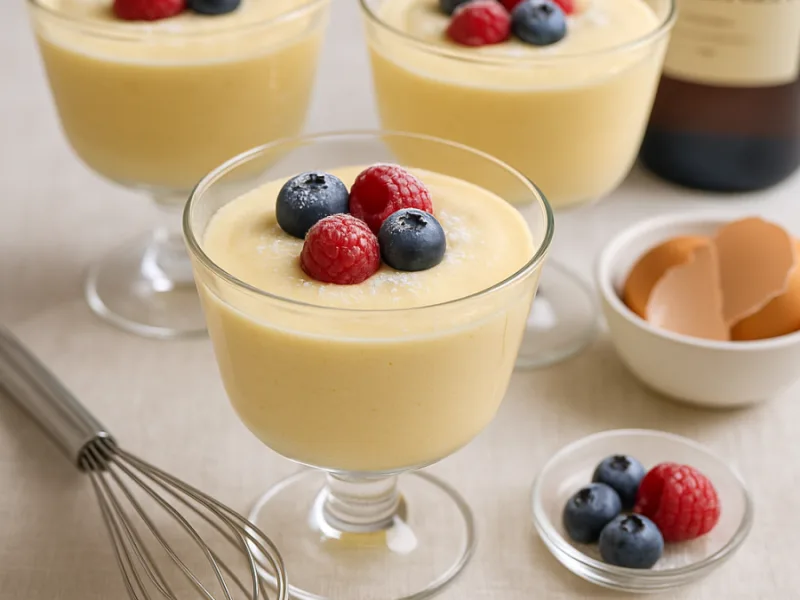
Base recipe: 4 servings
Your kitchen companion
Ingredients
Check off ingredients as you prepare them.
Follow the steps at your own pace.
Method
Fill a medium saucepan with a few inches of water and bring it to a gentle simmer over medium heat. Choose a heatproof bowl (such as a glass or metal mixing bowl) that can sit securely over the saucepan without touching the water.
In the bowl, whisk together the egg yolks and sugar until fully combined and pale in color. Make sure the mixture is smooth and creamy before proceeding.
Place the bowl over the simmering water (double boiler method). Continuously whisk the mixture to prevent the eggs from scrambling. Gradually pour in the Marsala wine in a slow stream while whisking constantly.
Continue whisking vigorously for about 8–10 minutes. The mixture should thicken gradually and triple in volume, becoming pale and foamy. It is ready when it forms soft peaks and has a custard-like consistency.
Remove the bowl from the heat once the zabaglione is thickened and airy. Serve immediately while warm for the best texture and flavor.
To serve, divide the zabaglione among dessert glasses or bowls. Optionally, top with fresh berries or lightly dust with cocoa powder for a classic presentation.
Extra technique, safety notes and details when you want to go deeper.
More tips & details
Traditional Zabaglione Dessert – A Taste of Italian Heritage
The rich history behind zabaglione
Zabaglione, also known as zabaione, is a timeless Italian dessert that has delighted taste buds for centuries. This luscious, creamy custard dates back to the Renaissance, where it was often served at royal banquets and festive celebrations across Italy. Traditionally made with egg yolks, sugar, and Marsala wine, zabaglione embodies the essence of Italian culinary artistry—simple ingredients transformed into something truly extraordinary. Its delicate texture and rich, velvety flavor make it a staple of Italian cuisine, enjoyed on its own or paired with fresh fruits, biscuits, or layered into elegant desserts like trifles.
What makes zabaglione unique
The beauty of zabaglione lies in its simplicity and versatility. While the classic version uses Marsala wine for its distinctive aroma and depth, many variations incorporate other fine wines, spirits, or even espresso for modern twists. The hallmark of a perfect zabaglione is its light, airy texture, created by gently whisking the mixture over simmering water until it thickens into a silky, golden custard. This delicate process ensures that the dessert retains its signature smoothness and a subtle yet complex flavor profile that highlights the quality of its ingredients.
Ingredients that elevate the flavor
At the heart of zabaglione are just a few essential ingredients: fresh egg yolks, fine sugar, and quality Marsala wine. These ingredients must be fresh and of the highest standard, as their purity directly impacts the final result. For those who enjoy experimenting, zabaglione offers endless possibilities—adding a splash of liqueur, infusing with citrus zest, or serving alongside seasonal berries or biscotti to enhance its appeal.
Why you will love this zabaglione recipe
This recipe captures everything you love about authentic Italian desserts—richness, elegance, and a celebration of simple ingredients. Whether you are preparing a romantic dinner, hosting a dinner party, or simply craving a taste of Italy, this zabaglione is the perfect finale to any meal. Its smooth texture and lightly boozy notes make every spoonful a luxurious experience, while its lightness ensures it never feels too heavy or overpowering. This dessert not only satisfies a sweet tooth but also adds a touch of sophistication to your table.
Perfect occasions for zabaglione
Zabaglione is a dessert that suits a variety of occasions. It shines during festive holidays, romantic dinners, and special celebrations, but it's equally delightful as a weekend indulgence. Its elegant appearance and rich taste make it a favorite at weddings, anniversaries, and family gatherings. No matter the setting, zabaglione brings a sense of Italian charm and warmth to your dessert spread, leaving guests impressed and eager for more.
Tips for serving zabaglione
To serve zabaglione at its best, prepare it just before serving to enjoy its fresh, airy consistency. It can be enjoyed warm, at room temperature, or even chilled, depending on your preference. For an eye-catching presentation, serve it in elegant glassware or dessert bowls, topped with a sprinkle of grated chocolate, a dusting of cocoa powder, or a few fresh berries. Pairing it with crisp biscotti or delicate ladyfingers also adds a delightful contrast in texture.
Bring Italian elegance to your kitchen
With its luxurious texture and timeless flavor, zabaglione is a wonderful way to bring a touch of Italian elegance into your home. Even if you're new to making custards, this recipe guides you through each step with ease, ensuring you achieve the perfect balance of creaminess and lightness. You'll be amazed at how quickly this seemingly sophisticated dessert comes together, offering maximum flavor with minimal effort.
Ready to impress your guests?
Don't wait for a special occasion—treat yourself and your loved ones to the indulgent delight of zabaglione today. Gather your ingredients, follow the simple steps, and enjoy the satisfaction of creating a dessert that embodies the heart of Italian cooking. One bite, and you'll understand why zabaglione has remained a beloved classic for generations.
Expert Tips to Enhance Your Zabaglione for a Perfect Italian Dessert
How to achieve the perfect zabaglione texture
One of the most defining features of zabaglione is its silky, airy texture. Achieving this perfect consistency requires not only patience but also technique. The traditional method involves whisking the egg yolks, sugar, and Marsala wine over a bain-marie, allowing the mixture to thicken gradually. To make your zabaglione even lighter and more stable, consider folding in softly whipped heavy cream after cooking. This addition creates a mousse-like texture and balances the richness of the egg yolks with a delicate, creamy finish.
Another useful technique is to strain the custard through a fine-mesh sieve after cooking. This ensures there are no lumps and that the final dessert is flawlessly smooth, which is especially helpful for beginners who are still mastering the double-boiler method.
Ingredient swaps to elevate flavor and aroma
While the traditional recipe uses Marsala wine, experimenting with other fortified wines or liqueurs can add exciting layers of flavor. Substituting Marsala with sweet sherry, Grand Marnier, or even Amaretto introduces unique aromatic profiles. For a non-alcoholic twist, orange juice mixed with a touch of vanilla extract creates a bright, fruity custard that retains the essence of zabaglione without the alcohol.
Adding fresh citrus zest, such as lemon or orange, to the mixture enhances the dessert with a vibrant note that cuts through the richness. For chocolate lovers, whisking in a small amount of melted dark chocolate after the custard is cooked turns your zabaglione into a decadent chocolate mousse with a traditional Italian base.
Why homemade zabaglione is superior
Making zabaglione at home ensures you have full control over the quality of ingredients, which is key to the dessert's success. Fresh eggs, high-quality sugar, and authentic Marsala wine make a significant difference in both taste and texture. Store-bought versions or pre-made mixes often contain preservatives and stabilizers that compromise the delicate balance of flavors.
In addition, homemade zabaglione allows you to customize the sweetness and alcohol content to your liking. You can adjust the sugar levels to suit your palate or experiment with the intensity of the wine for a bolder or milder flavor. This level of personalization results in a dessert that is tailored exactly to your preferences.
Common mistakes to avoid for best results
One of the most frequent pitfalls when making zabaglione is overheating the mixture, which can cause the eggs to scramble. To prevent this, always ensure the water in your bain-marie is at a gentle simmer, not a rolling boil. Whisk constantly and never leave the mixture unattended.
Another common mistake is undercooking. If the custard is removed from the heat too soon, it will be too runny and won’t hold its airy consistency. The zabaglione is ready when it has thickened enough to leave ribbons when drizzled from the whisk.
Finally, using cold ingredients can slow down the emulsification process. Allow your eggs and Marsala wine to come to room temperature before starting to ensure a smooth and speedy thickening.
Healthier alternatives without sacrificing flavor
For a lighter version of zabaglione, consider reducing the sugar by 25% while maintaining a hint of sweetness. Using honey or maple syrup instead of white sugar also introduces subtle, natural flavors that blend beautifully with the wine.
For a dairy-free adaptation, coconut cream can be whipped and folded into the cooked custard, offering a light tropical twist while keeping the texture rich and creamy. Additionally, for those avoiding alcohol, fruit juices such as apple or peach nectar serve as excellent substitutes, bringing a fresh, naturally sweet dimension to the dessert.
Garnishes and pairings to enhance your dessert
Zabaglione is traditionally served on its own, but pairing it with seasonal fresh fruits like strawberries, blueberries, or figs can add color and a refreshing contrast to the rich custard. A light dusting of cocoa powder or finely grated dark chocolate complements the Marsala’s caramelized notes perfectly.
For a more indulgent presentation, serve zabaglione over a slice of sponge cake or layer it into a trifle with crushed amaretti biscuits and fresh berries. These combinations turn a simple custard into a showstopping dessert centerpiece.
Small adjustments that make a big impact
One subtle way to enhance zabaglione is by adding a pinch of sea salt to the egg yolk mixture before cooking. Salt acts as a flavor enhancer, balancing the sweetness and deepening the custard’s complexity. Another tip is to chill your serving glasses in the refrigerator beforehand. This not only keeps the zabaglione cool but also offers an elegant contrast between the warm custard and the cold glass.
Why zabaglione remains a timeless favorite
Zabaglione has stood the test of time because of its simplicity, elegance, and adaptability. Its light yet indulgent character makes it suitable for every season, from a cozy winter dessert to a refreshing summer treat when paired with chilled fruits. By following a few expert tips and making thoughtful ingredient choices, you can take this classic Italian dessert to new heights, creating a zabaglione that is both authentic and uniquely yours.
Recivelle · /recipe/authentic-italian-zabaglione-recipe