Base recipe: 4
Your kitchen companion
Ingredients
Check off ingredients as you prepare them.
Follow the steps at your own pace.
Method
1. Prepare the veal shanks Pat the veal shanks dry with paper towels. Season with salt and pepper. Dredge each piece in flour, shaking off any excess.
2. Brown the meat In a large heavy-bottomed pot or Dutch oven, heat olive oil and butter over medium-high heat. Add the veal shanks and sear on all sides until well browned (about 4–5 minutes per side). Transfer the browned shanks to a plate and set aside.
3. Sauté the vegetables In the same pot, reduce heat to medium. Add chopped onion, carrots, celery, and garlic. Cook for 5–7 minutes until softened and lightly golden, stirring occasionally.
4. Deglaze and build the sauce Pour in the white wine and scrape up the brown bits from the bottom of the pot. Let it simmer for about 3–4 minutes until reduced slightly.
5. Add the meat and aromatics Return the veal shanks to the pot. Add beef or veal stock, tomato paste, bay leaf, and thyme. The liquid should come up to about ¾ the height of the meat. Bring to a gentle simmer.
6. Braise Cover the pot with a lid and reduce the heat to low. Simmer gently for 1.5 to 2 hours, or until the meat is tender and falling off the bone. Turn the shanks occasionally for even cooking. If the sauce reduces too much, add a bit more stock or water.
7. Prepare gremolata While the veal is cooking, mix together parsley, lemon zest, and minced garlic in a small bowl.
8. Finish the dish When the veal is done, remove the bay leaf. Taste and adjust seasoning if needed. Sprinkle gremolata over the shanks just before serving for a fresh, vibrant contrast.
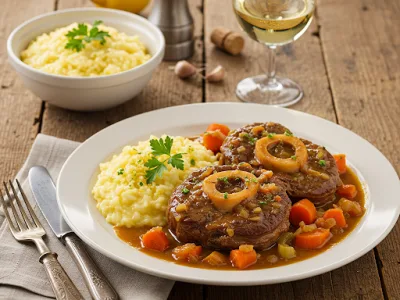
9. Serve Serve hot with creamy risotto, mashed potatoes, or polenta. Spoon the sauce generously over each veal shank and top with gremolata.
Extra technique, safety notes and details when you want to go deeper.
More tips & details
Traditional Milanese Veal Osso Buco: A Taste of Northern Italy
A culinary journey into the heart of Milanese comfort food
There’s something uniquely comforting about a slow-cooked dish that fills the kitchen with rich, aromatic depth. Osso Buco, the iconic veal shank dish from Milan, is a perfect example of Italian culinary heritage at its finest. With its tender, fall-off-the-bone meat and velvety, wine-infused sauce, this traditional recipe has earned its place on elegant dinner tables and cozy Sunday family meals alike.
Originally crafted in the bustling kitchens of Northern Italy, Osso Buco embodies the soul of Milanese cuisine, marrying rustic tradition with refined flavors. The name itself, which translates to "bone with a hole," refers to the luscious marrow-rich veal shanks that are braised gently until they reach a melt-in-your-mouth tenderness. Often paired with creamy risotto alla Milanese or soft polenta, this dish is more than just a meal — it’s an experience that speaks of patience, passion, and time-honored technique.
Why you will love this authentic Osso Buco recipe
This version of Authentic Italian Osso Buco brings all the warmth of a nonna’s kitchen directly to your home. Here’s why this dish stands out and why it’s guaranteed to become a new favorite:
- Slow-braised to perfection: Each veal shank is cooked low and slow until incredibly tender, ensuring a deep, rich flavor in every bite.
- Classic Italian aromatics: A soffritto of onion, celery, and carrot forms the fragrant base, enhanced with white wine, broth, garlic, and fresh herbs.
- Gremolata topping: This zesty mix of lemon zest, parsley, and garlic adds a bright, citrusy finish that balances the richness of the meat.
- Versatile accompaniments: Whether served with risotto, polenta, mashed potatoes or crusty artisan bread, Osso Buco adapts beautifully to your table.
From Sunday suppers to festive dinners, Osso Buco makes any occasion feel special. The marrow at the center of the bone, often called “the prize,” melts into the sauce, creating an unctuous richness that’s impossible to replicate with any other cut of meat.
The roots of Osso Buco: Italian tradition meets timeless elegance
While there are many regional variations of Osso Buco, the Milanese version is especially beloved for its refined simplicity and distinct use of white wine instead of red. This lighter braising liquid allows the delicate flavor of veal to shine, unlike southern adaptations that often use tomatoes. That said, both versions have their champions — and in this recipe, we honor the original Milanese roots, staying true to the traditional preparation methods.
Each element of the dish reflects Italian culinary philosophy: quality ingredients, careful preparation, and letting natural flavors shine. The result? A tender, richly flavored veal shank bathed in aromatic sauce, ready to be crowned with a fresh gremolata just before serving.
Tips for achieving restaurant-quality Osso Buco at home
Making Osso Buco is not difficult, but there are a few key techniques that can elevate your dish from good to unforgettable:
- Sear the meat well: This first step is essential to develop deep umami notes. Use a hot pan and don’t rush the browning process.
- Deglaze with wine: Scraping up the brown bits left behind by the seared meat adds incredible depth to your sauce.
- Use a heavy-bottomed pan or Dutch oven: Even heat distribution ensures that the veal shanks cook evenly and stay moist throughout.
- Low and slow: The long cooking time is worth it. Patience is key to achieving that spoon-tender texture.
- Don’t skip the gremolata: This small finishing touch transforms the dish with brightness and complexity.
A perfect dish for entertaining and special occasions
Whether you’re hosting a dinner party, cooking for someone special, or simply treating yourself to a luxurious home-cooked meal, this Osso Buco recipe is guaranteed to impress. The visual presentation alone — thick, bone-in veal shanks nestled in a golden, wine-kissed sauce — is enough to make mouths water. Add the fresh gremolata and a side of saffron risotto, and you have a show-stopping plate worthy of any celebration.
For those who love hearty, slow-cooked meals with layers of flavor, Osso Buco offers the best of both worlds: rustic charm and sophisticated taste. It’s a dish that rewards care and attention, but the end result is deeply satisfying — a true highlight of Italian comfort food.
Ready to make this Italian classic?
Bring a taste of Milan into your own kitchen by preparing this classic Osso Buco. Your guests will savor every bite of the tender veal and rich sauce, while the gremolata adds that perfect finishing flourish. If you’ve never made Osso Buco before, this is the recipe to start with — straightforward, traditional, and absolutely delicious.
Gather your ingredients, set aside some time for a slow braise, and prepare to impress. With just one bite, you’ll understand why Osso Buco remains one of Italy’s most beloved dishes — and why it deserves a place at your table.
Creative Ways to Elevate Your Osso Buco and Make It Unforgettable
Enhance flavor with high-quality ingredients
The foundation of any excellent Osso Buco is the quality of ingredients used. While the traditional Milanese recipe relies on veal shanks, carrots, celery, onion, garlic, white wine, and broth, there’s room to elevate each element for a more profound and complex flavor profile.
- Choose pasture-raised veal shanks: These typically offer richer flavor and better texture. Look for cuts with a generous bone marrow core, as this is where Osso Buco gets its signature silkiness.
- Use homemade stock instead of store-bought. A veal or beef stock made from roasted bones and simmered for hours imparts a deep, umami-rich base that enhances the sauce far beyond what a boxed broth can deliver.
- Opt for dry white wine with good acidity, such as a Pinot Grigio or Sauvignon Blanc. This not only tenderizes the meat but also balances the richness of the dish with brightness and complexity.
Aromatics and herbs that boost depth
While the classic soffritto (onion, carrot, celery) creates the aromatic base, it can be further enriched.
- Add a small amount of finely chopped fennel bulb to the soffritto for a subtle licorice note that complements veal perfectly.
- Incorporate a sprig of fresh rosemary or sage during braising. These herbs bring a woodsy, earthy dimension that enhances the meat's savoriness.
- A dash of anchovy paste added during the sautéing of the vegetables adds depth without fishiness, blending into the background for a savory flavor bomb.
How gremolata variations can transform the dish
The traditional gremolata topping adds a bright, zesty contrast to the rich, slow-cooked veal. However, this element is extremely flexible and can be customized to suit your palate.
- Add finely grated horseradish to the gremolata for a sharp, peppery note that cuts through the richness.
- Try including orange zest along with lemon for a slightly sweeter, more fragrant aroma.
- Replace garlic with shallot for a milder, more delicate garnish, ideal for those who prefer subtler alliums.
These tweaks can take your Osso Buco from comforting and traditional to refined and personalized, giving your guests something to talk about long after the plates are cleared.
Health-conscious swaps for a lighter version
Osso Buco is naturally rich due to its slow-braised veal and marrow-enhanced sauce. If you're looking to lighten the dish without compromising flavor, consider these alternatives:
- Substitute veal with turkey legs or chicken thighs. While not traditional, these cuts still offer tenderness and adapt well to the same braising technique.
- Use olive oil only, omitting butter. The flavor will remain lush while slightly reducing saturated fat content.
- Opt for a low-sodium broth and adjust the seasoning at the end to maintain flavor without overloading salt.
- Swap white wine with a splash of lemon juice and water for a non-alcoholic option that still provides acidity and balance.
While these substitutions may take the dish in a less traditional direction, they maintain its soul and open the door to more frequent, guilt-free enjoyment.
Homemade vs. restaurant: Why your kitchen wins
There’s a distinct difference between restaurant-prepared Osso Buco and the one made slowly and thoughtfully in a home kitchen.
- In a home kitchen, you have full control over every component—from ingredient sourcing to salt levels, cooking time, and presentation.
- Marrow lovers can extract every last bit of richness, while those who prefer leaner cuts can trim fat or choose alternative meats.
- The slow, gentle simmer at home often surpasses rushed kitchen prep in restaurants, where speed can come at the cost of flavor development.
Your version can be richer, more balanced, and tailored exactly to your preferences—making it an even more memorable dining experience.
Mistakes to avoid when making Osso Buco
Perfecting Osso Buco requires attention to technique. Here are common missteps that can compromise the dish:
- Overcooking the meat: While Osso Buco is a braised dish, too long on the heat can cause the meat to dry out rather than tenderize. Always monitor texture as it cooks.
- Skipping the sear: Searing the veal shanks creates a crucial Maillard reaction—caramelized flavors that deepen the overall taste of the dish.
- Neglecting to strain the sauce: For a more refined finish, straining the braising liquid before serving gives you a smooth, luxurious sauce that elevates the dish.
- Omitting gremolata: This final touch isn't optional—it's the element that ties everything together with freshness and acidity.
Pairings that elevate the experience
Traditionally served with risotto alla Milanese, Osso Buco pairs just as beautifully with other thoughtful accompaniments.
- Creamy polenta balances the savory meat with soft, buttery notes and makes a comforting winter pairing.
- Garlic mashed potatoes provide a familiar and satisfying foundation that lets the sauce shine.
- For a lighter option, try sautéed greens like Swiss chard or kale on the side, which bring a touch of bitterness and color contrast.
Even your wine choice can enhance the experience. A dry white wine during cooking should be echoed at the table—think Gavi di Gavi or Verdicchio. If you prefer red, choose a light-bodied Pinot Noir or Barbera, which won’t overpower the delicate veal.
Infuse global inspiration for a fusion twist
If you’re feeling adventurous, Osso Buco can be used as a canvas for global flavors without losing its essence.
- Add a star anise or cinnamon stick to the braising liquid for a subtle spiced undertone that plays well with veal.
- Use miso paste instead of tomato paste to bring umami depth with an Asian influence.
- Swap parsley in the gremolata with Thai basil or cilantro, and include a touch of grated ginger for a fresh East-meets-West fusion.
While purists might raise an eyebrow, these changes invite new interpretations while maintaining the comforting soul of the original.
The final spoonful: why innovation matters
Tradition provides the foundation, but creativity brings a dish to life. Osso Buco, as steeped in heritage as it is, thrives when prepared with personal insight and thoughtful technique. Whether you're preserving the Milanese authenticity or introducing a modern twist, your version of Osso Buco becomes a story told on the plate—one of flavor, passion, and attention to every delicious detail.
Recivelle · /recipe/authentic-italian-osso-buco