Base recipe: 4
Your kitchen companion
Ingredients
Check off ingredients as you prepare them.
Follow the steps at your own pace.
Method
Prepare the tomatoes: Rinse 400 g (2 ½ cups) of ripe tomatoes under cool running water. Dry them gently with a clean kitchen towel. Use a small, sharp knife to remove the core (the tough green stem area) from each tomato. Then slice each tomato in half. Place the cut side down on a cutting board and finely dice into small cubes, about 0.5 cm wide (¼ inch). Transfer all diced tomatoes to a medium mixing bowl.
Add basil: Rinse about 10 g (½ cup loosely packed) of fresh basil leaves. Gently pat them dry using paper towels. Pick the leaves off the stems and tear them into small pieces with your hands (this helps preserve their flavor better than cutting with a knife). Add the torn basil leaves to the bowl with the tomatoes.
Prepare the garlic and mix: Peel one garlic clove by crushing it slightly under the flat side of a knife, then removing the skin. Finely mince the garlic (cut it into very small, even pieces) and add it to the tomato and basil mixture.
Season the tomato mixture: Add 60 ml (4 tbsp) of extra virgin olive oil, 3 g (½ tsp) of sea salt, and 1 g (¼ tsp) of freshly ground black pepper to the bowl. Stir gently with a spoon to combine everything evenly. Let the mixture rest at room temperature for at least 10 minutes—this helps the flavors blend together beautifully.
Prepare the bread: Slice a rustic Italian bread loaf (about 300 g / 10.5 oz) into 8 slices, each around 1.5–2 cm thick (½–¾ inch). Make sure the slices are even so they toast uniformly.
Toast the bread: Heat a grill pan, place the slices in a single layer, and toast over medium-high heat for about 2–3 minutes per side. Look for golden brown grill marks and slightly charred edges. If you don't have a grill pan, you can toast the bread under a broiler (on a baking tray) or use a dry frying pan or toaster. The goal is a crisp outside with a slightly chewy center.
Add garlic aroma to the bread: While the toasted bread is still warm, take the second garlic clove, peel it, and rub the cut side gently across the surface of each bread slice. This step infuses the bread with a subtle garlic flavor—don’t press too hard; just a light swipe is enough.
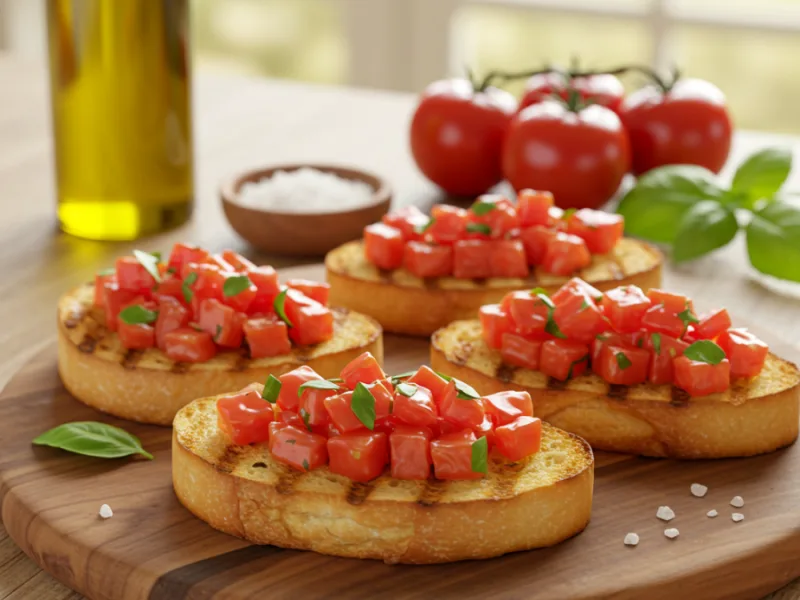
Assemble the bruschetta: Use a spoon to heap a generous amount of the tomato-basil mixture on top of each garlic-rubbed toast slice. Try to include some juice and oil for flavor, but not too much—otherwise, the bread may become soggy.
Serve immediately: Optionally, drizzle a few extra drops of olive oil on top, garnish with a small basil leaf on each, and arrange on a serving platter. Bruschetta is best served fresh and slightly warm, just after assembling.
Extra technique, safety notes and details when you want to go deeper.
More tips & details
Irresistible Rustic Tomato Bruschetta from the Heart of Italy
A timeless antipasto with sun-ripened flavors
Bruschetta is much more than just toasted bread with toppings—it's a celebration of Italian culinary simplicity and a love letter to the sun-soaked regions of central Italy. This Authentic Italian Bruschetta Recipe brings together the most iconic Mediterranean ingredients: crusty artisan bread, sweet vine tomatoes, fragrant extra virgin olive oil, fresh basil leaves, and just a touch of garlic to enhance the harmony of flavors. With each bite, it captures the spirit of Italian summers, leisurely aperitivos, and meals enjoyed slowly in the company of good friends.
The charm of traditional ingredients
What makes this bruschetta truly special is the use of high-quality, seasonal produce. Italian cuisine thrives on the principle that fewer ingredients, when chosen well, create the most extraordinary results. The star of this dish is undoubtedly the fresh tomato mixture, prepared using ripe tomatoes that are juicy, naturally sweet, and slightly acidic to balance the richness of the olive oil. When combined with finely chopped garlic, hand-torn basil, and a pinch of sea salt, this topping becomes the very essence of summer on a slice of toasted bread.
The bread itself plays a crucial role. Traditional bruschetta is made using rustic Italian bread, such as Pagnotta or Pane Toscano, which is thickly sliced and grilled until golden and slightly charred. This not only adds a wonderful crunch but also infuses the dish with a smoky depth that complements the freshness of the topping. A quick rub with a raw garlic clove while the bread is still warm elevates the flavor without overpowering the other components.
Perfect for every occasion
Whether served as a light appetizer, part of a Mediterranean-inspired lunch, or a refreshing starter at a summer gathering, this bruschetta brings people together. Its versatility allows for endless adaptations, but the classic tomato version remains the most beloved. It’s suitable for both casual meals and elegant dinner parties, offering a taste of Italy in every bite.
This dish is also an ideal way to highlight local, seasonal produce, especially during late spring and summer when tomatoes are at their peak. A drizzle of high-quality cold-pressed olive oil just before serving ties everything together and provides a silky finish that enhances the flavor and texture.
A cultural icon on the Italian table
In Italy, bruschetta has roots that go back centuries, originating as a practical way for farmers to test the quality of their freshly pressed olive oil. It was a humble dish, created with just grilled bread and oil, but over time it evolved into the classic antipasto we know and love today. Each region of Italy has its own twist on bruschetta, yet the tomato version has become universally adored and widely recognized as the most authentic representation.
Despite its simplicity, it is often the first bite that sets the tone for the meal—fresh, vibrant, and full of life. This makes it a perfect introduction to a traditional Italian feast, where quality and flavor are always at the forefront.
How to serve it beautifully
For best presentation, serve your bruschetta on a wooden board or rustic ceramic platter, garnished with whole basil leaves and a few shavings of Parmigiano Reggiano (optional, but delightful). Pair with a crisp white wine like Vermentino or Pinot Grigio, or offer it alongside other Italian appetizers such as marinated olives, roasted peppers, or prosciutto-wrapped melon for a full aperitivo experience.
Whether you’re an experienced chef or a passionate home cook, this authentic Italian bruschetta will always impress. It’s proof that when prepared with care and respect for tradition, even the simplest ingredients can deliver a deeply satisfying culinary experience.
Creative Ways to Elevate Classic Tomato Bruschetta
Rethinking the essentials without losing authenticity
Bruschetta is a dish rooted in tradition, but that doesn’t mean it’s off-limits for reinterpretation. With just a few thoughtful adjustments, the classic Italian tomato bruschetta can be transformed into a personalized culinary experience. Whether you're refining the texture, balancing acidity and sweetness, or enhancing the aromatic complexity, small changes can yield powerful results. Knowing how and why to make these changes is key to elevating this simple dish into something truly memorable.
Upgrading the tomato selection
Tomatoes are the heart of bruschetta, so their quality and type make a major difference. Classic recipes call for standard ripe red tomatoes, but choosing specific heirloom varieties, like San Marzano, Campari, or cherry tomatoes, can drastically improve both taste and presentation. Heirloom tomatoes tend to have richer flavor, lower acidity, and a meatier texture, which helps prevent the bruschetta from becoming soggy. Mixing yellow and red varieties can also add visual appeal while delivering a nuanced sweetness.
Roasting the tomatoes before mixing them into the topping introduces a deeper umami flavor. A slow roast at 160°C (320°F) for 45 minutes intensifies the natural sugars and adds a caramelized richness, making the bruschetta feel more gourmet without overpowering the base.
Choosing the right bread for texture and flavor
While rustic Italian bread is traditional, the choice of bread can elevate the dish. A slice of sourdough, whole grain, or rosemary focaccia brings an additional layer of complexity. The sourness from sourdough complements the sweetness of the tomatoes, while a hearty multigrain loaf adds nutty undertones and a more robust bite. Focaccia, lightly toasted, provides a buttery base that absorbs the tomato juices without losing its structure.
For added flavor, brushing the bread with olive oil infused with garlic or herbs before toasting can enhance the overall profile and create a crispy, aromatic crust.
Enhancing the tomato mixture
While the traditional tomato mix is undeniably delicious, you can build on it with a few smart additions. A dash of balsamic vinegar or balsamic glaze adds gentle acidity and a hint of sweetness that balances the tomatoes beautifully. If you enjoy a little kick, finely chopped red chili or a light sprinkle of Aleppo pepper flakes introduces a soft, lingering heat.
Incorporating ingredients like finely diced red onions, capers, or sun-dried tomatoes adds texture and layers of umami. Chopped fresh oregano or parsley can also be used alongside basil to round out the herbaceous profile. Even a few shavings of aged Parmigiano Reggiano or crumbled ricotta salata can lend a creamy, salty contrast without compromising the simplicity of the dish.
Healthier and seasonal variations
If you're aiming for a lighter or more nutrient-dense option, there are several adjustments that retain the essence of bruschetta while boosting its health benefits. Replacing part of the olive oil with a splash of fresh lemon juice keeps the topping bright while reducing overall fat content. Using whole grain or gluten-free bread not only makes the dish more inclusive but also adds additional fiber and complex carbohydrates.
For seasonal adaptations, try replacing tomatoes with grilled zucchini, roasted red peppers, or even caramelized mushrooms in the colder months. These maintain the bruschetta format but give it a heartier, autumn-inspired twist. In summer, adding fresh peaches or strawberries to the tomatoes creates a sweet-savory fusion that’s ideal for outdoor dining.
The value of homemade preparation
Preparing bruschetta at home gives you complete control over every element: freshness, balance, and presentation. Unlike pre-made options or restaurant versions, homemade bruschetta allows you to use the freshest tomatoes, high-quality olive oil, and natural sea salt without additives. The ability to fine-tune the seasoning and bread crispiness based on personal preference creates a superior eating experience. Additionally, the aroma of grilled bread and freshly chopped herbs in your kitchen sets a tone of warmth and authenticity that can't be matched by store-bought alternatives.
Common mistakes and how to avoid them
Even with its simplicity, bruschetta can easily go wrong if certain details are overlooked. One of the most common mistakes is using bread that’s too soft or thin, which leads to soggy results. Always opt for bread that has a firm crust and enough structure to hold the topping.
Another frequent issue is cutting the tomatoes too early and letting them sit for too long. This can lead to excess moisture. To prevent watery bruschetta, drain some of the tomato juice or serve immediately after assembly.
Avoid overloading the bread with topping. The goal is balance: a crunchy base with a juicy, flavorful layer—not a mountain of ingredients falling off with every bite.
Lastly, under-seasoning is a common flaw. Tomatoes need salt to bring out their natural sweetness and olive oil to round out the flavor. Taste and adjust the seasoning before assembling.
Small additions, big impact
- Roasted garlic instead of raw: Roasted garlic brings a mellow, slightly sweet taste that’s more suitable for sensitive palates.
- Microgreens or arugula: Adds a peppery freshness and nutritional boost.
- Crushed pine nuts or walnuts: Provide crunch and earthy tones that contrast beautifully with juicy tomatoes.
- A pinch of smoked salt: Elevates the aroma and adds depth without overpowering the original ingredients.
In essence, the beauty of bruschetta lies in its adaptability. With a few well-considered adjustments, this humble dish can be transformed into a refined appetizer, a vibrant party dish, or a nutrient-rich snack that reflects both tradition and modern creativity.
Recivelle · /recipe/authentic-italian-bruschetta-recipe