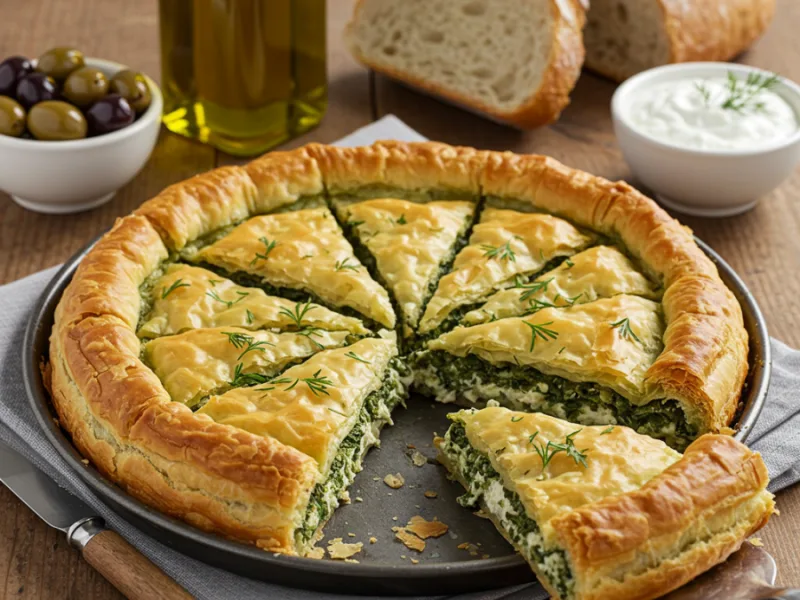
Base recipe: 8 portions
Your kitchen companion
Ingredients
Check off ingredients as you prepare them.
Follow the steps at your own pace.
Method
Preheat the oven to 180°C (350°F). Grease a baking dish with a little olive oil or butter.
Prepare the spinach filling: In a large pan, heat 1 tablespoon of olive oil over medium heat. Add the chopped onion and sauté until soft. Stir in the garlic and cook for another minute.
Wilt the spinach: Add the fresh spinach to the pan and cook until it wilts, about 3-5 minutes. Remove from heat and let it cool slightly.
Mix the filling: In a large bowl, combine the crumbled feta, ricotta, beaten eggs, fresh dill, and parsley. Stir in the cooled spinach mixture. Season with salt and black pepper.
Layer the phyllo dough: Place one sheet of phyllo dough in the baking dish, brushing it lightly with melted butter. Repeat, layering about 6 sheets.
Add the filling: Spread the spinach and feta mixture evenly over the phyllo layers.
Top with phyllo layers: Cover the filling with 6 more sheets of phyllo, brushing each one with melted butter.
Bake the spanakopita: Using a sharp knife, score the top layers into squares or triangles to make cutting easier after baking. Bake for 35-40 minutes until golden brown and crispy.
Cool slightly before serving: Let the spanakopita rest for 10 minutes before slicing and serving.
Extra technique, safety notes and details when you want to go deeper.
More tips & details
Discover the Ultimate Greek Spanakopita: A Flaky, Savory Spinach and Feta Pie
A Taste of Greece in Every Bite
Greek spanakopita is more than just a pie; it’s a timeless culinary masterpiece that captures the essence of Greek cuisine. Made with delicate layers of crispy phyllo pastry, a rich filling of fresh spinach, and creamy feta cheese, this dish is a true delight for the senses. The combination of buttery, golden phyllo dough with the savory, herb-infused filling creates an irresistible texture and flavor that has been adored for generations. Whether served as a snack, appetizer, or main dish, this classic Greek spinach and feta pie is a must-try for anyone who loves authentic Mediterranean flavors.
The Origins of Spanakopita: A Dish with History
Spanakopita has its roots in traditional Greek cooking, dating back centuries to when pies were a staple in Mediterranean households. This iconic dish evolved as a way to use wild greens, cheese, and handmade pastry, creating a meal that was both nourishing and flavorful. Over time, Greek spanakopita became a beloved comfort food, enjoyed at family gatherings, celebrations, and festive occasions. The crisp layers of phyllo, combined with the creamy, tangy taste of feta cheese, make it a signature dish in Greek cuisine.
This flaky spinach pie is particularly popular in Greek villages, where locals often prepare it using freshly harvested spinach, homemade cheese, and hand-rolled phyllo dough. While traditional recipes vary from region to region, the core ingredients remain the same, ensuring a rich, savory filling wrapped in perfectly crisp pastry.
What Makes the Perfect Spanakopita?
The secret to an authentic spanakopita lies in the balance of flavors and textures. A great Greek spinach pie should have:
- Light, flaky phyllo pastry that bakes to a crisp, golden perfection.
- A flavorful filling made with fresh spinach, feta cheese, eggs, and aromatic herbs like dill and parsley.
- The right blend of cheeses, with feta as the star, offering a creamy, slightly tangy contrast to the greens.
- Perfect moisture control, ensuring the filling remains rich and flavorful without making the crust soggy.
- A buttery, golden crust, achieved by brushing each layer of phyllo with melted butter or olive oil for an irresistible crispness.
Why You’ll Love This Greek Spinach Pie
Whether you’re a fan of Mediterranean cuisine or simply looking for a new savory pie recipe, this Greek spanakopita is a dish you’ll love making time and time again. Its versatility makes it perfect for any occasion—serve it warm as a hearty lunch, enjoy it as a satisfying appetizer, or pack it for a delicious picnic snack.
One of the best things about homemade spanakopita is that it can be made ahead of time and even frozen for later use, making it an excellent option for meal prepping. Whether you prefer a large tray-baked spanakopita or individual triangles, this dish is sure to impress with its rich taste and beautiful golden layers.
The Role of Phyllo Dough in Spanakopita
The thin, delicate layers of phyllo dough are what give spanakopita its signature light, crisp texture. Working with phyllo pastry may seem challenging at first, but with a few simple techniques, you can achieve the perfect flaky crust. The key is to keep the phyllo sheets covered while working to prevent them from drying out and to brush each layer with butter or olive oil to enhance their crispiness.
If you’re feeling adventurous, you can even try making homemade phyllo dough, just as it’s done in traditional Greek kitchens. However, store-bought phyllo works wonderfully and allows you to enjoy this classic Greek dish with ease.
How to Serve and Enjoy Greek Spanakopita
Once baked to golden perfection, spanakopita is best enjoyed warm or at room temperature, allowing the flavors to fully develop. It pairs beautifully with:
- A side of Greek tzatziki sauce, adding a refreshing, garlicky contrast to the rich, cheesy filling.
- A fresh Mediterranean salad, featuring tomatoes, cucumbers, olives, and a drizzle of olive oil.
- A glass of crisp white wine, such as Assyrtiko or Sauvignon Blanc, to complement the tangy feta and herbs.
This spinach and feta pie is also perfect for serving at parties, family dinners, or casual gatherings, as it can be easily sliced into portions and served as a delicious appetizer or side dish.
A Dish That Brings People Together
In Greece, food is about more than just eating—it’s about connection, tradition, and shared moments. Spanakopita embodies this spirit, bringing families and friends together over a dish that is both comforting and full of history. Whether you’re making it for a special occasion or as a simple weeknight meal, this Greek spinach and feta pie is guaranteed to bring joy to your table.
If you’ve never tried making authentic spanakopita before, now is the perfect time to experience the crunchy, cheesy, and savory goodness of this Mediterranean favorite. With its simple ingredients, incredible flavors, and stunning presentation, it’s no wonder that Greek spanakopita remains one of the most beloved dishes in Greek cuisine.
Elevating Greek Spanakopita: Enhancing Flavor, Texture, and Nutrition
Choosing High-Quality Ingredients for the Best Results
One of the most effective ways to improve traditional spanakopita is by carefully selecting high-quality ingredients. The better the ingredients, the richer the flavor and better the texture.
- Spinach: Using fresh baby spinach instead of frozen spinach enhances the natural sweetness and reduces excess moisture, preventing a soggy filling. If using frozen spinach, ensure it is thoroughly drained.
- Feta Cheese: Opt for authentic Greek feta, made from sheep’s or a mix of sheep’s and goat’s milk, rather than cow’s milk feta, which lacks the traditional tangy depth.
- Phyllo Dough: Freshly made hand-rolled phyllo will give a superior flaky texture, but if using store-bought phyllo, selecting a high-quality brand ensures a crispier and more delicate crust.
- Olive Oil and Butter: A mix of extra virgin olive oil and butter adds complexity to the flavor. Olive oil alone creates a lighter, crispier texture, while butter provides a rich, nutty taste.
Adjusting the Filling for a Richer Taste
The filling can be adjusted in various ways to enhance the depth of flavor and texture.
- Adding More Herbs: While dill and parsley are traditional, incorporating mint, oregano, or thyme adds freshness and aromatic complexity.
- Including Different Cheeses: Blending feta with ricotta, anthotyro, or kefalotyri creates a creamier and more complex filling. Ricotta adds a milder, smoother texture, while kefalotyri enhances the savory, umami notes.
- Enhancing the Texture: Chopped leeks or green onions bring mild sweetness, balancing the saltiness of the feta. Adding toasted pine nuts or walnuts provides an interesting crunch and nutty undertones.
Why Homemade Spanakopita is Superior
Preparing spanakopita from scratch results in better control over texture, taste, and nutritional content.
- No Preservatives: Store-bought versions often contain preservatives and excess salt, whereas homemade spanakopita uses only fresh, natural ingredients.
- Better Texture: Freshly prepared phyllo dough ensures a crispier and lighter texture compared to frozen alternatives that can turn chewy or dry.
- Customizable Flavors: Making it yourself allows you to adjust the seasoning, balance the level of herbs, and modify the cheese-to-spinach ratio to your taste.
Avoiding Common Mistakes
Even experienced cooks can encounter pitfalls when making spanakopita. Avoiding these mistakes ensures a perfectly crispy and flavorful dish.
- Not Draining the Spinach Properly: Excess moisture can make the filling watery and heavy, preventing the phyllo from crisping up. Pressing out all the liquid is essential.
- Overstuffing the Pie: A balanced ratio of phyllo to filling is crucial; too much filling can make the center dense and lead to undercooked layers.
- Brushing Too Much or Too Little Butter: Phyllo needs just enough butter or oil to become crispy but not greasy. Over-brushing makes it too heavy, while using too little dries it out.
- Baking at the Wrong Temperature: Spanakopita should bake at a consistent medium-high temperature (180°C/350°F). A temperature that is too low results in soggy pastry, while too high can burn the top before the inside is fully cooked.
Healthier Variations Without Sacrificing Flavor
For those looking to enjoy a lighter or diet-friendly version of spanakopita, several modifications can make this dish healthier while preserving its authentic taste.
- Whole Wheat or Gluten-Free Phyllo: Using whole wheat phyllo increases fiber content, while gluten-free phyllo allows those with dietary restrictions to enjoy it.
- Less Fat, Same Flavor: Instead of butter, using only extra virgin olive oil makes it lighter and heart-healthier while still achieving a golden, crispy crust.
- Low-Fat Cheese Alternative: Substituting part of the feta with low-fat ricotta or cottage cheese reduces the overall fat content while maintaining a creamy texture.
- Egg Replacement: For a vegan version, flax eggs (1 tbsp ground flaxseed + 3 tbsp water per egg) can be used to bind the filling.
Experimenting with Modern Twists
For a more innovative take on this Greek classic, modern adaptations can enhance its appeal and versatility.
- Adding Caramelized Onions: Caramelized onions provide a subtle sweetness that contrasts beautifully with the salty feta and earthy spinach.
- Incorporating Mushrooms: Sautéed mushrooms introduce a meaty texture and umami depth, making the dish more satisfying.
- Using a Nut Crust: Instead of phyllo, a crust made from ground almonds, walnuts, or sunflower seeds mixed with a little olive oil makes a delicious low-carb alternative.
- Individual Spanakopita Cups or Rolls: Instead of a large pie, rolling the filling into small phyllo cups or hand-held pastries creates a perfect party appetizer.
Pairing Spanakopita with the Perfect Side Dishes
To create a complete Mediterranean meal, spanakopita pairs beautifully with complementary side dishes and sauces.
- Greek Tzatziki Sauce: The cool, creamy yogurt dip with cucumber, garlic, and lemon enhances the flavors of the pie.
- Traditional Greek Salad: A fresh mix of tomatoes, cucumbers, onions, olives, and feta, dressed in olive oil, balances the richness of the spanakopita.
- Lentil or Chickpea Salad: Adding a protein-rich salad boosts the nutritional value of the meal while maintaining Mediterranean authenticity.
- Roasted Vegetables: A side of grilled zucchini, eggplant, or bell peppers adds sweetness and depth to the plate.
Bringing Out the Best in This Greek Classic
With just a few adjustments, spanakopita can be customized to suit different tastes and dietary needs while preserving its traditional essence. Whether you are enhancing the filling, making it healthier, or experimenting with new flavors, this dish remains a true Greek favorite that can be enjoyed in endless ways.
Recivelle · /recipe/authentic-greek-spanakopita-spinach-and-feta-pie