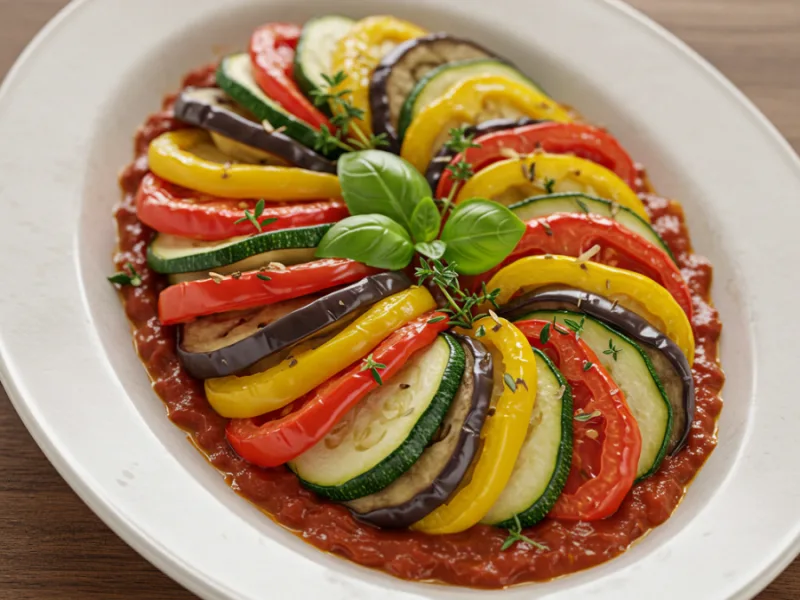
Base recipe: This recipe makes 4 servings.
Your kitchen companion
Ingredients
Check off ingredients as you prepare them.
Follow the steps at your own pace.
Method
Prepare the vegetables Wash and dry all vegetables. Cut the eggplant into cubes, slice the zucchini, chop the bell peppers, dice the onion, mince the garlic, and roughly chop the tomatoes.
Sauté the onions and garlic In a large heavy-bottomed pot or Dutch oven, heat 1 tbsp olive oil over medium heat. Add the onion and cook for 5 minutes, stirring occasionally, until soft and translucent. Add the garlic and cook for another 1 minute.
Cook the eggplant Add the remaining olive oil and toss in the eggplant cubes. Cook for 7-8 minutes, stirring occasionally, until they begin to soften and absorb the flavors.
Add the bell peppers and zucchini Stir in the chopped bell peppers and zucchini, and cook for 5 minutes, letting them soften slightly.
Incorporate the tomatoes and seasonings Add the chopped tomatoes, tomato paste, thyme, oregano, bay leaf, salt, and black pepper. Stir everything together.
Simmer gently Pour in the vegetable broth, reduce the heat to low, and cover. Let the ratatouille simmer for 30 minutes, stirring occasionally.
Adjust seasoning and finish cooking Remove the lid and let the dish cook for an additional 5-7 minutes, allowing some of the liquid to reduce. Taste and adjust seasoning if necessary.
Serve Remove the bay leaf, garnish with fresh basil leaves, and serve warm.
Extra technique, safety notes and details when you want to go deeper.
More tips & details
The Ultimate Authentic French Ratatouille Recipe – A Classic Provençal Dish
Few dishes capture the essence of French cuisine quite like ratatouille, the rustic vegetable medley from Provence. This dish is a celebration of fresh, sun-ripened ingredients, bringing together a harmonious blend of eggplant, zucchini, bell peppers, tomatoes, and aromatic herbs. Traditionally simmered slowly to develop deep, complex flavors, this vegetarian masterpiece is both comforting and elegant.
With its rich history and timeless appeal, ratatouille has become a beloved dish not only in France but around the world. Whether served as a main course, a side dish, or even a topping for crusty bread, its versatility and flavor make it a must-try for anyone who loves Mediterranean cuisine.
A Taste of Southern France in Every Bite
This authentic ratatouille recipe takes inspiration from the traditional methods used in the Provençal region. Unlike quick, modern adaptations, this version ensures that each vegetable retains its distinct texture and flavor, making every bite a true sensory delight.
Cooking ratatouille the right way is an art—it’s about patience, technique, and the perfect balance of ingredients. The secret lies in slow cooking, which allows the vegetables to release their natural sweetness and blend into a deeply flavorful, silky stew. Every forkful offers a burst of earthy eggplant, tender zucchini, sweet bell peppers, and juicy tomatoes, all infused with fragrant thyme, garlic, and olive oil.
Why You'll Love This Authentic Ratatouille Recipe
- Bursting with Freshness – Made with the finest seasonal vegetables, this dish captures the vibrant flavors of summer in every bite.
- Naturally Healthy – Packed with vitamins, minerals, fiber, and antioxidants, ratatouille is a nutritious dish that is both light and satisfying.
- Gluten-Free and Vegan – This recipe is naturally plant-based and gluten-free, making it perfect for a wide range of dietary preferences.
- Versatile Serving Options – Enjoy it hot, warm, or cold as a main course, side dish, or even a topping for rice, pasta, or crusty bread.
- Authentic French Flavor – This recipe stays true to its roots, following traditional techniques that bring out the best in each ingredient.
How to Serve This Classic French Dish
Ratatouille is incredibly versatile and can be enjoyed in numerous ways:
- As a main course – Serve it on its own with a drizzle of extra virgin olive oil and a side of freshly baked baguette.
- As a side dish – Pair it with grilled fish, roast chicken, or a juicy steak for a complete Mediterranean meal.
- With pasta or rice – Spoon it over al dente pasta, fluffy rice, or creamy polenta for a heartier meal.
- On toast – Spread it over grilled sourdough and top with goat cheese or fresh basil for a delightful appetizer.
- Cold or room temperature – Like many French classics, ratatouille tastes even better the next day, making it a great make-ahead dish.
A Dish That Gets Better with Time
One of the best things about ratatouille is that its flavors continue to develop as it sits. While delicious fresh off the stove, it’s even better the next day after the ingredients have had time to fully meld together. This makes it ideal for meal prep and perfect for those who love leftovers that taste even richer.
Bring the Flavors of Provence to Your Kitchen
If you've ever dreamed of experiencing the flavors of Provence, this ratatouille recipe is your chance to do just that. Made with simple, high-quality ingredients, it brings the warmth and charm of the French countryside straight to your table.
Now it’s time to get cooking! Gather your fresh vegetables, fragrant herbs, and the best olive oil you can find, and let’s create a timeless French masterpiece that will impress your taste buds and elevate your home cooking.
How to Elevate and Customize Your Authentic French Ratatouille
The Secret to a Perfect Ratatouille
The beauty of ratatouille lies in its simplicity and versatility. While the traditional recipe follows a well-balanced combination of eggplant, zucchini, bell peppers, and tomatoes, there are many ways to adjust the flavors, textures, and depth of this dish to suit your preferences. Whether you’re looking to enhance its richness, sweetness, or smokiness, the right ingredients and techniques can take your ratatouille to the next level.
Choosing the Right Vegetables
The quality and freshness of your ingredients will have the biggest impact on the final dish. Selecting ripe, seasonal vegetables ensures that ratatouille is naturally sweet and full of flavor.
- Eggplant Variety: Traditional ratatouille uses purple eggplant, but you can experiment with Japanese eggplant (which is milder and less bitter) or white eggplant (which has a creamier texture). If you find eggplant bitter, lightly salt the cubes before cooking to draw out excess moisture.
- Tomato Selection: Using ripe, juicy tomatoes creates a rich sauce. Opt for Roma tomatoes for their natural sweetness and low water content, or use heirloom tomatoes for a more complex flavor. If fresh tomatoes are unavailable, canned San Marzano tomatoes can be an excellent substitute.
- Bell Peppers for Sweetness: Yellow and red bell peppers add natural sweetness, while green peppers contribute a slightly bitter undertone. For a more robust taste, try roasting the peppers before adding them to the dish.
- Zucchini Alternatives: If zucchini is too mild for your taste, you can replace it with pattypan squash or yellow summer squash, both of which hold their texture well during cooking.
Enhancing the Depth of Flavor
One of the most common concerns when making ratatouille is achieving a deep, well-developed flavor rather than a watery vegetable stew. Here’s how to bring out the best flavors in your dish.
Layering Flavors Through Sautéing
Instead of adding all the vegetables at once, sauté them in batches. Cooking each ingredient separately before combining allows them to develop caramelization and intensify their natural sweetness.
- Sauté onions and garlic first to form a flavorful base.
- Cook eggplant separately to allow it to soak up the olive oil and soften without becoming mushy.
- Add zucchini and bell peppers later to retain some bite and prevent them from overcooking.
- Tomatoes should simmer slowly to create a rich, flavorful sauce that coats the vegetables rather than drowning them.
Using the Right Herbs and Spices
Classic Provençal herbs give ratatouille its signature aroma. However, you can adjust the seasonings to suit your taste:
- Thyme and oregano – Traditional choices that enhance the earthy, herby notes.
- Basil and parsley – Add fresh, bright flavors when garnishing the dish.
- Bay leaves – Contribute a subtle floral and peppery depth to the sauce.
- Smoked paprika – A great addition if you want a hint of smokiness without overpowering the dish.
- Chili flakes – For those who prefer a spicier kick, adding a pinch of chili flakes can balance out the sweetness of the tomatoes.
Adjusting the Cooking Method
The cooking technique plays a major role in the final texture and taste of ratatouille.
Traditional Simmering
This is the most common method, where the vegetables are slowly simmered to allow the flavors to blend. The result is a soft, melt-in-your-mouth texture.
Roasted Ratatouille
For a deeper caramelized flavor, consider roasting the vegetables instead of simmering them. Spread the chopped vegetables on a baking sheet, drizzle with olive oil, and roast at 200°C (400°F) for 25-30 minutes before combining them in a pot with the tomato base. This method results in a richer, more concentrated taste.
Layered Ratatouille (Confit Byaldi)
For a more elegant presentation, slice the vegetables thinly and arrange them in overlapping layers in a baking dish. Drizzle with olive oil, cover with foil, and bake at 180°C (350°F) for 45-50 minutes. This technique, made famous by the movie Ratatouille, results in tender, visually stunning layers of flavor.
Making It More Hearty
Although ratatouille is traditionally vegetarian, you can add protein or extra richness if desired.
- Beans or lentils – For a plant-based protein boost, mix in cooked white beans, chickpeas, or lentils.
- Eggs – Serve ratatouille with a poached or fried egg on top for added creaminess.
- Cheese – Sprinkle with crumbled goat cheese, feta, or parmesan for a richer taste.
- Meat Additions – While not traditional, adding chicken, sausage, or pancetta can enhance the umami depth.
Reducing Excess Liquid
One of the most common challenges in making ratatouille is preventing it from becoming watery. Here’s how to control the moisture levels:
- Salt the eggplant and zucchini before cooking to draw out excess moisture.
- Sauté vegetables separately instead of steaming them together.
- Let the sauce reduce by simmering uncovered for the final few minutes.
- Roasting the vegetables instead of simmering helps concentrate their natural juices.
Creating the Perfect Pairing
Ratatouille is a versatile dish that pairs beautifully with a variety of sides and accompaniments.
- With Bread – Serve with a crusty baguette or sourdough toast to soak up the flavorful sauce.
- Over Grains – Spoon over rice, quinoa, or couscous for a more filling meal.
- With Pasta – Use as a light pasta sauce, garnished with fresh basil and parmesan.
- As a Side Dish – Pairs wonderfully with grilled fish, roasted chicken, or lamb.
- Cold or Warm – Ratatouille can be enjoyed hot, at room temperature, or even chilled, making it a fantastic make-ahead dish.
How Small Changes Can Transform the Dish
- Adding red wine to the tomato base creates a deeper, richer sauce.
- Mixing in olives or capers adds a Mediterranean briny touch.
- Using butter instead of olive oil gives a silkier texture but reduces the dish’s lightness.
- Cooking longer on low heat makes the flavors meld beautifully, while a shorter cooking time keeps the vegetables vibrant and firm.
Ratatouille is not just a dish—it’s a celebration of flavors, colors, and textures that you can adjust to suit your personal taste. Whether you choose to keep it classic, experiment with spices, or transform it into something uniquely your own, the possibilities are endless. Embrace the process, use the freshest ingredients, and enjoy the magic of authentic Provençal cooking.
Recivelle · /recipe/authentic-french-ratatouille-recipe