Base recipe: 6
Your kitchen companion
Ingredients
Check off ingredients as you prepare them.
Follow the steps at your own pace.
Method
Prepare the broth: Heat olive oil in a large pot over medium heat. Add onions, leeks, fennel, and garlic. Sauté for 5-7 minutes until softened. Stir in tomatoes, tomato paste, orange zest, saffron, thyme, and bay leaves. Cook for another 3 minutes.
Simmer the base: Pour in white wine, bring to a boil, and let it reduce for 2 minutes. Add fish stock, salt, and black pepper. Simmer on low heat for 30 minutes, allowing the flavors to develop.
Strain the broth: Remove bay leaves and blend the broth using an immersion blender. Strain through a fine sieve, pressing solids to extract maximum flavor. Return the broth to the pot and keep warm over low heat.
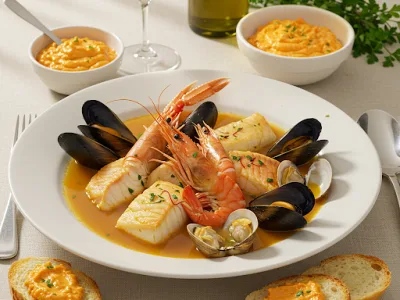
Cook the seafood: Add red rascasse, monkfish, and John Dory to the broth. Simmer for 10 minutes. Add mussels, clams, prawns, and langoustines. Cook for another 5-7 minutes, until shellfish open and fish is tender.
Prepare the rouille: In a bowl, whisk garlic, egg yolk, mustard, saffron, and lemon juice. Slowly drizzle in olive oil, whisking continuously to form a smooth, thick sauce. Season with salt and cayenne pepper.
Assemble and serve: Ladle broth and seafood into serving bowls. Top with a drizzle of rouille. Serve with toasted baguette slices. Garnish with extra saffron, if desired.
Extra technique, safety notes and details when you want to go deeper.
More tips & details
The Essence of Traditional French Bouillabaisse
A Timeless Mediterranean Delight
Bouillabaisse is more than just a French seafood stew—it is a true representation of the Mediterranean way of life. Originating from the sun-drenched shores of Provence, particularly Marseille, this dish is a harmonious blend of fresh seafood, aromatic herbs, and a rich, saffron-infused broth. Known for its complex yet delicate flavors, bouillabaisse is a recipe that has been passed down through generations, transforming from a humble fishermen’s meal into a celebrated culinary masterpiece.
The key to an authentic bouillabaisse lies in the selection of high-quality seafood and a well-balanced broth. Traditionally, this dish was prepared using the day’s fresh catch, often consisting of a variety of rockfish, shellfish, and aromatic vegetables. Over time, this rustic stew has evolved, but its essence remains unchanged—a bold yet elegant seafood experience that captures the flavors of the French Riviera.
The Origins of Bouillabaisse
Bouillabaisse has deep roots in Marseille’s fishing culture, dating back centuries when local fishermen prepared this dish using the less marketable fish that were not sold at the market. They would boil the fish in a pot of seawater, olive oil, and wild herbs, creating a flavorful, nourishing meal. The name "bouillabaisse" itself comes from the French words bouillir (to boil) and abaisser (to reduce heat), which describes the traditional slow-cooking method that allows the flavors to meld beautifully.
Over time, the recipe evolved, incorporating saffron, tomatoes, and white wine, which are now signature ingredients in modern variations of this dish. Bouillabaisse gained popularity beyond Marseille, becoming a dish synonymous with French coastal cuisine. Today, it is a symbol of French culinary excellence, enjoyed in both casual seaside bistros and Michelin-starred restaurants.
Key Ingredients That Define an Authentic Bouillabaisse
To create a true bouillabaisse, the selection of fresh ingredients is crucial. The foundation of this dish is a rich seafood broth, infused with the flavors of the sea and the aromas of Provence. Here are some of the essential ingredients that contribute to its depth and complexity:
The Seafood Selection
A proper bouillabaisse requires a combination of different fish varieties, traditionally sourced from the Mediterranean Sea. Some of the most common choices include:
- Red rascasse (Scorpaena scrofa) – A fundamental fish in Marseille-style bouillabaisse, known for its firm texture and intense flavor.
- John Dory (Saint-Pierre) – Adds a mild sweetness and delicate texture.
- Monkfish (Lotte) – Provides a meaty consistency and absorbs the broth’s flavors beautifully.
- Shellfish (Mussels, Clams, Langoustines, Prawns) – Enhance the natural briny taste of the dish.
While Mediterranean fish are preferred, substitutions like snapper, cod, or halibut can be used when fresh local options are not available.
The Flavorful Broth
The heart of bouillabaisse is its aromatic broth, which is carefully crafted using a combination of traditional ingredients:
- Olive oil – A staple of Mediterranean cooking, adding a subtle richness.
- Garlic and onions – Essential for building a deep, savory base.
- Leeks and fennel – Contribute a slight sweetness and anise-like aroma.
- Tomatoes – Provide a slight acidity and a rich depth of flavor.
- White wine – Enhances the broth’s complexity and complements the seafood.
- Saffron – The key ingredient that gives bouillabaisse its golden hue and distinct floral notes.
- Orange zest – Adds a subtle citrusy brightness that balances the dish.
Once combined, these ingredients create a broth that is fragrant, flavorful, and deeply satisfying—a true reflection of Provençal cuisine.
The Traditional Serving Method
Bouillabaisse is traditionally served in two parts, staying true to its Marseille origins. The broth is served first, accompanied by toasted baguette slices topped with rouille, a garlicky saffron-infused sauce that adds richness and depth. The fish and seafood are then presented separately, allowing diners to savor each element at its peak flavor.
To fully experience the authentic taste of bouillabaisse, it is best enjoyed with a glass of crisp white wine, such as a Provençal rosé, a Côtes de Provence white, or a classic Picpoul de Pinet. These wines perfectly complement the delicate seafood flavors and the aromatic broth.
Why Bouillabaisse is More Than Just a Dish
Bouillabaisse is not merely a seafood stew—it is a culinary tradition, a dish that embodies the history, culture, and spirit of the Mediterranean. Whether prepared as a special occasion meal or enjoyed as a comforting homemade dish, this recipe offers a sensory journey to the sun-kissed coasts of Southern France.
Its depth of flavors, aromatic ingredients, and rich heritage make it one of the most iconic dishes in French cuisine. Perfect for those who appreciate authentic, slow-cooked seafood dishes, bouillabaisse remains a timeless classic that continues to be celebrated worldwide.
Enhancing the Depth and Flavor of Bouillabaisse
Selecting the Best Seafood for a More Refined Taste
The quality and variety of seafood used in bouillabaisse directly impact the depth of flavor and texture of the dish. While traditional recipes rely on Mediterranean fish, modern adaptations can be improved by choosing fresh, sustainable, and flavorful alternatives.
Upgrading the Fish Selection
- Incorporating oily fish such as sea bass or turbot adds richness and umami, balancing the delicate white fish varieties.
- Using bone-in fish pieces instead of fillets creates a more intense broth, as collagen and natural oils are released during simmering.
- Adding shellfish like scallops enhances the sweetness and depth of the seafood profile.
Improving the Broth with Additional Seafood
- Roasting fish bones and shells before simmering results in a more concentrated, complex base.
- Using a combination of shrimp heads, crab shells, and prawn shells instead of standard fish stock creates a fuller, more aromatic seafood essence.
- Slowly reducing the broth over low heat ensures a more intense and luxurious flavor, avoiding excessive water content.
Enhancing the Aromatics for a More Balanced Dish
Bouillabaisse is known for its aromatic and herbaceous character, but subtle improvements in the spice and herb combinations can elevate its complexity.
Infusing the Broth with Additional Depth
- Slightly charring leeks, onions, and fennel before adding liquid enhances their natural sweetness and adds a subtle smokiness.
- Using star anise in small amounts deepens the licorice notes, complementing the fennel and saffron.
- Replacing part of the white wine with dry vermouth introduces a more refined, herbaceous undertone.
Adjusting the Spice Profile for More Complexity
- Adding a touch of smoked paprika gives the dish a more robust, slightly earthy warmth.
- Including a pinch of ground coriander brightens the broth and enhances the citrusy notes of orange zest.
- Balancing saffron with turmeric enhances the color and adds a mild peppery warmth, preventing overpowering floral notes.
The Benefits of Making Bouillabaisse at Home
A homemade bouillabaisse offers superior flavor, freshness, and customization compared to restaurant versions. Making this dish from scratch ensures control over ingredients, seasoning, and cooking techniques.
Control Over Ingredient Quality
- Using fresh seafood from a trusted source eliminates the risk of over-processed, frozen fish with compromised texture.
- Homemade fish stock provides a cleaner, more natural taste without excess sodium or preservatives.
- Organic, locally sourced vegetables contribute a more pronounced sweetness and natural complexity.
Adjusting the Recipe for Dietary Needs
- Reducing the amount of olive oil slightly without sacrificing richness makes the dish lighter while maintaining depth.
- Substituting heavy white wine with a citrus-forward variety adds brightness without excessive acidity.
- Gluten-free adaptations, such as using almond flour-based bread for the rouille, allow more people to enjoy this dish.
Common Mistakes to Avoid
Even with high-quality ingredients, some cooking missteps can affect the final outcome of bouillabaisse. Avoiding these errors ensures a well-balanced and authentic dish.
Overcooking the Seafood
- Adding delicate fish and shellfish too early results in a rubbery, dry texture. Instead, stagger the cooking process:
- Firm fish: 10 minutes before serving
- Mussels and clams: 5-7 minutes before serving
- Prawns and langoustines: 3-5 minutes before serving
Skipping the Straining Process
- Leaving unblended broth ingredients can create an overly chunky, uneven texture. Straining and pressing solids enhances the silkiness and uniformity of the broth.
Underseasoning the Broth
- Not allowing enough time for saffron to infuse results in a weaker, underwhelming color and aroma. Soaking saffron in warm water for at least 15 minutes before adding it to the broth maximizes its vibrancy and depth.
- Failing to balance acidity from tomatoes and white wine can make the broth too sharp. Adding a small pinch of sugar counteracts excess tartness without making it sweet.
Healthier Variations Without Compromising Flavor
For those looking to enjoy a lighter version of bouillabaisse, small adjustments can enhance nutritional value while maintaining authentic taste.
Reducing Saturated Fat Without Losing Depth
- Replacing half the olive oil with vegetable broth lowers the fat content while keeping the silky mouthfeel.
- Using coconut milk instead of heavy cream in some versions provides a rich texture without excessive dairy fats.
Increasing Fiber and Nutrients
- Adding root vegetables like parsnips or sweet potatoes enhances the natural sweetness while boosting fiber and vitamins.
- Mixing in chickpeas or white beans adds protein and creaminess, making the dish more filling without relying on additional seafood.
Using Alternative Fish for Sustainability
- Opting for line-caught fish rather than overfished species supports sustainable seafood consumption.
- Using responsibly farmed mussels and clams ensures an environmentally friendly protein source.
Elevating the Dining Experience
Beyond the recipe itself, presentation and serving techniques enhance the overall enjoyment of bouillabaisse.
Perfecting the Rouille and Bread Pairing
- Whipping the rouille longer creates a more airy, luxurious consistency.
- Using a sourdough baguette instead of traditional white bread adds a slightly tangy contrast, enhancing the richness of the broth.
Wine Pairings for a More Refined Taste
- Aged white wines like Viognier or Marsanne complement the depth of the saffron and seafood flavors.
- A dry rosé with minerality balances the richness of the broth and the briny elements of shellfish.
Elevating Bouillabaisse to a New Level
Bouillabaisse is a dish that thrives on careful ingredient selection, thoughtful preparation, and delicate balance. By making small refinements to the choice of seafood, broth infusion, and aromatic layering, this iconic French recipe can be elevated to new heights of depth and sophistication. Whether enjoyed in its traditional form or with modern adaptations, bouillabaisse remains a captivating culinary experience that brings the essence of Provence to every bowl.
Recivelle · /recipe/authentic-french-bouillabaisse-recipe