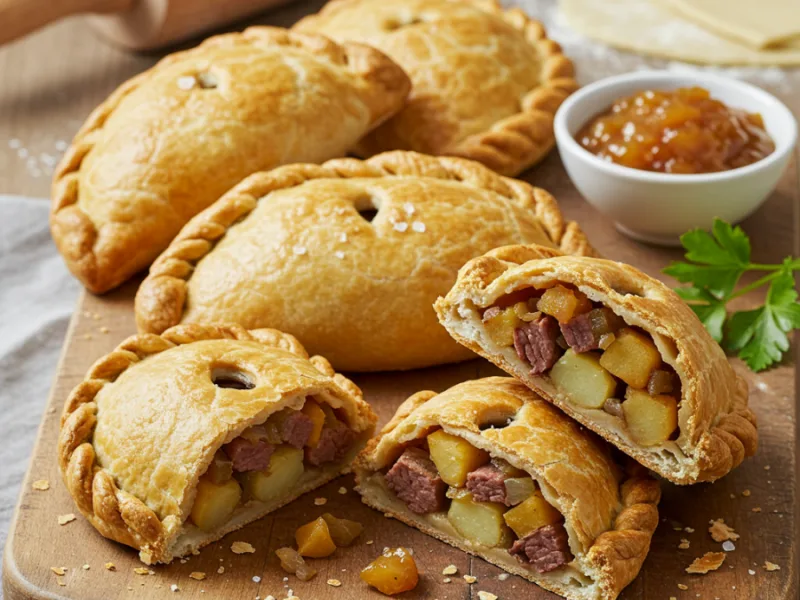
Base recipe: 4 large pasties
Your kitchen companion
Ingredients
Check off ingredients as you prepare them.
Follow the steps at your own pace.
Method
Making the pastry:
In a large bowl, combine the flour and salt. Add the cubed butter and lard, then rub the fats into the flour using your fingers until the mixture resembles breadcrumbs.
Gradually add the cold water, mixing with a spoon or your hands until a dough forms.
Knead the dough briefly, just until smooth. Wrap in cling film and refrigerate for at least 30 minutes.
Preparing the filling:
Finely dice the beef, potatoes, swede, and onion.
Place all ingredients in a bowl, add salt, pepper, and flour, and mix well.
Assembling the pasties:
Preheat the oven to 200°C (400°F). Line a baking tray with parchment paper.
Roll out the chilled dough on a floured surface to about 3 mm (⅛ inch) thick. Cut out circles approximately 20 cm (8 inches) in diameter.
Divide the filling evenly between the pastry circles, placing it slightly off-center.
Add a few small cubes of butter on top of the filling.
Brush the edges of the pastry with beaten egg, then fold over the dough to form a semi-circle.
Press the edges together and crimp them to seal. Place on the prepared baking tray.
Brush the tops with more egg wash for a golden finish.
Baking:
Bake in the preheated oven for 45 minutes, or until golden brown and crisp.
Allow to cool slightly before serving.
Extra technique, safety notes and details when you want to go deeper.
More tips & details
Traditional Handcrafted Cornish Pasties – A Taste of Britain’s Heritage
The Origins and History of Cornish Pasties
The Cornish pasty is one of Britain’s most iconic traditional dishes, deeply rooted in the history of Cornwall. With its signature golden, flaky crust and hearty, flavorful filling, this handheld delight has been enjoyed for centuries. Originating as a practical meal for Cornish tin miners, the pasty was designed to be a portable and satisfying lunch that could be eaten without utensils. The thick crimped edge allowed miners to hold the pasty with dirty hands, discarding the crust after consuming the warm, comforting filling.
As time passed, Cornish pasties evolved beyond the mines and became a beloved British classic, enjoyed in homes, bakeries, and pubs across the UK. Today, the authentic Cornish pasty remains a protected regional dish, meaning that only pasties made in Cornwall using traditional methods can carry the official name.
The Perfect Cornish Pasty Crust – Golden, Buttery, and Flaky
One of the defining characteristics of a true Cornish pasty is its sturdy yet tender pastry crust. Unlike puff pastry or shortcrust, this dough is specially crafted to be strong enough to hold the filling while remaining delicately flaky and buttery. The combination of flour, butter, lard, salt, and water creates a perfectly balanced texture that crisps up beautifully in the oven.
The crimping technique is also essential. Traditional Cornish pasties feature a distinct hand-crimped edge, sealing in the juicy and savory filling while providing the pasty with its recognizable crescent shape. The art of crimping is considered a sign of craftsmanship, ensuring that each pasty is securely closed and bakes evenly.
Classic Cornish Pasty Filling – A Hearty, Flavorful Combination
A genuine Cornish pasty contains a simple yet incredibly flavorful combination of ingredients, each carefully layered to ensure proper cooking. The filling consists of thinly sliced beef, potatoes, swede (rutabaga), and onions, all seasoned with salt and black pepper. Unlike other meat pies, Cornish pasties do not require gravy or additional sauces, as the natural juices from the meat and vegetables create a rich and succulent texture when baked inside the sealed pastry.
One of the unique aspects of a traditional Cornish pasty is that the ingredients are added to the pastry raw, allowing them to cook together in the oven. This slow baking process ensures that the flavors meld perfectly, producing a tender and aromatic filling encased in a golden, crispy crust.
Why Cornish Pasties Are the Ultimate Comfort Food
Few dishes offer the same warming, nostalgic satisfaction as a well-made Cornish pasty. Whether enjoyed fresh from the oven, slightly cooled for a picnic, or reheated for a quick meal, it provides a hearty, comforting bite in every mouthful. The combination of buttery pastry, tender meat, and perfectly cooked vegetables makes it a wholesome and deeply satisfying meal for any occasion.
Cornish pasties are also incredibly versatile. While the traditional recipe remains the gold standard, variations with cheese, chicken, or vegetarian fillings have gained popularity, catering to different preferences while maintaining the classic texture and flavor.
How to Serve and Enjoy an Authentic Cornish Pasty
The best way to experience a Cornish pasty is to enjoy it warm, straight from the oven, allowing the aromatic filling and crisp pastry to shine. Traditionally, pasties are served on their own, but they can also be paired with a fresh salad, a dollop of tangy relish, or a mug of hot tea for a more complete meal.
For an authentic experience, Cornish pasties should be eaten by hand, just as they were intended. The hearty structure of the crust makes them easy to hold and enjoy without the need for cutlery, making them an ideal on-the-go meal for busy days, road trips, or outdoor gatherings.
Bringing a Taste of Cornwall to Your Kitchen
Making your own homemade Cornish pasties is a rewarding experience that allows you to appreciate the traditional craftsmanship behind this British classic. With just a few simple ingredients and the right technique, you can create perfectly crimped pasties that capture the authentic flavors of Cornwall.
Whether you’re looking for a classic British dish to try at home or a comforting, hand-held meal that satisfies every craving, the Cornish pasty is a timeless favorite that continues to bring warmth and tradition to every bite.
Enhancing the Traditional Cornish Pasty for a Superior Taste
Adjusting the Pastry for a Better Texture
One of the key elements of a great Cornish pasty is its pastry crust, which should be both sturdy and flaky. While the traditional recipe uses a mix of butter and lard, there are a few ways to improve the texture and flavor of the pastry:
- Using all-butter pastry: Replacing lard with butter results in a richer, more flavorful crust. The butter enhances the crispness and creates a deeper golden color when baked.
- Incorporating egg into the dough: Adding one egg yolk to the pastry increases its elasticity and richness, making it easier to work with and slightly more delicate when baked.
- Chilling the dough longer: While 30 minutes is enough for the dough to rest, allowing it to chill for at least an hour results in a flakier, more tender texture. This prevents shrinkage during baking and enhances the overall quality of the crust.
Experimenting with the Filling for More Depth of Flavor
The traditional Cornish pasty filling is a simple combination of beef, potatoes, swede, and onions, but small adjustments can significantly enhance the flavor.
- Adding fresh herbs: While pasties are typically seasoned with just salt and pepper, incorporating fresh thyme, rosemary, or parsley into the filling can add a subtle depth of flavor without overpowering the dish.
- Using caramelized onions: Instead of using raw onions, lightly caramelizing them before adding them to the pasty can introduce a natural sweetness and umami complexity to balance the richness of the meat.
- Choosing the right cut of beef: Beef skirt is the traditional choice due to its tender texture and rich flavor, but substituting it with chuck steak or short rib can add more juiciness and depth, especially if cooked for a longer period.
- Marinating the meat: Letting the diced beef rest in a light marinade of Worcestershire sauce and black pepper for 30 minutes before assembling the pasty can intensify the flavor and tenderness.
The Benefits of Making Cornish Pasties at Home
Homemade Cornish pasties offer several advantages over store-bought or pre-packaged versions.
- Control over ingredients: When making pasties at home, you can select high-quality meats, organic vegetables, and fresh herbs, ensuring a healthier and more flavorful outcome.
- No artificial preservatives: Many commercially produced pasties contain preservatives, stabilizers, and artificial flavors that can compromise the authentic taste. Homemade versions stay true to tradition without unnecessary additives.
- Customization to dietary needs: Preparing pasties from scratch allows for adaptations based on personal preferences, whether it's reducing salt, using leaner meats, or creating a vegetarian version.
- Better pastry texture: Homemade pastry tends to be flakier and more delicate than mass-produced versions, which are often made with industrial processes that sacrifice texture for efficiency.
Common Mistakes to Avoid When Making Cornish Pasties
Even experienced bakers can encounter pitfalls when preparing Cornish pasties. Here are some frequent mistakes and how to avoid them:
- Overworking the pastry: Kneading the dough too much can result in a tough, chewy crust. It’s important to mix just until combined and allow it to rest adequately.
- Using too much filling: Overstuffing the pasties can cause the pastry to tear and the filling to leak during baking. The ideal amount ensures that the pasty remains intact while still being generously filled.
- Not sealing the edges properly: A weak crimp or insufficient sealing may lead to the pasty opening in the oven, causing juices to escape. Using a firm hand-crimping technique ensures that the edges stay intact.
- Skipping the egg wash: An egg wash not only enhances the golden brown color but also helps create a crisp outer layer. Without it, the pastry may appear pale and dry.
- Baking at the wrong temperature: Too low a temperature results in a soggy pastry, while too high can burn the edges before the filling is fully cooked. The ideal baking temperature is 200°C (400°F) for a perfect balance.
Healthier Variations and Ingredient Substitutions
For those looking to make a lighter or healthier version of Cornish pasties, a few modifications can be made without sacrificing flavor.
- Using whole wheat flour: Replacing half of the plain flour with whole wheat flour increases fiber content while adding a slightly nutty flavor to the pastry.
- Choosing leaner meats: Opting for lean beef cuts or even ground turkey can reduce saturated fat while still maintaining a meaty, satisfying filling.
- Reducing the butter and lard: A mix of Greek yogurt and a small amount of olive oil can be used in place of some of the butter and lard, providing a healthier pastry option.
- Incorporating more vegetables: Adding mushrooms, leeks, or bell peppers enhances the flavor profile while boosting vitamin and mineral content.
- Trying plant-based alternatives: A filling made from lentils, mushrooms, and walnuts can replicate the savory, umami depth of beef, making it an excellent option for vegetarians.
Small Tweaks That Can Elevate the Cornish Pasty Experience
Even minor adjustments in technique and ingredient pairing can make a difference in how Cornish pasties turn out.
- Using high-quality butter: European-style high-fat butter (82% fat content) results in a flakier, more flavorful crust.
- Adding a hint of mustard powder: A small pinch of mustard powder in the filling enhances the savory notes without making the pasty spicy.
- Baking on a preheated tray: Placing pasties on a hot baking sheet helps them develop a crisp base, preventing sogginess.
- Resting the pasties before serving: Allowing pasties to rest for 10 minutes after baking lets the juices redistribute, preventing a runny filling when cut.
These small but effective improvements ensure that the Cornish pasty retains its traditional charm while offering an enhanced flavor, texture, and nutritional profile.
Recivelle · /recipe/authentic-british-cornish-pasties