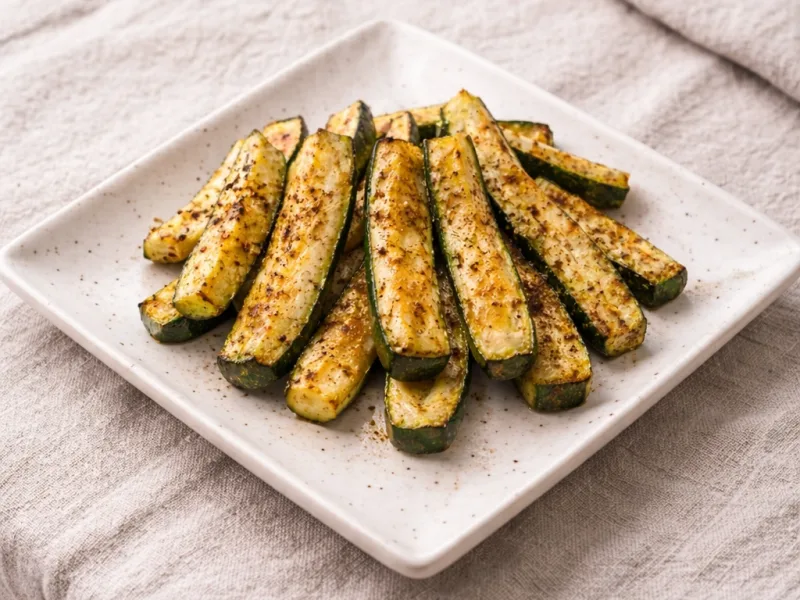
Base recipe: 3 cups (400 g) cooked zucchini
Your kitchen companion
Ingredients
Check off ingredients as you prepare them.
Follow the steps at your own pace.
Method
Wash and trim zucchini: Rinse the zucchini under cold water, pat dry, and trim off both ends to remove tough stem sections.
Cut zucchini evenly: Slice the zucchini into uniform batons about 2.5–3 in long and ⅓ in thick to ensure even heat exposure.
Season zucchini: Place the zucchini in a bowl and add olive oil (1 tbsp / 15 ml), fine sea salt (3 g), garlic powder (2 g), sweet paprika powder (2 g), and black pepper (1 g). Toss until all surfaces are evenly coated and lightly glossy.
Preheat air fryer: Set the air fryer to 190 °C (375 °F) using air-fry or convection mode. Allow it to fully preheat for stable heat circulation.
Arrange in basket: Place the seasoned zucchini in a single layer in the center of a standard air fryer basket (5–6 L capacity). Avoid overlapping to prevent steaming.
Air fry zucchini: Cook for 10 minutes, shaking the basket once after 5 minutes. The zucchini should show lightly golden edges and feel tender when pressed.
Finish with lemon juice: Transfer the zucchini to a plate and immediately drizzle with fresh lemon juice (2 tsp / 10 ml) to brighten flavor without adding moisture during cooking.
Rest before serving: Let the zucchini rest for 2 minutes so excess steam can escape, helping the surface stay dry and lightly crisp.
Extra technique, safety notes and details when you want to go deeper.
More tips & details
Controlling moisture for crisp zucchini in the air fryer
Dry surface, crisp edges, and stable texture
Achieving air fryer vegetables crispy results requires precise moisture management, and this variation applies strict control to prevent surface liquid from softening the final texture. The focus remains on dry surface development and consistent edge browning. Since zucchini naturally possesses a high water content, the method is calibrated to limit steaming and encourage rapid evaporation. When executed correctly, the exterior develops light golden blisters while the interior stays tender without collapsing.
Even browning without soggy spots
A common failure point is uneven exposure to circulating heat, which results in undesirable soft patches. This preparation addresses that by ensuring proper separation between pieces, allowing heated air to move freely around every surface. As moisture evaporates, the exterior firms and begins to caramelize. You will recognize the ideal stage when the edges offer slight resistance to pressure while the center remains yielding. This balance is essential for crispy zucchini in air fryer conditions, avoiding the pitfall of overcooked dryness.
When a firmer, drier crunch is preferred
Zucchini naturally offers a softer bite compared to other vegetables, even when perfectly crisped. If a more pronounced, rigid crunch is desired, crispy air fryer broccoli provides an excellent technical comparison. The lower moisture content of broccoli allows for a drier, sturdier exterior. However, this zucchini preparation is superior when seeking a tender-crisp contrast, making it an ideal component for lighter, vegetable-forward side dishes.
Flavor stays clean with controlled finishing
Because the surface is not saturated by excess oil or moisture, seasonings adhere lightly and maintain their distinct profiles. The garlic component develops a mellow roasted character rather than a sharp, pungent aroma. A precise finish after the cooking cycle preserves this culinary clarity. The result is a preparation where the natural vegetable flavor remains the protagonist, enhanced rather than overwhelmed by the spices. The texture and aroma remain stable for a narrow serving window before residual steam begins to soften the surface.
Chef PEKIS recommendations
Space pieces evenly in the basket to prevent trapped steam, which is the primary cause of soft surfaces. Avoid increasing the oil to force browning, as excess fat can act as a barrier to proper evaporation. Always allow a 2-minute rest after cooking to let residual steam escape; bypassing this step causes moisture to migrate back to the surface immediately.
Best served fresh, not held or reheated
This specific preparation is not suited for storage or advance assembly. As the zucchini temperature drops, internal moisture redistributes to the surface, neutralizing the crisp edges and creating a soft exterior. For the best sensory experience, serve the batons immediately following the brief resting phase.
Best served straight from the plate
The first forkful sets expectations quickly. This is Air Fryer Zucchini, a dry-cooked version without breading, where the surface gives a faint resistance before yielding. The edges carry a light firmness, while the centers stay supple and moist. When eaten warm, the contrast is clear and stable, without any oiliness pooling on the plate. The aroma stays mild and vegetal, making it easy to place alongside other dishes without dominating them.
On the table, it works best when nothing competes for attention. Served alone or next to simply prepared proteins, the zucchini holds its form and color, with a clean finish that does not linger heavily on the palate. The texture stays consistent for a short window, so there is no rush, but it rewards being eaten while the surface still feels dry to the touch and the interior remains steamy.
Fits easily into everyday meals
This dish slides naturally into weekday meals where balance matters more than abundance. It can replace heavier sides without feeling like a compromise, especially when the rest of the plate leans rich or salty. The zucchini brings structure rather than softness, which keeps the meal feeling composed rather than loose or mixed.
At casual gatherings, it serves well as a shared vegetable in the center of the table. The pieces separate easily, hold up under serving utensils, and do not collapse as they cool slightly. That stability makes it practical when people eat at different paces. The final impression is defined by a lightly crisp surface and a clean, warm finish that stays pleasant through the meal rather than fading or turning dull.
Questions
Is Air Fryer Zucchini suitable for a vegan diet?
Air Fryer Zucchini is vegan because the ingredient set contains only vegetables, oil, spices, and acid with no animal-derived components. Texture and browning rely on surface dehydration and oil-assisted heat transfer rather than proteins or dairy fats. The result is a clean, plant-based side with tender bite and light crisping that behaves consistently across batches. No functional substitutions are required for vegan use.
Why does air fryer zucchini sometimes turn soft instead of crisp?
Soft zucchini results when excess moisture remains trapped during or after cooking. High water content releases steam, which recondenses on the surface if pieces overlap or are stacked hot. Proper spacing allows evaporation, creating a thin dry layer that limits further moisture loss. Brief resting uncovered finishes the process, keeping the surface lightly firm instead of wet.
Can Air Fryer Zucchini be cooked ahead for dinner service?
Advance cooking reduces surface definition because cooled zucchini reabsorbs released moisture. As temperature drops, internal steam condenses and migrates outward, softening the exterior. Reheating restores warmth but not original texture. For best mouthfeel and aroma, cook close to serving time and allow only a short holding period at room temperature.
What cut size keeps zucchini from collapsing in the air fryer?
Structural collapse happens when pieces are too thin to retain internal moisture balance. Thicker batons maintain a stable interior while the surface dries, creating contrast instead of limp texture. Even sizing also ensures uniform heat exposure, preventing some pieces from overcooking while others remain pale. Consistent cuts produce predictable firmness and clean bite.
Does Air Fryer Zucchini work without oil?
Oil-free cooking reduces browning and increases surface dehydration speed, often leading to leathery texture. A small amount of oil slows moisture loss at the surface while improving heat conduction, allowing interior softening before exterior drying completes. The result is smoother mouthfeel, better color development, and more stable texture across the batch.
Why does Air Fryer Zucchini taste flat after cooling?
Flavor dullness after cooling comes from reduced aroma volatility and muted salt perception at lower temperatures. As the dish cools, aromatic compounds dissipate and acidity becomes less pronounced. Serving hot or warm preserves brightness and savory balance. Finishing with acid after cooking helps maintain flavor clarity during the short serving window.
Recivelle · /recipe/air-fryer-zucchini-easy-and-flavorful-side-dish