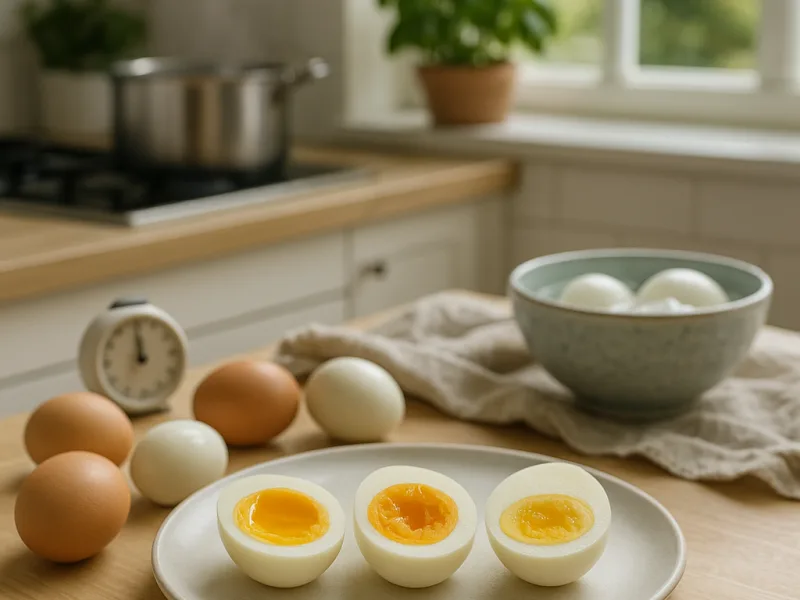
Understanding the Science Behind Boiling Eggs
Boiling eggs may seem simple, but perfectly boiled eggs require precision and an understanding of the cooking process. When you heat an egg, the proteins in the egg white and yolk coagulate at different temperatures. Managing these temperatures ensures that your eggs achieve the desired consistency without becoming rubbery or undercooked.
Why Perfectly Boiled Eggs Matter
The texture and flavor of eggs greatly depend on boiling time. A soft-boiled egg with a runny yolk offers a rich, velvety texture ideal for dipping toast, while a hard-boiled egg is perfect for salads, snacks, and deviled eggs. Knowing how long to boil eggs empowers you to consistently enjoy your preferred style.
How to Prepare Eggs Before Boiling
Choosing the Right Eggs
- Fresh eggs are ideal for soft-boiled eggs.
- Slightly older eggs (7-10 days) peel easier when hard-boiled.
Bringing Eggs to Room Temperature
Allowing eggs to sit at room temperature for about 15-20 minutes reduces the risk of cracking and promotes even cooking.
Tools You Will Need
- A medium or large saucepan
- Cold water
- Slotted spoon
- Timer
- Ice bath (ice and cold water)
Tips for Success
- Use enough water to cover the eggs by at least one inch.
- Start with cold water to control the rate of heating.
- Gentle boiling prevents cracks and overcooked whites.
Step-by-Step Guide: How Long to Boil Eggs for Perfect Results
Soft-Boiled Eggs
4 to 5 Minutes: Soft, Runny Yolks
- Place eggs in a saucepan and cover with cold water.
- Bring water to a gentle boil.
- Start the timer: 4 minutes for very runny yolks, 5 minutes for slightly more set yolks.
- Remove eggs promptly and transfer to an ice bath for about 1-2 minutes.
Medium-Boiled Eggs
7 to 8 Minutes: Slightly Set Yolks
- Place eggs in cold water and bring to a gentle boil.
- Start the timer: 7 minutes for a jammy yolk, 8 minutes for a more set but still creamy center.
- Transfer immediately to an ice bath.
Hard-Boiled Eggs
10 to 12 Minutes: Fully Set Yolks
- Begin with cold water and bring to a boil.
- Timer: 10 minutes for tender yolks, 12 minutes for very firm yolks.
- Cool in an ice bath for at least 5 minutes.
Common Mistakes and How to Avoid Them
Overcooking
Overcooked eggs have grayish-green yolks and rubbery whites. This occurs when eggs cook too long or at too high a temperature. Stick to the recommended times.
Undercooking
If you remove eggs too early, you might end up with watery whites. Always start timing once the water reaches a gentle boil.
Cracked Shells
Starting eggs in hot water can cause cracking. Always begin with cold water and heat gradually.
How to Peel Boiled Eggs Easily
Ice Bath Method
An ice bath stops the cooking process and helps create a gap between the egg white and shell.
Rolling Technique
Gently roll the egg on a hard surface to loosen the shell before peeling.
Peeling Under Water
Peeling eggs under running water can help remove stubborn bits of shell.
Nutritional Benefits of Boiled Eggs
Rich in High-Quality Protein
Each boiled egg contains about 6 grams of protein, essential for muscle repair and overall health.
Packed with Vitamins and Minerals
- Vitamin A: Supports eye health.
- Vitamin D: Enhances calcium absorption.
- Vitamin B12: Promotes red blood cell production.
- Choline: Crucial for brain development.
Low in Calories
A single large boiled egg has approximately 70-80 calories, making it an ideal snack or meal addition.
Heart Health Benefits
Boiled eggs are rich in good fats and can help increase levels of HDL (good cholesterol).
Creative Ways to Use Boiled Eggs
Breakfast Options
- Top toast with a sliced soft-boiled egg.
- Add to breakfast bowls for extra protein.
Lunch and Dinner Ideas
- Chop into salads for a nutrient boost.
- Use in sandwiches or wraps.
Snack Ideas
- Enjoy seasoned deviled eggs.
- Prepare simple egg salad.
Storage Tips for Boiled Eggs
Refrigeration
Store boiled eggs in the refrigerator within two hours of cooking. Keep them in their shells for up to one week.
Freezing
Freezing boiled eggs is not recommended, as the texture of the whites becomes rubbery.
Variations for Boiling Eggs
Boiling with Baking Soda
Adding a teaspoon of baking soda to the boiling water can make peeling easier by loosening the shell membrane.
Steaming Eggs
Steaming eggs for about the same times as boiling can also yield easy-to-peel results and even cooking.
Instant Pot Method
Pressure cooking eggs (5-5-5 method: 5 minutes cook, 5 minutes natural release, 5 minutes ice bath) provides consistent results.
Troubleshooting Guide: How to Fix Common Boiling Problems
Gray or Green Yolks
Caused by overcooking. Use a timer and an ice bath immediately after cooking.
Hard-to-Peel Eggs
Use older eggs or try steaming for easier peeling.
Cracks During Cooking
Starting with cold water and gentle heating reduces cracks.
Final Tips for Perfect Boiled Eggs Every Time
Consistency is Key
Always use the same size eggs (e.g., large) and adjust cooking times accordingly.
Altitude Adjustments
At higher altitudes, water boils at a lower temperature, so increase cooking times by 1-2 minutes.
Use a Timer
Precision matters; never guess the cooking time.
Frequently Asked Questions About Boiling Eggs
How Do I Know When Boiled Eggs Are Done?
Rely on timing rather than appearance. If you are unsure, spin the egg: hard-boiled eggs spin smoothly, while soft-boiled eggs wobble.
Can You Overcook a Boiled Egg?
Yes, overcooking causes the yolk to turn gray-green and affects the taste and texture.
How Long to Boil Eggs from the Fridge?
If using cold eggs, add an extra minute to the boiling time.
Is It Better to Peel Boiled Eggs Hot or Cold?
Peeling is easier after cooling in an ice bath.
How Long Do Boiled Eggs Last in the Refrigerator?
Properly stored boiled eggs last up to seven days.
Should I Salt the Water When Boiling Eggs?
Salting the water is not necessary, but it may help prevent cracks by making the shells a little tougher.