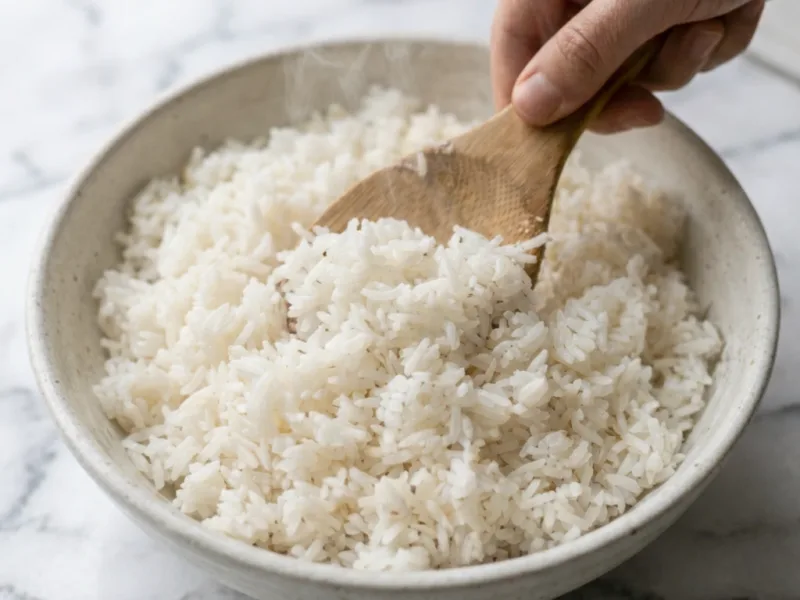
Precise control of water, heat, and starch behavior
To master how to cook rice perfectly every time, one must maintain precise control over hydration levels, water-to-grain ratios, and thermal application. These variables ensure that grains cook uniformly, achieving a tender internal structure without undergoing physical breakdown or retaining excess surface moisture.
While rice is a foundational staple in global cuisine, producing consistently fluffy rice with distinct grain separation depends on a technical understanding of its physical and chemical properties. Common procedural errors typically result in undesirable outcomes such as persistent stickiness, uneven texture, or waterlogged grains.
This article establishes a comprehensive technical framework for how to cook rice perfectly every time, detailing grain selection, hydration ratios, cooking methods, and professional troubleshooting. Each section explains the specific cause-and-effect relationships that dictate final texture and consistency.
Understanding Rice Structure and Texture Formation
Amylose and amylopectin impact on grain separation
The final texture of rice is primarily governed by its starch profile, specifically the ratio of amylose to amylopectin. High-amylose varieties yield firm, distinct grains that resist clumping, whereas varieties with higher amylopectin levels develop a softer, significantly more adhesive texture.
During the cooking process, heat triggers starch gelatinization, causing the granules to absorb water and expand. Maintaining a controlled thermal environment allows these grains to soften thoroughly without rupturing, which is the essential requirement for producing a light, aerated texture rather than a dense, congealed mass.
Differences between long-grain and short-grain rice
Long-grain varieties, such as basmati and jasmine, tend to remain separate due to their linear starch structure. In contrast, short-grain rice releases a higher concentration of surface starch during the cooking cycle, which increases inter-grain adhesion and creates a characteristic "sticky" quality.
Selecting the appropriate variety is the foundational step in how to cook rice perfectly every time, as each type demands a specific approach to handling and moisture levels to reach its ideal state.
Water Ratios and Measurement Accuracy
Standard ratios for different rice types
The water-to-rice ratio is the primary determinant of final moisture content and grain integrity. To achieve how to cook rice perfectly every time, utilize these standardized benchmarks based on a 200g base measurement:
- Long-grain white rice: Approx. 1 cup (200g) rice to 1 2/3 cups (400 ml) water
- Basmati rice: Approx. 1 cup (200g) rice to 1 1/3 cups (320 ml) water
- Jasmine rice: Approx. 1 cup (200g) rice to 1 1/3–1 2/3 cups (320–400 ml) water
- Brown rice: Approx. 1 cup (200g) rice to 2–2 1/4 cups (480–540 ml) water
Excessive water results in structural collapse and clumping, while insufficient water leaves the grain centers hard and chalky. Precise measurement ensures balanced hydration and repeatable quality across every batch.
Volume versus weight measurement
While volume-based measurements are standard in most home kitchens, weight-based measurement (using grams) significantly improves precision. Weighing ingredients eliminates the variability caused by air pockets and differences in grain packing density between different brands or bags.
Maintaining a consistent measurement protocol is essential for effectively scaling recipes or ensuring reliable results when repeating a successful cooking process.
Core Cooking Method for Fluffy Rice
Absorption method step control
The absorption method is considered the most reliable technique for how to cook rice perfectly every time. In this process, rice is simmered in a measured volume of liquid until the water is fully absorbed, which protects the delicate integrity of the starch granules.
The procedure begins by combining the rice and water, reaching a boil, and immediately reducing the heat to a low simmer. This rapid heat reduction prevents excessive evaporation, allowing for a gradual, deep internal hydration of the individual grains.
Lid control and resting phase
A tightly sealed lid is necessary to trap steam and maintain a stable, pressurized thermal environment. Removing the lid during the active cooking phase disrupts the moisture balance and lowers the internal temperature, which often leads to unevenly cooked results.
Once the heat source is deactivated, the rice must undergo a resting phase for 5–10 minutes. This period allows the remaining internal moisture to redistribute and stabilizes the grain structure, which is critical for achieving professional grain separation and a superior final texture.
Rinsing and Pre-Treatment Techniques
Removing surface starch for better separation
Rinsing rice in cold water effectively strips away the excess surface starch that causes grains to stick together during cooking. This step is a prerequisite for achieving fluffy rice, particularly when working with premium long-grain varieties.
One should rinse the rice until the water transitions from cloudy to clear, ensuring minimal starch residue remains. Incomplete rinsing often leads to a sticky, gelatinous film forming on the exterior of the cooked grains.
Soaking and hydration efficiency
Soaking rice for 15–30 minutes pre-hydrates the grains, promoting more uniform heat transfer throughout the cooking cycle. This is especially advantageous for basmati rice, as soaking encourages significant grain elongation and results in a more delicate, elegant texture.
Pre-soaked grains typically require a slightly shorter cooking duration; adjusting for this improves consistency and prevents the grains from becoming over-gelatinized or mushy.
Cooking Methods Compared for Different Use Cases
Stovetop versus rice cooker performance
The stovetop method provides the cook with direct manual control over thermal intensity and timing, offering high flexibility for different recipes. However, it requires a high degree of attention and a consistent heat source to avoid localized burning or undercooking.
An automatic rice cooker utilizes precise thermal sensors to manage the transition from cooking to warming once the water is fully absorbed. This technology enhances repeatability and provides a convenient, low-effort path to consistent results for daily preparation.
Alternative methods and batch cooking
Techniques such as oven-baking or steaming utilize indirect heat and are particularly effective for large-scale batch cooking. These methods minimize the risk of scorched bottoms but require adjusted water ratios and extended cooking times to account for lower evaporation rates.
The choice of method should be dictated by the required volume, available hardware, and the specific level of textural control desired for the final dish.
Optimization Strategies for Consistent Results
Enhancing grain separation and texture
Incorporating a small amount of neutral oil or butter can lightly coat the grains, further inhibiting adhesion. This technique is frequently utilized in professional environments to improve the "mouthfeel" and ensure each grain remains distinct.
Once the resting phase is complete, fluffing rice with a fork separates the grains without crushing them. Avoid stirring the rice during the active cooking phase, as mechanical agitation releases excess starch and inevitably causes clumping.
Improving consistency across batches
Using a heavy-bottomed pot provides superior heat distribution and helps prevent localized hot spots that can lead to uneven cooking. Documenting and repeating exact ratios and timing is the most effective way to ensure consistent execution over time.
When scaling recipes for larger groups, proportional adjustments to water are necessary, alongside a slightly longer resting period to ensure uniform moisture stabilization throughout the larger mass of rice.
Common Mistakes and How to Fix Them
Excess moisture and mushy texture
Oversaturating the rice or extending the cooking time beyond the point of full absorption causes the grains to break and release internal starches. Adhering to strict timing and ratio guidelines is the best prevention for a mushy outcome.
If the rice appears overly wet at the end of the cycle, removing the lid for a few moments to allow excess steam to escape can help dry the surface and partially restore textural integrity.
Undercooked or uneven grains
Insufficient hydration or heat fluctuations can lead to grains with hard, chalky centers. If this occurs, adding a small volume of boiling water and continuing the simmer on the lowest setting can often correct the moisture deficit without ruining the batch.
Frequent lid removal is a common cause of unevenness, as it allows necessary steam to escape. Maintaining a sealed environment throughout the process is vital for success.
Practical Applications and Adaptation
Using fluffy rice in different dishes
Perfectly cooked, distinct grains are essential for side dishes, pilaf, and fried rice. High-quality rice should be able to absorb the flavors of sauces and seasonings without losing its structural form or becoming overly soft.
For applications like fried rice, cooling the grains completely before use is recommended. This reduces surface moisture and ensures the grains remain separate and firm during the secondary high-heat cooking process.
Adapting to environment and conditions
Higher altitudes lower the boiling point of water, which may necessitate longer cooking durations to ensure full starch conversion. Additionally, the mineral content of local water can impact texture, sometimes requiring minor adjustments to the water-to-grain ratio.
Recognizing these environmental variables is key to maintaining mastery over rice cooking in any location or kitchen setup.
Scientific and Cultural Context of Rice Cooking
Traditional methods and regional practices
Global culinary traditions have developed specialized methods based on local rice varieties and available tools. While the absorption method is standard for long-grain varieties, steaming is often the preferred technique in regions where sticky rice or glutinous varieties are the staple.
These regional techniques represent centuries of practical adaptation to specific grain chemistries and cultural preferences for final texture.
Scientific principles behind consistent results
Reliable rice cooking is a function of starch gelatinization, moisture diffusion, and heat transfer. Controlled hydration ensures that each grain expands to its maximum volume without losing its physical boundaries or structural definition.
By mastering these scientific principles, cooks can achieve precise results and consistent execution in both domestic and professional kitchen environments.