Understanding timing, texture control, and practical cooking methods
Lentil cooking time determines the precise balance between structural integrity and tenderness, which dictates how the pulse performs in various culinary applications. This guide details exactly how long to cook lentils, why durations vary by variety, and how to achieve uniform results without guesswork.
Improper preparation often leads to an uneven texture, where some grains remain firm while others disintegrate. Controlling heat intensity, duration, and the water-to-lentil ratio ensures consistent hydration and predictable outcomes across all common varieties.
This comprehensive reference provides exact timings, method comparisons, and optimization strategies for brown, green, red, and yellow lentils. It serves as a definitive resource for both everyday home cooking and professional kitchen workflows.
Types of Lentils and Their Structural Differences
Lentils vary in skin thickness and starch composition, which dictates their water absorption rate and softening behavior. Whole varieties, such as brown and green lentils, feature an intact outer hull that allows the grains to maintain their shape during the cooking process.
Split lentils, including red and yellow varieties, cook significantly faster because their protective outer layer has been removed. This lack of a hull allows for rapid water absorption and a natural breakdown into a soft, creamy consistency.
Understanding these structural differences is essential when selecting a variety for a specific recipe. Dishes requiring a distinct bite depend on whole lentils, while creamy preparations rely on the fast-disintegrating split varieties.
Exact Lentil Cooking Time by Variety
The ideal lentil cooking time is determined by the specific variety and the target texture. For high-quality results, it is best to simmer the grains gently rather than using an aggressive, rolling boil.
Brown lentils typically require 20–30 minutes to become tender while remaining structurally intact. Green lentils generally take 25–35 minutes due to their denser composition; they are the preferred choice for salads and side dishes where shape retention is paramount.
Red lentils cook in 10–15 minutes, quickly softening into a smooth, thick consistency. Yellow lentils follow a similar range of 12–18 minutes, with slight variations depending on the age and size of the grain.
These durations reflect standard stovetop preparation without prior soaking. Exceeding these ranges will lead to excessive softening or the complete loss of structural integrity.
Preparation Techniques for Even Cooking
Rinsing lentils under cold water removes surface starch and debris. This step improves the clarity of the cooking liquid and prevents excessive foaming during the simmering process.
Sorting through the grains ensures uniform size and removes any impurities or small stones. A consistent grain size is necessary to achieve a uniform texture throughout the entire batch.
The standard ratio is 1 cup (240 ml) of lentils to 3 cups (710 ml) of water. Bringing the water to a boil before reducing to a simmer stabilizes the hydration process and ensures controlled heat application.
Cooking Methods and Time Variations
Stovetop simmering
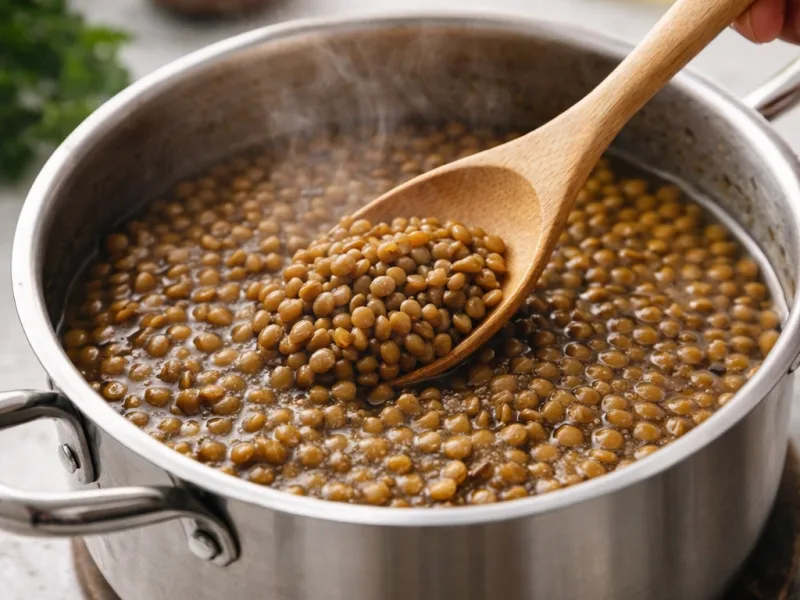
Simmering on the stovetop offers the highest level of control over the final texture. Maintaining a steady, gentle heat allows for gradual hydration, ensuring the center of the grain softens at the same rate as the exterior.
Pressure cooking
Using a pressure cooker significantly reduces total cooking time. Brown and green lentils reach a soft state in 8–12 minutes, while red lentils require only 3–5 minutes under high pressure.
Slow cooking
A slow cooker extends the process to 2–4 hours. This long-duration method produces a very soft texture, making it ideal for stews, dals, and dishes intended for blending or puréeing.
Factors That Influence Lentil Cooking Time
Water quality impacts how quickly pulses soften. The minerals in hard water can interact with the lentil's cell walls, slowing down the cooking process. Using filtered or softened water ensures more consistent timing.
The addition of salt or acidic ingredients, such as tomatoes and vinegar, can toughen the skin and delay softening if added too early. These should be introduced only after the lentils have reached the desired tenderness.
The age of the lentils also plays a critical role. Older pulses lose internal moisture over time, becoming denser and requiring longer durations to fully hydrate and soften.
Comparing Lentil Types for Different Uses
Brown and green lentils are the standard choice for recipes requiring a defined structure. They offer a firm yet tender bite that works well in grain bowls, warm salads, and hearty side dishes.
Red and yellow lentils are better suited for soups, sauces, and traditional dals. Their rapid breakdown creates a naturally thick, creamy base without the need for additional thickening agents.
Selecting the appropriate variety based on the intended use reduces the need for corrective measures and ensures the final dish achieves the correct consistency.
Optimization Strategies for Consistent Results
Maintaining a gentle simmer prevents the outer skins from splitting prematurely. This ensures the lentils remain whole and uniform in texture.
Stirring the pot occasionally helps distribute heat evenly and prevents the grains from sticking to the bottom. Constant heat exposure is essential for predictable results.
Using a partial lid helps regulate the evaporation of the cooking liquid while stabilizing the internal temperature. This practice improves the repeatability of the recipe in any kitchen environment.
Common Mistakes and Corrective Actions
Overcooking results in mushy, disintegrated lentils, which is a common issue with red varieties. Closely monitoring the texture as the timer nears completion prevents this outcome.
Undercooking leaves the lentils with a gritty or firm center. This is easily corrected by extending the simmering time in 5-minute increments until the desired softness is reached.
Adding salt too early can harden the exterior and significantly increase the total time. Seasoning should occur only after the lentils are fully cooked and tender.
Using insufficient water can lead to uneven hydration and scorched grains. Adhering to the recommended ratio ensures there is enough liquid for the lentils to expand and soften fully.
Practical Applications and Workflow Integration
Cooked lentils are highly versatile, appearing in everything from chilled salads to hot stews. The final texture should always be calibrated to the specific requirements of the dish.
For batch cooking or meal prep, lentils should be removed from the heat when they are just slightly underdone. This allows for carryover cooking and prevents them from becoming mushy during storage.
Lentils can be blended into high-protein spreads or sauces. For these applications, extending the cooking time slightly beyond the standard range ensures a completely smooth, velvety finish.