Operational Strategy and Technical Snippet
To cook cauliflower using the best methods and expert techniques, the secret is controlling the transition from internal moisture retention to external surface dehydration. I see beginners fail daily because they treat cauliflower like a sponge rather than a structure. Most home cooks produce a gray, swampy mess because they trap steam and apply timid, low-intensity heat. You must listen for the shift in the pan; a sharp sizzling sound within the first sixty seconds is your only signal of success. Silent cooking is a guarantee of failure.
The Contrast Hook: Why Most Methods Fail
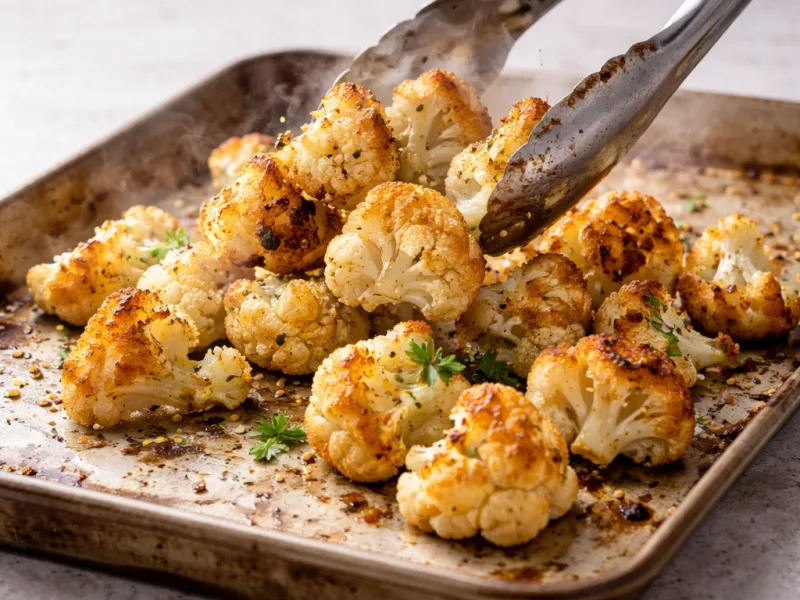
Home cooks fail because they fear high heat. They crowd the tray, which drops the oven temperature and turns a roast into an accidental steam bath. If you see thick, white steam clouds billowing when you open the oven, you have already lost the texture battle. Your goal is to move the vegetable from a raw state to a caramelized state without passing through the "mushy" phase. I look for the physical transition from a matte, dry surface to a blistered, golden crust. Anything less is just warm cabbage.
- Observation: A heavy sulfur aroma intensifies above 194°F (90°C) in wet environments.
- Texture cue: If the floret compresses easily under light pressure, the cellular structure has collapsed.
Foundational Physics of Cauliflower Cooking
Cauliflower is a reservoir of 92% water. To create flavor, that water must be evacuated before the internal cell walls collapse completely. I monitor the acoustic feedback of the vegetable; a steady, high-pitched crackle confirms that surface moisture is leaving the floret. If the sound is dull or bubbling, the heat is too low to drive surface dehydration effectively.
Dry Heat vs. Moist Heat Transfer
The Maillard reaction, which creates the "nutty" flavor profile, requires surface temperatures to exceed 285°F (140°C). Steam is physically capped at 212°F (100°C), meaning you can never brown cauliflower in a wet environment. Warning: If you cover your pan, you are effectively locking the temperature at boiling point and destroying the possibility of a crust.
Material Variables and Structural Control
How you cut the vegetable dictates the thermal penetration. I standardize floret size to roughly 1.5 inches (4 cm) to ensure the batch finishes simultaneously. When I press a paring knife into the stem, I should feel a firm "snap" rather than a soft, buttery slide. This tactile resistance confirms the pectin structure hasn't been obliterated by over-hydration.
Surface Prep and Oil Conductance
Oil acts as a liquid thermal bridge, transferring heat into the microscopic crevices of the floret. Before any oil is applied, the cauliflower must be bone-dry to the touch. If you wash it and cook it immediately, the oil will sit on a layer of water, preventing browning. I look for a light sheen on the florets; they should glisten but never pool oil at the bottom of the bowl.
Workflow Systems for Repeatable Results
Every method requires a specific temperature window to maintain structural integrity. I use an infrared thermometer to verify pan surfaces before the cauliflower makes contact. Consistency is the result of deterministic temperature control, not intuition.
Roasting System (Dry High Heat)
Operate your oven between 400–445°F (205–230°C). This high range forces moisture out fast enough to brown the edges before the core turns to mush. Within twelve minutes, you should smell a deep, toasted aroma. If you only smell raw vegetable after fifteen minutes, your oven calibration is off or your tray is too cold.
Steaming System (Moist Control)
Keep steaming limited to 5–7 minutes at 212°F (100°C). The goal is "al dente" softness. Stop the process the moment the color shifts to a vibrant, opaque white. If the florets turn translucent or gray, they have been saturated and the flavor is already leaching out into the water.
Frying System (Rapid Surface Sealing)
Maintain oil at 340–375°F (170–190°C). This temperature creates an immediate barrier, preventing the vegetable from absorbing fat. I watch the bubble density; rapid, fine bubbles indicate success. Slow, large bubbles signal a temperature crash that results in a greasy, heavy product.
Comparing Structural Outcomes Across Systems
Roasting results in a firm exterior and caramelized core. This is the optimal system for "meatier" preparations. I look for deep golden-brown edges as the primary indicator. Steaming produces uniform softness with clean, vegetal notes. The visual cue here is an opaque white color with no translucency. Frying creates a high-contrast texture with a crisp shell and creamy interior. This requires an immediate sharp sizzle and rapid bubble formation to succeed.
Advanced Optimization: The Double-Cook Method
The secret to professional "melting" texture with a crisp skin is the steam-then-roast hybrid. I steam the florets for three minutes until they are slightly flexible, then let them air-dry completely. Once dry, I blast them at 450°F (230°C) for five minutes. This prevents moisture mismanagement by ensuring the interior is cooked while the exterior is forced into rapid browning.
Pre-Blanching Technique
Blanching for 120 seconds in salted water seasons the floret from the inside out. Immediately shock them in ice water to stop the clock. Warning: If the florets feel limp after the ice bath, you have blanched too long and the roast will fail to crisp. They should feel cold, firm, and resilient.
Batch Control and Heat Recovery
Overcrowding is the primary cause of failure. Each floret releases steam; if they are too close, they share that steam and drop the local temperature. I always leave at least half an inch (1.2 cm) of space between pieces. If I see a white "fog" inside the oven window, I know the batch is too large and the temperature recovery has stalled.
System Failure Diagnostics
Mushy Texture and Waterlogging
- Symptom: Soft, translucent florets that collapse when touched.
- Cause: Excess washing water or low-intensity heat trapping steam.
- Fix: Increase heat to 425°F (220°C) and towel-dry florets before oiling.
- Operational Cue: Lack of sizzling sound during the first two minutes of heat contact.
Scorched Exterior with Raw Interior
- Symptom: Carbonized black edges with a hard, crunchy core.
- Cause: Uneven floret sizes or oven rack positioned too close to the heat element.
- Fix: Standardize cuts to 1.5 inches and move the tray to the center rack.
- Operational Cue: Rapid browning occurring before the 8-minute mark.
Pungent Sulfur Odor Release
- Symptom: A sharp, aggressive cabbage smell that fills the kitchen.
- Cause: Excessive cooking time or high-heat moisture trapping.
- Fix: Reduce total cook time and ensure florets are "tender-crisp."
- Operational Cue: Aroma shifts from toasted/nutty to pungent/bitter.
Flavor System and Finishing
Salt is a moisture-drawer. If you salt before roasting, you risk creating a brine that prevents crust formation. I salt immediately after the cauliflower leaves the heat while the oil is still shimmering. This ensures the salt adheres without dissolving the surface. I finish with lemon juice or vinegar only when serving; acid applied too early will break down the pectin and soften the vegetable. Your final result should reach its aromatic peak just as it hits the table—mild, nutty, and slightly sharp.