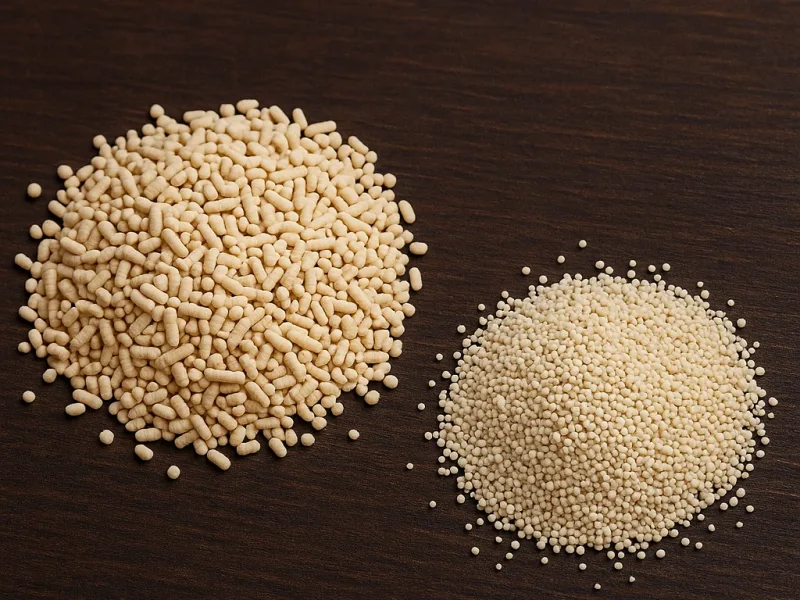
How Yeast Types Influence Texture, Flavor, and Baking Results
Yeast is a living organism that transforms simple dough into light, airy bread. Among the many varieties available, fast rising yeast (also called instant yeast) and active dry yeast are the most commonly used in both home and professional baking. Understanding how these two differ in activity, handling, and flavor development helps bakers achieve consistent, high-quality results across a wide range of baked goods.
The Science Behind Yeast Activity
Both fast rising and active dry yeast contain Saccharomyces cerevisiae, the same strain responsible for fermentation. The difference lies in how they are processed:
- Active dry yeast is dried with a thicker coating of inactive cells, which must be dissolved in warm water before use.
- Fast rising yeast is dried more quickly and finely milled, allowing it to activate faster and mix directly with flour without proofing.
This fine granulation gives instant yeast the ability to work quickly, reducing rise times by nearly half. However, speed can sometimes come at the cost of depth in flavor, since longer fermentation produces richer, more complex notes.
Historical Background of Modern Yeast
The evolution of commercial yeast began in the mid-19th century when bakers moved from natural starters to more predictable, laboratory-cultured strains. Active dry yeast was introduced during World War II as a shelf-stable solution for soldiers and home bakers. Fast rising yeast, on the other hand, appeared in the 1970s, offering convenience for quick baking without compromising too much texture. Over time, both types became staples in global baking traditions, from European artisanal breads to American quick-rise pizza doughs.
Key Differences Between Fast Rising and Active Dry Yeast
- Activation process: Active dry yeast requires rehydration in warm liquid (around 40–43°C), while fast rising yeast can be mixed directly into dry ingredients.
- Fermentation time: Fast rising yeast acts quickly, ideal for recipes with one rise; active dry yeast allows longer proofing for deeper flavor.
- Storage and shelf life: Both types keep well in airtight containers, though instant yeast maintains its potency longer once opened.
- Flavor outcome: Active dry yeast often yields more aromatic, complex bread profiles due to extended fermentation.
Practical Ideas and Simple Tricks for Better Baking
- For soft, fluffy breads, use fast rising yeast when time is limited, ensuring your dough temperature stays slightly warm to promote even rise.
- For rustic loaves and sourdough-style flavor, opt for active dry yeast and let the dough rest overnight in the refrigerator for slow fermentation.
- Mixing tip: If substituting one for the other, use 25% less instant yeast compared to active dry yeast, as it is more potent.
- Hydration balance: Instant yeast absorbs less water; if your dough feels dry, add 10–15 ml more liquid per 500 g of flour.
- Freezer hack: Pre-shape doughs and freeze after the first rise. Thaw slowly in the fridge before baking to maintain yeast performance.
Inspiration from Traditional and Modern Cuisine
Traditional European bread-making techniques rely heavily on active dry yeast for its slow fermentation benefits. Long rising times help develop that classic aroma found in French baguettes, Italian ciabatta, or German rye loaves. In contrast, modern recipes from American kitchens often favor fast rising yeast for practical reasons—ideal for quick dinner rolls, homemade pizza, or cinnamon buns prepared in under an hour.
In global gastronomy, both types coexist:
- Fast rising yeast thrives in weeknight baking where convenience matters most.
- Active dry yeast remains a favorite for heritage recipes, where flavor depth defines authenticity.
Useful Combinations and Flavor Enhancements
- Pair fast rising yeast with milk-based doughs for enriched bakes like brioche or challah.
- Combine active dry yeast with whole grain flours and a touch of honey to enhance natural fermentation.
- Add herbs, seeds, or olive oil after the first rise to diversify aroma and texture.
- For pizza, blending both yeasts (half and half) can produce a unique result—fast proofing with full flavor development.
Common Mistakes to Avoid
- Using water that’s too hot, which kills yeast instantly.
- Adding salt directly onto yeast during mixing—it slows down fermentation.
- Storing opened yeast at room temperature; refrigeration or freezing maintains its power.
- Overproofing dough, which leads to a flat loaf with weak structure.
Why This Method Works
Yeast performance depends on three elements: temperature, hydration, and sugar availability. Fast rising yeast delivers quick results because of its fine granules and high enzyme activity, while active dry yeast supports gluten development during longer fermentation. The method chosen should reflect the desired bread texture—light and airy or robust and chewy.
Chef’s Tip
We suggest experimenting with a two-step fermentation: begin with active dry yeast for the initial rise, then boost the final proof with a small amount of fast rising yeast. This hybrid approach creates breads with exceptional volume and rich aroma—perfect for both professional and home bakers.
Summary of Yeast Usage
- Fast rising yeast: Best for quick recipes, no proofing needed, shorter rise times.
- Active dry yeast: Requires proofing, ideal for artisanal and flavorful doughs.
- Storage: Keep sealed and chilled after opening.
- Ratio: ¾ teaspoon instant yeast = 1 teaspoon active dry yeast.
Modern Baking Innovation
As baking continues to blend tradition with technology, understanding yeast remains essential. Whether preparing classic sourdough, buttery brioche, or everyday sandwich bread, mastering the use of both fast rising and active dry yeast empowers bakers to control flavor, structure, and timing—bringing artistry and science together in every loaf.