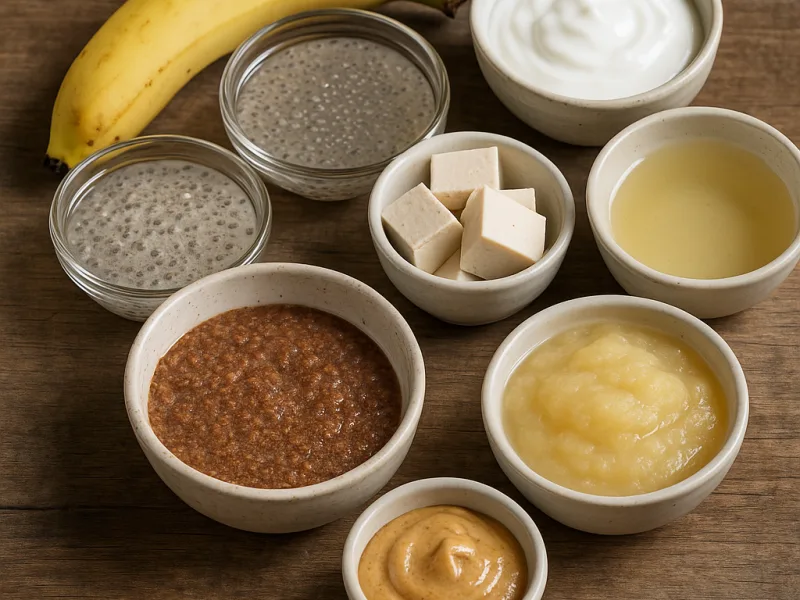
Understanding Why Eggs Matter in Baking: The Science Behind Substitution
In any baking recipe, eggs play a vital role far beyond simply holding the ingredients together. They provide structure, moisture, leavening, richness, and sometimes a glossy finish. The proteins in eggs coagulate during baking to form a firm structure, while the fats add tenderness. This is why finding the best substitutes for eggs in baking requires a thoughtful approach—different replacements excel in different roles. For example, a replacement that works perfectly in a cake might fail in a soufflé or a custard.
If you're baking for someone with an egg allergy, following a vegan lifestyle, or simply ran out of eggs, this comprehensive guide will help you understand and choose the most effective egg alternatives.
Top Vegan Egg Substitutes for Baking: Plant-Based Ingredients for Moisture and Binding
Flaxseed Meal: A Versatile Binder and Nutrient Boost
One of the most popular options among vegan bakers is flaxseed meal. To replace one egg, mix 1 tablespoon of ground flaxseeds with 3 tablespoons of warm water and let it sit for 5–10 minutes. The mixture thickens to a consistency similar to a beaten egg.
Benefits of flaxseed meal:
- Adds fiber and omega-3 fatty acids
- Subtle nutty flavor complements whole-grain recipes
- Excellent binding properties for cookies, muffins, and quick breads
Best for: Dense baked goods such as brownies, pancakes, and muffins.
Chia Seeds: A Gel-Forming Superfood
Chia seeds work similarly to flaxseeds. When combined with water, they create a gel that holds ingredients together. Mix 1 tablespoon of chia seeds with 3 tablespoons of water, stir well, and allow to rest until gelatinous.
Benefits of chia seeds:
- Rich in antioxidants and minerals
- Adds a mild crunch to batters
- Long shelf life and easy to keep in the pantry
Best for: Recipes where a bit of texture is acceptable, like multigrain breads or energy bars.
Aquafaba: The Miracle Liquid from Canned Chickpeas
Aquafaba has revolutionized vegan baking. It mimics egg whites’ ability to whip into foams and create light, airy textures. To replace one egg, use 3 tablespoons of aquafaba. For recipes requiring whipped egg whites—such as macarons or meringues—whip aquafaba with cream of tartar until stiff peaks form.
Benefits of aquafaba:
- Neutral taste
- Incredible versatility for both sweet and savory applications
- No special preparation required beyond straining canned chickpea liquid
Best for: Cakes, meringues, and recipes needing lift and lightness.
Mashed Banana: Natural Sweetness and Moisture
For recipes where sweetness is welcome, mashed banana makes an excellent egg substitute. Use ¼ cup of mashed banana per egg.
Benefits of mashed banana:
- Provides moisture and natural sweetness
- Affordable and widely available
- Adds subtle banana flavor
Best for: Muffins, quick breads, pancakes, and brownies.
Applesauce: Classic Moisture Replacement
Unsweetened applesauce is a staple in vegan baking for replacing eggs. Use ¼ cup of applesauce to substitute one egg.
Benefits of applesauce:
- Keeps baked goods moist
- Mild flavor that doesn’t overpower
- Contains pectin, which helps bind ingredients
Best for: Cakes, cupcakes, and soft cookies.
Silken Tofu: A Protein-Rich Binder
Silken tofu blends into batters and provides creaminess and structure. Use ¼ cup of pureed silken tofu for each egg.
Benefits of silken tofu:
- High in protein
- Neutral flavor profile
- Adds density, ideal for richer desserts
Best for: Cheesecakes, custards, and dense brownies.
Vinegar and Baking Soda: Chemical Leavening for Fluffy Textures
When combined, vinegar and baking soda create a chemical reaction that produces carbon dioxide bubbles, helping batter rise. Mix 1 tablespoon of vinegar (apple cider or white) with 1 teaspoon of baking soda per egg.
Benefits of this combination:
- Excellent for leavening
- No added flavors
- Easy to find in any pantry
Best for: Cakes, cupcakes, and lighter baked goods.
Pantry-Friendly Egg Alternatives: Everyday Ingredients You Already Have
Yogurt: Creamy Moisture and Mild Tang
Plain yogurt, especially non-dairy versions, can replace eggs while adding moisture and a subtle tang. Use ¼ cup yogurt for one egg.
Benefits of yogurt:
- Supports tender crumb
- Mildly acidic, helping activate leavening agents
- Adds richness
Best for: Quick breads, cakes, and muffins.
Buttermilk: Soft Texture and Lift
Buttermilk contributes to both moisture and rise. Use ¼ cup buttermilk as a replacement for each egg.
Benefits of buttermilk:
- Acidity reacts with baking soda for leavening
- Rich flavor
- Creates tender baked goods
Best for: Pancakes, waffles, and biscuits.
Nut Butters: Binding and Richness
Almond, peanut, or cashew butter can replace eggs while adding protein and flavor. Use 3 tablespoons of nut butter per egg.
Benefits of nut butters:
- Excellent binding power
- Adds depth of flavor
- Nutritional benefits from healthy fats
Best for: Cookies, brownies, and dense bars.
Arrowroot Powder: Neutral Binding Agent
Arrowroot powder can be mixed with water to form a slurry that mimics egg’s binding qualities. Combine 2 tablespoons of arrowroot powder with 3 tablespoons of water for each egg.
Benefits of arrowroot powder:
- Neutral taste
- Smooth texture
- Easy to incorporate
Best for: Cakes, muffins, and gluten-free recipes.
Commercial Egg Replacers: Convenient All-in-One Solutions
Brands like Ener-G and Bob’s Red Mill offer commercial egg replacers formulated to replicate eggs’ binding and leavening effects. Follow the package instructions for substitutions.
Benefits of commercial replacers:
- Predictable results
- Long shelf life
- Designed for consistency across recipes
Best for: A wide variety of baked goods, from cookies to cakes.
Matching Egg Substitutes to Different Baking Needs
Binding vs. Leavening: Understanding Your Priority
Some recipes primarily rely on eggs for binding, while others depend on leavening or moisture. For example:
- Binding-focused recipes (cookies, bars): Flaxseed, chia seeds, nut butter
- Leavening-focused recipes (cakes, muffins): Vinegar + baking soda, aquafaba
- Moisture-focused recipes (brownies, quick breads): Applesauce, mashed banana, yogurt
Choosing the right substitute ensures your final product maintains the desired texture and flavor.
Substitution Tips for Different Baked Goods
Cookies: For chewy cookies, flax eggs or chia eggs work best. For cakey cookies, consider applesauce or aquafaba.
Cakes: For light, fluffy cakes, aquafaba or vinegar + baking soda are excellent choices.
Brownies: Silken tofu or mashed banana provide moisture and density.
Muffins and Quick Breads: Applesauce, yogurt, or buttermilk yield a tender crumb.
Custards and Puddings: Silken tofu delivers creaminess and stability.
Meringues and Macarons: Aquafaba is the only substitute that can replicate whipped egg whites.
Expert Tips for Successful Egg-Free Baking
Measuring Carefully
Egg replacements require precise measuring. Too much liquid can make a recipe dense, while too little can leave it crumbly.
Adjusting Bake Times
Egg alternatives often require longer baking times. Always check for doneness using a toothpick or cake tester.
Balancing Flavors
Some replacements, like banana or nut butter, add distinct flavors. Consider whether these complement your recipe.
Combining Substitutes
Sometimes combining two substitutes yields the best results. For example, using aquafaba for leavening and flaxseed for binding.
Testing Small Batches
If you’re adapting a treasured recipe, test a small batch before making the full quantity.
Nutritional Considerations: Health Benefits of Egg Substitutes
Many egg replacements offer additional nutritional benefits:
- Flax and chia seeds are rich in omega-3 fatty acids and fiber.
- Aquafaba is low in calories and fat.
- Nut butters add protein and healthy fats.
- Tofu provides plant-based protein and minerals.
- Bananas and applesauce contribute vitamins and antioxidants.
For those reducing cholesterol or saturated fat intake, these alternatives are often healthier than traditional eggs.
Common Mistakes When Replacing Eggs and How to Avoid Them
Using the wrong substitute for the recipe: Always match the substitute to the function—binding, leavening, or moisture.
Overmixing batters: Some egg substitutes thicken quickly and can lead to tough baked goods if overmixed.
Ignoring flavor impact: Banana and nut butters can overwhelm delicate recipes if not balanced properly.
Skipping rest time: Flax and chia mixtures need time to gel for full binding power.
Expecting identical results: Egg-free baking sometimes yields a slightly different texture—embrace the uniqueness.
Why This Approach Works: The Science of Effective Substitution
Protein coagulation: Tofu and aquafaba can partially mimic eggs’ protein structure, helping bind and set the batter.
Moisture retention: Applesauce, yogurt, and mashed fruit maintain the moisture lost without eggs.
Leavening: Vinegar and baking soda, along with whipped aquafaba, create bubbles that lighten the crumb.
Fat contribution: Nut butters and yogurt offer richness and mouthfeel similar to egg yolk.
By understanding these mechanisms, you can confidently bake egg-free while achieving delicious, reliable results.
Bringing It All Together: Your Path to Successful Egg-Free Baking
Finding the best egg substitutes for baking isn’t about a one-size-fits-all answer. The key is identifying what role the egg plays in your recipe, then choosing the substitute that best replicates that function. Whether you opt for flaxseed meal for its binding power, aquafaba for lightness, or applesauce for moisture, you can create baked goods that are every bit as satisfying—without the eggs.
Experiment with these options, take notes on your results, and enjoy the creative process of transforming traditional recipes into vegan or allergy-friendly delights. With this knowledge, you’re fully equipped to master the art of egg-free baking and craft treats that everyone can enjoy.