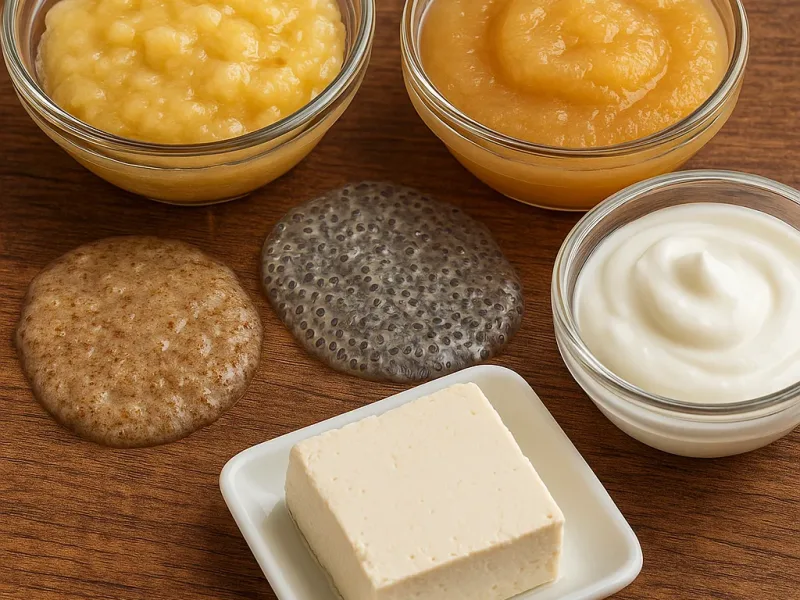
Discover how to replace eggs while keeping flavor, texture, and structure intact
Baking cakes and pies often depends on eggs for binding, leavening, and richness. However, many home bakers look for egg substitutes due to allergies, dietary choices, or simply running out of eggs. With the right combinations, you can achieve moist, fluffy, and delicious results without compromising on taste or consistency.
The role of eggs in baking
Eggs are more than just an ingredient. They provide:
- Binding to hold batters together
- Moisture that softens cakes and pie fillings
- Leavening to help cakes rise and stay airy
- Richness and flavor that enhance baked goods
Replacing eggs requires understanding these roles to choose the correct alternative.
Historical background of egg replacements
The idea of baking without eggs is not new. During wartime shortages, bakers relied on vinegar, baking soda, and mashed fruits to stretch supplies. In traditional cuisines such as Indian or Mediterranean, plant-based thickeners and dairy alternatives were often used long before vegan trends. Today, these methods are refined and widely embraced in both traditional baking and modern plant-based recipes.
Popular egg substitutes for baking cakes and pies
Several proven options can replace eggs while keeping a pleasant texture and flavor:
- Mashed banana (½ banana ≈ 1 egg) – adds moisture and sweetness
- Unsweetened applesauce (60 g ≈ 1 egg) – mild flavor and soft crumb
- Ground flaxseed mixed with water (1 tbsp flax + 3 tbsp water) – creates a gel for binding
- Chia seed gel (same ratio as flax) – slightly nutty flavor, excellent in pies
- Yogurt (60 g ≈ 1 egg) – adds creaminess and richness
- Silken tofu (60 g ≈ 1 egg) – neutral flavor, strong binding properties
- Vinegar with baking soda (1 tbsp vinegar + 1 tsp baking soda) – ideal for cakes that need rise
- Commercial egg replacer powders – balanced blends for consistent results
Practical ideas and simple tricks
To make baking easier and more reliable, consider these useful practices:
- For moist chocolate cakes, use mashed banana or applesauce for extra softness.
- For light sponge cakes, vinegar with baking soda ensures a fluffy texture.
- For dense pies or cheesecakes, silken tofu or yogurt provides stability.
- To create gluten-free desserts, pair chia or flax gel with nut flours for better structure.
Inspiration from traditional and modern cuisine
- Mediterranean baking often uses olive oil and yogurt as natural binders.
- Indian sweets rely on chickpea flour (gram flour) for thickening and richness.
- Scandinavian kitchens make use of mashed berries and potato starch in pastries.
- Contemporary vegan bakeries combine aquafaba (chickpea water) with sugar to mimic egg whites in meringues.
Useful combinations for better results
Experimenting with combinations can elevate your baking:
- Applesauce + baking powder for extra rise in muffins
- Flax gel + yogurt for both structure and creaminess
- Banana + cocoa powder to balance sweetness in brownies
- Silken tofu + lemon juice for smooth pie fillings
Common mistakes to avoid
- Using too much banana can make desserts overly sweet or dense
- Chia seeds may create a chewy texture if not soaked long enough
- Too much liquid from substitutes can lead to soggy cakes; adjust flour accordingly
- Substituting without considering the recipe’s flavor profile may alter the taste unexpectedly
Why these methods work
Eggs perform multiple roles at once, but each substitute covers part of their function. Flax or chia provide binding, while yogurt or tofu offer creaminess. Baking soda and vinegar release carbon dioxide for leavening, mimicking eggs’ lifting power. By choosing the right substitute, you maintain balance in structure, flavor, and texture.
Chef’s tip
When replacing eggs in cakes or pies, test smaller batches first. Keep notes on texture, rise, and taste. Over time, you’ll discover which substitute works best for your preferred recipes.
Summary of best egg substitutes
- Banana, applesauce, yogurt, or tofu for moisture and binding
- Flax or chia seeds for structure in vegan desserts
- Vinegar and baking soda for light, airy cakes
- Aquafaba for whipping and meringues
- Commercial egg replacers for reliable, all-purpose use
With these egg substitute ideas, baking cakes and pies without eggs becomes both practical and creative. Whether you want a vegan dessert, a quick dinner idea turned into a sweet finale, or a solution for egg allergies, the right choice ensures your cakes rise beautifully and your pies hold their shape with confidence.